REVIEW · ROME
Exploring Rome’s Rich Heritage: Pantheon and Jewish Ghetto
Book on GetYourGuide →Operated by CheckandGo Tours · Bookable on GetYourGuide
Two Roman icons, one easy walk. You start at the Pantheon and then connect it to the Jewish Ghetto, with a guide threading together art, religion, and politics in a way that feels practical, not academic. I love the skip-the-line setup, and I also appreciate the headsets, which help you catch every key point even when Rome gets loud.
One catch: the Pantheon has strict dress and access rules (no shorts, short skirts, sleeveless tops, or hemlines above the knees), and the notes around mobility are mixed (it’s listed as wheelchair accessible, but it also says it is not suitable for wheelchair users). If you’re traveling with limited clothing options or mobility needs, read the rules closely before you go.
In This Review
- Key things to know before you go
- Starting at Piazza della Rotonda: Why this route works
- Entering the Pantheon with skip-the-line tickets and live guidance
- Piazza della Minerva: Bernini’s Elephant and Obelisk moment
- Largo di Torre Argentina: Julius Caesar’s assassination site
- Piazza Mattei and the Jewish Ghetto streets: walking with context
- Portico of Octavia: A strong ending marker
- Price and value: Is $42.59 worth it?
- Practical tips: attire rules, what to bring, and how to pace yourself
- Who this tour is best for
- Should you book this Pantheon and Jewish Ghetto tour?
- FAQ
- How long is the Pantheon and Jewish Ghetto tour?
- What is the price per person?
- Where does the tour start and where does it end?
- What languages are the live guides?
- What’s included in the ticket price?
- Is skip-the-line entry included for the Pantheon?
- What should I wear or avoid for the Pantheon?
- Is the tour wheelchair accessible?
- What is the cancellation policy?
Key things to know before you go

- Skip-the-line Pantheon entry saves time at one of Rome’s busiest stops.
- Headsets make the guide easy to follow in crowded squares.
- Bernini’s Elephant and Obelisk in Piazza della Minerva adds a fun art interlude.
- Largo di Torre Argentina brings you to the archaeological site connected to Julius Caesar’s assassination.
- Jewish Ghetto walking segment gives you a guided context for one of Rome’s historic neighborhoods.
- Clear, simple explanations from the guide stand out, including Maria’s approach from the tour’s reviews.
Starting at Piazza della Rotonda: Why this route works

The tour starts at Piazza della Rotonda, 2, right by the Pantheon. That matters because it puts you at the main event first, when you can still focus before your feet and attention get tired. You’ll also get your guide’s name and contact details one day before, which keeps the meeting point from feeling like a scavenger hunt.
The pacing is built for people who want two big Rome stops without a full-day commitment. It’s about 2 hours total, and the Pantheon time is specifically 45 minutes with a guided visit. After that, you move through a sequence of plazas and streets on foot, with more short guided moments along the way.
You can also read our reviews of more historical tours in Rome



Entering the Pantheon with skip-the-line tickets and live guidance
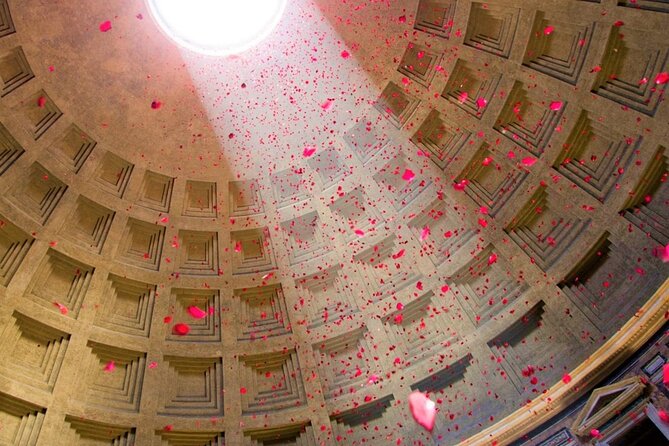
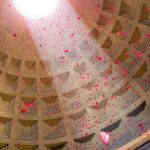
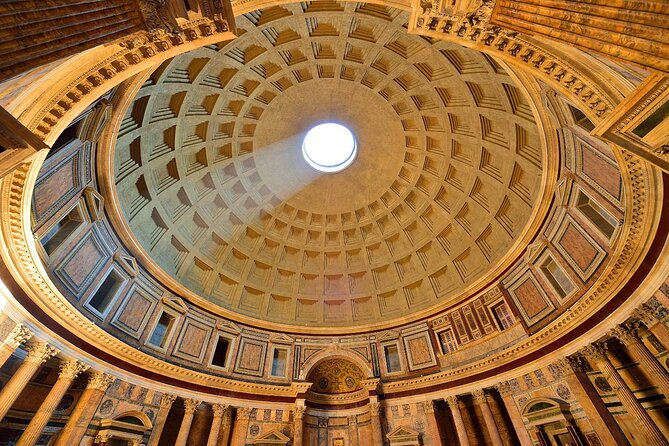
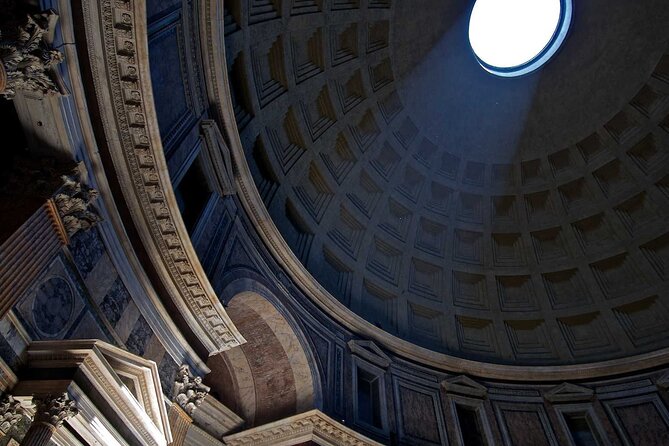
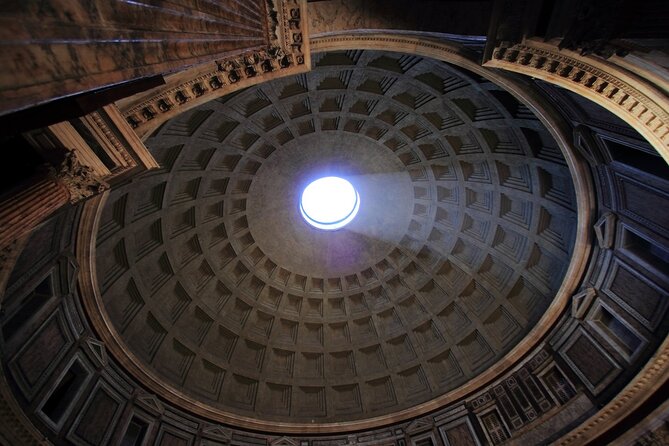
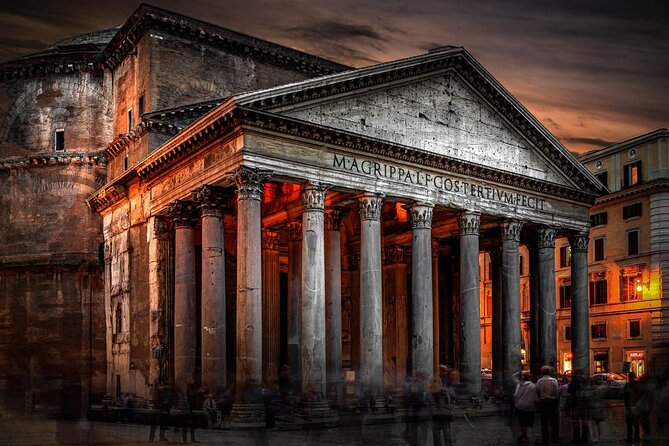
The Pantheon is the kind of place where you can’t help but stare up. You’ll learn what you’re looking at: a massive domed ceiling with an oculus that lets natural light spill into the interior. The guide explains the building’s shift over time too. It was originally built as a temple for all gods, and it now functions as the final resting place for notable figures, including the Renaissance artist Raphael and the kings of Italy.
The big practical win is the skip-the-line ticket plus a guided session. In real terms, that means less time getting bottlenecked and more time hearing why the Pantheon is so famous. You also get headsets, which is a small detail that pays off. In Rome, guides often compete with street noise, coins clinking, and the general bustle of people trying to take photos and understand the building at the same time.
What I like most about doing it guided is that you don’t just see the Pantheon—you understand what to notice. You’ll know what the oculus does for the space, and you’ll connect the building’s religious roots to its modern role as a monument and resting place for famous Italians.
Piazza della Minerva: Bernini’s Elephant and Obelisk moment
After the Pantheon, you head to Piazza della Minerva, which is where the tour adds a satisfying art stop. You’ll admire Bernini’s iconic Elephant and Obelisk sculpture—a striking visual break from ancient architecture while still staying in the Rome-is-every-era theme.
This is a good pause in the walk. The Pantheon section is intense—big scale, big engineering, and a lot to process. The Elephant-and-Obelisk stop gives you something more playful to look at, and it also helps your brain switch gears from ancient Rome to later art that responded to it.
If you’re the type who likes your tours to mix viewpoints—architecture, sculpture, and streets—this is the moment that keeps it from becoming only one long lesson.
Largo di Torre Argentina: Julius Caesar’s assassination site
Next comes Largo di Torre Argentina, where the tour takes you to an archaeological site connected to Julius Caesar’s assassination. This is one of those Rome locations that hits a different way because you’re not just reading about the past—you’re standing where the story is tied to the ground.
The guide-led format helps here. Caesar is easy to recognize as a name, but a good guide helps you understand why the site matters in the context of Roman politics and memory. The tour’s whole angle is the connections between art, religion, and politics, and this is where the politics part becomes concrete.
A small practical consideration: archaeological sites in Rome can be uneven. You’ll want your shoes to handle stone textures and the quick transitions between plazas and open areas.
Piazza Mattei and the Jewish Ghetto streets: walking with context
Then you move into the heart of the Jewish Ghetto, with guided time around Piazza Mattei and the streets in the area connected to Via del Portico d’Ottavia. The tour doesn’t treat this like a quick photo stop. It frames the area as historic and guided, with the “why it matters” part built into the walking.
This is one of the best segments if you like tours that connect places to meaning. The Pantheon teaches you how Rome reuses sacred space over time. The Jewish Ghetto segment shifts the focus to a community’s long cultural presence in the city.
Also, language can make or break this kind of neighborhood walk. The reviews highlight Maria for explaining the Pantheon history in a clear, thorough way—and that same guide-led style carries over as you wander the ghetto streets. Even if you don’t speak Italian, the tour offers Spanish and English guidance, and you’ll still get a guided narrative rather than just wandering through blocks.




Portico of Octavia: A strong ending marker
The tour finishes in front of the Portico of Octavia, which the experience frames as a symbol of the community’s past and cultural heritage in Rome. Ending here is smart. It gives you a last visual anchor that’s still tied to the Jewish Ghetto segment, so the story doesn’t fade into generic sightseeing.
If you’re trying to leave Rome with a “things connected” feeling—rather than a pile of separate memories—this ending helps. You come from a domed pagan temple-turned-monument, you pass through a sculpture tied to later art, you hit the assassination site, and then you close with a historic portico connected to neighborhood identity. That’s a thread.
Price and value: Is $42.59 worth it?
At $42.59 per person for about 2 hours, this tour is priced like you’re paying for access, not just for walking with a stranger. The value calculation looks like this:
- You get skip-the-line tickets to the Pantheon, which alone can save time and frustration.
- You get headsets, which improve the odds you’ll actually understand what you’re hearing.
- You get guided time at the Pantheon plus guided time across the ghetto area and key stops along the route.
- You’re not paying separately for each major segment; the whole experience is bundled.
It’s also a good match for a first or mid-trip day. If you don’t have time to build a complex DIY route, this gives you a structured way to see the Pantheon and then continue without backtracking across Rome.
One caveat on value: because the tour runs on guided time and includes specific sites, you’ll want to be ready for the Pantheon’s rules about attire and possible scheduling disruptions. If you show up in the wrong clothes, you might not get access, which would obviously reduce the value.
Practical tips: attire rules, what to bring, and how to pace yourself
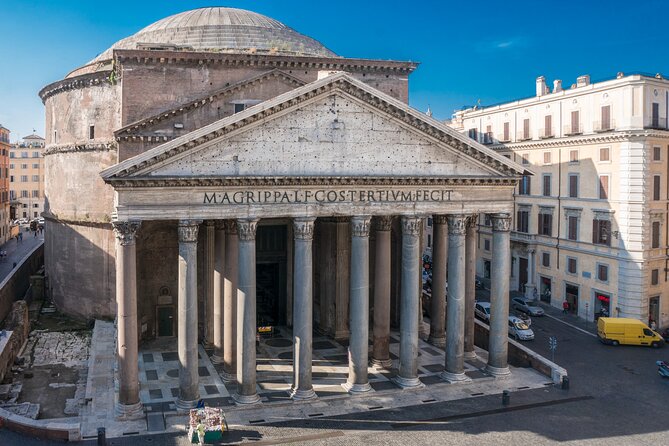
The Pantheon requires “suitable attire.” That means no hemline above the knees, no vests, and no sleeveless tops for both men and women. The same rules are reinforced with “not allowed” items like shorts and short skirts, plus sleeveless shirts. It’s not the place to test your luck with what you packed.
Bring an ID or passport (and passports/IDs for children as well). Rome sites sometimes move quickly between security checks and entry rules, so it’s better to have it ready instead of hunting for it mid-line.
For day planning, remember the tour is 2 hours total. That’s short enough that you’ll feel the walk, but long enough that you’ll get real context at each stop. If you’re easily fatigued, wear shoes you trust on stone and uneven pavement.
Who this tour is best for
This is a strong pick if you want Rome with story, not just stamps in your passport. You’ll likely enjoy it if you:
- Want a guided Pantheon that explains what you’re seeing (domed ceiling, oculus, and the building’s change over time).
- Like connecting places to bigger themes—here, art, religion, and politics.
- Appreciate quick, well-chosen stops like Piazza della Minerva and Bernini’s Elephant and Obelisk instead of only “the big one.”
It may be a tougher fit if you need special mobility support, since the information includes mixed notes about wheelchair users. It’s also worth thinking twice if you’re not prepared for strict dress requirements at the Pantheon.
Should you book this Pantheon and Jewish Ghetto tour?
Yes, if you want two of Rome’s most important stops handled in a guided, structured way—and you care about understanding what you’re looking at. The skip-the-line Pantheon entry, headsets, and guided pacing make it feel efficient without turning it into a sprint.
Book it especially if you like the idea of seeing the Pantheon first, then carrying that context into the Jewish Ghetto walk. The guide style highlighted in the reviews—particularly Maria’s clear, thorough explanations—sounds like exactly what you want when you’re trying to make sense of multiple eras in one outing.
Skip it or plan carefully if you don’t meet the Pantheon dress rules or if mobility needs are a concern. With the right prep, this tour is a solid value way to experience Rome’s layers in just two hours.
FAQ
How long is the Pantheon and Jewish Ghetto tour?
The tour lasts about 2 hours, and you should check availability to see the starting times.
What is the price per person?
The price is listed as $42.59 per person.
Where does the tour start and where does it end?
It starts at Piazza della Rotonda, 2, and the activity ends back at the meeting point.
What languages are the live guides?
The live tour guide is available in Spanish and English.
What’s included in the ticket price?
You get skip-the-line tickets to the Pantheon, headsets to hear the guide clearly, a guided tour of the Pantheon, and a guided tour of the Jewish Ghetto.
Is skip-the-line entry included for the Pantheon?
Yes, skip-the-line tickets to the Pantheon are included, with entry through a separate entrance.
What should I wear or avoid for the Pantheon?
Access requires suitable attire: no hemline above the knees, no vests, and no sleeveless tops for both men and women. Shorts, short skirts, and sleeveless shirts are not allowed.
Is the tour wheelchair accessible?
It’s listed as wheelchair accessible, but it also states it is not suitable for wheelchair users and for people with mobility impairments. If that’s relevant for you, double-check before booking.
What is the cancellation policy?
You can cancel up to 24 hours in advance for a full refund.