REVIEW · ACCRA
Full-Day Private Culture and History Tour of Accra
Book on Viator →Operated by NYONKOPA ECO TOURS · Bookable on Viator
Accra has stories you can feel in your day. This private culture-and-history outing strings together Independence-era landmarks, a real-life market stop, and museum time with a guide who keeps things readable and on pace.
I love two things most: the admission fees are included, so you don’t spend the day hunting for tickets, and the route balances big ideas with everyday Ghana life. One drawback to plan for up front: lunch and snacks aren’t included, so you’ll need to manage food on your own.
In This Review
- Key highlights
- Price and what $85 buys you in Accra
- Starting at Independence Square and the Eternal Flame
- Makola Market: the place to see Accra as locals do
- Jamestown by car: fishing life and older European shadows
- Kwame Nkrumah Memorial Park: your longer, more reflective chapter
- The W.E.B. Du Bois Center and guided museum time
- What a private format changes (and why guides matter)
- Timing, transport, and what to plan around
- Who should book this Accra culture and history tour
- Should you book this tour?
- FAQ
- How long is the private culture and history tour of Accra?
- Is pickup offered?
- Is this tour private?
- What stops are included on the tour?
- Are admission fees included?
- Is lunch or snacks included?
- Is bottled water included?
- What is the cancellation policy?
Key highlights
- Private guide, personalized pace with room for small itinerary adjustments
- All entrance fees included plus bottled water
- Independence Square and the Eternal Flame tied to Osagyefo Dr Kwame Nkrumah
- Makola Market as Accra’s largest open market experience
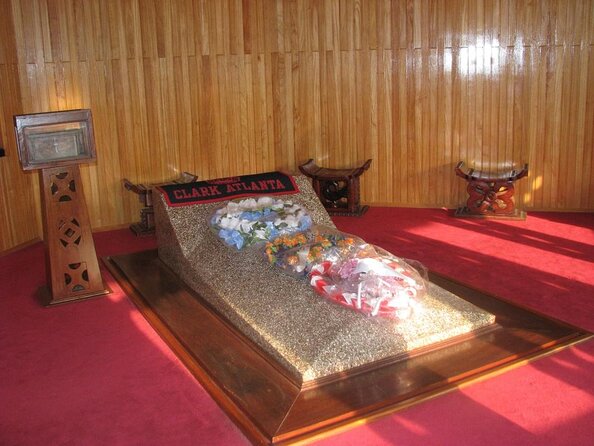
- Kwame Nkrumah Memorial Park with a longer, more thoughtful stop
- W.E.B. Du Bois Center focused on modern pan-Africanism with guided museum time
Price and what $85 buys you in Accra
At $85 per person for a 5 to 6 hour private tour, you’re paying for three things that usually cost extra on your own: a guide, transport within the city loop, and entrance fees that can add up fast. Here, all fees and taxes are included, plus bottled water. That matters because in a day like this, the “hidden” costs are often what turn a good plan into a pricey one.
The private format also changes the feel. You’re not stuck with a fixed herd timetable. A good guide can slow down where you’re curious and speed up when you just want photos and a clear route. In the feedback I’ve seen from this experience, guides like Kofi and Kweku are noted for being friendly, informed, and good at matching the day’s rhythm to the group.
You can also read our reviews of more private tours in Accra

Starting at Independence Square and the Eternal Flame

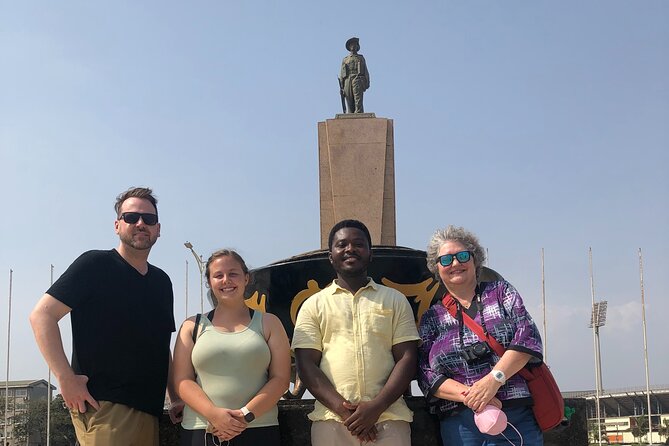
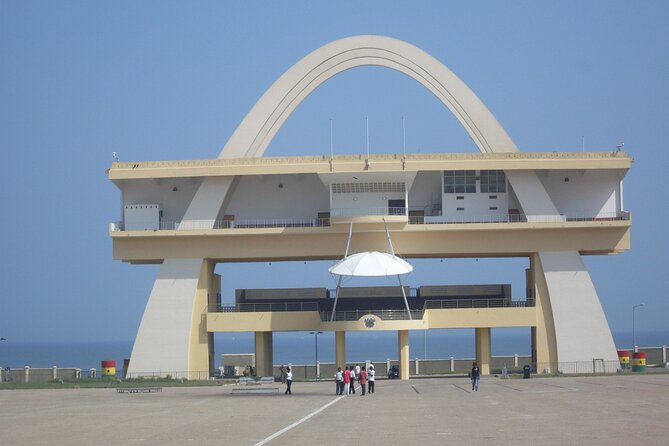
Your first stop is Independence Square, home to the Eternal Flame of African Liberation. The flame was lit by Osagyefo Dr Kwame Nkrumah, Ghana’s first President. Even if you know the name already, seeing the site in person gives the story weight in a way that a textbook never quite does.
You’ll have about 30 minutes here, with admission included. Use that short window to do two practical things: take in the symbolism of the flame and read the context around it. This is one of those places where the details help you connect later stops, especially the memorial sites and museum time.
Possible downside: because the stop is brief, you don’t get time for a slow, lingering wander. If you’re the type who wants to sit and absorb at length, go into it with a quick mindset: this is your orientation stop, not your whole lesson.
Makola Market: the place to see Accra as locals do
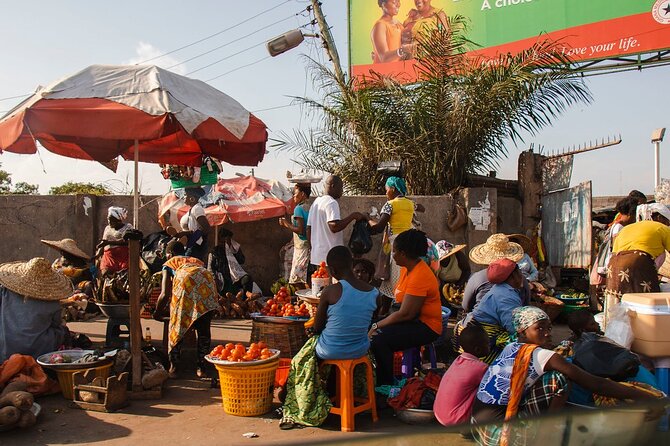
Next is Makola Market, described as Accra’s largest open market, full of goods, people, scents, and sounds. This is the part of the day that’s less about monuments and more about living city rhythm. You’ll have about 30 minutes here, and admission is included.
What I like about putting a market on the route is that it grounds the history. When you talk independence, pan-Africanism, and political identity, you’re still talking about real people. Makola Market shows you the daily side of Ghana: trade, hustle, small conversations, and the constant motion of buying and selling.
A smart approach here is to treat it like a “window,” not a shopping mission. Walk slowly, look closely at what’s on display, and if you want souvenirs, keep an eye on what catches your eye and what fits your budget. Since the tour is built for shopping opportunity, you’ll be in a good spot to pick up local products without needing to plan extra time.
Jamestown by car: fishing life and older European shadows
After Makola, you’ll drive through Jamestown, a fishing community and one of Accra’s historic old towns. The focus here is history, especially how the neighborhood relates to European influence.
This segment is different from the formal stops: it’s not a long “walk around” moment. You’re getting context as you pass through, and that’s a useful change of pace. You’re still moving through a place with layers, but you’re not losing the whole day to traffic navigation or long detours.
Why this matters for your understanding: Accra’s story isn’t only independence-era politics. City neighborhoods reflect older trade routes, colonial contact, and the way communities adapted over time. Jamestown is one way to see that layering without pretending it’s one single story.
If you’re sensitive to car time, note that this day includes a few driving segments. It’s part of how the tour connects distant points efficiently in just 5 to 6 hours.
Kwame Nkrumah Memorial Park: your longer, more reflective chapter
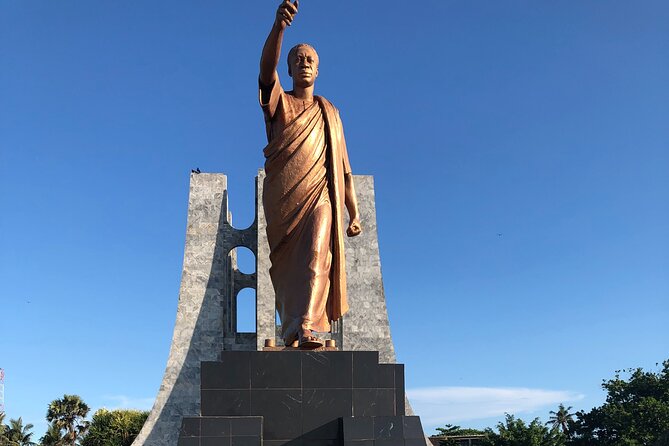
Then comes Kwame Nkrumah Memorial Park, a 2-hour stop with admission included. This is where the day shifts from quick orientation to a more sustained visit.
A longer window is a real gift on a tour like this. It gives you time to connect the name on Independence Square to the deeper narrative of Ghana’s independence struggle. You’re visiting a site built and dedicated to Osagyefo Dr Kwame Nkrumah for his role in Ghana’s independence.
In practice, I’d use this time in two ways. First, follow your guide’s thread on the major themes so the site doesn’t turn into a blur of photos. Second, pick one area (or one exhibit focus) and give it your attention. That’s how the memory sticks after the tour ends.
Also, if you’re traveling with an older person or someone who prefers less rushing, this 2-hour stop can be a good middle ground: it’s structured, but it doesn’t feel like a “blink and you miss it” photo stop.
You can also read our reviews of more historical tours in Accra
The W.E.B. Du Bois Center and guided museum time
Your final listed stop is the W.E.B. Du Bois Center, built around W.E.B. Du Bois, described as the father of modern pan-Africanism. You’ll take a guided tour of the museum here, with about 1 hour on-site and admission included.
I like this placement toward the end of the day because the ideas start to connect. You’ve seen Ghana’s independence story begin at Independence Square, you’ve spent longer time on Kwame Nkrumah, and now you shift to a wider worldview—pan-Africanism—where Ghana’s story fits into a bigger intellectual and political movement.
A guided museum tour is especially helpful if you’re not sure where to focus. The point isn’t just seeing objects; it’s understanding what the center wants you to think about. In other words, you’re not left alone trying to interpret exhibits at speed.
This stop also balances the earlier ones. Independence Square is symbol-heavy. A market is sensory and human. Jamestown is place-based context. The Du Bois Center is ideas and interpretation—history you can talk about, not just history you can photograph.
What a private format changes (and why guides matter)
In a private tour, the guide becomes more than a translator. They become the filter. You don’t just get facts—you get a sense of what to pay attention to and what’s less important for your time.
The guides mentioned in connection with this tour—like Kofi and Kweku—are described as friendly, well versed, and able to adjust. One standout detail: the day can be tuned to your group. If your family wants a slower rhythm, or a solo traveler wants things organized and clear, the guide can help you find that sweet spot.
That’s also why the tour works for different traveler types. In feedback tied to this experience, I’ve seen it described as especially good for a senior citizen (not rushed, paced well) and also as a great option for a solo traveler who wants sightseeing without doing the planning math alone.
Timing, transport, and what to plan around
The tour runs about 5 to 6 hours. You’ll have time blocks at Independence Square (30 minutes), Makola Market (30 minutes), Kwame Nkrumah Memorial Park (2 hours), and W.E.B. Du Bois Center (1 hour), with driving time between stops.
That timing adds up fast, so your best strategy is preparation instead of stress. Wear comfortable shoes for market walking and any museum floors. Bring sun protection, since you’ll be in outdoor market space for at least part of the day.
And yes, here’s the big “do this yourself” item: lunch and snacks aren’t included. The tour does include bottled water, but it doesn’t solve food. If you’re the kind of person who gets cranky when hungry, plan ahead for lunch on your own after the tour, or arrange snacks in whatever way is easiest for you before you start.
Pickup is offered, and the meeting area is described as near public transportation. That usually makes it easier to sync with local plans if you’re already moving around Accra.
Who should book this Accra culture and history tour
This is the right fit if you want a guided day that mixes three essential sides of Accra: national story, everyday life, and big ideas across Africa. It’s also a strong choice if you like structure. The stops are clear, the time windows are realistic, and admission fees are handled.
Book it if:
- You want a private guide who can tailor the pace to your group
- You care about Ghana’s independence story and want it connected to wider pan-African thinking
- You want a market visit that doesn’t require you to map your own route
- You’d rather pay one fair price with fees included than juggle ticket costs later
You might want a different option if:
- You’re specifically looking for a long, slow walk through neighborhoods. This is a “drive and contextualize” Jamestown moment, not an all-day wandering plan.
- You need lunch included in the price. You’ll handle food yourself.
Should you book this tour?
If you want an efficient, thoughtful way to understand Accra’s past and present in one day, I’d say yes, book it. The value is strongest because admissions and taxes are included, you get bottled water, and the tour is private enough to feel personal rather than rushed.
Before you go, do two quick checks: plan food since lunch/snacks aren’t included, and choose comfy shoes because at least one stop is a real market walk. If you like your history with context—plus a slice of daily city life—this route is a solid bet.
FAQ
How long is the private culture and history tour of Accra?
It runs about 5 to 6 hours.
Is pickup offered?
Yes, pickup is offered.
Is this tour private?
Yes. It’s a private tour, and only your group participates.
What stops are included on the tour?
You visit Independence Square, Makola Market, drive through Jamestown, Kwame Nkrumah Memorial Park, and the W.E.B. DuBois Center.
Are admission fees included?
Yes. All admission fees and taxes are included.
Is lunch or snacks included?
No. Lunch and snacks are not included.
Is bottled water included?
Yes, bottled water is included.
What is the cancellation policy?
You can cancel up to 24 hours before the experience starts for a full refund.