REVIEW · ACCRA
Naming Ceremony and Heritage Homecoming Experience for Diasporas
Book on Viator →Operated by Kwame Tours · Bookable on Viator
Your name has a rhythm in Ghana. This outing for diasporas centers on an elder-led traditional naming ceremony, with drumming and dancing, for anyone looking to reconnect to roots in a village setting near Accra. If you want something personal, you’ll get a day-based Soul Name and a community name tied to story.
I love how the ceremony is built around your date of birth, which you share so the elder can guide your naming process. I also like the tangible welcome that comes with it: Ghanaian cloth tailored for you, plus a gift that may include beads or a Ghana Kente stole marked Welcome to Ghana, and a certificate of recognition.
One thing to plan for: this isn’t a polished, indoor show. It’s designed to feel like a community rite, so expect a village-style flow with time spent standing, listening, and participating, not rushing from “photo spot” to “photo spot.”
In This Review
- Key things that make this ceremony worth your time
- A Name Ceremony That Feels Like Community, Not Performance
- Your Soul Name and the Local Name You Carry Home
- What Happens During the Elder-Led Ceremony (Drumming, Dancing, and Cloth)
- The Morning Plan from Kotoka Airport to Your Village Welcome
- Gifts, Kente Stoles, and the Recognition Certificate
- Price and Value: What $265 Buys in Real Life
- Who This Naming Ceremony in Accra Is Best For
- Should You Book This Naming Ceremony Experience?
- FAQ
- What will I receive during the naming ceremony?
- Do I need to provide my date of birth?
- How long is the experience, and when does it start?
- Where do we meet, and where does the tour end?
- Is pickup included?
- Is it private or shared with other people?
- Are service animals allowed, and what are the cancellation rules?
Key things that make this ceremony worth your time

- A Soul Name based on your birth day: you share your date of birth as part of the traditional process.
- A second name from the community with a meaning: you leave with a local identity that connects you to the people there.
- Traditional drumming and dancing during the ceremony: the vibe is celebratory and guided by the elders’ rhythm.
- Tailored Ghanaian cloth and a welcome gift: you may receive beads or a Kente stole with Welcome to Ghana.
- A certificate of recognition: you get something official you can keep and explain later.
- Private group feel with pickup: you start at Kotoka Airport and the tour ends back there.
A Name Ceremony That Feels Like Community, Not Performance
If you’ve ever thought about your ancestry and wished it came with a real, personal marker, this is the kind of experience that gives you one. In Accra, you join a traditional naming ceremony led by a respected elder with a strong moral standing in the community. The goal isn’t just “see culture.” It’s for your identity to be spoken into the community in a way that matters.
What I appreciate most is the structure: you’re part of a ritual tied to your birth information, then welcomed through songs, drumming, and movement. That matters because naming ceremonies aren’t meant to be casual. They’re about relationships—between you, the community, and the spiritual idea behind your origin story.
You should also know the tone. You’re not going to “browse” the event like a museum. You’ll be guided into the ceremony, and that means paying attention, being respectful, and going with the flow. If you want an action-packed tour, you might find yourself slower here—in a good way, if you’re ready for it.
You can also read our reviews of more historical tours in Accra


Your Soul Name and the Local Name You Carry Home
The ceremony is built around two naming elements: a Soul Name linked to the day you were born, and a local name chosen by the community with a meaning. This is one of the most powerful parts because it turns something abstract—your origin—into a concrete label with context.
Here’s what that looks like in practical terms. You’ll provide your date of birth, and the elder will use it as the basis for discovering your day-based Soul Name. You’re not just hearing a nickname. You’re learning a concept tied to how the naming tradition connects time, identity, and spirituality.
Then there’s the community name. This one comes with meaning, which is crucial for how you’ll talk about your experience later. It gives you language to explain what happened beyond the ceremony itself. Instead of only saying you were “renamed,” you can say the community gave you a name meant to reflect something about you—through their lens.
One more point worth considering: if you’re cautious about sharing personal details, be ready for that moment. The tour specifically includes sharing your birth date to complete the ritual. If that’s a concern, plan ahead mentally so it doesn’t distract you once you’re there.
What Happens During the Elder-Led Ceremony (Drumming, Dancing, and Cloth)
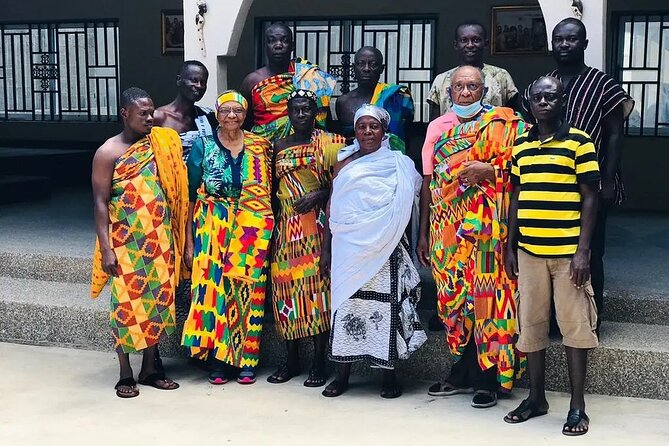
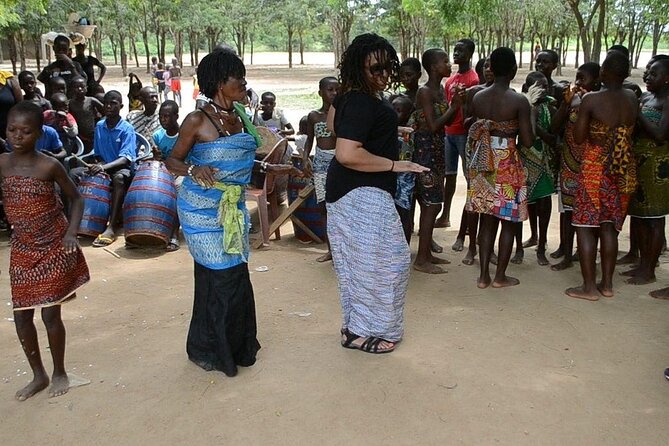
The ceremony is conducted by a respected elder, and you’ll experience it with traditional drumming and dancing. That combination isn’t just entertainment. In a naming rite, drumming and movement set the atmosphere and help the community mark the transition you’re going through.
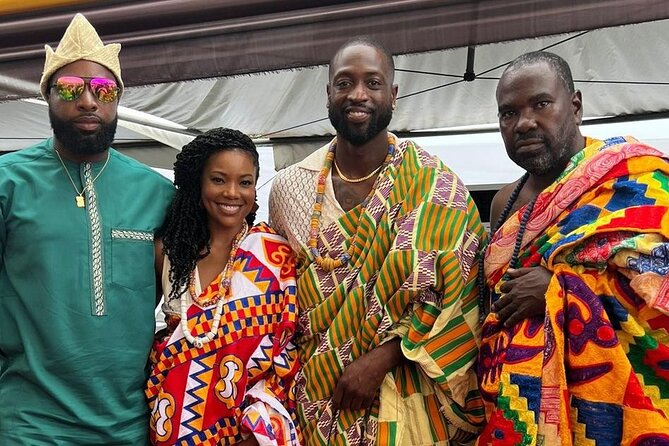
You’ll join the process of traditional naming, and the community will welcome you during the event. A key detail: you’re also adorned with Ghanaian cloth tailored for you. That’s more than a costume. It’s part of how the community visually acknowledges you in the ceremony—like you’re being wrapped into the moment.
You can also expect a celebratory tone. Even when the ritual part is serious, the drumming and dancing add warmth. It’s not silent and ceremonial like a courtroom. It has energy. You’ll feel it when the music starts and people move as one.
From a practical travel standpoint, this is an experience where comfort matters. You’ll want shoes that work on uneven ground and clothes that can handle draped fabric. Don’t dress in a way that makes you tense about getting cloth on you. You’re being welcomed, and that welcome may look like being dressed for the occasion.
The Morning Plan from Kotoka Airport to Your Village Welcome
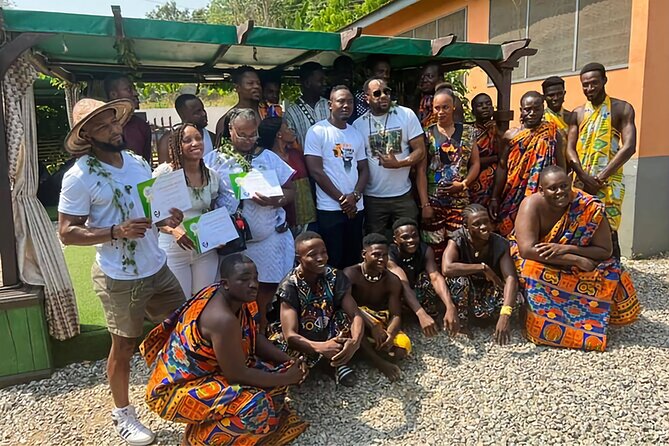
This runs as a morning experience with an early start. It begins at 7:00am from Kotoka Airport in Accra, and the tour ends back at the meeting point. Pickup is offered, and it’s designed as a half-day block that totals about 5 to 8 hours.
Think of your day like two parts:
1) time moving through Accra and getting to the community setting
2) the ceremony itself, which is described as about 3 hours for the main event
That timing is helpful because it means you’re not stuck for the entire day in a waiting room. You’ll still have some “tour day” time built in, but the heart of the experience is the ceremony.
Also, this is a private tour/activity. Only your group participates. That matters for cultural experiences. It reduces the chance of feeling rushed or crowded, and it lets you focus on what’s happening without trying to squeeze your way through a larger crowd.
One more detail I like for planning: confirmation is received at booking time, which usually means you’re not guessing about the start window when you arrive in Ghana.
Gifts, Kente Stoles, and the Recognition Certificate
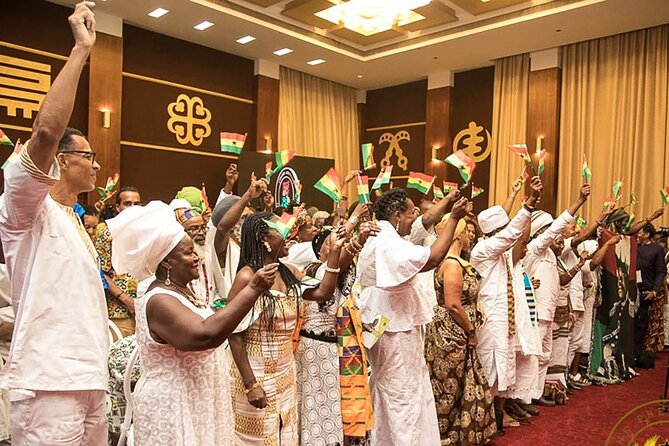
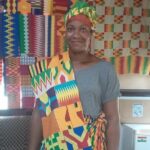
A big part of the value here is what you take home. The community provides a gift as part of the naming ceremony, which may include beads or a Ghana Kente stole with Welcome to Ghana written and designed on it. You also receive a certificate of recognition.
Why this matters: cultural experiences can be memorable but hard to hold onto. A certificate gives you a document you can reference later. The stole or beads give you something visible, worn or displayed, that carries the story with you.
Let’s talk about the Kente stole detail for a second. It’s specifically described as having Welcome to Ghana written and designed on it. That makes it more than “some cloth.” It’s labeled as part of the event, so you can explain it without sounding vague.
And the cloth you wear during the ceremony? That’s a different kind of keepsake moment. It’s part of the ritual, which also means you should treat it respectfully and be ready for it to be used during the ceremony.
In other words: you’re not just buying an afternoon of photos. You’re leaving with items that help you remember the people involved and the feeling of being recognized. That’s hard to quantify until you’re standing there and receiving your place in the community’s moment.


Price and Value: What $265 Buys in Real Life
At $265 per person, this isn’t a “grab it last minute” type of outing. The good news is that the price is tied to real, structured access: elder-led ceremony time, the traditional naming process using your date of birth, the community welcome, and the gift and certificate.
Value-wise, you’re paying for a specific kind of participation that doesn’t happen on a standard sightseeing circuit. Most tours show you culture. This one gives you a ceremony framework where your identity becomes part of the story—at least in the way this tradition is meant to unfold.
It also includes pickup offered and a mobile ticket. Plus, there’s mention of group discounts. If you can book with friends or family, you can spread the cost while still keeping that private group feel.
Average booking timing is about 11 days in advance, so don’t wait until you’re already in town if your dates are fixed. Cultural experiences like this can be easier to lock in when you plan ahead.
Also consider your “time cost.” Yes, it’s 5 to 8 hours. But you’re getting a concentrated event (about 3 hours for the ceremony portion). If you like meaningful stops and you’re comfortable with a slower, more relational pace, that timing can feel fair instead of long.
Who This Naming Ceremony in Accra Is Best For
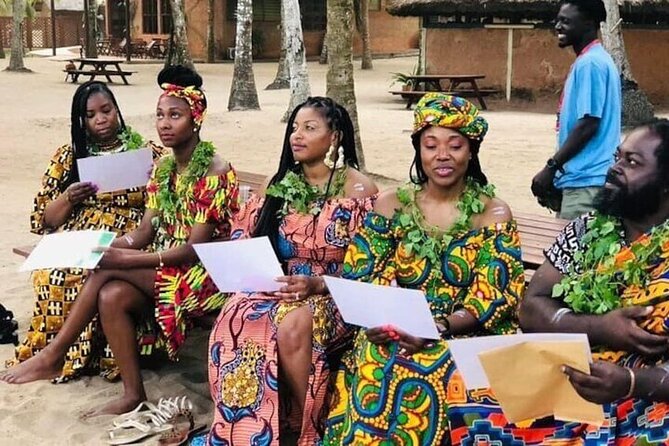
This experience is especially meaningful for people from the African American and Caribbean diasporas who want a direct, cultural connection to their heritage and ancestors. If you’re carrying family stories, questions, or a longing for something you can feel—not just read—this is likely to land well.
It’s also a good choice if you’re the kind of traveler who prefers:
- guided participation over passive viewing
- community interaction over checklist sightseeing
- a personal takeaway (names, certificate, cloth/gift) over another photo
You might want to think twice if you’re expecting a tightly scripted “tour show.” The event is community-led and ritual-driven. That means the flow can feel different from the way you’re used to touring. It’s not meant to be a performance built for tourists, even though you’ll be welcomed.
One more good fit: if you like meeting elders and older women as part of a village welcome, this kind of experience is exactly that. You’re not just handed a quick ceremony moment; you’re treated as part of the group for the rite.
Should You Book This Naming Ceremony Experience?
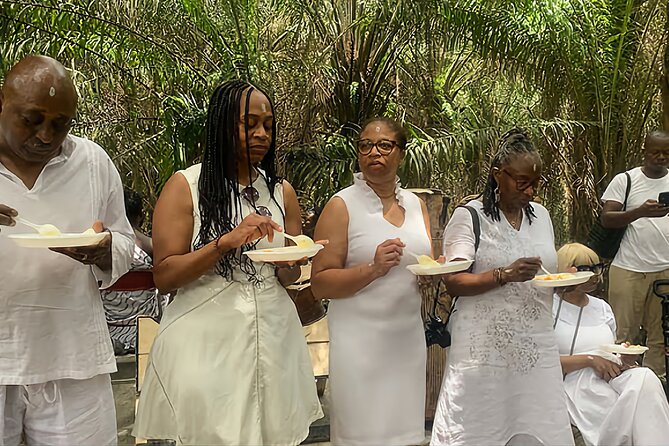
Yes—if what you want is a real reconnection moment with a clear personal result. I think the strongest reason to book is the mix of structure and warmth: your date of birth matters, your Soul Name and local name come with meaning, and you’ll be welcomed with drumming, dancing, tailored cloth, a possible Kente stole or beads, and a certificate.
The main caution is practical: come ready for a village-style ceremony, not an indoor, polished show. Wear comfortable shoes, be open to standing and participating, and treat the elder-led process as the focus of your day.
If you can answer yes to most of these, you’re a strong fit:
- You’re okay sharing your date of birth for the naming ritual.
- You want keepsakes that connect to a living community moment.
- You’re traveling with a group mindset (this is private for your group).
- You don’t mind a slower, more reflective pace for cultural meaning.
If you want, I can also help you plan what to do after the ceremony on the same day, since you’ll return to Kotoka Airport and you might still have time for a sensible meal and one nearby stop.
FAQ
What will I receive during the naming ceremony?
You’ll go through the traditional naming process and discover your day-based Soul Name. You’ll also receive a local name from the community along with its meaning. As part of the ceremony, you’ll get a gift that may include beads or a Ghana Kente stole with Welcome to Ghana, and you’ll receive a certificate of recognition.
Do I need to provide my date of birth?
Yes. The naming process involves you sharing your date of birth for the Ghanaian naming ritual, which is used to determine your Soul Name.
How long is the experience, and when does it start?
It runs about 5 to 8 hours total, and it starts at 7:00am.
Where do we meet, and where does the tour end?
The experience starts at Kotoka Airport in Accra, Ghana, and it ends back at the meeting point.
Is pickup included?
Pickup is offered.
Is it private or shared with other people?
It’s private. Only your group will participate.
Are service animals allowed, and what are the cancellation rules?
Service animals are allowed. Cancellation is free up to 24 hours in advance of the experience for a full refund (you must cancel at least 24 hours before the start time for a refund).