REVIEW · PARIS
Jewish History Tour of Le Marais
Book on GetYourGuide →Operated by SIGHT SEEKERS PARIS · Bookable on GetYourGuide
History here feels close to the street. The Jewish History Tour of Le Marais led by Karen (20 years in the role) turns Paris landmarks into real-life stories, with humor and human details you won’t find on a quick walking loop. You start in the heart of the old Jewish neighborhood and keep moving through layers of the city’s past without getting bogged down.
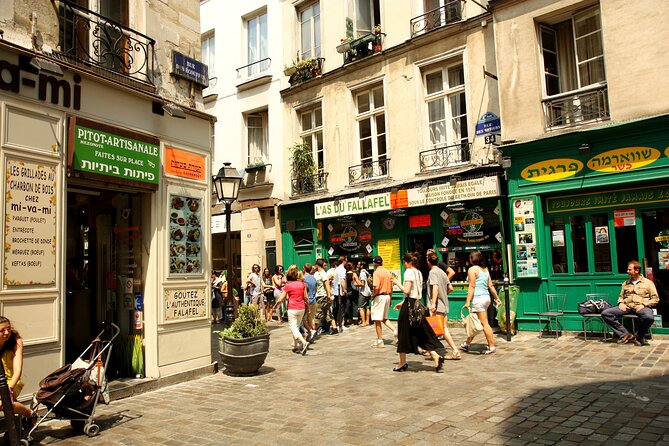
I especially love the sit-down history break inside one of the oldest synagogues in Paris. That change of pace matters: you’re not just seeing buildings from the sidewalk; you’re getting context where the setting carries weight. I also like the VIP-style stop at L’As du Fallafel—you get access that helps you avoid the longest line, so the meal feels part of the experience, not an annoying detour.
The main thing to plan for is that lunch isn’t included in the tour price. You’ll want to budget about €15–€30 per person for your falafel stop, and in rare cases higher neighborhood security can affect whether the synagogue break happens as planned.
In This Review
- Key highlights to notice before you go
- Le Marais Jewish Neighborhood: the setting does the storytelling
- Place des Vosges start: meeting at King Louis XIII
- Hôtel de Sully exterior: the 17th-century anchor
- Hector Guimard synagogue exterior: Art Nouveau meets faith architecture
- Old synagogue sit-down break: why going inside changes everything
- Musée Carnavalet exterior: learning how Paris narrates itself
- VIP L’As du Fallafel lunch: a smart way to eat and not lose time
- Shoah Holocaust Memorial & Museum: the day’s emotional finish
- Price and logistics: is $94 a fair value?
- Who this tour suits best (and who should plan differently)
- Practical tips for a smooth 3.5-hour Le Marais day
- Should you book the Jewish History Tour of Le Marais?
- FAQ
- How long is the Jewish History Tour of Le Marais?
- Where do I meet for the tour?
- What language is the tour offered in?
- Is lunch at L’As du Fallafel included in the price?
- Does the tour include entry to an old synagogue?
- Is the tour wheelchair accessible?
- Where does the tour end?
- What is the cancellation policy?
Key highlights to notice before you go
- Karen’s 20-year experience means the tour stays lively, clear, and well paced for real groups.
- Old synagogue, sit-down break rather than just a photo stop, with note that it can change in rare security situations.
- Le Marais focus keeps the story tight: one neighborhood, many eras.
- L’As du Fallafel VIP stop (not included in price) ties food culture to Jewish life in Paris.
- Shoah Holocaust Memorial & Museum finish gives the day emotional weight and optional time to continue exploring.
Le Marais Jewish Neighborhood: the setting does the storytelling
Le Marais is the Jewish-heart neighborhood in Paris, and it also happens to be one of the older parts of the city. That means you get more than a museum-style lesson. You walk through streets that have held community life for generations, with the architecture doing a lot of the work for you.
What I like about keeping everything in Le Marais is the focus. You’re not bouncing across town trying to connect distant dots. Instead, you see how Jewish history, French history, and everyday life overlap in one compact area. If you’re curious about how culture survives in a changing city, this kind of geography helps.
You can also read our reviews of more historical tours in Paris



Place des Vosges start: meeting at King Louis XIII
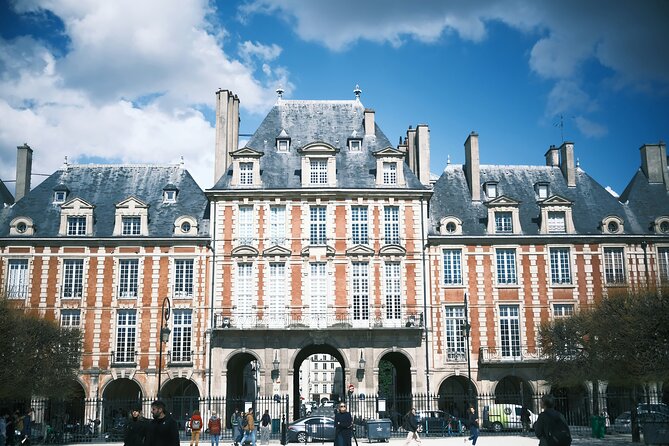
Your tour begins at the foot of the statue of King Louis XIII, right in the center of Place des Vosges. It’s a great starting point because it’s easy to orient yourself: you’re in one of Paris’s most iconic squares, with clear sightlines and plenty of atmosphere.
From there, the route keeps you moving through the neighborhood while still giving you chances to slow down. The tour is about 210 minutes (3.5 hours) total, and it’s designed to be physically manageable. The walk is described as a few blocks, and you get two sit-down history breaks (each 45 minutes), which is a smart pacing choice in a city that can feel endless on foot.
Hôtel de Sully exterior: the 17th-century anchor
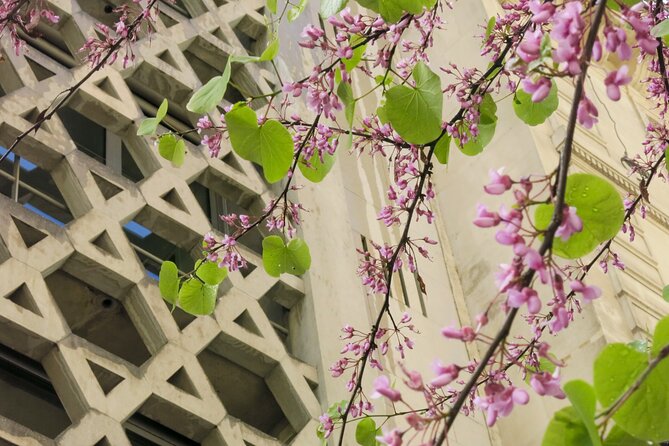
One of your early visual stops is Hôtel de Sully, a striking 17th-century mansion you see from the outside. Exteriors can feel like “just looking,” but in a tour like this, the goal is to anchor the timeline.
That building gives you a sense of how power and wealth shaped the city around the Jewish community across different eras. You’re training your eye to notice what was nearby, what looked permanent, and what changed. Even without going inside, the exterior helps set the stage for later stops tied to Jewish communal life.
Hector Guimard synagogue exterior: Art Nouveau meets faith architecture
Next up is a famous synagogue by Hector Guimard—again, exterior viewing. This is a fun contrast stop. Guimard is closely associated with Art Nouveau design, so it’s a reminder that Jewish life in Paris didn’t only exist in quiet, historical corners. It also appeared in public-facing, stylistically bold architecture.
When you’re walking, it’s easy to miss why a building’s shape and details matter. This stop helps you practice a different kind of looking: you’re not just scanning for recognizability, you’re learning to see design as a cultural signal.
Old synagogue sit-down break: why going inside changes everything
A key moment is the sit-down history break inside one of the oldest synagogues in Paris. You’re told this is included, with one important exception: in rare cases of increased neighborhood security, it may not be possible.
Here’s why that detail matters. A synagogue interior is not just another impressive room. It’s a place with specific spatial meaning, and sitting there changes how you absorb the story. You’re more likely to listen carefully, and the guide can connect the narrative to what you’re seeing in real time—light, layout, and the feel of the space itself.
This is also where Karen’s experience shows. A long walking tour can turn into “facts and faces.” A sit-down break keeps the day from flattening into trivia. It’s also a good moment for people who want a rest without giving up the story.






Musée Carnavalet exterior: learning how Paris narrates itself
The tour includes an exterior stop at Musée Carnavalet, the museum of Paris history. Even as an exterior, it points you toward a helpful idea: cities build memory systems. Museums are one layer. Neighborhood stories are another.
You don’t spend your time inside here during the tour itself (the plan emphasizes walking plus breaks), but you get a prompt for what you might want to explore later if the topic grabs you. If you like connecting Jewish history to the larger story of Paris—politics, urban change, and cultural shifts—this stop tees up that curiosity.
VIP L’As du Fallafel lunch: a smart way to eat and not lose time
For lunch, you do a stop at L’As du Fallafel with VIP access, and yes—the line is often the problem. This lunch is not included in the tour price. You’ll pay around €15–€25 per person, but the VIP entry is part of what makes the stop work.
In practice, that means you can treat the meal like a chapter instead of a delay. You’re not stuck waiting long enough that the rest of the tour feels rushed or you end up cranky. And because this is Le Marais—where food culture is deeply tied to community life—having lunch as a planned storytelling moment makes sense.
Tip: budget for lunch ahead of time so you can focus on the experience during the meal rather than doing last-minute decision math.
Shoah Holocaust Memorial & Museum: the day’s emotional finish
The tour ends at Shoah Holocaust Memorial & Museum. This is where the day slows and turns heavier. You’ll hear incredible stories before you have the option to explore the museum on your own afterward.
This ending works well for several reasons. First, you’ve spent the day learning about Jewish life, place, architecture, and community continuity in one Paris neighborhood. Then you arrive at a memorial that forces a different kind of attention—one centered on survival, loss, memory, and the importance of history being told and retold.
If you want to extend the experience, you can stay and explore the museum independently after the guided portion. If you prefer a quieter landing, you can also choose your level of museum time based on your energy.
Price and logistics: is $94 a fair value?
At $94 per person for a 210-minute guided walking tour, the value comes from what’s included versus what’s extra.
Included:
- A walking tour experience with an amazing guide and storyteller
- The pacing structure with two sit-down history breaks
- Time focused on major landmarks in Le Marais
- Access that supports a sit-down visit inside an old synagogue (with rare security exceptions)
- A guided landing at Shoah Holocaust Memorial & Museum
Not included:
- Lunch at L’As du Fallafel (around €15–€30)
When I look at the math in plain terms, this is a good deal if you care about more than just outside sightseeing. You’re paying for narrative time with a long-tenured guide plus access moments—especially the synagogue sit-down—that typically cost more if you try to build them yourself. The only predictable “extra” is lunch.
Who this tour suits best (and who should plan differently)
This Jewish History Tour of Le Marais is built for people who want to understand Jewish heritage in Paris in a grounded way. It’s a solid fit whether you’re Jewish or not, and the tour’s structure suggests it’s designed for mixed groups, including people who want to feel welcomed and included while staying curious and engaged.
It’s also a good match if you like walking but don’t want a marathon. It’s described as one of the most physically achievable tours, with the key detail being limited walking distance plus two sit-down breaks.
You might want to think twice if your goal is purely “see famous things fast.” This is not a speed run. It’s a story-focused day, and you’re getting time inside and sitting down to listen.
Practical tips for a smooth 3.5-hour Le Marais day
- Wear comfortable shoes. Even with only a few blocks of walking, Paris sidewalks can be slick or uneven.
- Bring water and plan for a full meal break. Lunch is extra money, so you’ll want to treat it like part of your day’s plan.
- Expect a pace with stopping points. Two 45-minute sit-down breaks mean you don’t just “keep moving”; you get real time to absorb.
- If you’re sensitive to plan changes, know that synagogue access can be affected in rare cases due to increased neighborhood security. That’s uncommon, but it’s part of the tour’s reality.
- If you can, avoid booking tours on your arrival day. The advice here is practical: travel fatigue can make even a well-paced tour feel longer than it needs to be.
Should you book the Jewish History Tour of Le Marais?
If you want a Jewish history experience that stays human—stories in context, places with meaning, and actual time to sit and listen—this is a strong choice. The standout advantages are the Karen-led storytelling built over 20 years, the sit-down time inside an old synagogue, and the VIP falafel stop that respects your schedule instead of forcing you into a long line.
Book it if:
- You want one neighborhood, told clearly and thoughtfully
- You like landmarks that come with context, not just photos
- You appreciate breaks during walking-heavy sightseeing
Consider another option if:
- You’re budget-tight on meals and don’t want to add the lunch cost
- You prefer fully inside-the-museum experiences every hour (this tour mixes walking, exteriors, and sit-down history stops)
FAQ
How long is the Jewish History Tour of Le Marais?
The tour lasts 210 minutes (about 3.5 hours).
Where do I meet for the tour?
Meet at the foot of the statue of King Louis XIII, right in the center of Place des Vosges.
What language is the tour offered in?
The tour is offered in English.
Is lunch at L’As du Fallafel included in the price?
No. Lunch at L’As du Fallafel is not included. It typically costs about €15–€30 per person, though VIP access is part of the stop.
Does the tour include entry to an old synagogue?
You get a sit-down history break inside one of the oldest synagogues in Paris, except in rare cases of increased neighborhood security.
Is the tour wheelchair accessible?
Yes, the tour is listed as wheelchair accessible.
Where does the tour end?
The tour ends at the Shoah Holocaust Memorial & Museum, where you’ll hear stories and then have the option to explore the museum on your own.
What is the cancellation policy?
You can cancel up to 24 hours in advance for a full refund.