REVIEW · KUALA LUMPUR
Malacca UNESCO “World Heritage Site” Day Trip with Lunch from KL
Book on Viator →Operated by Dynamic Tours · Bookable on Viator
Malacca hits you fast: European rule layered over local life. This day trip gives you an efficient route through St. Paul’s Hill and Church and the Jonker Street area, plus a stop-by-stop look at Portuguese, Dutch, British, Chinese, Muslim, and Hindu landmarks. The only real drawback is the schedule is tightly paced, so you’ll want to keep your expectations realistic about how long you’ll linger at each site.
I like that this trip is built for comfort and convenience. You get hotel pickup and drop-off, air-conditioned transport, mineral water, and a local lunch—so you’re not constantly solving logistics on the fly. One thing to consider: with an 8-hour total day (including driving), it’s not a slow wander, and you’ll be on your feet more than you might expect, especially around Jonker Street.
The trip caps at a maximum of 15 people, and for small groups you travel in a car. You also get a mobile ticket, so you’re not stuck hunting for paper confirmations at the start point in Kuala Lumpur.
In This Review
- Key highlights that matter
- The Malacca UNESCO story you can actually see in a day
- Getting from KL: 8 hours total, pickup comfort, small-group pace
- Dutch Square essentials: Red Square, clock tower, and Victoria Fountain
- St. Peter’s, St. Francis Xavier, and St. Paul’s Hill: Catholic roots under shifting rulers
- A Famosa fortress gate: the surviving edge of Portuguese power
- Houses of worship everywhere: Cheng Hoon Teng, Kampung Kling, Sri Poyatha
- Jonker Street walk: snacks, souvenirs, and choosing your pace
- Malacca River and the Straits-of-Malacca atmosphere
- Lunch, mineral water, and what you’re paying for
- Price and value: what $89 really covers on this kind of day
- The human touch: when your driver matches your interests
- Who should book this Malacca UNESCO day trip
- Should you book? A simple decision guide
- FAQ
- FAQ
- What time does the Malacca day trip start?
- How long is the tour?
- Is hotel pickup and drop-off included?
- Where is the meeting point in Kuala Lumpur?
- What’s included in the price?
- Is admission included for the listed sights?
- How many people are in a group?
- What vehicle will I travel in?
- Can I get a refund if I cancel?
Key highlights that matter
- A full UNESCO-style route in one day across Portuguese, Dutch, British, Chinese, Muslim, and Hindu sites
- Free admission at every listed stop, including A Famosa, major churches, and key temples
- Jonker Street time for snacks and shopping, with local favorites like Asam Laksa and Cendol
- Small-group feel (max 15) with pickup/drop-off and air-conditioned driving
- A driver who pays attention to your interests, based on past guest feedback
The Malacca UNESCO story you can actually see in a day
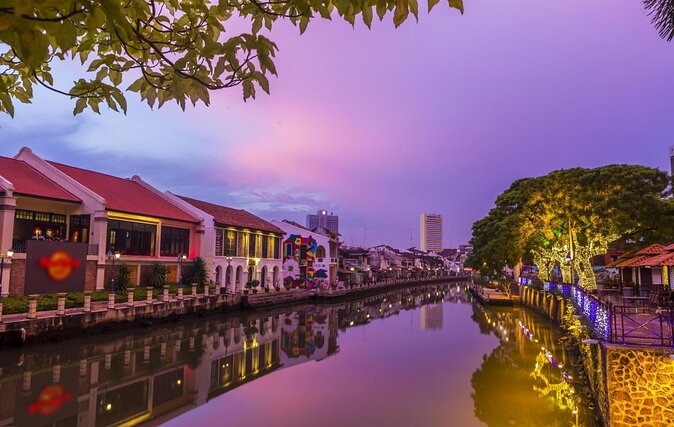
Malacca is one of those places where the past isn’t stuck behind museum glass. It’s visible in street layouts, church facades, temple architecture, and the kinds of neighborhoods that still act like trading zones. This tour is set up so you can piece that story together without needing to plan a route yourself.
You’ll start with the European chapters—Portuguese influence shows up in the older church sites and fort remnants, while Dutch landmarks define central civic spaces. Then you’ll shift into later layers: British-era details, and religious sites that reflect Malacca’s multi-ethnic community. That blend is the whole point of doing Malacca from Kuala Lumpur as a day trip: you compress a lot of change into a manageable day.
You can also read our reviews of more historical tours in Kuala Lumpur


Getting from KL: 8 hours total, pickup comfort, small-group pace
The tour starts at 8:00 am from MATIC109, Jln Ampang in Kuala Lumpur, and you return to the same meeting point. The total duration is about 8 hours, and the travel time is included in that number—so plan your day around it, not around a flexible “we’ll see” schedule.
The transport is air-conditioned, and you’ll travel with private transportation. The vehicle type depends on group size: 1–3 people typically go by car, while 4–15 people travel by van. There’s a max of 15 travelers total, which keeps things from turning into a chaotic free-for-all. You also get hotel pickup and drop-off included, which is a big deal if you’re staying outside the city center or you just don’t want to deal with taxis all day.
Practical tip: bring sunscreen and wear comfortable shoes. You’re moving between multiple historic points, and even when time at each stop is short, walking adds up fast.
Dutch Square essentials: Red Square, clock tower, and Victoria Fountain
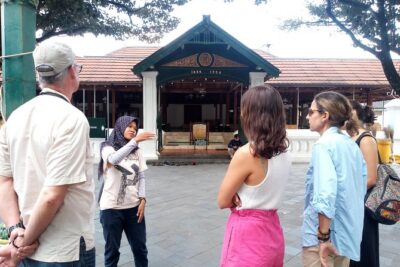
Malacca’s city center has a cluster of landmark sights that help you get oriented quickly. You’ll spend brief but worthwhile time at the Red Square (Dutch Square) area, where the Stadthuys sits in the heart of the administrative capital. Even if you don’t go deep on details, standing in that space helps you understand how Dutch civic power took shape in Malacca.
Right nearby is the Melaka Clock Tower (also known as the Tan Beng Swee Clock Tower). It’s about 134 years old, and it’s one of the most photographed spots in the area—so expect plenty of people at peak daylight. It’s still worth it because it gives you a visual anchor for the whole Dutch Square zone.
Then you’ll see Queen Victoria’s Fountain, built in 1901. This is where the British layer becomes obvious without needing a history lecture. It’s a functioning fountain and still a pretty focal point, especially if you want something classic to photograph before you switch into the religious and fort areas.
Why this cluster works on a day trip: it helps you map the city fast. Once you’ve seen these points, the rest of the day feels less like random stops and more like a connected route.
St. Peter’s, St. Francis Xavier, and St. Paul’s Hill: Catholic roots under shifting rulers
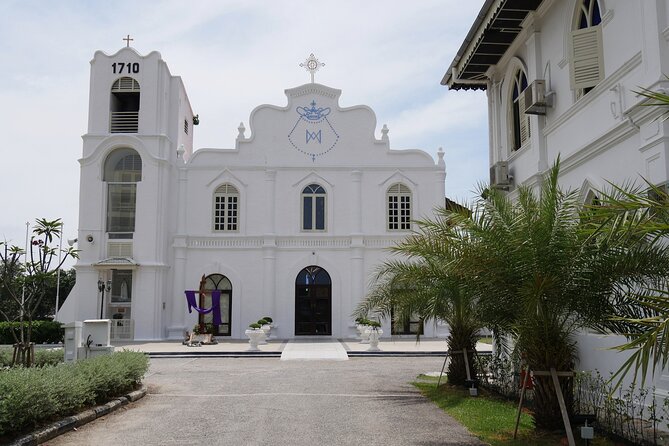
The tour includes several church stops that reflect how European powers competed—and how Catholic communities persisted through changes. You’ll start with St. Peter’s Church (1710). Portuguese occupation ended when Malacca fell to the Dutch in 1641, and after that came periods of Catholic persecution by the Dutch. Even if the building itself can’t tell you every detail, it sets the tone: Malacca’s European influence wasn’t purely architectural—it was political.
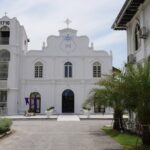
Next is St. Francis Xavier Church, built in 1849 on the site of an older Portuguese church, with finishing touches completed in 1856. A French priest (Father Farvé) and Father Allard are tied to the construction story, which adds a human thread to the visit.
Then comes the big one: St. Paul’s Hill & Church (Bukit St. Paul). This site dates back to 1521, dedicated to the Virgin Mary, and is described as the oldest of its kind in Malaysia and Southeast Asia. Even when you only have around 15 minutes here, it’s a stop that tends to give you perspective—literally. Hilltop church sites often make it easier to understand why certain places mattered.
One consideration: church stops are quick by design. If you like slow, quiet time inside historic buildings, you might feel like you’re mostly seeing the exterior and immediate areas. Still, these are key anchors for anyone who wants Malacca’s European era in one day.
A Famosa fortress gate: the surviving edge of Portuguese power
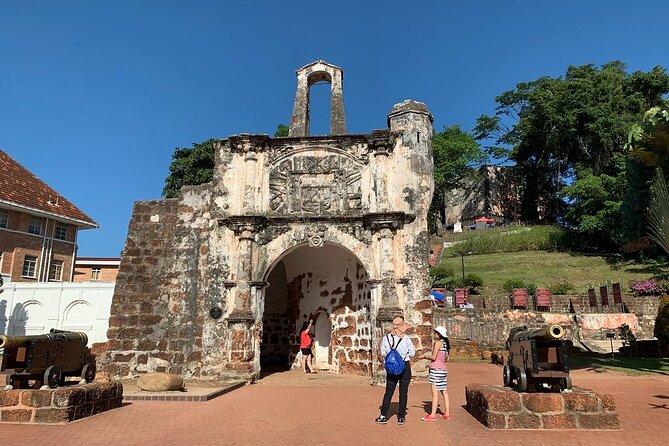
You’ll reach A Famosa Fort, one of the most recognizable remnants of European architecture in Asia. The name comes from Portuguese meaning The Famous, and the tour highlights that it’s among the oldest surviving European structures in the region.
Time here is brief, but it matters because you’re looking at what history spared. The tour notes that the only remnant is a tiny gate called the Porta de Santiago (noting the old fort’s diminished survival). That tiny scale can be a little surprising after you’ve seen the large civic spaces in Dutch Square—yet it’s exactly why this stop is memorable. You’re not just looking at a building; you’re looking at survival.
Practical tip: if you enjoy photography, use this stop to reset your camera settings. Gates and stone textures can look great in softer light, and you’ll likely be walking from sun to shade all day.



Houses of worship everywhere: Cheng Hoon Teng, Kampung Kling, Sri Poyatha
One of my favorite parts of Malacca is that it doesn’t feel like one culture in one zone. This tour stitches the religious and cultural map together in a way that’s easy to follow.
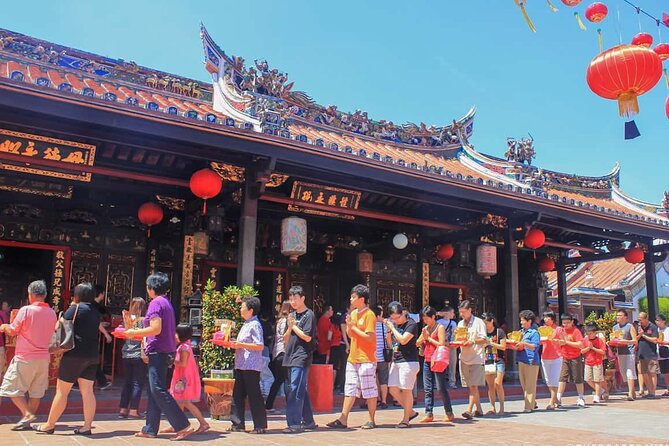
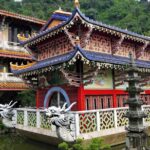
- Cheng Hoon Teng Temple is included as a major historical Chinese temple site, noted as the finest of Chinese temples in Malaysia and recognized for outstanding architecture.
- Kampung Kling Mosque is known for a minaret styled like a Chinese pagoda, which is a neat detail that shows how communities influenced each other over time.
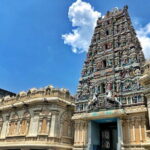
- Sri Pogyatha Vinoyagar Moorthi Temple is presented as the oldest existing Hindu temple in Malaysia and one of the oldest functioning Hindu temples in Maritime Southeast Asia.
Each stop is around 15 minutes. That’s enough time to see the main features, notice the architecture, and understand how Malacca’s identity isn’t single-track. You’re essentially watching how different communities shaped the city in parallel.
Small caution: dress respectfully at all religious stops. The tour doesn’t spell out clothing rules, but it’s always a good idea when you’re visiting temples and mosques.
Jonker Street walk: snacks, souvenirs, and choosing your pace
This is where Malacca becomes fun in a modern, street-level way. You get time at Jonker Street—also called Jonker Walk—described as the main street of Chinatown. It’s known for shops selling clothes, antiques, and souvenirs, and it also acts as a food hub.
You’ll spend about 30 minutes here, which means you should pick your priorities before you arrive:
- If you want snacks, go first and don’t wait until the end.
- If you want souvenirs, scan quickly, then commit to a few items rather than trying to look at everything.
The tour specifically calls out tasting local food like Asam Laksa and Cendol. Those are crowd-pleasers, and this is exactly the kind of place where you’ll see why people plan their Malacca day around the street foods.
How the time feels: 30 minutes is enough to get your bearings and do one loop with a snack, but it’s not enough for deep bargain-hunting. If you fall in love with one shop, you might need to compromise on stopping elsewhere.
Malacca River and the Straits-of-Malacca atmosphere
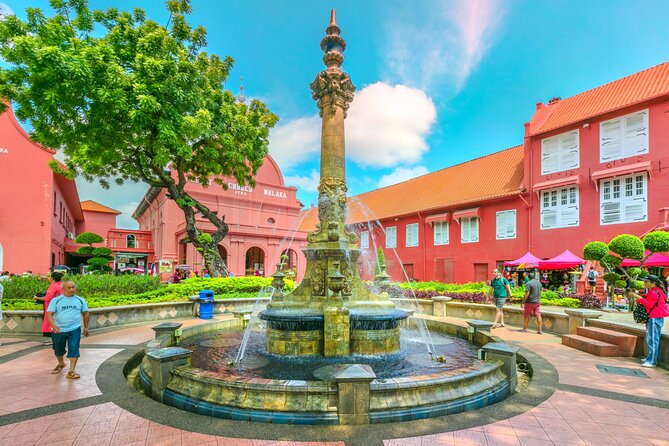
After Jonker Street, the itinerary moves to the Malacca River (Sungai Melaka) area. It’s described as a vital trade route during the heyday of the Malacca Sultanate in the 15th century. Even if you only get around 15 minutes here, you’ll get the sense that the river shaped where markets, communities, and wealth concentrated.
There’s also a bit of a “choose-your-own-feel” vibe described around a colorful square by the Straits of Malacca—places where you’ll find a mix of locals and tourists eating and hanging out. That’s part of what makes the day work: you’re not only in landmark photo spots. You also get a taste of the city’s everyday social energy.
If you’re the kind of person who likes to pause and watch life happen, use the river portion to do that. If you’re more structured, use it as your transition moment before heading back.
Lunch, mineral water, and what you’re paying for
This tour includes a local lunch and mineral water. In other words, you’re not forced to spend your whole day budgeting for food. The itinerary also highlights trying Asam Laksa and Cendol, which usually means you’ll have at least a couple of local tastes built into the experience rather than just watching other people eat.
A practical way to think about lunch: included meals reduce decision fatigue. You spend your mental energy on the sights instead of asking yourself where to eat next.
One small note: anything beyond the included lunch is up to you. Jonker Street has lots of food options, and personal spending can add up quickly if you treat it like an all-you-can-try tasting menu.
Price and value: what $89 really covers on this kind of day
At $89 per person, this isn’t a cheap casual outing—yet it’s also not trying to be a luxury private charter either. The value comes from stacking several things together:
- hotel pickup and drop-off
- air-conditioned transport for the full day
- private transportation
- local lunch plus mineral water
- a tight, pre-planned route that includes multiple major landmarks
If you tried to replicate this alone, you’d likely spend time coordinating transport across sites, and you’d still need to figure out an order that makes sense. Here, the order is already built around Malacca’s key layers: Dutch civic core, European church sites, A Famosa, then the religious sites, finishing in Jonker Street and the river area.
The tour also notes free admission for the listed stops, which helps your budget feel predictable.
Where the price won’t feel like value: if you hate walking, or if you want long, slow visits inside every building, this format may feel too compressed.
The human touch: when your driver matches your interests
One of the strongest signals from past experiences is that the driver experience matters here, not just the vehicle. A past review praised a Tamil driver for being funny, intelligent, and attentive—someone who could talk with you and adjust to what you were interested in.
That’s more than entertainment. In a day trip like this, a good driver (and guide in spirit) can help you notice small details you’d otherwise miss—like why certain buildings belong to Portuguese or Dutch chapters, or what to pay attention to during short stops.
So if you like a bit of conversation and guidance, that’s a real plus on this itinerary.
Who should book this Malacca UNESCO day trip
I’d point this tour toward a few types of visitors:
- You want a first visit to Malacca without researching every stop.
- You like history, but you also like having a plan that gets you fed and back to Kuala Lumpur.
- You want a manageable group size (max 15) and a relaxed day with a driver who pays attention.
It may not fit if:
- You need lots of free time in each neighborhood.
- You’re hoping for a museum-heavy, slow-paced experience rather than a landmark-to-landmark circuit.
- You’re very sensitive to walking at midday heat.
Should you book? A simple decision guide
Book it if you want a clean, efficient day that hits Malacca’s major identity points: Portuguese/Dutch/colonial landmarks, the multi-faith architecture, and the Jonker Street food-and-shopping scene. The included lunch, mineral water, and pickup/drop-off make it feel practical rather than “just a sightseeing bus.”
Skip it or choose a slower alternative if you know you get frustrated by short stops. This itinerary works best when you treat each stop like a chance to see the key features, then move on.
FAQ
FAQ
What time does the Malacca day trip start?
The tour starts at 8:00 am.
How long is the tour?
It runs about 8 hours total, including travel time.
Is hotel pickup and drop-off included?
Yes. Hotel pickup and drop-off are included, and the activity ends back at the meeting point.
Where is the meeting point in Kuala Lumpur?
The start point is MATIC109, Jln Ampang, Kuala Lumpur, 50450.
What’s included in the price?
The tour includes air-conditioned vehicle/transport, private transportation, local lunch, and mineral water.
Is admission included for the listed sights?
The listed stops show free admission tickets.
How many people are in a group?
The tour has a maximum of 15 travelers.
What vehicle will I travel in?
For 1–3 people it’s typically a car, and for 4–15 people it’s typically a van.
Can I get a refund if I cancel?
Yes, free cancellation is allowed if you cancel up to 24 hours in advance for a full refund.