REVIEW · WARSAW
Jewish Heritage and Holocaust Memorial Tour of the Former Ghetto
Book on Viator →Operated by Orange Umbrella Free Tour · Bookable on Viator
Street corners hold heavy stories in Warsaw. This 2.5-hour former ghetto walking tour strings together key Jewish heritage and Holocaust memorial stops from Plac Zamkowy to Umschlagplatz, using the city itself to give you context that’s more than facts on a page.
I also like the way guides such as Magda bring calm, clear explanations to painful subjects, and how Max keeps things engaging with lots of information. The one caution: if you’re expecting a broader picture at every stop, a guide who stays tightly focused can leave you wanting a wider survey of events.
In This Review
- Key highlights you will actually feel on the walk
- Why the route starts at Plac Zamkowy and Sigismund’s Column
- Castle Square context: medieval Jewish Warsaw before wartime sites
- Krasinski Palace: baroque power and protection
- Warsaw Ghetto stop: seeing the traces of Nalewki street
- POLIN Museum memorial zone: the Monument to the Ghetto Heroes
- Mordechaja Anielewicza and the bunker memorial area
- Umschlagplatz: deportation memorial and the last surviving prewar buildings
- Price and what $19.22 gets you in real terms
- Group size, pace, and why they matter
- Meeting point details that can save you time
- The biggest benefit: empathetic guiding that makes space understandable
- A potential drawback: when the focus narrows
- Who should book this tour (and who might want a different format)
- Should you book the Jewish Heritage and Holocaust memorial walk?
- FAQ
- Where does the tour start?
- What time does the tour begin?
- How long is the walking tour?
- How much does it cost?
- Is the tour offered in English?
- Are tickets required for the stops?
- What’s included in the price?
- Where does the tour end?
- What’s the group size limit?
- Can I cancel for a full refund?
Key highlights you will actually feel on the walk
- A route built for orientation: you start at Sigismund’s Column and end at Umschlagplatz, so the story moves forward as the streets do.
- Multiple layers of Warsaw Jewish life: medieval Jewish Warsaw comes first, then wartime space, then memorials.
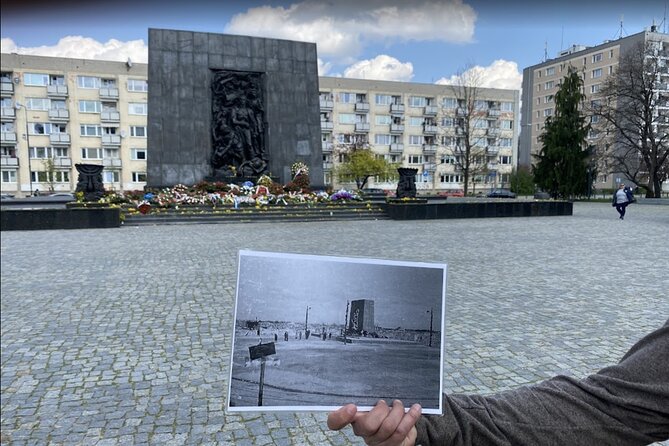
- Memorials you can see right away: Monument to the Ghetto Heroes and the deportation memorial are right in your path.
- Historical specificity at the sites: the Anielewicz Bunker area connects directly to the Jewish Combat Organization headquarters.
- A short, workable time window: about 2 hours 30 minutes, with roughly 20 minutes at each stop.
- Small-ish group size: maximum 25 people keeps questions possible.
Why the route starts at Plac Zamkowy and Sigismund’s Column
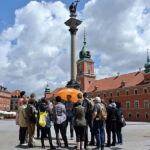
This tour begins at Sigismund’s Column, right in the heart of Warsaw at Plac Zamkowy. That matters because it gives you a clean way to orient yourself before the story turns toward the ghetto and the Holocaust memorial landscape.
At the start, the guide talks about migrations of medieval Jews and the nearby medieval Warsaw Jewish quarter. Even if you only know Warsaw from postcards, this opening helps you understand that Jewish history here did not begin with World War II. You’re shown how earlier Jewish life was shaped by where people lived and how cities grew.
And this is one of the best reasons to do a guided walk instead of just reading plaques. The guide can connect the dots between place names you’ll keep seeing later, and it makes your eyes “know where to look.”
You can also read our reviews of more historical tours in Warsaw


Castle Square context: medieval Jewish Warsaw before wartime sites
From the start point, you get an early foundation for what you’re about to see. The stop at Castle Square (Plac Zamkowy) focuses on the medieval Jewish quarter that was situated nearby and how Jewish communities moved through time.
This isn’t filler. It changes how you experience the next stops. When you walk through a former ghetto area, it’s easy to think only in terms of tragedy and memorials. That opening gives you a baseline of community life and settlement—so the later memorial spaces land heavier, but also make more sense.
Expect this first segment to be about 20 minutes, with a quick pace meant to set context rather than overload you.
Krasinski Palace: baroque power and protection
Next up is Krasinski Palace, one of Warsaw’s finest baroque aristocratic palaces, set in a park setting. The key idea here is that the Krasinski family are described as protectors of Warsaw’s Jews.
It’s a smart move to include a palace and not only memorial sites. You get a reminder that protection, influence, and social position were part of how communities survived and navigated risk. Even though the tour is centered on Jewish heritage and Holocaust remembrance, this stop keeps the story from flattening into a single emotional tone.
It’s also a good moment to slow down. The palace and its park environment gives your brain a short rest before you move back into the tighter, more painful geography of the ghetto.
Warsaw Ghetto stop: seeing the traces of Nalewki street
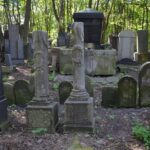
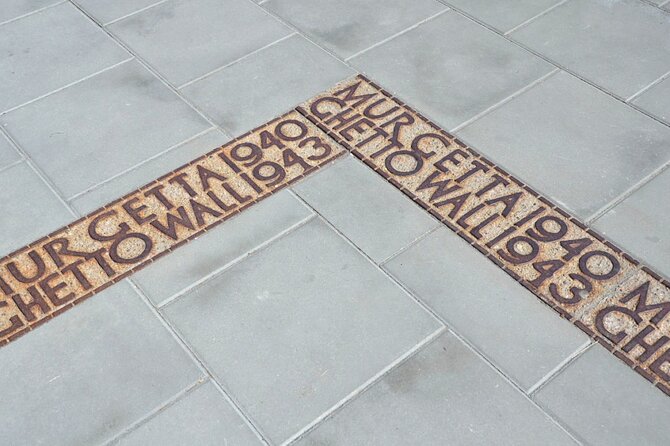
Then the tour shifts into what you came for: the Warsaw Ghetto area. Here you’re looking at relic traces connected to the former Nalewki street, including visible traces of the main Ghetto Gate and Ghetto Wall.
This is where the “walking tour” format becomes more than convenient. You’re not only hearing about a sealed-off area—you’re standing near the physical remnants and getting guided attention on what those remnants mean.
A helpful mental frame: treat this stop like a guided interpretation of a city map. You’re learning how to read the space, even when much of what once stood is gone.
This segment also runs about 20 minutes, which is useful given how emotionally weighty this theme is.
POLIN Museum memorial zone: the Monument to the Ghetto Heroes
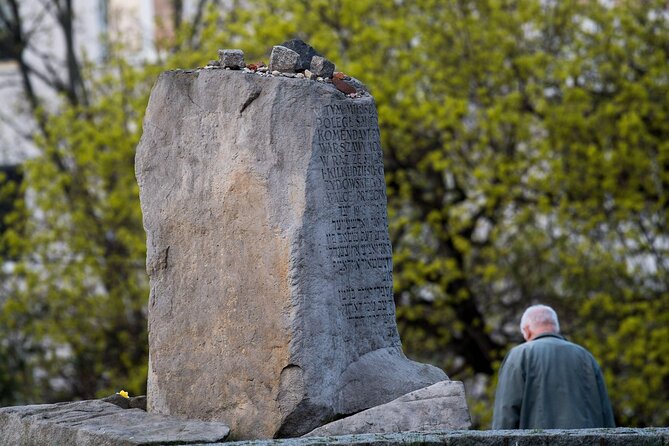
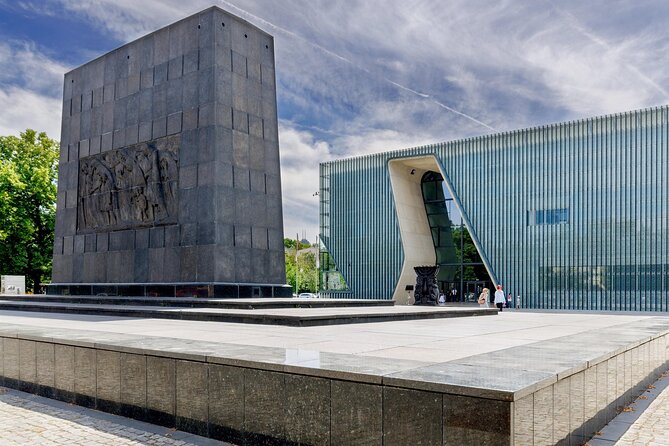
The next stop is at the memorial area in front of the POLIN Muzeum Historii Żydow Polskich (POLIN Museum). Right outside, you see the famous Monument to the Ghetto Heroes.
Even if you never go inside the museum, this outdoor memorial zone is a strong point in the walking route. It gives you a clear “memory anchor” before you move into a more specific site tied to the uprising.
For many people, this is the emotional turning point. You go from traces in the street to a dedicated remembrance space, and the guide can help you connect that shift: from what survived in the urban fabric to what was intentionally built to ensure the story is not forgotten.
This stop is also about 20 minutes and is part of why the tour flows well. It prevents the day from feeling random—there’s a logic to when remembrance is offered and when you move on.


Mordechaja Anielewicza and the bunker memorial area
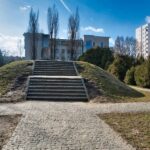
After POLIN, the tour moves to Mordechaja Anielewicza, near Miła street. This stop focuses on the Anielewicz Bunker Memorial Area, described as the headquarters of the Jewish Combat Organization during the Uprising in the Ghetto.
This is one of the most specific and powerful stops on the route, because it links a place to a named leadership and a defined resistance structure. The name of the person and the organization matter, not just the general idea of resistance.
If your goal is to understand the ghetto story in concrete terms—who organized, what headquarters meant, and how events unfolded spatially—this is the stop to watch for. Listen for how the guide ties the location to the uprising, and how they explain why this site is memorialized the way it is.
Again, this is about 20 minutes, so you’ll get enough to orient yourself without having to feel like you’re rushing through something important.
Umschlagplatz: deportation memorial and the last surviving prewar buildings
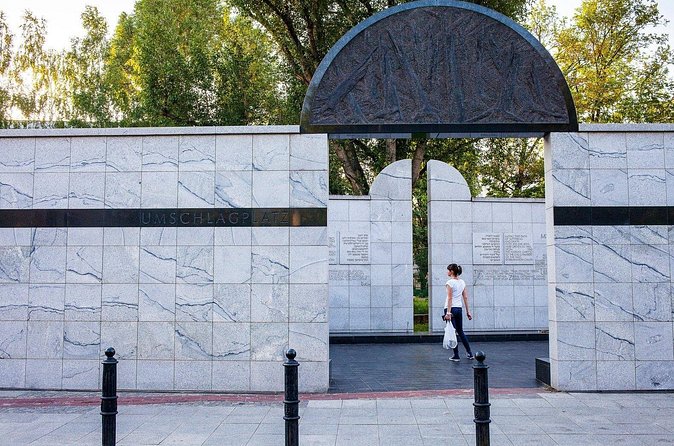
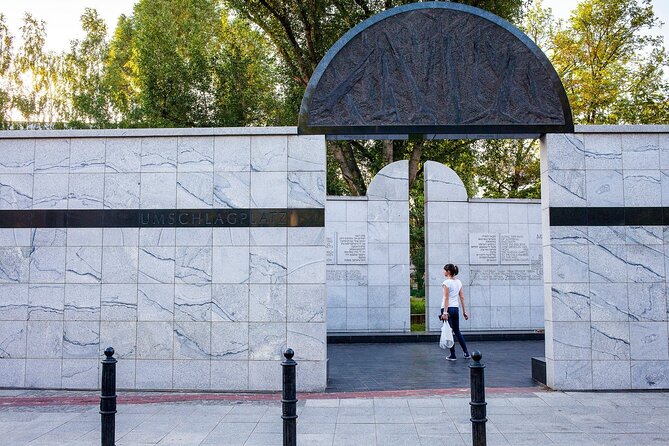
The tour ends at Umschlagplatz, the memorial of the deportation area. This is where you see the only three prewar buildings that survived in the Big Ghetto.
Ending here is not accidental. It takes you from the ghetto’s internal story and resistance sites to the deportation space, which changes the emphasis of what you’re carrying. You leave with a clearer sense of how the narrative pivots from life in confinement, to organized resistance, to mass deportation.
Practically, this is a solid finish point because you’re also described as being about two blocks away from the POLIN Museum. If you want to continue independently, this helps you keep your momentum without having to travel across town.
Price and what $19.22 gets you in real terms
The price listed is $19.22 per person. For Warsaw, that’s the kind of price that can feel almost too low for a serious walking tour—until you notice what’s included.
You get:
- a professional local guide service
- a free tourist map of Warsaw
- a route that includes multiple memorial and heritage stops where admission tickets are noted as free
The value here isn’t just the sites. It’s the interpretation. Guides bring structure: they tell you what to pay attention to and how to connect one stop to the next. One review emphasized how guides like Magda explained difficult material with clarity and empathy. Another praised Max for staying engaging and information-heavy. That kind of guide skill is usually what makes a low-cost tour feel worthwhile.
One note for your expectations: this is not a museum ticket that replaces the POLIN building experience. Think of it as your guided map into the story, and then use additional time if you want to go deeper.
Group size, pace, and why they matter
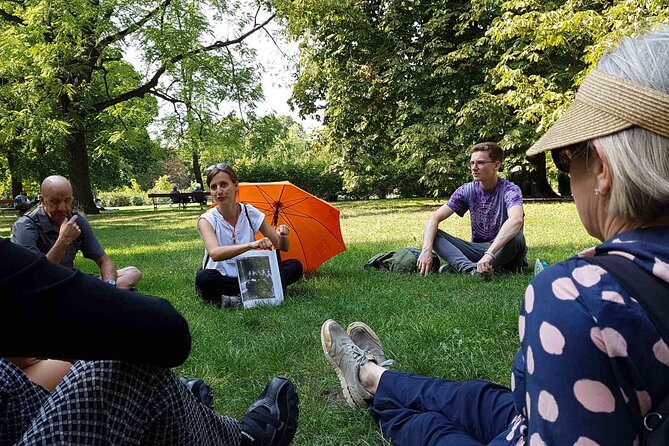
The tour has a maximum of 25 travelers. That’s big enough to be lively, but small enough that you’re not just disappearing into a crowd. With a topic like this, you’ll appreciate the ability to ask a question or at least hear follow-ups when the group pauses at a stop.
The duration is about 2 hours 30 minutes, and each stop is roughly 20 minutes. That timing matters because it prevents the tour from dragging on when your emotional battery is low. It also means you can fit it into a day with other plans.
The tour is offered in English, and confirmation is received at booking. It also uses a mobile ticket, which is convenient for getting started quickly.
Meeting point details that can save you time
Start is at 1:30 pm. The main meeting point is at Sigismund’s Column, Plac Zamkowy.
There’s also an important contingency: if there’s a mass event like a parade, protest, or concert at the usual meeting point, the tour starts from beneath a red-brick medieval defensive wall about 100 meters north of the Column. That detail is worth taking seriously, because it helps you avoid a frustrating late scramble if the square is busy.
For navigation, the tour runs near public transportation, and service animals are allowed. Most people can participate, but it is still a walking tour, so bring practical shoes and plan for city streets.
The biggest benefit: empathetic guiding that makes space understandable
What I think is most praised here is not just the locations. It’s the way the information is delivered.
Guides like Magda are described as helpful and knowledgeable, explaining things with clarity and empathy. Another guide, Max, was praised for being engaging with lots of information and for focusing on Jewish history in a way that matched what people came to learn.
That focus is key because Jewish heritage and Holocaust memorials can feel overwhelming. The best-guided tours do two things at once:
1) they give you context and names so you’re not lost
2) they keep the emotional tone respectful and clear
If your guide does that, the route feels meaningful rather than just serious.
A potential drawback: when the focus narrows
Not every tour experience lands the same way. One review described a guide as single-minded, leaning heavily on facts from a book and not offering the full picture of history across all aspects.
So here’s a practical consideration. If you want broad, multi-angle coverage—religion, culture, political history, wartime policy, and postwar memory all in one pass—then this may not give you everything you hoped for. You may still leave informed, but you might want to add independent reading or museum time.
In other words: go in expecting a focused storyline anchored to specific sites. That’s exactly what keeps the tour short and workable.
Who should book this tour (and who might want a different format)
This walking tour is a great fit if you:
- want a guided sense of former ghetto geography
- like learning through place-based stops rather than only through museum walls
- want an English tour with a professional local guide
- have limited time and still want a thoughtful route that ends at a major memorial
You might consider a different approach if you:
- need a more general overview that covers a wider range of Jewish history beyond the sites on this route
- expect every guide to match your preferred teaching style
Should you book the Jewish Heritage and Holocaust memorial walk?
I’d book it if you want your Warsaw day to feel structured and meaningful, not random. With stops like POLIN’s Monument to the Ghetto Heroes area, the Anielewicz Bunker Memorial Area, and the deportation memorial at Umschlagplatz, you get a coherent path that moves from heritage context to wartime space to remembrance.
Also, the price-to-guiding value is strong: for $19.22, you’re paying for a professional local guide plus a free tourist map, while the stops themselves are described as free-entry.
My final advice: go in with a focused mindset. This is a site-based memorial walk, not a complete textbook tour. If you want that kind of clarity and you appreciate guides who explain with empathy—this is the kind of tour that makes the city’s past feel readable.
FAQ
Where does the tour start?
It starts at Sigismund’s Column (Plac Zamkowy), 00-001 Warszawa, Poland.
What time does the tour begin?
The start time is 1:30 pm.
How long is the walking tour?
The duration is about 2 hours 30 minutes.
How much does it cost?
The price listed is $19.22 per person.
Is the tour offered in English?
Yes, it is offered in English.
Are tickets required for the stops?
The information provided says the admission ticket is free for the stops listed.
What’s included in the price?
It includes professional local guide service and a free tourist map of Warsaw.
Where does the tour end?
It ends at the Umschlagplatz Monument, Stawki 10, 00-178 Warszawa, Poland, which is about two blocks away from the POLIN Museum.
What’s the group size limit?
There is a maximum of 25 travelers.
Can I cancel for a full refund?
Yes, you can cancel for a full refund if you cancel up to 24 hours in advance of the experience start time.