REVIEW · TOKYO
Tokyo: Locals Secret Shrine Tour // Walk with a Guide
Book on Viator →Operated by Sunrise Adventure · Bookable on Viator
Shrines, explained like a city secret. This 2-hour Tokyo experience focuses on how locals visit shrines, with stories behind several respected places and practical guidance on worship habits. You’ll move through the Ochanomizu–Akihabara–Kanda area and end near Ueno, so it’s easy to fold into a bigger day.
I love the small group size (max 4), because it feels personal without getting fussy. I also like that guide Lakki (with Mari appearing as part of the team) shares clear cultural context, including shrine etiquette you can actually use afterward.
One possible drawback: you’ll be doing a decent amount of walking and you need moderate physical fitness, and you should know Toshogu’s inner grounds require an extra ticket even though several stops are free.
In This Review
- Key things you’ll remember
- Why this shrine walk feels local, not tour-bus Japanese
- Price and what you actually get for $42.44
- Meet-up at Ochanomizu and how the 2-hour route flows
- Yushima Seido: Confucian roots in Tokyo shrine culture
- Kanda Myojin: Deities, festivals, and community protection
- Yushima Tenjin: academic success and the season plum blossoms
- Shinobazu-no-ike Benten-do: music and knowledge by the pond
- Ueno Toshogu: the ticket detail that changes your visit
- Shrine etiquette lessons that make the rest of your trip easier
- Small-group guiding: why Lakki and Mari get mentioned
- Who should book this tour, and who should pass
- Should you book this shrine walk? My bottom-line advice
- FAQ
- How long is the Tokyo locals secret shrine tour?
- How much does the tour cost?
- What’s included in the price?
- What’s not included?
- Is the ticket mobile?
- Where do you meet for the tour?
- Where does the tour end?
- What’s the group size?
- Is the tour suitable for everyone physically?
- What’s the weather policy?
- FAQ
- How does free cancellation work for this tour?
- What time of year or day is best for this tour?
- Do I need to buy anything in advance for shrine entries?
Key things you’ll remember
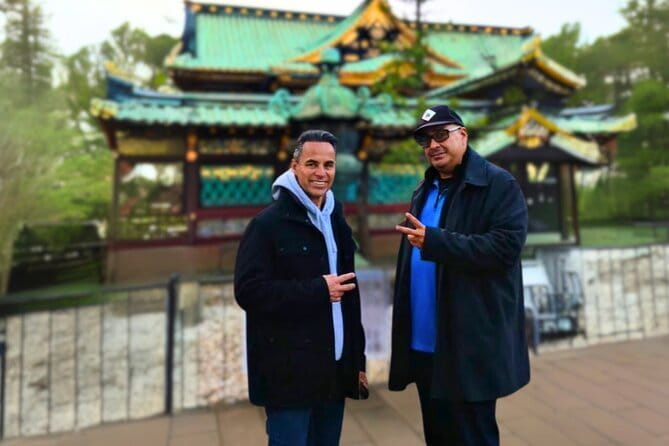
- Max 4 travelers for a more human pace and questions you can actually ask
- Guide-led shrine etiquette so you know how to behave at each stop
- Ochanomizu–Kanda–Ueno route that strings together famous and local-feeling sites
- Free admissions for most stops, plus a heads-up that Toshogu inner grounds cost extra
- Photo opportunities built into a thoughtful walking route
- Mobile ticket for easier check-in on the day
Why this shrine walk feels local, not tour-bus Japanese
Tokyo has a lot of shrines, but most people only see them as photo backdrops. This kind of tour helps you read what you’re looking at. Instead of treating each place as a checklist, you learn why people visit—what they ask for, how they show respect, and how worship fits into daily life.
The format is also a good match for first-time visitors. You get an English-speaking guide, and the stops are close enough to feel like you’re walking through real neighborhoods around Ochanomizu, Akihabara, Kanda, and Ueno. That matters, because shrine culture in Tokyo isn’t just one district—it’s woven through the city.
You can also read our reviews of more walking tours in Tokyo
Price and what you actually get for $42.44
At $42.44 per person for about 2 hours, you’re paying for more than entrance to temples and shrines. You’re paying for an English-speaking guide, cultural stories, etiquette coaching, and local tips that help you visit other shrines on your own later.
Most of the itinerary is built around sites with free admission, which helps your value math. There is one catch: Ueno Toshogu’s inner grounds need a ticket. Your tour won’t ignore it, but you should budget for that extra add-on if you want to see what’s inside. Transportation costs aren’t included, so you’ll cover your own train/subway rides.
For me, the best value angle is the guide component. Reviews highlight that Lakki (and the team around him, including Mari) goes above and beyond—especially when plans wobble or someone needs a hand. That’s the kind of value you can’t get from a self-guided audio tour.
Meet-up at Ochanomizu and how the 2-hour route flows
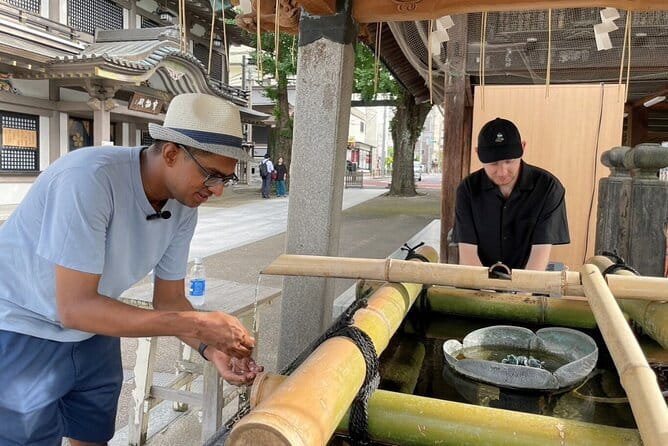
You start at Starbucks Coffee in Ochanomizu Saint Clair (4-chōme-3 Kanda Surugadai, Chiyoda City). It’s a straightforward meeting point, and it helps you avoid the classic Tokyo problem: wandering around a big station area with no clear landmark.
The tour ends at Ueno Station (7 Chome-1 Ueno, Taito City). That’s a smart finish. You’re not stuck back-tracking, and you can pivot to Ueno area plans right away.
Duration is about 2 hours, and the activity level is listed as moderate fitness. Translation: wear comfortable shoes and expect steady walking. This is not a sit-and-listen lecture tour.
Small-group size (max 4) also changes the experience. You’re not competing with a big crowd for attention, and you can get clarifications about shrine behavior and what certain offerings or rituals mean.
Yushima Seido: Confucian roots in Tokyo shrine culture
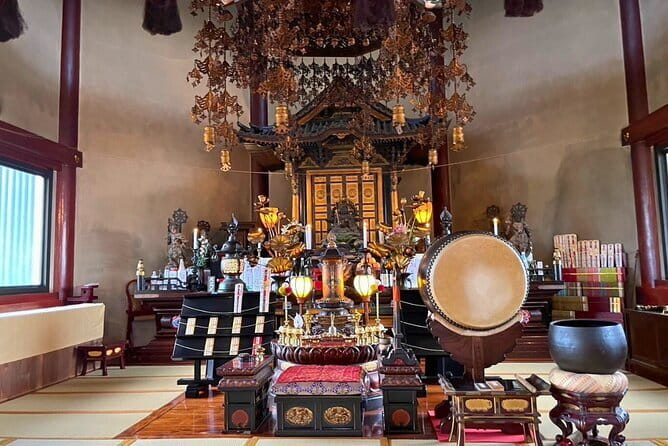
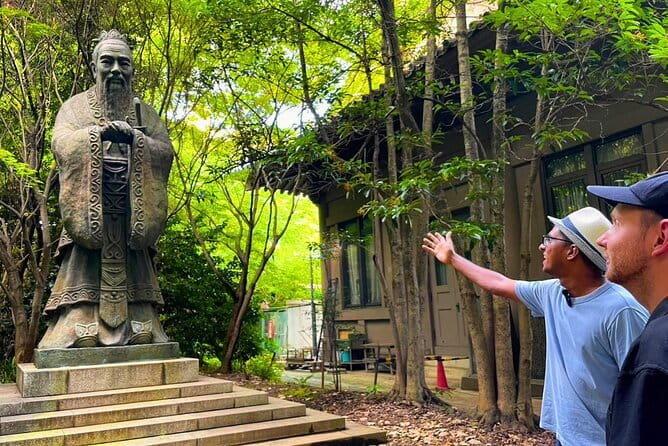
The first shrine stop brings you to Yushima Seido Shrine, where you’ll learn how neo-Confucian ideas from China helped shape modern Japanese society. This is a useful angle because it connects shrines to broader belief systems, not just legends and aesthetics.
What I like about starting here is that it gives you a framework. When you later visit other shrines, you’ll have an easier time understanding why people show up with specific hopes—academic success, protection, music/knowledge symbolism—and why certain shrines became closely tied to community life.
Kanda Myojin: Deities, festivals, and community protection
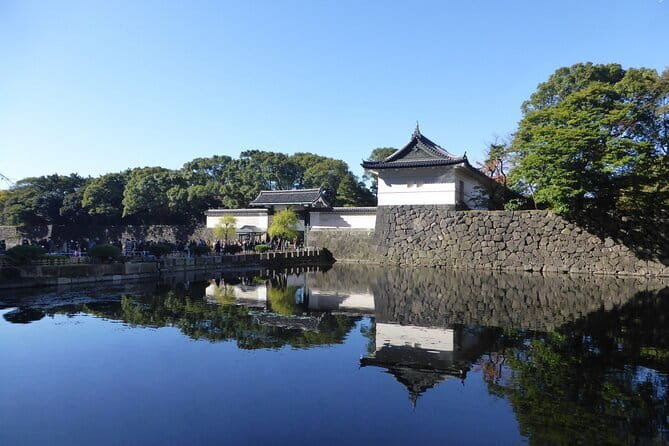
Next is Kanda Myojin Shrine, a lively stop tied to history, deities, and the energy of local festivals. The emphasis here is on what the shrine means to the neighborhood: protection and continuity, not just spectacle.
Even if you’ve never heard of Kanda Myojin before, you’ll leave knowing it’s more than a pretty building. It’s a living civic landmark, the kind of place that helps define a community’s sense of identity.
If you like your cultural context with a human scale, this is one of the best stops. You get story and meaning, not just dates.
You can also read our reviews of more guided tours in Tokyo
Yushima Tenjin: academic success and the season plum blossoms
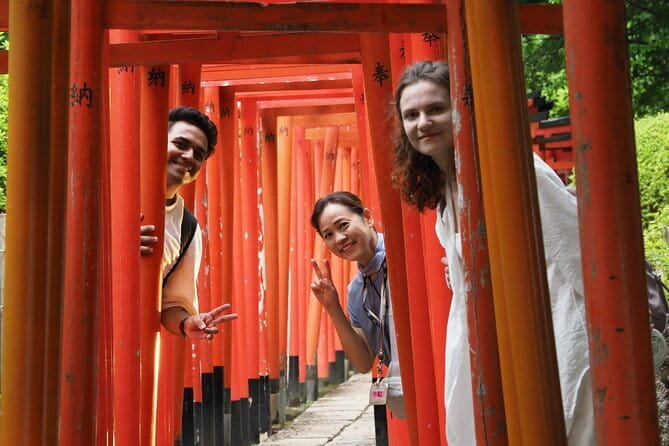
Yushima Tenjin Shrine shifts the mood toward education and achievement. The theme is academic success, and the tour also points out seasonal plum blossoms and why they matter culturally.
This stop is especially helpful if you’re traveling in a season when the plum blossoms are visible. Even if you don’t catch perfect timing, the shrine’s focus tells you something important: in Japan, spiritual practice often supports specific life goals, not just general luck.
You also get practical takeaway from the guide about how worship and respectful behavior work in real shrine visits. That’s where the tour earns its keep.
Shinobazu-no-ike Benten-do: music and knowledge by the pond
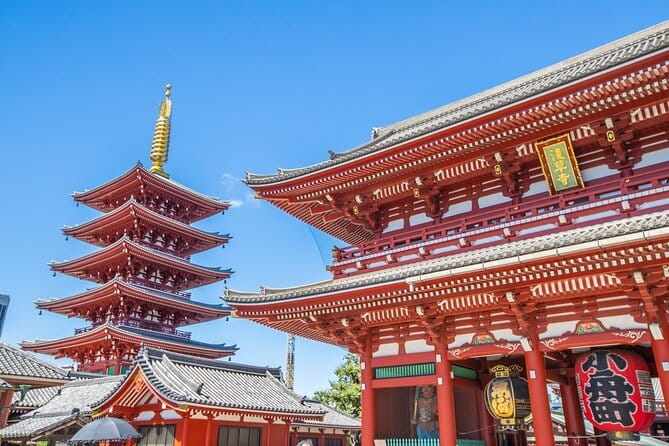
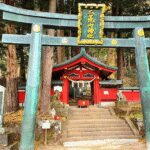
Then you move to Shinobazu-no-ike Benten-do, a peaceful shrine on a pond. It’s dedicated to Benzaiten, the goddess associated with music and knowledge.
What makes this stop feel special is the setting. A pond shrine naturally slows you down, and it matches the subject: learning, creativity, and things people work toward patiently.
For photographers, this stop is a good chance to get calmer compositions without feeling like you’re fighting crowds. For culture-minded visitors, it’s the moment when the tour’s themes start to feel connected: worship as support for what you care about.
Ueno Toshogu: the ticket detail that changes your visit
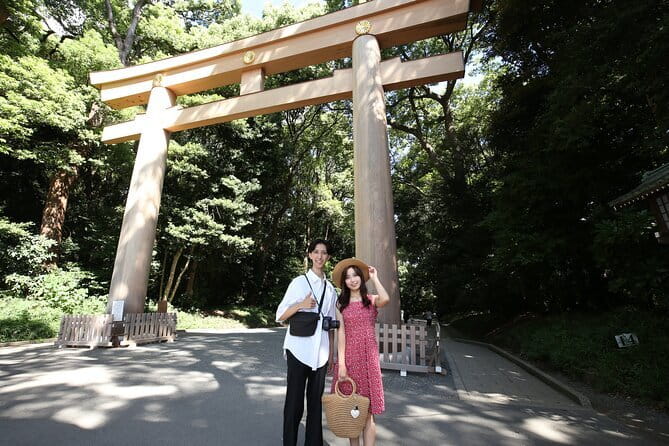
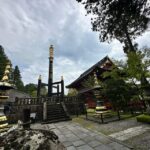
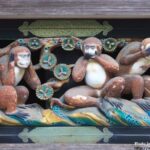
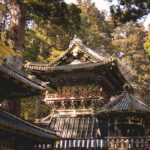
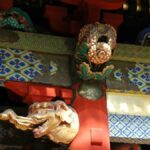
The tour finishes at Ueno Toshogu Shrine. You’ll admire its Edo-period significance, and the guide notes a crucial practical point: the inner grounds require a ticket, unlike free-entry stops you’ve already visited.
This is a big deal for planning, because you may be thinking you’ll see everything included in the tour price. You won’t be shortchanged, but you should treat the inner grounds as a separate choice: if you want that extra level of access, plan to purchase the ticket on the day.
Your tour also includes nearby exploration, so the time doesn’t evaporate even if you decide not to buy the inner-grounds ticket.
Shrine etiquette lessons that make the rest of your trip easier
One of the most praised parts of this experience is that your guide teaches proper etiquette for visiting a shrine. That can sound vague until you’ve actually tried visiting on your own and realized there’s a lot of unspoken behavior people pick up by watching.
When a guide explains what to do and why, it changes the whole trip. You’re not just taking photos—you’re participating in a respectful way, and you’re more likely to notice details you would otherwise skip.
Based on the way Lakki and the team are described, you’ll likely get clear, friendly explanations rather than a rigid script. And because it’s a small group, you can ask questions if something feels confusing.
Small-group guiding: why Lakki and Mari get mentioned
In the feedback, Lakki is repeatedly highlighted for passion and energy, and for turning history and culture into something you can follow in real time. Mari also appears as part of the team, and there are examples of them handling curveballs and still keeping the tour experience strong.
That “go above and beyond” theme shows up in a very practical way: when something goes wrong (like someone getting lost), they’re willing to help you get back on track. You also get the impression the guide team understands how stressful it can be to navigate Tokyo, especially around busy rail areas.
Even if your day goes smoothly, that attitude matters. It means you can relax and ask questions without feeling like you’re slowing the group down.
Who should book this tour, and who should pass
This tour is a strong fit if you:
- want practical shrine etiquette and local worship context
- prefer small groups over large crowds
- like history, but want it tied to what you can actually observe today
- plan to visit more shrines after this and want a mental framework
You might skip it if:
- you dislike walking for about 2 hours
- you need completely predictable admissions (since Toshogu inner grounds has an extra ticket)
- you’re only interested in the single most famous shrine sites and don’t care about the neighborhood-level, everyday meaning
Should you book this shrine walk? My bottom-line advice
If you’re planning a Tokyo trip and want something that feels authentic instead of generic, this is an easy yes. The price makes sense when you consider you’re paying for a guide-led explanation of worship behavior, plus a tight route that links Ochanomizu–Kanda–Ueno without wasting your day.
Just go in with two expectations: you’ll walk, and Toshogu’s inner grounds may cost extra. If you’re good with that, you’ll come away feeling like you understand shrines in Tokyo at street level—how locals see them, not just how they look in postcards.
FAQ
How long is the Tokyo locals secret shrine tour?
It lasts about 2 hours.
How much does the tour cost?
The price is $42.44 per person.
What’s included in the price?
You get an English-speaking guide, cultural insights, photo opportunities, and local tips. There are also free admissions for the stops that are free on the route.
What’s not included?
Transportation costs aren’t included. Also, Toshogu Shrine needs a ticket for the inner grounds (the tour explores nearby too).
Is the ticket mobile?
Yes, the tour uses a mobile ticket.
Where do you meet for the tour?
You meet at Starbucks Coffee – Ochanomizu Saint Clair, located at 4-chōme-3 Kanda Surugadai, Chiyoda City, Tokyo.
Where does the tour end?
The tour ends at Ueno Station, 7 Chome-1 Ueno, Taito City, Tokyo.
What’s the group size?
The maximum group size is 4 travelers.
Is the tour suitable for everyone physically?
It’s listed as needing a moderate physical fitness level.
What’s the weather policy?
The experience requires good weather. If it’s canceled due to poor weather, you’ll be offered a different date or a full refund.
FAQ
How does free cancellation work for this tour?
You can cancel up to 24 hours in advance for a full refund. If you cancel less than 24 hours before the start time, the amount you paid will not be refunded.
What time of year or day is best for this tour?
The information provided only notes that it requires good weather. If weather is questionable, choose dates where forecasts look more stable.
Do I need to buy anything in advance for shrine entries?
Most shrine/temple stops are free on the route, but you should plan for the possibility of buying a ticket for Toshogu Shrine’s inner grounds.