REVIEW · ATHENS
“Tour of Ancient Corinth:Follow in the footsteps of Apostle Paul”
Book on Viator →Operated by Greece Athens Taxi GAT · Bookable on Viator
Corinth feels bigger than its ruins. This private route follows the story path of the Apostle Paul connection, moving from the strategic Isthmus to the hilltop fortress of Akrokorinthos. I like the hotel pickup setup because you spend more time looking at ancient stones and less time organizing your day.
I also love the comfort layer: an air-conditioned Mercedes van, on-board WiFi, and quick stop pacing that suits a half-day. You get a driver who keeps things moving, with history explained during the ride and at each viewpoint.
One consideration: entrance is split. The Archaeological Museum of Corinth costs extra, and the driver isn’t a licensed museum guide inside sites, so you’ll rely on signage or arrange a licensed guide if you want that extra layer.
In This Review
- Key things to know before you go
- Why Corinth hits so hard for Paul-linked travelers
- Isthmus of Corinth: where the map became a weapon
- Ancient Corinth (Archaia Korinthos): reading a polis in layers
- The Corinth Museum stop: what to expect before you pay
- Apollo’s temple and market area: what survives says a lot
- Akrokorinthos (Acrocorinth): the 575m fortress and Paul’s setting
- The private driver setup: how it affects your actual day
- Transportation and timing: why 4 to 5 hours works well
- Price and value: is $204.50 a fair deal?
- Who this tour suits best
- Should you book the Ancient Corinth: Follow in the footsteps of Apostle Paul tour?
- FAQ
- What’s the duration of the Ancient Corinth tour?
- How much does the tour cost?
- Does the tour include hotel pickup?
- Is this a private tour?
- What language is used during the tour?
- Are entrance tickets included?
- How long do you spend at each main stop?
- What transportation is provided?
- Can the driver act as a licensed guide inside museums?
- Is free cancellation available?
Key things to know before you go
- Apostle Paul focus without rushing: the route is built around the links many visitors care about, not just a generic museum loop.
- Isthmus views with big-picture context: the Corinth Canal area and ancient wall history help you understand why this spot mattered.
- A private format that changes your pacing: you can linger at the places you care about most instead of following a group.
- The museum is a smart add-on: it covers periods from prehistoric through Byzantine, plus standout pieces like the Twin Kouroi from Tenea.
- Akrokorinthos is the real payoff: the 575m rock gives you that fortress-on-a-knife-edge feeling, with multiple sacred sites up there.
- Comfort is not an afterthought: A/C, WiFi, bottled water, and mobile chargers make the ride easy, especially in warm months.
Why Corinth hits so hard for Paul-linked travelers
If you’re interested in the Apostle Paul, Corinth is one of those places that makes the setting feel real. It’s not just ruins in the distance. It’s a geography story—mainland Greece meets the Peloponnese—and you can see how trade, power, and movement shaped daily life.
The biggest strength of this tour is the pairing of viewpoints. You’re not stuck only at the ancient city level, where everything is spread out and easy to miss. You also climb your perspective up at Akrokorinthos, the mountain fortress area. That shift matters. Standing above the landscape helps you understand how a city could be both connected and defended.
And because it’s private, you control the tempo. If you want more explanation at one stop—maybe the wall history at the Isthmus or the religious sites on the hill—you can ask for it on the spot. You’re not fighting a countdown clock tied to a coach schedule.
You can also read our reviews of more tours and experiences in Athens.

Isthmus of Corinth: where the map became a weapon
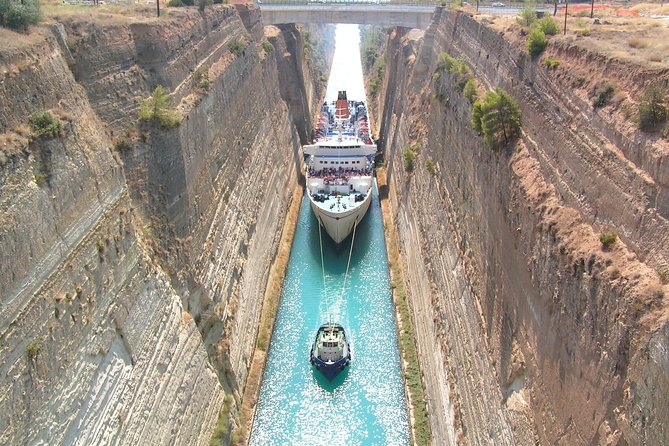
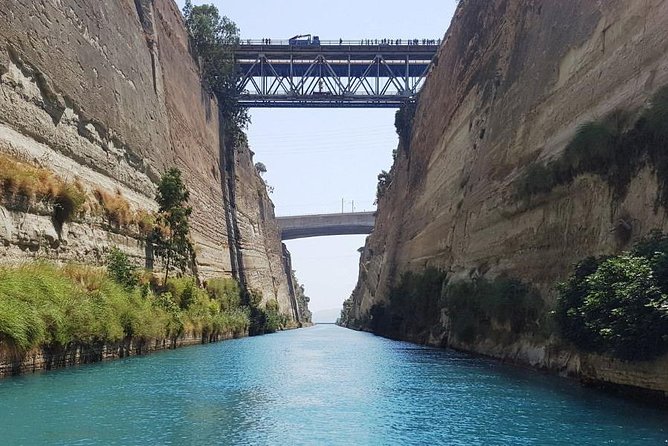
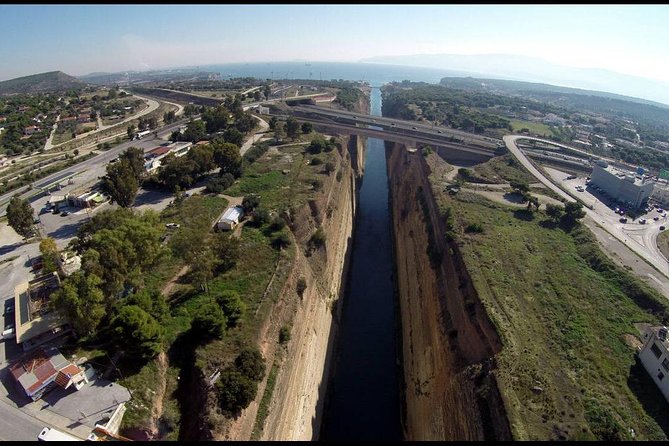
You start at the Isthmus of Corinth, the narrow strip linking Central Greece to the Peloponnese. The canal running through it (connecting the Saronic Gulf with the Gulf of Corinth) is the modern headline, but the ancient logic is what really grabs you.
Here’s the key idea: this narrow point was strategic in a way that turned into defenses over and over. In ancient times—by the end of the 5th century BC—there was already a wall built to control movement. That wall concept is preserved into the Byzantine period as the Hexamilion.
Even with only about 30 minutes at the stop, you get something useful: a sense of why armies cared, and why this corridor mattered for centuries. This is the kind of place where a couple of clear explanations can make you see the landscape differently for the rest of the day.
Practical tip: treat this stop as your orientation moment. Spend a few minutes looking across the terrain and imagining the old choke points. It makes the later ruins and hilltop fortress make more sense.
Ancient Corinth (Archaia Korinthos): reading a polis in layers
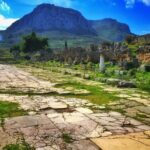
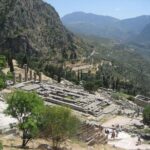
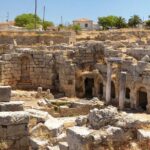
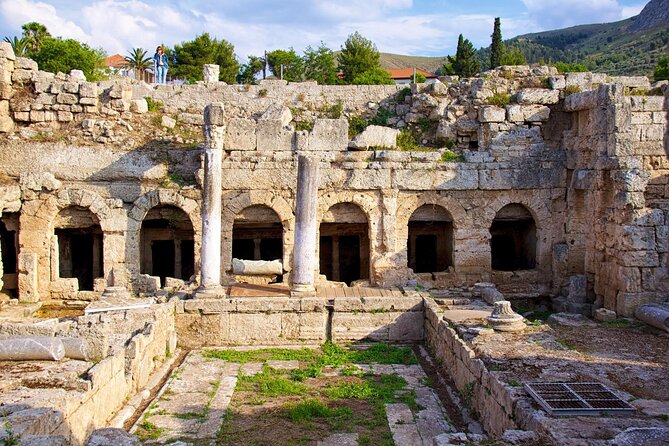
Next is Ancient Corinth, the city-state (polis) that sat on this isthmus route. The ancient city is about 5 kilometers northeast of modern Corinth, so you’re going from today’s geography to what the Romans and Greeks knew as a major hub.
You’ll feel the layout more when you learn the timeline in plain terms. Systematic archaeology began in 1896 with the American School of Classical Studies at Athens, and ongoing work by the Greek Ministry of Culture has added fresh details. That’s why you may see different types of remains and areas that feel like they were revealed in stages rather than all at once.
This stop is also built for focus: it’s only around 30 minutes, and it’s paced so you can take in the highlights without turning it into a marathon. That works well because the day still has more to offer later—especially the hilltop.
One drawback of a short stop: you can’t do everything here. If you’re the type who wants to study every inscription or architectural fragment, plan on doing extra reading with your museum visit or later on your own. The time is meant for big understanding, not deep study.
The Corinth Museum stop: what to expect before you pay
The Archaeological Museum of Ancient Corinth is about 1 hour, and it’s the only ticketed stop called out by a clear price. The museum itself was built in 1932 by the American School of Classical Studies that excavated in the area, and it’s been renovated to help you understand Corinth through the long sweep of time.
Here’s what you should know so you don’t walk in blind. The museum includes:
- Prehistoric collections
- Finds connected with the Asklepieion (the healing sanctuary area)
- Artifacts from Geometric times all the way to the Byzantine period
- A set of standout archaic sculptures: the Twin Kouroi from ancient Tenea, an important example of archaic plastic art
- The museum atrium, which helps you reorient after viewing the galleries
The museum is where many visitors get their mental map straight. It connects objects and contexts to the ruins you saw outside. If you skip it, Akrokorinthos can still be impressive, but you may feel less anchored in what you’re looking at.
Admission for this museum is not included, and the data lists it as €20.00 per person. If you add that to the tour price, you’re still getting a structured day with transportation and multiple key stops—but it’s worth treating museum entry as a budget item, not a surprise later.
Also note: the museum has specific closure dates (including major holidays). If your travel lines up with one of those, you may want to adjust the day plan.
Apollo’s temple and market area: what survives says a lot
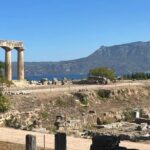
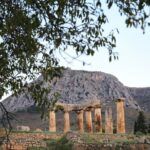
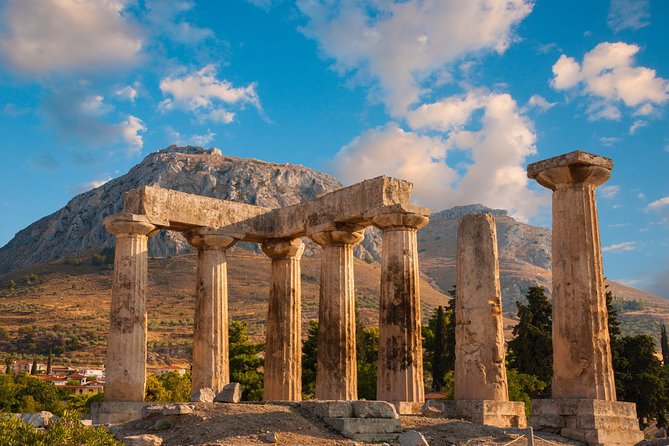
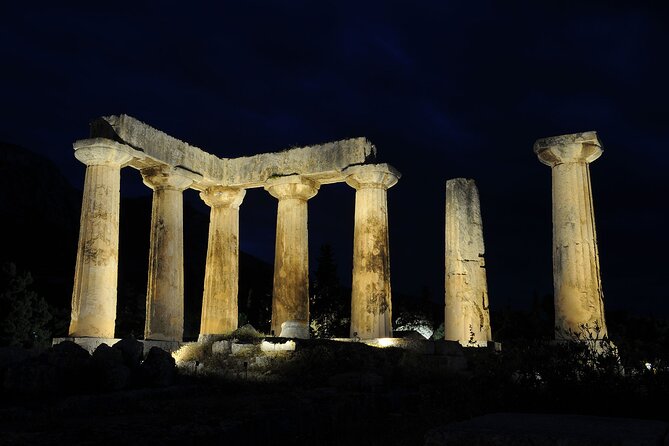
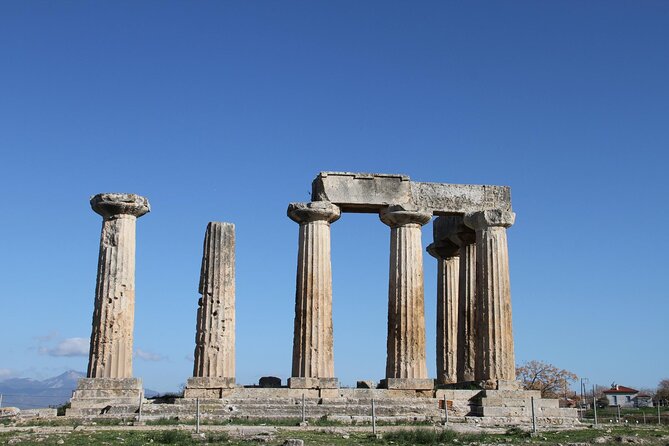
Near the ancient ruins area, you’ll see the remains connected with the Temple of Apollo. The description here is unusually concrete: it was built with 40 monolithic Dorian columns, and only seven remain over the ruins of the ancient market.
That’s a detail that helps you visualize the scale. Even if you’re not counting columns like an engineer, the idea is clear: this was built to impress, and it left a mark that still reads from a distance.
The original temple dates back between the early 7th and early 6th centuries BC. It was stone with bricks and wooden beams, and it carried a complex four-pitched roof with clay tiles. It’s also described as likely a simpler construction without external columns in that early form—one of those reminders that temples weren’t always the finished marble fantasies people expect.
If you like learning how a sacred site functioned over time, this stop is worth your attention. You’re not only looking at architecture; you’re seeing the imprint of worship culture woven into the city’s public life.
Akrokorinthos (Acrocorinth): the 575m fortress and Paul’s setting
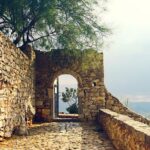
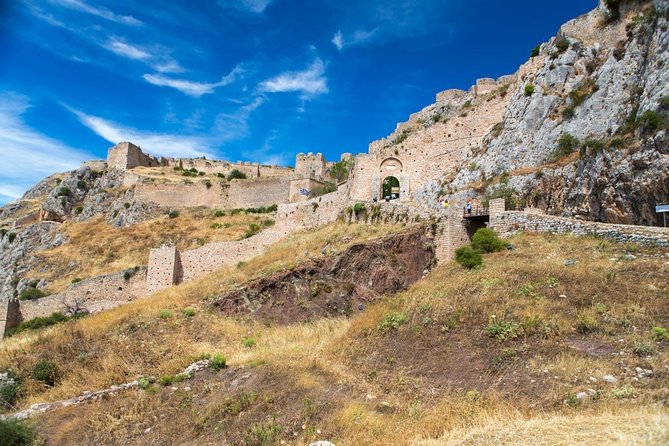
Then comes the star-level terrain: Akrokorinthos, also called Acrocorinth. It’s a steep rock around 575 meters high, and it served as a kind of acropolis and viewpoint for spotting raids, whether they came from central Greece or from the sea.
This is also where defense becomes personal. The hilltop had a secure water supply, and because of that, the fortress repeatedly acted as a last line of defense for southern Greece. When you’re up there, it’s hard not to understand why command positions mattered so much.
There’s a real payoff to visiting this spot with a knowledgeable driver who can narrate the logic of the place. Even if you spend only about an hour here, you get the sense of layered use—military, sacred, then later Christian meanings.
The site area includes a long list of points you can look for, including:
- An amphitheater
- Apostle Paul’s step
- A theater
- Sanctuary of Asclepius
- Sanctuary of Demeter and Koris
- Fountain Glavki
- Temple of Apollo
- Temple of Octavia
- Early Christian Basilicas, including the Basilica of the Skull and the Basilica of Lechai
- Pirine
- A conservatory
A short time here means you’ll have to choose what to focus on. If you care about the Paul-linked portion, aim your attention early so you don’t run out of time when you see something else interesting.
Practical note: wear shoes you trust on uneven ground. You’ll be outside, and you’ll be moving between vantage points. The tour provides bottled water, but you’ll still feel better if you manage your pace.
The private driver setup: how it affects your actual day
This tour is private, meaning it’s only your group. That matters more than it sounds. You’re not listening from the back of a crowd. You can ask questions in the car, then get pointed answers when you reach each stop.
The driver is English speaking and provides historical context, but there’s an important boundary: the driver is not licensed to accompany you in any site. In practice, that means you might not get a full museum-style walkthrough inside every building. For many people, that’s fine—you can read signage and enjoy the surroundings while the driver gives context outdoors and on the way.
If you want a licensed tour guide at the museum or other interior spaces, that can be requested depending on availability. If your style is very museum-focused, you might want to plan that ahead so you’re not hoping it’s possible at the last minute.
One more detail I think you’ll appreciate: the vehicle is a Mercedes-Benz with A/C, WiFi, bottled water, mobile chargers, and child seats. This is an easier day when you’re traveling in warm weather or doing pickup early.
In past operations, drivers like Spyros, Andreas, and Ted have been praised for balancing the right amount of information with a friendly conversation style. That’s not just comfort—it’s what keeps stops from turning into silent photo sessions.
Transportation and timing: why 4 to 5 hours works well
This experience is listed as 4 to 5 hours, with about 30 minutes at the Isthmus, 30 minutes at Ancient Corinth, around 1 hour at the Archaeological Museum, and about 1 hour at Akrokorinthos.
That time split tells you what kind of tour it is: a curated hit list designed to give you a coherent story arc. You’re not doing a slow, all-day crawl. You also aren’t being rushed through every place like a drive-by.
Because the vehicle includes A/C, WiFi, and bottled water, you can tolerate the travel time without feeling drained. Plus, pickup and drop-off are included for hotels and Airbnbs in Athens, and also at Port Piraeus. If you’re arriving by cruise, it’s simpler because you meet right outside your ship with a sign.
If you want to stretch the day, hourly extensions are available for a fee. That option is useful if you feel like Akrokorinthos needs more time, or if you want a second pass through the museum exhibits.
If you’re going in off season, you might also find it less crowded. Less crowd pressure makes it easier to stop, think, and take photos without constantly moving.
Price and value: is $204.50 a fair deal?
The tour price is $204.50 per person, and the value comes from what’s included, not just the number.
What you’re getting for that price:
- Private transportation in an air-conditioned vehicle
- Hotel/Airbnb/Port Piraeus pickup and drop-off without extra charge
- English-speaking driver with historical commentary
- Assistance purchasing skip-the-line tickets (you cover the ticket cost)
- Mobile chargers, WiFi, bottled water
What costs extra:
- The Archaeological Museum of Ancient Corinth is listed at €20.00 per person
- Some entrance tickets for other sites are marked as not included in the data
So the real budgeting trick is this: treat the museum entry as the main add-on you’ll likely pay. After that, the structure is the value—pickup logistics are handled, travel is comfortable, and you get a guided narrative without paying for a full licensed guide at every stop.
If you’re traveling in a group and can share costs, the private format can feel even better. If you’re solo, it’s still reasonable for a half-day that covers multiple big anchors in one plan.
One more smart approach: before you book, check whether your dates line up with museum closures. If you’re unlucky with a closure day, the tour may still run but the interior experience changes.
Who this tour suits best
This is a strong choice if:
- You care about the Apostle Paul connection and want that story anchored to place
- You’d rather have a calmer private format than a tight bus schedule
- You want comfort and efficient timing, with a driver who explains what you’re seeing
- You like mixing ruins outdoors with a museum stop for context
It may be less ideal if:
- You need a fully licensed guide inside each museum building to answer every question
- You want hours and hours of unstructured wandering with no fixed pacing
- You’re not interested in viewpoints and sacred-site areas at Akrokorinthos
If your travel style is photo-heavy, you’ll like this. If your travel style is theory-heavy, you’ll still like it, but consider requesting extra guidance for interiors if you want more detail.
Should you book the Ancient Corinth: Follow in the footsteps of Apostle Paul tour?
Yes—if you want an efficient, comfortable, private way to connect Corinth’s geography to its religious and civic life.
Book it if you value:
- Hotel pickup and a no-fuss start
- A half-day route that keeps the story moving from Isthmus to ruins to Akrokorinthos
- Comfort upgrades like A/C, WiFi, and mobile chargers
Think twice if:
- Your schedule includes a museum closure date
- You’re expecting the driver to act as a licensed guide inside every site without any extra arrangements
If you’re aiming to make Corinth feel like more than a list of ruins, this tour is set up to help you do that.
FAQ
What’s the duration of the Ancient Corinth tour?
The tour is approximately 4 to 5 hours.
How much does the tour cost?
The listed price is $204.50 per person.
Does the tour include hotel pickup?
Yes. Pickup and drop-off are included for hotels, Airbnbs, and Port Piraeus (without extra charge). Rafina Port/Laurio Port pickup and drop-off has an additional charge.
Is this a private tour?
Yes. It’s a private tour/activity with only your group.
What language is used during the tour?
The experience is offered in English.
Are entrance tickets included?
Not all of them. The Archaeological Museum of Ancient Corinth entrance fee is not included. Some other stops are also marked as not included, while the Isthmus of Corinth and Ancient Corinth have free admission tickets listed.
How long do you spend at each main stop?
The Isthmus of Corinth and Ancient Corinth are each about 30 minutes. The Archaeological Museum is about 1 hour, and Akrokorinthos is about 1 hour.
What transportation is provided?
You travel in a Mercedes-Benz vehicle with air-conditioning. It also includes WiFi, mobile chargers, and bottled water.
Can the driver act as a licensed guide inside museums?
No. The driver is not licensed to accompany you at any site or museum. A licensed tour guide can be requested depending on availability.
Is free cancellation available?
Yes. You can cancel up to 24 hours in advance for a full refund.