REVIEW · ATHENS
Ancient Agora and Acropolis Private Tour with Licensed Expert
Book on Viator →Operated by WARMPENGUIN · Bookable on Viator
Acropolis in 3 hours, without the usual mess. This private tour brings together UNESCO Acropolis sights and the Ancient Agora in one efficient morning-style loop, led by a licensed expert who keeps the story straight and the walking practical. It’s designed to feel personal, not like you’re being herded through tablets and selfies.
I like the smart start near Acropoli Metro Station, so you build context before you even hit the main slopes. I also love the question-and-answer feel; guides such as Mandio, Manto, Shorty, and Vicky have been called out for making the monuments click in a way an audio guide rarely does. One catch: this isn’t ideal if you need reduced-mobility accommodations, since there’s walking between the Acropolis and Agora.
In This Review
- Key highlights
- Why this Acropolis + Ancient Agora combo makes sense
- Finding your guide at Makrygianni 7 (and why the location helps)
- 80 minutes on the Acropolis: temples, theaters, and the Parthenon storyline
- Theatre of Dionysus: the oldest-stage feeling
- Propylaea and the approach: built for drama
- Key temples: Athena Nike, the Parthenon, Erechtheion
- Odeon of Herodes Atticus: a theater that never really went away
- New Acropolis Museum: where the myths get their props
- Ancient Agora in 80 minutes: the marketplace behind the monuments
- The standout temple: the most complete survivor
- Price and what you’re really paying for
- Tickets, timing, and the crowd reality
- Walking, pace, and who should book this
- Final verdict: should you book?
- FAQ
- What’s included in this private tour?
- How long is the tour?
- Are admission tickets included?
- Where do we meet the guide?
- Does this tour end back at the start?
- Is the tour suitable for reduced mobility?
- Are there other tour length options?
Key highlights
- Private, licensed guide: you get explanations tuned to your questions, not a one-size script.
- Two UNESCO sites in one block of time: Acropolis first, then the Ancient Agora, so your day stays focused.
- Fast but structured pacing: roughly 80 minutes at the Acropolis area and about 80 minutes at the Agora.
- Crowd-savvy meeting point: you start at street level near the Acropolis Museum area, with a great orientation view.
- Skip-the-line ticket help (for a fee): you can request ticket organization so entry is smoother.
Why this Acropolis + Ancient Agora combo makes sense
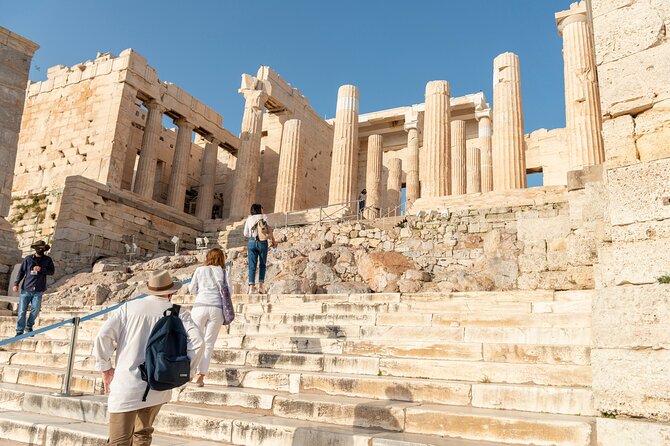
Athens can feel like a lot. You arrive excited, then spend hours trying to sort out what matters, where to stand for views, and how to tell one temple from the next. This tour is built to reduce that mental load.
The value here isn’t just that you see two famous places. It’s that you see them in the right order, with real context before you get trapped in the crush. You’ll spend real time on the monuments people actually come to Athens for, then shift down to where ancient Athenians lived, argued, traded, and worshiped.
It’s also private. That changes everything about how the information lands. If you want your questions answered on the spot, you’re not waiting for a group to catch up.
You can also read our reviews of more private tours in Athens

Finding your guide at Makrygianni 7 (and why the location helps)

Your guide meets you at Acropoli Metro Station, street level, at 7 Makrygianni Street, close to the Acropolis Museum. That sounds like a small detail, but it’s actually useful. You’re not dealing with complicated transfers or searching across the wrong hill blocks.
The best part of the meeting area is the way it sets the tone. From there you get an early view of the surrounding Acropolis wall built by earlier Mycenean civilization, plus an intro to why the Acropolis mattered so much to ancient Greek life. In practice, this means when you later see gates and temples, you’ll understand what you’re looking at instead of treating it as a list.
80 minutes on the Acropolis: temples, theaters, and the Parthenon storyline
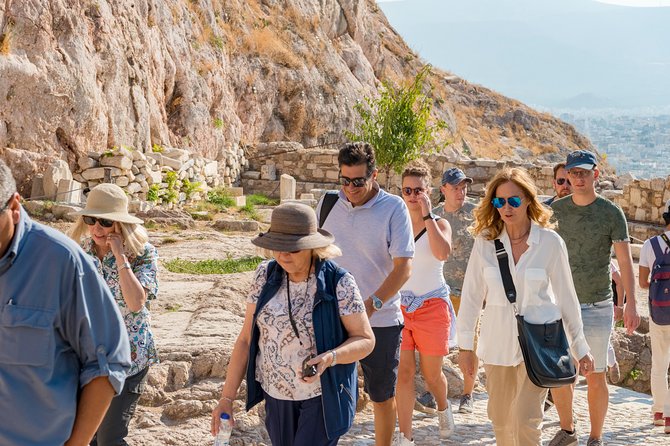
The Acropolis portion is built to cover the big monuments without wasting your time wandering randomly. You’ll move through a sequence of stops that matches the way the site tells its story—gateways, major sanctuaries, and standout buildings.
Theatre of Dionysus: the oldest-stage feeling
One of the first memorable stops is the Ancient Theater of Dionysus. It sits on the slopes of the Acropolis and was built in the 4th and 5th century BC, in a natural amphitheater. The tour frames it as the world’s oldest theater, with a huge original capacity of around 25,000.
If you like how theater and myth connect, this is a great moment. It’s also the kind of stop that makes the site feel alive, not just stone.
Propylaea and the approach: built for drama
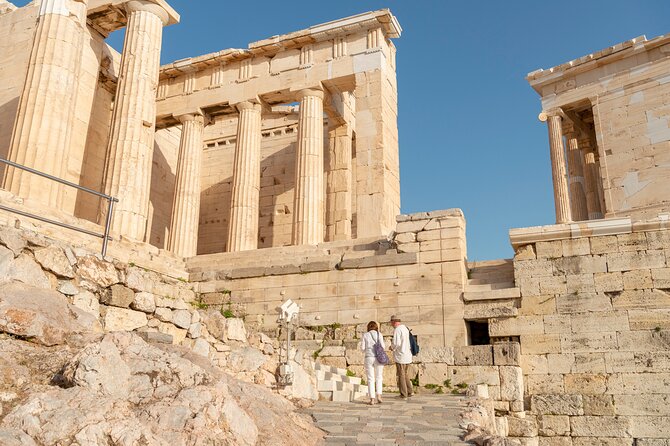
Next comes the climb toward the monumental gateway, the Propylaia, and the entrance to the Acropolis. You’ll hear about how the Greeks greeted ships arriving in sunlight with a legend tied to a bronze Athena statue—specifically the idea that the tip of her spear could be seen from far out at sea.
That detail helps you see the Acropolis as a planned statement to the world, not just a hilltop collection of ruins.




Key temples: Athena Nike, the Parthenon, Erechtheion
From there you’ll get several major temple moments:
- The Temple of Athena Nike, built around 420 BC. It’s an early Classical Ionic temple dedicated to Athena and is largely restored, with commanding views over Athens.
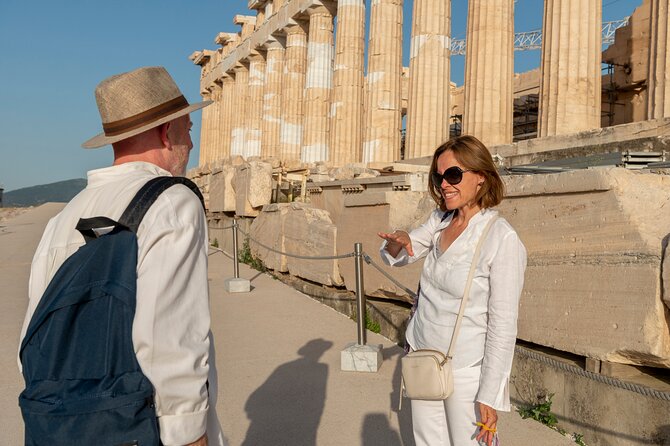
- The Parthenon, treated as the pinnacle of the Golden Age. The focus here is not just how it looks, but how it was built, what myths and meaning were attached to it, and why it sat at the heart of worship and ceremony in ancient Athens.
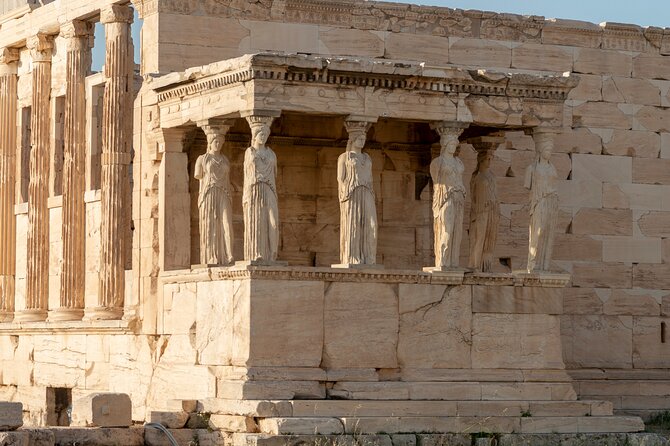
- The Erechtheion, dedicated to both Zeus and Athena. The tour points out the mythology and notable statues you’ll also see discussed again once you reach the museum.
Odeon of Herodes Atticus: a theater that never really went away
You’ll also come across the Odeon of Herodes Atticus, a marble amphitheater built in AD 161 in memory of Herodes Atticus’s wife. What makes this stop special is that it’s described as continuing as a working theater up to today.
So you’re not only looking at ancient entertainment. You’re seeing proof that performance spaces can live long lives.
New Acropolis Museum: where the myths get their props
There’s also a museum stop included, and the plan includes time for the New Acropolis Museum. The idea is to pair what you see outside with what’s preserved and explained inside—original masterpieces, plus models, videos, and interactive installations.
This is a smart pairing because a lot of the Acropolis experience depends on recognizing details that are hard to notice at ground level. In the museum, your guide can point out significant pieces and connect them to myth and legend in a way that makes those outside ruins feel more specific.
Also, museum time is one of those “quality of understanding” upgrades. Even if you’ve read about Athens before, the museum helps you translate famous names into actual objects and scenes.
Ancient Agora in 80 minutes: the marketplace behind the monuments
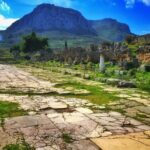
After the Acropolis, you shift down to the Ancient Agora, which the tour frames as the marketplace and center of daily life at the base of the Acropolis.
This is where Athens stops being just a viewing park and becomes a real city.
You’ll see a recreation of an ancient commercial center—a place where traders worked—plus an onsite museum with artifacts uncovered from the site. The practical value here is that you’ll understand the Agora not only as ruins, but as a working hub tied to workshops, temples, and important monuments.
The standout temple: the most complete survivor
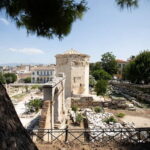
The Agora portion includes a highlight: the most complete remaining temple of Greek antiquity. The tour uses this stop to anchor what you’re seeing in the bigger religious and civic world.
And because you’re getting an explanation from a guide, you’re less likely to treat it like “another old building.” You’ll likely come away understanding why it’s so significant that it survived in such strong shape.
Price and what you’re really paying for
At $185.86 per person for about 3 hours, this tour sits in the mid-to-upper range for Athens. But here’s the value logic:
- You’re getting a private tour with a licensed expert guide, which is harder to replace with budget options.
- You’re covering two top-tier UNESCO sites in one run, so you’re compressing planning time and reducing the chance you’ll miss key context.
- You also get mobile tickets and, for larger groups of 6 or more, a whisper communication system. In a private format, you still benefit from a guide who can keep you aligned without shouting over the crowd.
The main cost caveat is that admission tickets are not included in the price. The good news is that the operator can help organize hassle-free tickets on request after booking, for an extra cost. Still, you’ll need to plan for that add-on and confirm your ticket preferences in your messages, since entry depends on specific date and time slots and tickets can sell out.
Tickets, timing, and the crowd reality
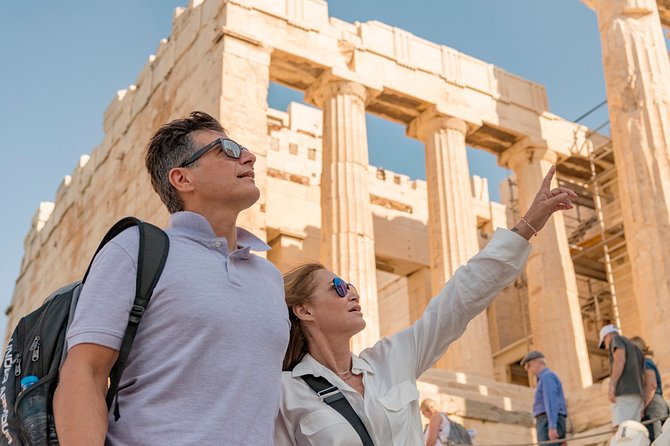
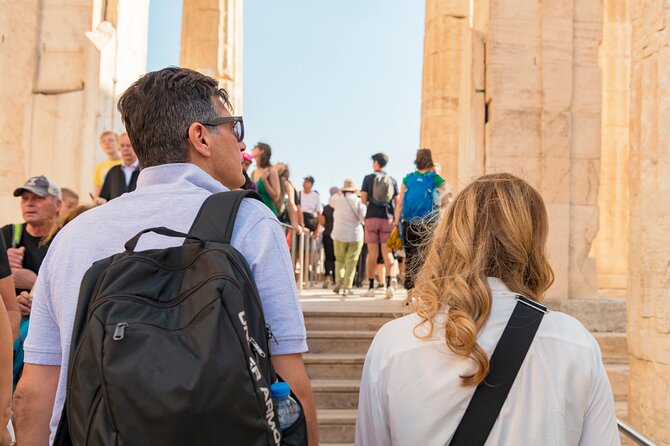
Acropolis days run on time slots. If you arrive without a plan, you can lose an hour to lines and confusion. This tour helps reduce that risk by offering ticket support and a guided route that keeps you moving.
But don’t ignore this practical warning: tickets may sell out weeks in advance and require specific date and time slots. If you want the smoothest experience, check your messages after booking and respond if asked about skip-the-line tickets.
Also, the tour’s structure matters. With only about 3 hours total, the best experience comes from staying flexible and moving at the guide’s pace when you need to.
Walking, pace, and who should book this
This is a tour built for people who want to see more than one major site without spending their whole day in logistics.
However, there’s an important limitation: there’s some walking distance between the Acropolis and Agora, so it’s not suitable for persons of reduced mobility. If that’s your situation, you’ll want to look for an option that reduces transfers or offers different accessibility support.
This also tends to suit:
- Couples and small groups who want answers fast
- People who hate crowded, rigid group tours
- Anyone who wants to ask questions in real time, especially while you’re standing in front of the monument
And because it’s private, you can stop for photos without the pressure of keeping a big group moving.
Final verdict: should you book?
Yes, if you want the best mix of big sights and real explanations in a tight schedule, this is a strong pick. The biggest reason is simple: you’ll spend your time where it counts—the Acropolis highlights, then the Agora’s daily-life context—guided by a licensed expert who can point out details you’d likely miss on your own.
Skip it only if mobility limits make the Acropolis-to-Agora walking difficult, or if you’d rather spend a full half-day at a single site to go slowly. For a focused Athens hit with less guesswork, this tour earns its place.
FAQ
What’s included in this private tour?
You get a private tour with a licensed expert guide. A whisper communication system is included for groups of 6 or more, and you’ll have a mobile ticket.
How long is the tour?
The tour is about 3 hours.
Are admission tickets included?
No. Admission tickets and their cost are not included. The operator may help organize hassle-free tickets after booking for an extra cost.
Where do we meet the guide?
Meet your guide at Acropoli Metro Station (street level) at 7 Makrygianni Street, close to the Acropolis Museum.
Does this tour end back at the start?
Yes. The tour ends back at the meeting point.
Is the tour suitable for reduced mobility?
Not really. There is some walking distance between the Acropolis and the Agora, so it’s not suitable for persons of reduced mobility.
Are there other tour length options?
Yes. You can book Acropolis only (about 1.5 hours), or Acropolis and Ancient Agora (about 1.5 hours). There’s also an optional 4-hour luxury city tour by vehicle that includes stops like Plaka, Temple of Zeus, Hadrian’s Arch, the Olympic Stadium area, Athens Trilogy, Syntagma Square, and the traditional Evzone guards.