REVIEW · NEW DELHI
Old Delhi Walking Tour: Food, Culture & Spice Bazaars
Book on Viator →Operated by Unzip Delhi · Bookable on Viator
Old Delhi smells like a living lesson. This 2–3 hour walk is packed with Khari Baoli spice tasting and the feeling of Chandni Chowk’s many religions all sharing the same street space. You get guided context as you move through markets, shrines, and historic corners, so the chaos turns into something you can actually understand.
I also like the mix of “look at this” stops and “try this” moments, including a short tuk-tuk ride that helps you cover ground without burning out. One consideration: you’ll navigate crowded, tight lanes, and Jama Masjid admission is not included, so budget a little extra at the end.
In This Review
- Key Things To Know Before You Go
- Old Delhi on Foot: Why This Route Works
- Starting at Chandni Chowk: The Place to Get Oriented
- Chandni Chowk’s Spiritual Street Mix (and How to Appreciate It)
- Khari Baoli: Asia’s Largest Spice Market (with Tastings)
- Old Delhi by Tuk-Tuk: A Fast Way Through the Tight Lanes
- Naughara and the Row of Nine Houses: A Pause from the Chaos
- Jama Masjid Finish: Mughal Architecture and Rooftop Views
- Price and Value: What $19.01 Actually Covers
- The Human Factor: Your Guide Makes (or Breaks) Old Delhi
- Who Should Book This Old Delhi Walking Tour?
- Should You Book This Old Delhi Walking Tour?
- FAQ
- FAQ
- How long is the Old Delhi walking tour?
- What does the tour cost?
- Where does the tour start?
- Where does the tour end?
- What’s included in the price?
- What isn’t included?
- Is there an admission ticket needed for Chandni Chowk?
- Is spice tasting included at Khari Baoli?
- Can I get a refund if my plans change?
- Is the tour suitable for most travelers, and are service animals allowed?
Key Things To Know Before You Go
- Expert-led route designed around Old Delhi’s living culture, not just photo stops
- Khari Baoli spice tasting plus history about spice trade routes
- Tuk-tuk ride for a quick reset after walking the densest lanes
- Jama Masjid rooftop panorama at the end (with admission not included)
- Private group experience with a mobile ticket and bottled water
Old Delhi on Foot: Why This Route Works
Old Delhi can feel like sensory overload at first. The streets are loud, crowded, and full of smells you can’t place yet. What makes this experience work is that it gives you a way to “read” the neighborhood as you walk—food, religion, trade, and everyday life are all tied together.
A key detail here is the route’s focus on the area’s close-by religious mix: temples, mosques, churches, and gurudwaras in the same stretch of Old Delhi. You’re not just seeing architecture. You’re learning how different communities have coexisted in tight urban space for centuries.
And because the walk is guided, you’re less likely to feel lost when the lanes squeeze together. Instead of guessing what you’re looking at, you get the why behind it.
You can also read our reviews of more walking tours in New Delhi



Starting at Chandni Chowk: The Place to Get Oriented
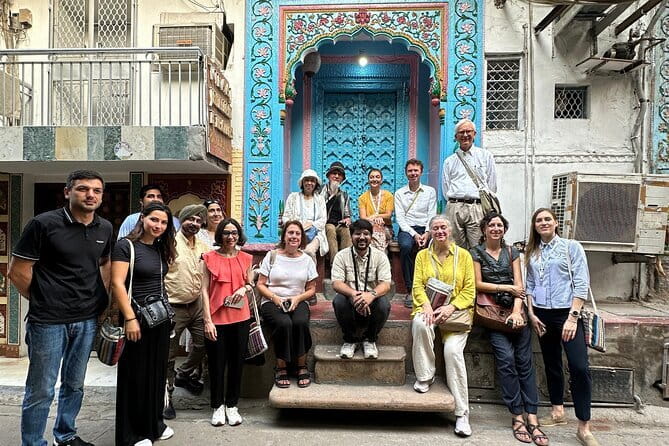
You start near the Chandni Chowk View Point at Shop No 24, Metro Gate 1, opposite Lal Qila (Red Fort) in the Chandni Chowk area. It’s a practical meeting point because it’s right where you want to begin—close to the historic core, but still connected enough that you’re not trapped by confusing streets.
Chandni Chowk is described as a 1.5 km stretch where multiple religions sit side by side. That’s exactly what you should expect at the start: signage, worship spaces, and daily commerce all sharing the same narrow corridor. If you’ve only seen Old Delhi from outside, walking into it changes the whole picture.
What I like about starting here is that it sets expectations immediately. You’re not waiting until the middle of the tour to encounter the most interesting part.
Chandni Chowk’s Spiritual Street Mix (and How to Appreciate It)
During the Chandni Chowk segment, you’re given time to take in the neighborhood’s layered spiritual landscape. The route includes stops where you can see Hindu temples, Jain derasars, mosques, churches, and gurudwaras along the walk.
This is one of those experiences where a guide’s explanations make the details “stick.” For example, you’ll learn how this area functions like a shared civic space, not separate bubbles. That helps when you notice how commerce happens next to devotion.
Possible drawback: this is a busy corridor. If you want quiet, controlled viewing, you may feel impatient. But if you’re okay with the hum of daily life, this is one of the most memorable ways to understand Old Delhi.
Khari Baoli: Asia’s Largest Spice Market (with Tastings)

Next you head to Khari Baoli, described as Asia’s largest spice market. This is where Old Delhi stops being mostly visual and becomes deeply physical—smell, color, and sound all at once. You get about 30 minutes here, with spice tasting included.
What makes this stop worth your time is the context. You don’t just taste random powders. You learn about historical spice trade routes of medieval India and how those ideas connect to what’s still being traded today. That’s the difference between sampling spices and understanding why the market exists in the first place.
Practical tip: take it slow. If you rush the tasting, you’ll miss the guide’s explanation and you might get overwhelmed by strong aromas.
Another consideration: if you have sensitivities to strong scents, this is the moment you’ll notice it most. Bring bottled water with you during the market time (yours is included), and don’t be shy about asking what’s in each taste.
Old Delhi by Tuk-Tuk: A Fast Way Through the Tight Lanes

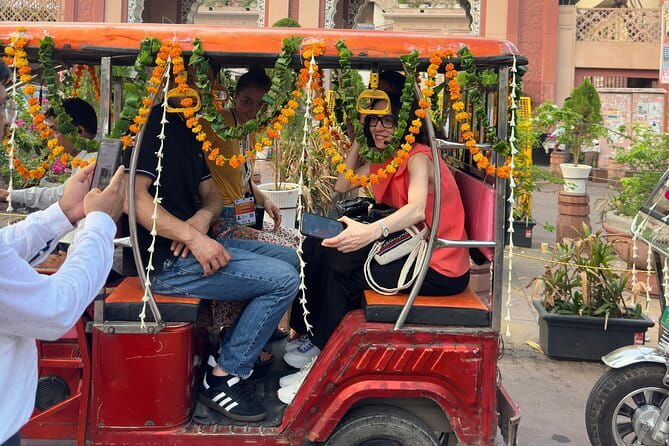
After the spice market, you get an Old Delhi rickshaw ride (tuk-tuk). This is not a full sightseeing circuit—it’s a targeted hop through the beating heart of the lanes so you can cover key areas efficiently.
The ride matters for two reasons. First, it reduces the amount of time you spend trying to walk through the densest traffic patterns on foot. Second, it gives you a moving vantage point: you see the same scene—shops, lanes, religious calls, and food smells—without getting stuck in the slowest pockets.
This is also a great “mental reset.” Old Delhi is intense. The tuk-tuk breaks the day into segments, so you can stay present instead of worn out.
You can also read our reviews of more food & drink experiences in New Delhi




Naughara and the Row of Nine Houses: A Pause from the Chaos
The next stop is Naughara – Row of Nine Houses, where you visit a Jain temple and enjoy a quieter, more photo-friendly break. The temple is described as peaceful compared to the surrounding bustle, with intricate carvings and spiritual energy.
Even if you’re not a temple person, this stop gives you balance. After spice smells and packed lanes, you get a place to slow down. It’s also a strong photography moment because the architecture details are easier to take in when the crowd thins a bit.
What I find useful here: the guide’s explanations help you connect that calm space to the broader religious mix you saw earlier. Old Delhi isn’t only loud commerce. It also has pockets of devotion and craft that people have maintained through generations.
Jama Masjid Finish: Mughal Architecture and Rooftop Views
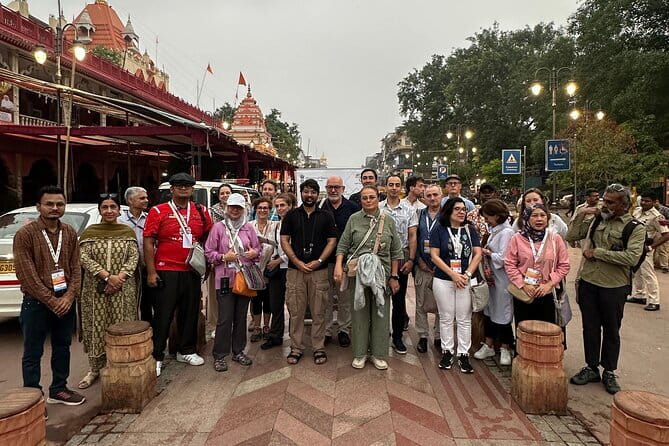
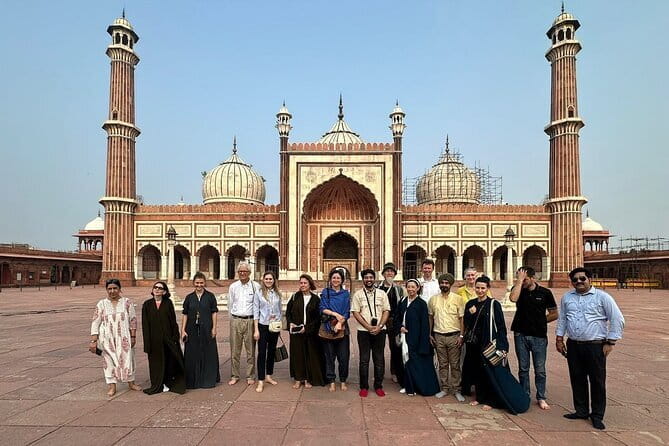
Your tour ends at Jama Masjid, one of India’s largest and most beautiful mosques. It’s made from red sandstone and white marble, and it’s described as a living symbol of Old Delhi’s spiritual heart—not just a monument you pass by.
You also get time for panoramic viewing from the top area (described as a rooftop view). This is one of the reasons this tour earns its keep: the walk brings you into the lanes, then the end gives you a sense of scale.
Important note: Jama Masjid admission is not included, so plan for that cost. The tour ends at Jama Masjid gate number 3, which is handy because you can head out of the old city without having to figure out your way from scratch.
If you’re sensitive to crowds, this ending area can still be busy. But the payoff—architecture plus city views—is real.
Price and Value: What $19.01 Actually Covers

At $19.01 per person, this is one of the more budget-friendly ways to get a structured Old Delhi experience. What you’re paying for isn’t just walking with someone—it’s specific guided access to the markets and key culture stops, plus included basics.
Here’s what’s included:
- Bottled water
- Coffee and/or tea
- Local expert cum tour guide
- Tuk-tuk ride
- Spice tasting
- Ticket for Chandni Chowk is free in the plan
- The itinerary includes time at major sites, with Jama Masjid admission not included
And what’s not included:
- Hotel pick-up/drop-off
- Shopping from markets
- Jama Masjid admission
Value-wise, the best comparison is time. Old Delhi can be hard to navigate on your own, and spice markets are even harder to understand without context. Paying for a guide can save you from wandering in circles and help you focus on what to notice.
You also get a mobile ticket and group discounts. Plus, it’s run as a private experience for your group, which helps if you want the pacing to fit your comfort level.
The Human Factor: Your Guide Makes (or Breaks) Old Delhi
This tour is curated by Anas Khan, an anthropologist and history writer who grew up in these lanes—so the approach is meant to be more than surface facts. The idea is to connect street scenes to stories people have carried through oral history and daily life.
The guide side matters in a very practical way too. In the feedback you can see a pattern: guides like Lareb are praised for being flexible, informative, and genuinely helpful when timing gets tricky. One example given is arranging a last-minute tour and coordinating transportation so getting to the meeting point stays simple.
That kind of professionalism matters because Old Delhi logistics can get messy fast. A good guide doesn’t just explain. They help you keep moving with less stress.
Who Should Book This Old Delhi Walking Tour?
This experience is a smart fit if you:
- like food + culture together, not as separate activities
- want spice market context instead of just tasting things
- enjoy guided history told through the street-level reality you see around you
- travel solo and want a calmer, structured way to handle crowded lanes
- want a compact 2–3 hour plan without hotel transfers
It may be less ideal if you:
- hate crowd energy and strong smells
- want long meals or downtime (this is mostly walk-and-stop time)
- don’t want to handle an extra ticket cost at the end (Jama Masjid admission isn’t included)
Good news: most travelers can participate, and service animals are allowed.
Should You Book This Old Delhi Walking Tour?
If you want the highlights of Old Delhi without losing hours to wandering, I’d book it. The included spice tasting, the tuk-tuk ride, and the fact that the tour ends at Jama Masjid with panoramic views give you a clean arc: street religion → spice trade → lanes → calmer temple stop → grand finish.
The main reason to hesitate is simple: this is still Old Delhi. Expect crowded streets and intense sensory moments, especially at Khari Baoli. If that sounds fun rather than stressful, this is a strong value at $19.01.
FAQ
FAQ
How long is the Old Delhi walking tour?
The tour runs about 2 to 3 hours.
What does the tour cost?
It costs $19.01 per person.
Where does the tour start?
It starts at Chandni Chowk View Point, Shop No 24, Metro Gate 1, opposite Lal Qila, in Chandni Chowk, Delhi.
Where does the tour end?
It ends at Jama Masjid, at gate number 3, Old Delhi.
What’s included in the price?
Included are bottled water, coffee and/or tea, a local expert tour guide, a tuk-tuk ride, and spice tasting. Chandni Chowk admission is free in the plan.
What isn’t included?
Hotel pick-up and drop-off are not included, shopping from the markets is not included, and Jama Masjid admission is not included.
Is there an admission ticket needed for Chandni Chowk?
No. The plan lists admission ticket as free for the Chandni Chowk stop.
Is spice tasting included at Khari Baoli?
Yes. Spice tasting is included at Khari Baoli.
Can I get a refund if my plans change?
Yes. Free cancellation is available up to 24 hours in advance for a full refund.
Is the tour suitable for most travelers, and are service animals allowed?
The tour notes that most travelers can participate, and service animals are allowed.