REVIEW · ROME
Ancient Rome Guided Tour: Colosseum, Forum and Palatine & Pick Up
Book on Viator →Operated by Gray Line I Love Rome by Carrani Tours · Bookable on Viator
Three sights, one efficient half-day. You’ll see the Colosseum, walk the Roman Forum, and get eye-level context from Palatine Hill, all in about 3.5 hours. I especially like the hotel pickup option and the fact that your Colosseum entry is handled with a reservation, so the visit starts faster. One catch: you’re walking on cobbles and stone, often in full sun, so bring good shoes and plan for heat.
This is the kind of Rome tour that helps things click. The guide doesn’t just point at ruins; you connect why Palatine sits above the Forum, how the Via Sacra carried people toward the Colosseum, and how imperial ceremonies like the triumph fit into Roman power.
Value-wise, the price may look steep until you tally what’s included. You get a professional guide with wireless audio headsets plus admission to three major sites, with the Colosseum reservation fee included. The day’s pace is busy, but it’s a solid way to cover Rome’s headline acts without wasting hours on logistics.
In This Review
- Key things to know before you go
- Price and what you really get for $98.86
- Hotel pickup in Rome: how to show up at the right time
- Palatine Hill: the view 40 meters above the Forum
- Colosseum entry: your guided connection to the building
- Roman Forum: how the Sacred Road turns ruins into a route
- How the 3.5 hours feel on your feet (and in the sun)
- Guides: the difference between a good tour and a great one
- What’s included vs. what you’ll supply
- Should you book this Colosseum, Forum and Palatine tour?
- FAQ
- How long is the Ancient Rome guided tour?
- Does the tour include hotel pickup?
- Are entrance tickets included?
- What’s the maximum group size?
- What do I need to bring on the day?
- Is this tour suitable for kids?
- Is the tour accessible for people with mobility issues?
- Is there free cancellation?
Key things to know before you go
- Hotel pickup (and a clear backup meeting point) to reduce transit time
- Wireless audio headsets so you can hear the guide over crowds and stone echoes
- Three tightly connected landmarks that tell one story: Palatine → Via Sacra → Forum → Colosseum
- Palatine Hill views from above the Forum (about 40 meters higher)
- Small group size (max 20) for better control on tight paths
- Bring water and shade-seeking habits for hot, sun-heavy walking
Price and what you really get for $98.86
At $98.86 per person for roughly 3 hours 30 minutes, this tour sits in the “not cheap, but fair” zone. The math gets easier once you see what’s included: guided access to the Colosseum, Roman Forum, and Palatine Hill, plus a Colosseum reservation fee and the admission ticket value.
Here’s why that matters in real life. The Colosseum has timed entry rules and strict access. When your reservation is handled for you, you’re not stuck figuring out the system at the ticket counters while your day tightens around you. You also get wireless audio headsets, which is a big quality-of-life item in Rome, where the sound bounces and crowds can make it hard to hear.
Also, this is not a “drive-by” tour. You’re spending real time inside the archaeological area and moving between sites on foot. If you’re the type who wants Rome in big, readable chunks, this format tends to work well.
The only realistic “but” is that you’re paying for convenience. If you enjoy planning routes, timing ticket lines yourself, and building a DIY itinerary, you may decide the included logistics aren’t worth it. If you’d rather just show up and follow a guide through three icons, this price makes more sense.
You can also read our reviews of more guided tours in Rome
Hotel pickup in Rome: how to show up at the right time
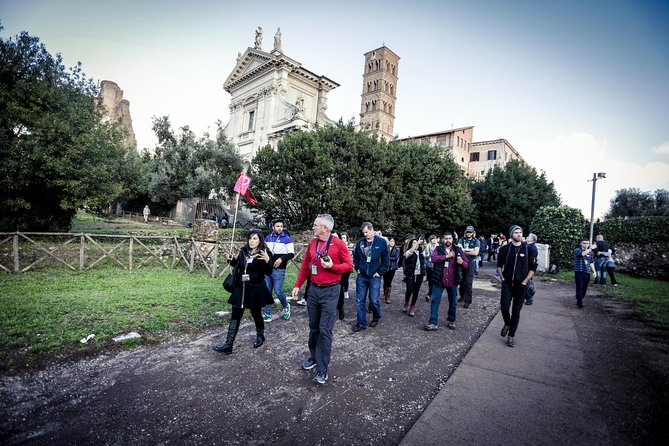
Pickup is one of the biggest reasons people choose this tour. The rule is simple: be ready 45 minutes before departure in the hotel lobby (and 60 minutes for non-central hotels). If your hotel isn’t covered, you’ll use a backup meeting point at Colle Oppio Park (Via delle Terme di Tito, corner of Via Nicola Salvi, inside the park).
Two practical tips that can save stress:
- Don’t wait until the last minute. You’re asked to be in the lobby early, and Rome traffic and on-site checks can add delays. Build in a buffer so you’re calm if the pickup timing shifts.
- Keep your confirmation details handy. Confirmation is received at booking time, and the pickup feasibility depends on your hotel coverage. If you’re not sure, ask reception or contact the booking office before the day.
Transportation is included, and there’s a note that the tour is near public transportation, which is helpful if you need to adjust plans. Just know: drop-off isn’t included, so you’ll need a way to get back to your area afterward.
Palatine Hill: the view 40 meters above the Forum
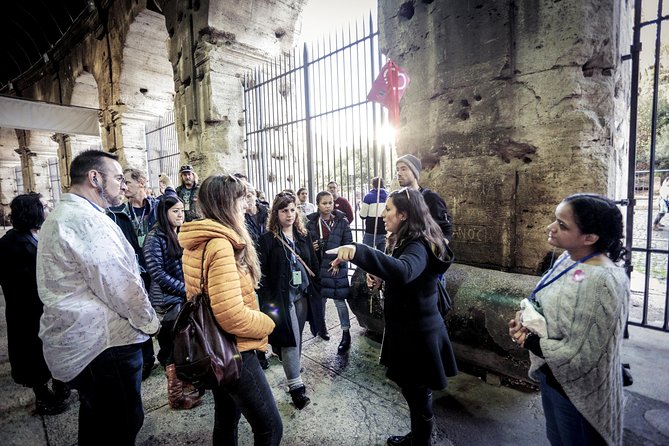
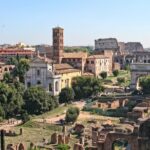
Palatine Hill is where the Roman story feels physical. You’re not just looking at ruins; you’re standing on one of the Seven Hills, the centremost one, and one of the most ancient parts of Rome. The big idea is the elevation: Palatine rises about 40 meters above the Roman Forum.
From up here, the Forum isn’t some vague cluster of stones. You see how Palatine overlooks it from one direction and how it faces toward the Circus Maximus on the other. That change in perspective is a shortcut to understanding why power and politics sat where they did.
You’ll also hear about the setting for imperial life. From the time of Augustus, palaces were built on Palatine. That’s the kind of context that makes the Roman Forum feel less like an open-air museum and more like the operating center of an empire.
One more thing you may notice: the guide’s storytelling often links sites to Roman ceremonies. The tour info includes the triumph, a civil ceremony and religious rite used to publicly celebrate and sanctify a commander’s victory. If you’re into how Rome mixed politics, religion, and spectacle, this kind of explanation fits Palatine perfectly.
What to watch for: this portion still involves walking on uneven ground. Wear shoes you’d trust for cobblestones and marble slabs.
Colosseum entry: your guided connection to the building
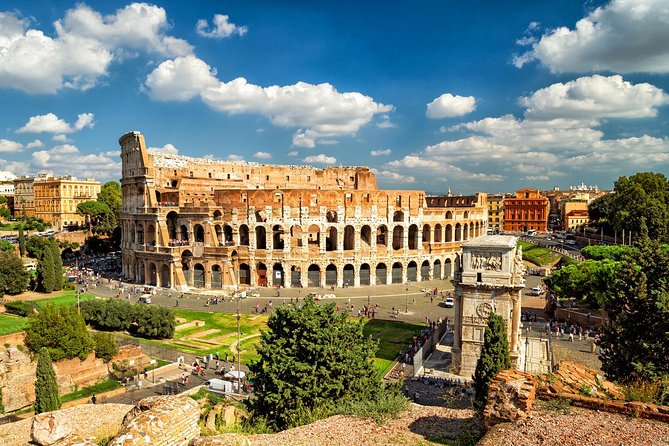
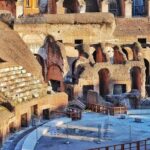
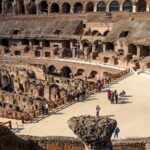
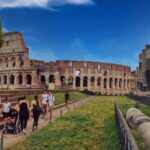
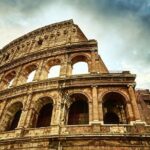
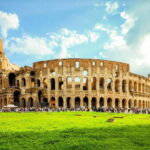
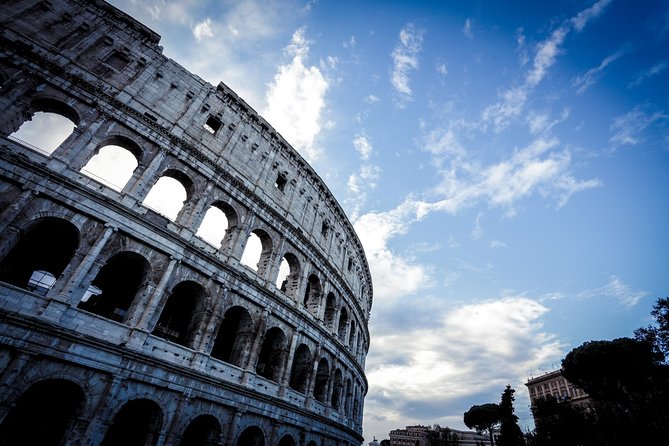
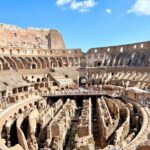
The Colosseum is the headline, and it earns the attention. It’s an oval amphitheatre built from materials like travertine, tuff, and brick-faced concrete, and it’s the largest amphitheatre ever built. Even if you’ve seen photos, being inside changes your sense of scale.
What makes a guided Colosseum visit worth it is the way the guide ties architecture to life. You’re not only looking at stone remnants; you’re learning what the space was designed for and how the building fits into the broader setting near the Forum.
You also get what you want operationally:
- Colosseum admission is included
- A Colosseum reservation fee is included
- You’ll have wireless audio headsets so you can keep up in real conditions
One practical advantage from real-world experience: name and ID checks can be strict. Bring your passport or ID card, exactly as required. The tour information is clear that admission requires ID on the day of the tour, and travelers must provide full names when booking. If your booking name doesn’t match your ID smoothly, I’d handle that up front rather than hope it works out at the gate.
Heat note: the Colosseum area can be sun-heavy. Even when there’s some shade, you’ll spend stretches outside. A hat and water aren’t optional in summer.
Roman Forum: how the Sacred Road turns ruins into a route
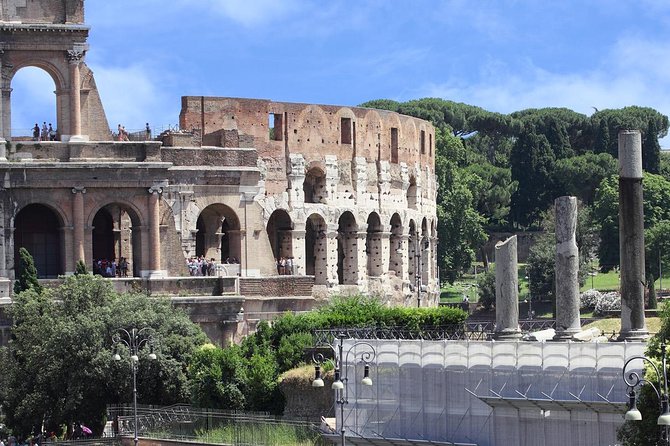
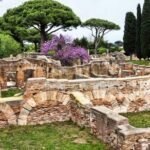
The Roman Forum is the “center of the center.” It’s a rectangular forum (plaza) surrounded by ruins of important ancient government buildings. The Forum began as a marketplace, and in ancient times people called it the Forum Magnum.
The best part of pairing the Forum with Palatine and the Colosseum is the route logic. The tour highlights the Via Sacra, the sacred road that led from the top of the Capitoline Hill through major religious sites in the Forum and onward toward the Colosseum. Once you understand that street as the main spine, the ruins stop feeling random.
You’ll also pick up a sense of how modern Rome frames the ancient area. The info about Via dei Fori Imperiali explains that this straight road runs from Piazza Venezia to the Colosseum and passes over parts of the Forum of Trajan, Forum of Augustus, and Forum of Nerva. Even when you’re not stopping there for a deep look, knowing what runs beneath and beside you helps you “see” the empire layered under today’s streets.
What to expect: the Forum section is less about standing in one spot and more about moving through the site while the guide connects buildings, function, and symbolism. It’s where your tour’s storytelling pays off, assuming you keep listening while you walk.
How the 3.5 hours feel on your feet (and in the sun)
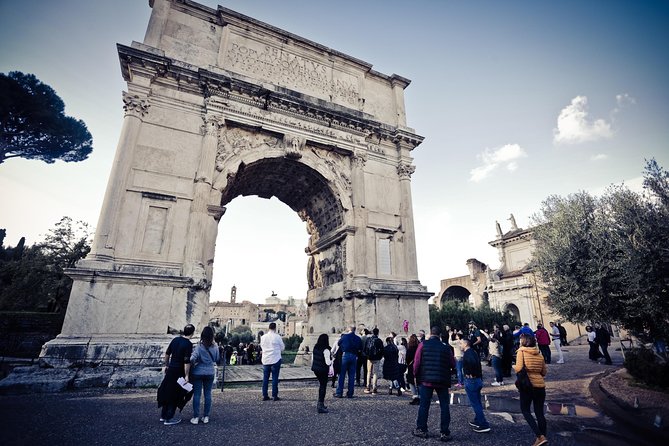
This tour is built for motion. With three major sites in about 3 hours 30 minutes, you’ll cover a fair amount of ground between stops, and you’ll do it on stone surfaces that can be slick or uneven. One of the clearest cautions is the physical-fitness note: moderate fitness level is required, and the tour isn’t recommended if you have impaired mobility.
A few practical things I’d do before you go:
- Wear running shoes (or very supportive walking shoes). Cobblestones and marble slabs are real.
- Bring water and plan your breaks. The tour includes shade-and-rest behavior in the way guides handle pacing, and you’ll want to take it seriously.
- Use sun protection. Even when the guide looks for shade, you still end up in full sun stretches.
- Expect pictures, but don’t slow the line. The sites have crowd flow rules. You’ll get moments for photos, but you’ll also move quickly enough to stay on schedule.
Small group size matters here. The tour caps at 20 travelers, which helps the guide keep people together in tighter corridors. Still, pick a meeting rhythm: when your group stops, stop. Don’t let gaps form.
Guides: the difference between a good tour and a great one
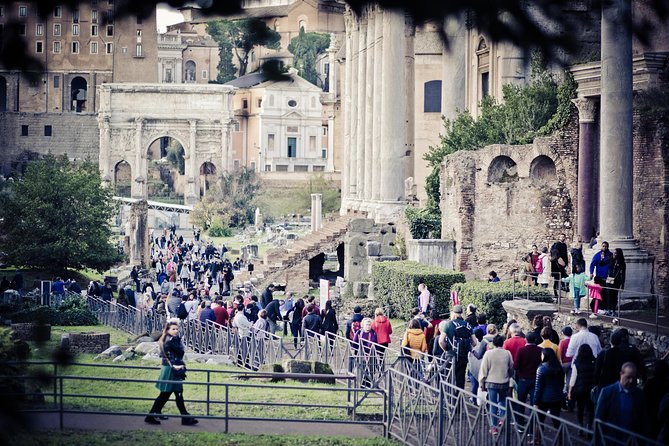
Guides can make or break your experience in Rome’s big-ticket sites. On this tour, you may hear from different professionals, and the guide style varies.
From the names and descriptions you’re likely to run into, a few patterns show up:
- Guides who explain with humor and clear pacing tend to keep energy up through the heat.
- Many guides actively manage comfort, often working toward shade when the sun is intense.
- Some guides use visual aids or reconstructed context to help you picture what the buildings looked like.
You might encounter guides such as Marcello, Nicoletta, Alessa, Luciana, Leticia (Letty), Rita, Caro, Roger, Daniel, Lina, or Eglie—each with their own voice. Regardless of the specific guide, the tour provides wireless audio headsets, which is there for a reason.
The biggest way to get value is to show up ready to listen. This isn’t a quick photo walk. It’s a story-based circuit.
What’s included vs. what you’ll supply
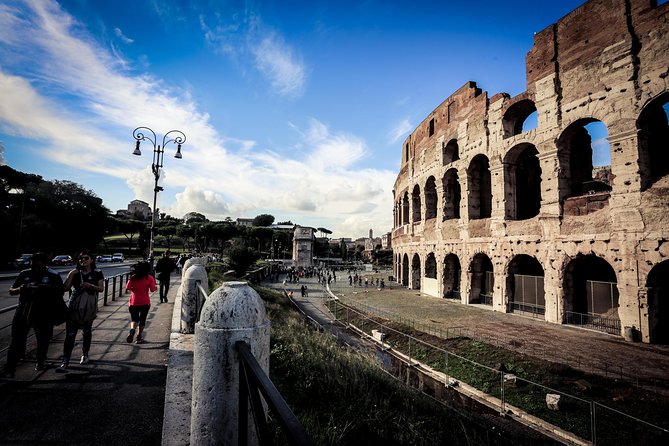
Included:
- Guided tour of the Colosseum and archaeological area
- Entrance to the Colosseum, Roman Forum, and Palatine Hill
- Professional guide with wireless audio headsets
- Transportation
- Mobile ticket
- Colosseum reservation fee and Colosseum entrance ticket (with the stated values)
Not included:
- Meals and beverages
- Drop-off
My advice: treat this as a morning-or-afternoon mission. Bring a snack you can eat before or after if your day needs fuel. If the tour runs when it’s hot (which is often in Rome), having water in your own bag can be the difference between pushing through and getting grumpy.
Should you book this Colosseum, Forum and Palatine tour?
Book it if:
- You want a guided, structured path through Rome’s top three ancient sites
- You like the idea of hotel pickup or a clear, nearby backup meeting point
- You’d rather spend your time learning than solving logistics
- You’re okay with a moderate walking day in sun and stone
Skip it (or switch tactics) if:
- You’re very sensitive to heat or long walking distances
- You prefer fully DIY travel with no guided commentary
- You’re hoping for minimal movement and maximum rest
If you’re on the fence, here’s my simple decision rule: if you’ll regret spending hours outside in queues and figuring out timing, this tour is a strong use of your Rome time. If you’re the type who loves building your own route and doesn’t mind reading maps while crowds swirl, you can do Rome’s classics without a guide. Either way, plan for the sun and wear shoes you can trust.
FAQ
How long is the Ancient Rome guided tour?
It lasts about 3 hours 30 minutes.
Does the tour include hotel pickup?
Pickup is offered. You should be ready in your hotel lobby 45 minutes before departure (60 minutes for non-central hotels). If your hotel is not covered, you’ll use the backup meeting point at Colle Oppio Park.
Are entrance tickets included?
Yes. Entrance to the Colosseum, Roman Forum, and Palatine Hill is included, along with the Colosseum reservation fee and the Colosseum entrance ticket.
What’s the maximum group size?
The tour has a maximum of 20 travelers.
What do I need to bring on the day?
Bring your passport or ID card. You’ll also want to bring what you need for comfort, since the tour involves walking.
Is this tour suitable for kids?
Children must be accompanied by an adult.
Is the tour accessible for people with mobility issues?
It’s not recommended for individuals with impaired mobility, and it requires a moderate physical fitness level.
Is there free cancellation?
Yes, free cancellation is available. You can cancel up to 24 hours in advance for a full refund.