REVIEW · ATHENS
Athens: Ancient Corinth Tour with Official Guide & Tickets
Book on GetYourGuide →Operated by CHAT TOURS · Bookable on GetYourGuide
A day trip to Corinth feels like history with your shoes on. You’ll stand above the Corinth Canal, then walk through Ancient Corinth’s Agora and Apollo’s Temple area with an official guide. The St. Paul story is threaded through the ruins and the museum, so it’s not just sightseeing. My favorite parts are the Corinth Canal viewpoint (that 90-meter drop is real) and the way your guide turns the Agora into a lived-in crossroads. The main drawback to plan for is time: the day is short, so the museum stop may feel a bit rushed.
You’re also paying for real convenience, not just entrance fees. Hotel pickup and drop-off, air-conditioned bus transport, onboard Wi‑Fi, an English-speaking guide, and tickets to both the museum and archaeological site are all part of the package. On the road, the drive is part of the experience too, since you’re moving west out of Athens along scenic coastal routes.
Just bring your patience for a tight schedule and a practical mindset for comfort. You’ll want comfortable shoes, sun protection, and (for kids) an ID/passport to avoid ticket-price surprises. Also note that Wi‑Fi can be unreliable during the ride, so plan your day without needing the internet to work.
In This Review
- Key things to know before you go
- Morning hotel pickup: starting the day without the headache
- Corinth Canal: the 90-meter drop you’ll want photos for
- Ancient Corinth’s Agora and Apollo’s Temple: where your guide makes it click
- St. Paul’s footprint in Corinth: the “Bible geography” part of the day
- Corinth Museum: small collection, big payoffs (but don’t expect forever)
- The ride matters: Kechreai and the scenic drive out of Athens
- Price and value: what you’re really paying for
- Tips to make this Corinth day feel smooth
- Should you book this Ancient Corinth tour?
Key things to know before you go
- Corinth Canal first: You’ll get the big “engineer’s miracle” moment early, with dramatic cliffs dropping around 90 meters.
- Agora + Apollo’s Temple ruins: The guided walk is where the day’s meaning clicks—markets, worship, and power in one circuit.
- St. Paul stops are built in: The guide points out why this place mattered for early Christianity, including a key spot tied to his time.
- Museum tickets are included: You’ll see artifacts from Corinth’s golden age, but you may want more time on slower days.
- Small-group feel: Many runs operate like a compact group, which usually helps you keep up with the guide.
- Practical schedule limits: There can be limited time for extra wandering or a longer second look.
Morning hotel pickup: starting the day without the headache
This tour is set up for an easy Athens morning. You’re picked up from a long list of selected central hotels, with pickup running from about 07:30 to 08:15, and the key 08:15 pickup point being Hotel Amalia Athens at Syntagma Square. The bus leaves at 08:30 from Amalia Athens.
Why this matters: if you try to reach Corinth on your own, you’ll spend mental energy on transport timing. Here, you show up, get sorted, and you’re on your way. It also means you can use the ride to get context from the guide instead of staring at maps.
Bus comfort is generally part of the appeal—air-conditioned transport and Wi‑Fi listed on board. Just don’t count on perfect connectivity; some passengers reported weak or missing Wi‑Fi. Treat it as a bonus, not a requirement.
A few more Athens tours and experiences worth a look

Corinth Canal: the 90-meter drop you’ll want photos for
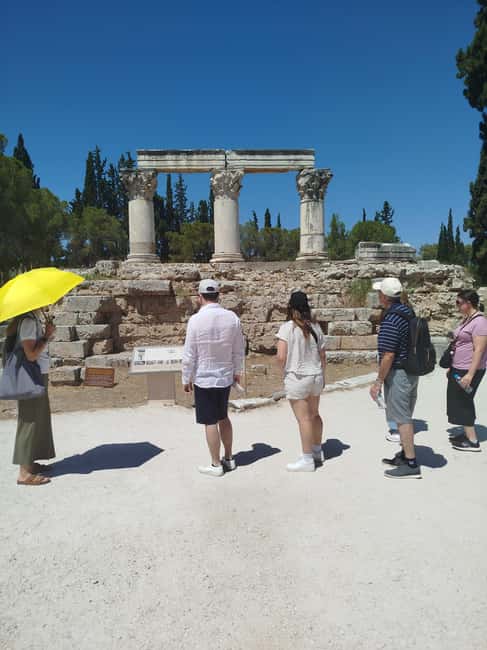
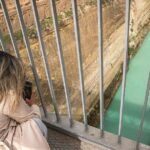
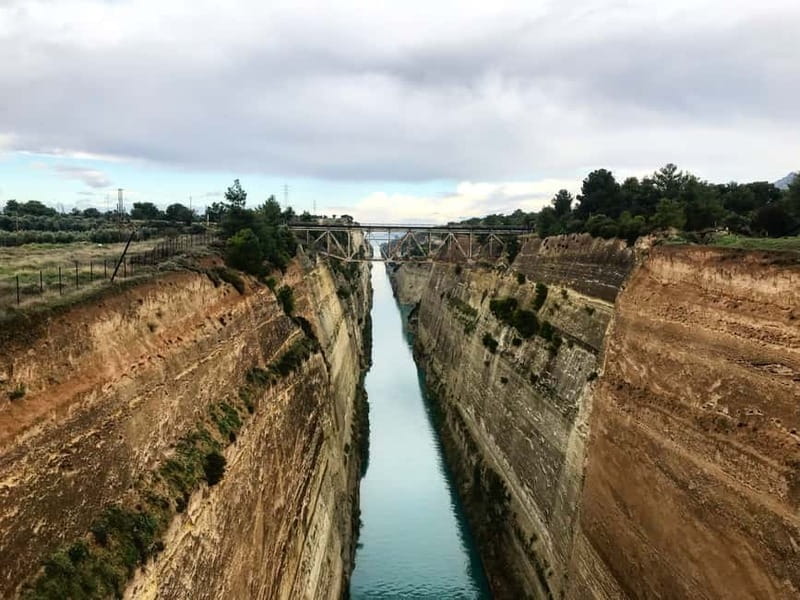
Your first major stop is the Corinth Canal, the narrow passage that links two seas. From the viewpoint, you’re looking at steep limestone cliffs falling roughly 90 meters, and you can watch ships slip through the channel like they’re threading a needle.
What makes this stop special is the contrast. You get engineering scale, not just ancient stones—plus it’s a real break from Athens traffic and noise. Even if you’ve seen pictures, the depth hits differently in person.
The one caution is timing. The canal stop can be shorter than you might hope, so if you like lingering for coffee or extra angles, arrive with a quick plan. If you need bathroom breaks, keep them in mind before you get locked into the main ancient-site route.
Ancient Corinth’s Agora and Apollo’s Temple: where your guide makes it click
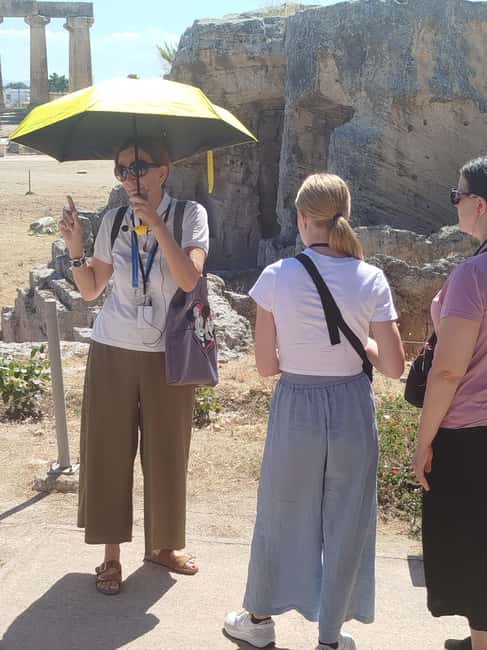
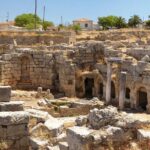
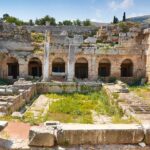
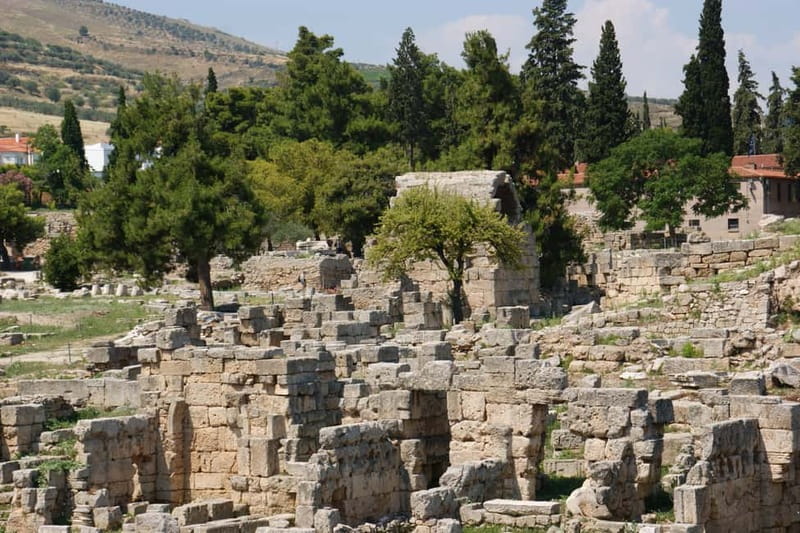
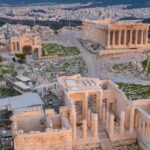
Ancient Corinth is big, and it can feel like a lot of scattered ruins without a map of meaning. This is where the guide earns their keep. You walk through the sprawling Agora, once filled with merchants from across the Mediterranean, and the guide helps you read what you’re seeing.
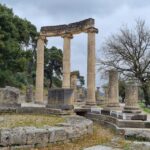
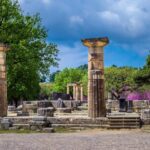
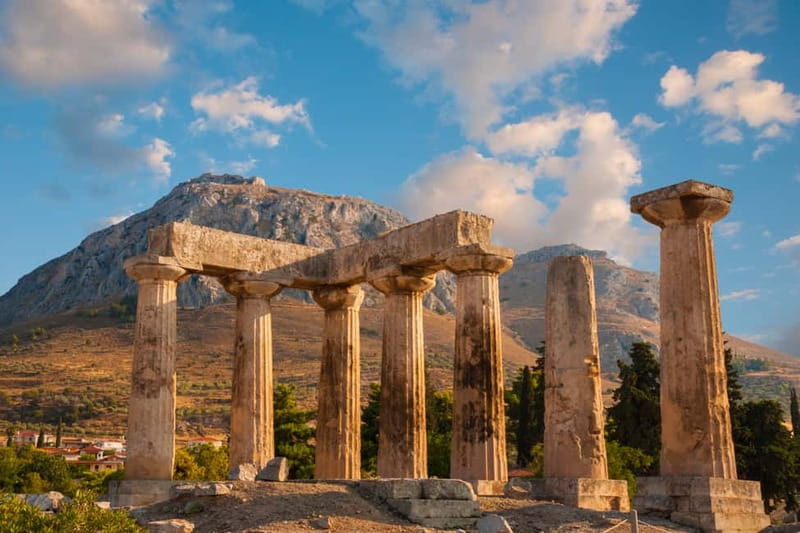
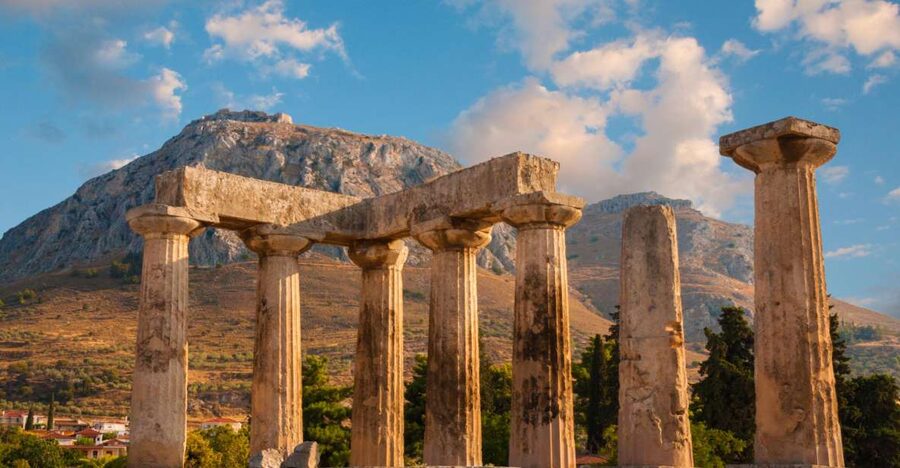
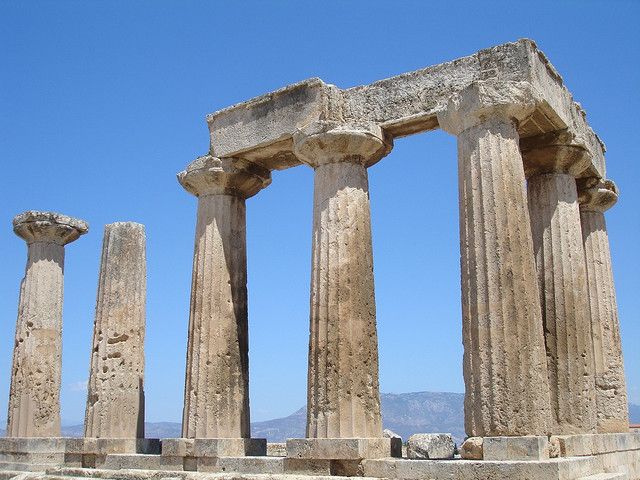
Then the route includes the area tied to Apollo’s Temple, including time walking among the standing remains and columns of Apollo’s sanctuary—connected to a temple dating back to the 6th century BC. You’ll get close enough to register scale, not just pass by from a distance.
Why I like this format for a first Corinth visit: it’s not random. Your visit focuses on the public spaces—market and worship—so you come away understanding how Corinth worked as a major city. One passenger even noted that the guide’s pacing struck a solid balance: enough explanation without turning it into a lecture.
Drawback to consider: with a 6-hour day, free time at the site may be limited. If you’re the type who loves to roam slowly and read every inscription, you might feel a pinch. But if you prefer a guided route that covers the essentials, this is a good match.
St. Paul’s footprint in Corinth: the “Bible geography” part of the day
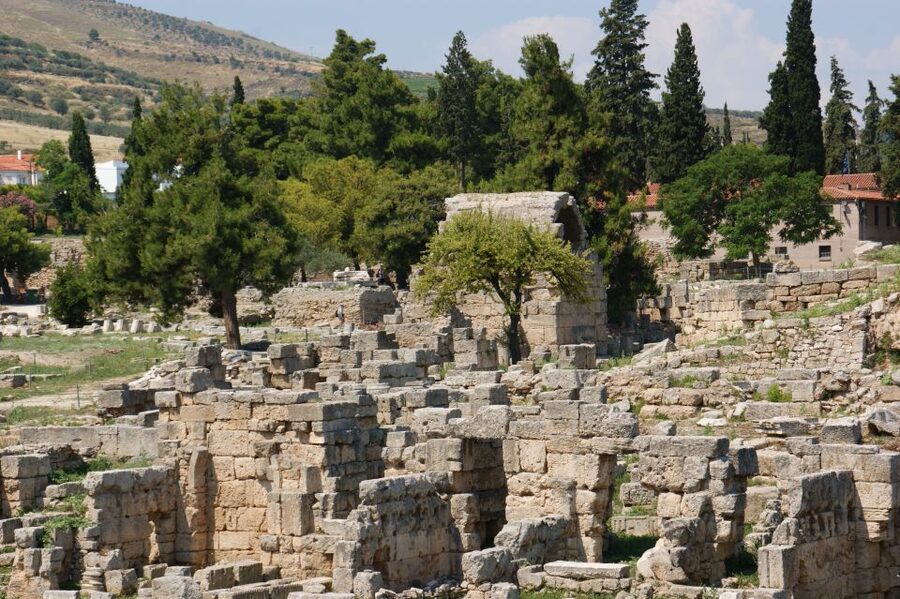
Corinth isn’t only about Greek mythology and Roman-era power. It’s also a place tied directly to early Christianity.
Your guide explains why St. Paul chose Corinth and the fact that he lived and preached there for about two years. You’ll also hear about the moment tied to where he stood before a Roman proconsul—told as a turning point in the story of early Christianity.
To make it feel real, the tour includes a pass connected to Paul’s arrival by way of the port area—Kechreai—which is referenced as the place where St. Paul first set foot in Corinth. Even if you don’t get a long stop here, hearing why the geography matters changes how you see the city.
One practical note for faith-focused visitors: the more meaningful parts of the day are tied to explanation and pointing-out, not just remaining ruins. So listen closely when your guide gives context about locations tied to Paul.
Corinth Museum: small collection, big payoffs (but don’t expect forever)
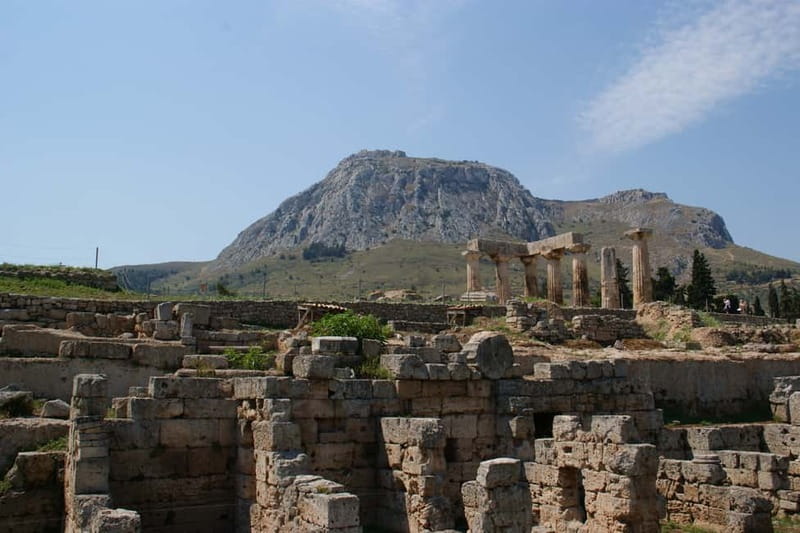
Corinth’s museum is included, and it’s designed to connect the dots between daily life and the site outside. Your ticket covers the museum’s treasures from Corinth’s golden age—things like mosaics, ancient pottery, and marble sculpture.
This stop can feel especially valuable because you’re not just staring at fragments outdoors. The museum helps you understand what the city looked like at its height and what kinds of objects were part of everyday life.
The trade-off is time. Several passengers mentioned that the museum visit can be tight, with a wish for more wandering time. If you’re the kind of person who likes to study details—faces in sculpture, patterns in mosaics—you may want to plan your expectations accordingly.
Tip that helps: if you arrive with a few questions, the museum time feels more focused. For example, ask yourself what kind of city Corinth was—port, market, religious center—and then look for artifacts that support that idea.
You can also read our reviews of more guided tours in Athens




The ride matters: Kechreai and the scenic drive out of Athens
The bus route isn’t just filler. Leaving Athens by road gives you a different pace and a better feeling for distance—Corinth is close enough for a day trip, but far enough to feel like you left the big-city bubble.
On the way back, you’ll pass the ancient port of Kechreai, again tied to Paul’s story. This is a nice touch because it connects what you saw at the site to the broader coastline context.
There’s also a practical upside: a guided bus day saves time and effort. One review described the driver negotiating narrow lanes with skill, and that kind of competence matters when you’re not driving yourself.
If you’re sensitive to late-day timing, keep an eye on it. Some passengers said the return came later than expected. It’s not unusual for day trips, but if you have evening plans, plan some flexibility.
Price and value: what you’re really paying for
At about $89 per person for a 6-hour day, this tour looks like good value if you measure it the smart way: you’re not only buying entry tickets. You’re paying for:
- Hotel pickup and drop-off
- Air-conditioned bus transportation
- An English live guide
- Museum and archaeological site admission
- Onboard Wi‑Fi (spotty at times)
If you tried to cobble this together alone, you’d likely spend time figuring out transport and ticket logistics. Here, the structure is doing that work for you. It’s also priced like a tour that expects to cover key stops without turning into a full-day commitment.
The main “value question” is time depth. If you hate rushing, you might feel it’s a bit much for the limited museum or canal minutes. If you prefer a guided hit of the highlights, you’ll probably feel like you got what you came for.
Tips to make this Corinth day feel smooth
A few small moves make a big difference on a schedule like this:
- Wear shoes you can walk in for a couple hours. The ground at Ancient Corinth is uneven in places, and you’ll be on your feet for the guided circuit.
- Bring a sun hat. You’re outside in open areas more than you might expect.
- Skip food in the bus. Food and drinks aren’t allowed on the vehicle, so plan to eat before/after or bring snacks only if you’re allowed at stops (meals aren’t included).
- Use the bathroom before the big transitions. Some passengers flagged not enough toilets at the canal area and museum.
- If you’re traveling with kids, plan for ID. Children and students aged 5 to 18 must show a valid passport or ID to get the discounted price, or they’ll need full-price entrance tickets.
- Don’t count on Wi‑Fi working well. It’s listed, but some rides had very limited connection.
If your group includes someone with mobility constraints, note that this tour is not suitable for wheelchair users or people with mobility impairments, and electric wheelchairs aren’t allowed on board.
Should you book this Ancient Corinth tour?
Book it if you want a clean, guided way to connect Corinth’s geography (canal, Agora, Apollo’s area, museum) with the story of St. Paul, without spending your morning arranging transport. The included official tickets and hotel pickup make it feel practical, and the guide role seems to be the reason people leave satisfied—one-on-one moments like being told what to look for can turn a pile of ruins into a real city.
Skip or rethink it if you’re chasing long, unhurried museum time or deep wandering at the canal and site. With a 6-hour structure, you may feel you’re moving through at a brisk pace.
If you’re in the middle—curious, comfortable on your feet, and happy to follow a strong route—this is the kind of day trip that gives you a lot of meaning per hour.