REVIEW · BERLIN
Berlin Protest History Tour: Rebels, Resistance, and Revolution
Book on Viator →Operated by Beyond and Beneath Tours · Bookable on Viator
Protests are etched into Berlin’s streets. This short Berlin history walk connects revolts, resistance, and revolution using stone timelines and political landmarks you can read as you go.
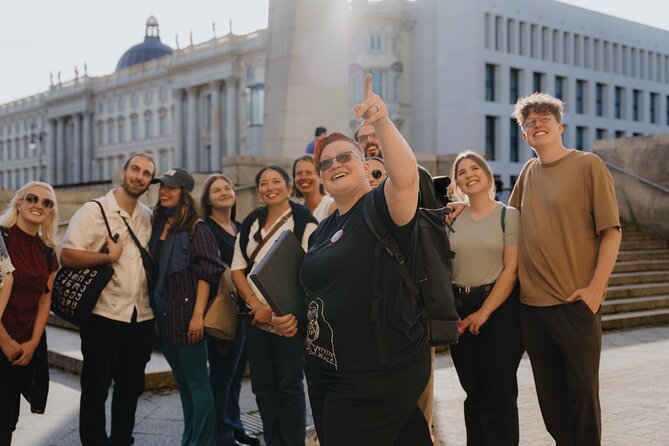
I love the terracotta history timelines at Rotes Rathaus and Gasthaus Mutter Hoppe—especially the way the East German version tells you what to notice and what to ignore. I also like the small group size (max 15) and the expert guide approach that spotlights small details most people miss, with guides like Martina and Simone praised for careful research.
The trade-off is that it’s very politics-forward and mostly spent outdoors on street corners, so if you want long indoor museum time, you may feel a bit restless.
In This Review
- Key Highlights You’ll Actually Feel
- A 2-Hour Protest Walk With Mobile Ticket Value
- Rotes Rathaus Terracotta Timeline: Early Berlin Uprisings in Stone
- Nikolaiviertel and Gasthaus Mutter Hoppe: East Berlin Tells Two Different Stories
- Marx-Engels-Forum: When Public Statues Become Public Debates
- Humboldt Forum and the Rebuilt Berlin Palace: Protests Behind the Façade
- Rosenstraße: 1943 Women’s Civil Disobedience Against the Final Solution
- St. Mary’s Church and Martin Luther King’s 1964 Sermon
- Berlin Television Tower: A Communist Power Symbol in Plain View
- Brunnen der Völkerfreundschaft: The Peaceful Revolution of 1989 and the T-Shirt Protest
- Weltzeituhr: Ending at Alexanderplatz’s Rotating World Clock
- Meeting Points and Practical Tips That Keep the Day Smooth
- Should You Book This Berlin Protest History Tour?
- FAQ
- How long is the Berlin Protest History Tour?
- How much does the tour cost?
- Is the tour offered in English?
- Do I need an admission ticket for the stops?
- What are the start and end points?
- What if the weather is bad?
Key Highlights You’ll Actually Feel
- Terracotta timelines that turn Berlin’s political story into something you can walk around and follow at eye level
- East German “memory editing” moments, including a socialist timeline where the Berlin Wall is notably absent
- Rosenstraße (1943), centered on women’s civil disobedience and the oldest synagogue foundations
- 1989 Peaceful Revolution stop that connects events leading to the Wall’s fall to a real street-level protest, the T-shirt demonstration
- Weltzeituhr clock finish at Alexanderplatz, with time in 148 cities and a very East Berlin feel
A 2-Hour Protest Walk With Mobile Ticket Value
At $30.04 per person for about 2 hours, you’re paying mainly for the guide—because the stops along the way are all listed as admission ticket free. That makes it feel like good value for people who love context more than ticket lines. You also get a mobile ticket, and the tour runs in English, which is a real plus in Berlin.
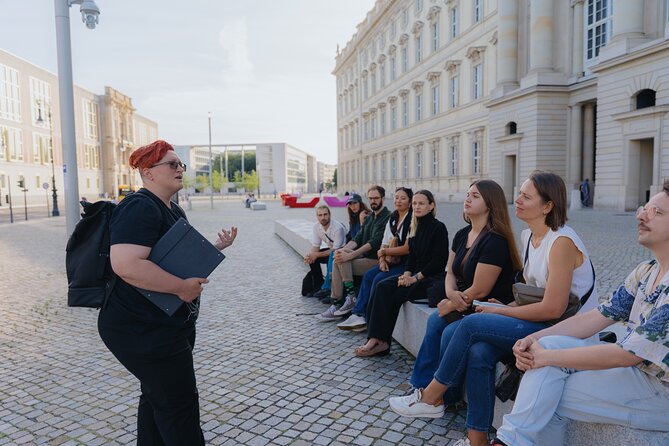
It’s a small group experience (up to 15 people), and the walking is not meant to exhaust you. One review even described it as a short walk around 2 km, which matches the “micro-tour” style: you spend time at key corners and facades without turning the day into a long hike.
Plan for an outdoor-heavy experience. The tour notes it needs good weather, so dress for the forecast and bring the usual Berlin basics (water, comfortable shoes, and a jacket that won’t get you grumpy halfway through).
You can also read our reviews of more historical tours in Berlin

Rotes Rathaus Terracotta Timeline: Early Berlin Uprisings in Stone
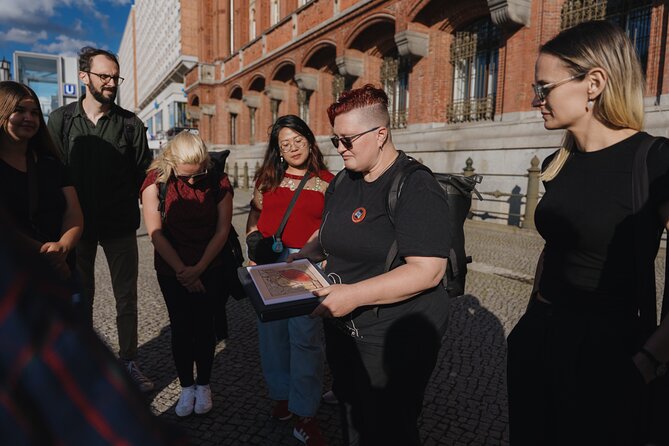
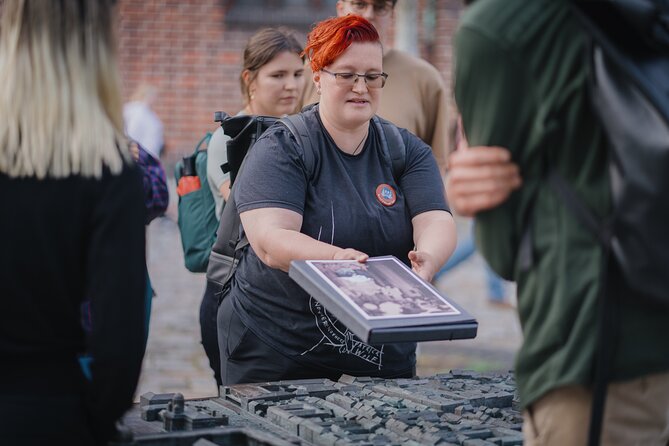
The tour starts at the Rotes Rathaus area, meeting at the nearby Aufbauhelferin sculpture by Fritz Cremer. From there, you move to the Red Town Hall’s terracotta timeline that runs around the building like a history band you can circle with your eyes.
This stop matters because it frames the whole tour idea: Berlin doesn’t only remember in museums. It also remembers in public architecture—by choosing what to highlight and how to present the story of the city’s origins and its early big uprising.
You’ll get a chance to slow down at the moments the guide points out and see how “history” is shaped. That’s the recurring theme here, and it’s why this isn’t just a facts-and-dates walk.
Time on site is about 15 minutes, and since admission is free, you can focus on observation rather than logistics.
Nikolaiviertel and Gasthaus Mutter Hoppe: East Berlin Tells Two Different Stories
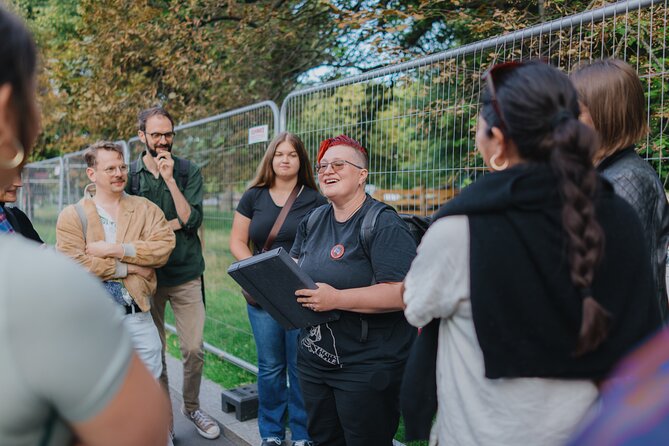
After the Red Town Hall, the tour heads toward Nikolaiviertel, a district that pulls off a very specific look. It was built as part of celebrations for Berlin’s 750th anniversary, and it mixes “socialist kitsch” aesthetics with real remnants from the East German era—most notably the leftover fabric tied to the Palace of the Republic.
The Palace of the Republic is one of those places that instantly invites questions. It served as the seat of the East German parliament, and it was also known as a major entertainment venue for the socialist half of the city. That double role—politics plus popular culture—helps you understand how regimes try to win hearts and control narratives at the same time.
Then comes Gasthaus Mutter Hoppe, where the history storytelling turns even more revealing. This is described as the East German answer to the Rotes Rathaus timeline: another terracotta-like timeline, but one aimed at the socialist country’s key moments. The most talked-about detail here is the absence of the Berlin Wall from the timeline—an intentional omission that gives you a clear visual lesson in propaganda.
You’re not just learning what happened. You’re learning how power edits memory. That’s the kind of “behind the facade” thinking this tour is built on.
These two stops are brief—about 10 minutes at Nikolaiviertel and 5 minutes at Gasthaus Mutter Hoppe—but they’re packed.
Marx-Engels-Forum: When Public Statues Become Public Debates
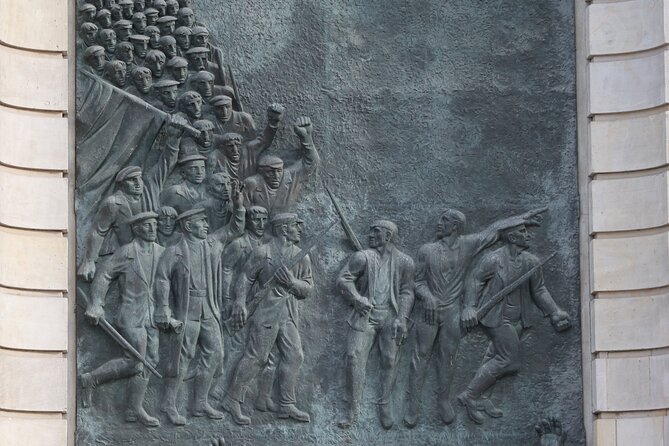
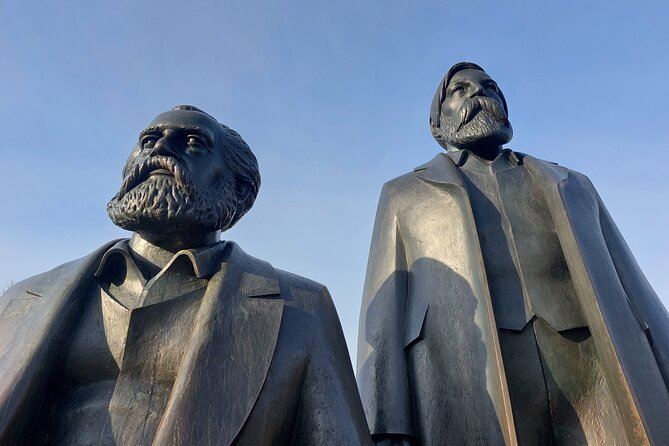
At the Marx-Engels-Forum, you meet the iconic duo associated with The Communist Manifesto: Karl Marx and Friedrich Engels. The statue area has been a subject of debate over the years, and that debate isn’t just academic—it’s a reminder that political ideas keep changing meaning depending on who’s looking at them.
This stop works well if you like your history to have friction. Berlin has plenty of monuments, but not many that are as openly tied to ideology and argument as these.
Plan for around 15 minutes here. It’s enough time to stand back, read the setting, and understand why the “same” artwork can feel different across generations.
Humboldt Forum and the Rebuilt Berlin Palace: Protests Behind the Façade
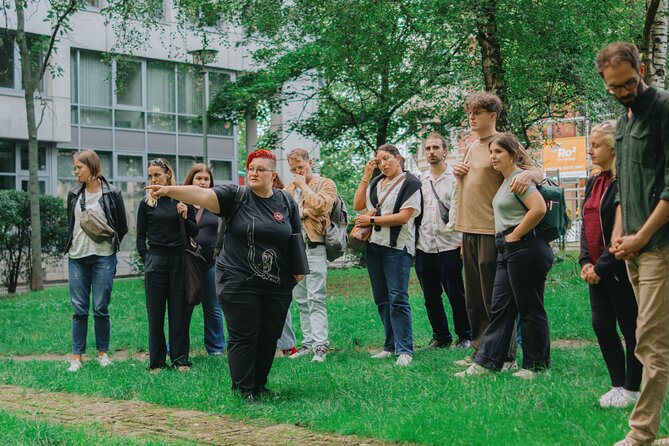
Next you reach the Humboldt Forum, where you can see the reconstructed Berlin Palace. What makes this stop more than a photo stop is the idea that the original palace wasn’t just decorative. It witnessed protests and revolutions, especially the March Revolution of 1848, which helped sow the seeds of democracy in Germany.
That’s a strong theme for the whole tour: the same physical structures can host different eras of conflict and change. Reconstruction can help you see what was lost, but it also invites a question: which version of the past are we rebuilding, and why?
Time here is about 20 minutes, and it pairs especially well with the earlier timeline stops. By now, you’re starting to read Berlin as a system of messages—some painted in stone, some erased, and some rebuilt.


Rosenstraße: 1943 Women’s Civil Disobedience Against the Final Solution
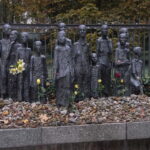
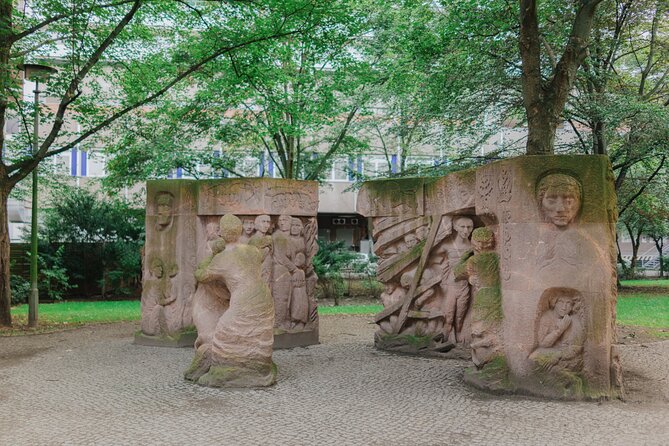
One of the most powerful stops is Rosenstraße, where you’ll see a monument connected to a courageous act of civil disobedience in the winter of 1943. The tour frames it as the only protest by Germans against the Final Solution—which alone makes this a stop you’ll remember long after the walk ends.
This is not presented as distant, abstract tragedy. You also hear about Jewish life under Nazi rule, and you can see the foundations of the oldest synagogue in Berlin.
That combination is what gives Rosenstraße its weight. It’s both remembrance and survival-era context, and the guide’s job is to keep the story grounded in what people endured and what resistance could look like when it was risky and public.
Expect about 15 minutes at the monument area. It’s a good moment to slow down, take in the setting, and let the guide’s explanation do what reading a plaque can’t.
St. Mary’s Church and Martin Luther King’s 1964 Sermon
The tour then moves to St. Mary’s Church, one of the oldest churches in Berlin. Here, the connection is not German political history alone—it’s international and civil-rights linked: Martin Luther King delivered a sermon here in 1964 to a huge crowd.
This stop adds an important layer to the protest theme. It shows that Berlin wasn’t only a stage for East-West conflict. It also hosted voices tied to broader human rights struggles.
It’s a short stop—around 10 minutes—but it helps balance the heavier parts of the walk with a different kind of moral courage.
Berlin Television Tower: A Communist Power Symbol in Plain View
At a key viewpoint, you’ll catch sight of the Berlin Television Tower—the city’s landmark and described as a symbol of communist power.
This is a reminder that ideology can be architectural. From a distance, the tower looks like just skyline machinery. With the guide’s framing, it reads like a statement the government wanted the city to see every day.
There isn’t a set “museum time” here. It’s more of a visual punctuation mark for the tour’s political story—then you keep moving.
Brunnen der Völkerfreundschaft: The Peaceful Revolution of 1989 and the T-Shirt Protest
Next is Brunnen der Völkerfreundschaft (Fountain of Peoples’ Friendship), where the tour turns to the Peaceful Revolution of 1989. You trace the chain of events that led to the Fall of the Wall, but you don’t do it in a classroom way. You do it by connecting political shifts to people standing in public spaces.
A highlight is the story of young East German oppositionists staging a T-shirt protest by the fountain in autumn 1989. That kind of protest—simple, visible, and copied quickly—shows why this period felt different from earlier, more violent confrontations.
Time here is about 15 minutes, and it’s one of the stops where the tour’s “small details matter” philosophy really pays off.
Weltzeituhr: Ending at Alexanderplatz’s Rotating World Clock
The tour finishes at Weltzeituhr, the World Time Clock by Alexanderplatz. It’s described as the most popular meeting spot in East Berlin, and it features a rotating design showing time in 148 cities around the world.
This ending is clever. After walking through propaganda timelines, monuments, and protest sites, you end at a place about global time and everyday meeting rhythms. It’s a quieter kind of meaning, but it fits the tour’s arc.
You’ll spend around 15 minutes at the clock, and it’s also a practical payoff: Alexanderplatz is well connected, so getting back into your Berlin day is easy.
Meeting Points and Practical Tips That Keep the Day Smooth
You meet at the Aufbauhelferin sculpture by Fritz Cremer near Rotes Rathaus (Jüdenstraße, 10178 Berlin). You end at the World Time Clock at Alexanderplatz (Alexanderpl. 1).
The tour is offered in English, uses a mobile ticket, and is designed to be easy to join with good weather. It’s also noted as near public transportation, so you’re not stuck planning a complicated transit route just to see the highlights.
One last practical tip: bring your curiosity and your willingness to look at facades like documents. This tour rewards people who slow down and notice what’s written in stone, what’s missing, and what’s being emphasized.
Should You Book This Berlin Protest History Tour?
Book it if you want a short, focused walking tour that treats monuments and architecture like evidence—not just background decoration. It’s a strong fit for history-inclined travelers who like contextual stories, and it works well even if you live in Berlin and think you already know the basics.
Skip it if you prefer museum-style exhibits, audio-heavy narratives, or long indoor stops. This one is built for street-level learning and it’s naturally politics-focused.
Given the $30.04 price, the expert guide, the free-access stops, and the small-group pace, I think it’s a smart way to spend two hours when you want Berlin’s protest story explained through the city itself.
FAQ
How long is the Berlin Protest History Tour?
It runs for approximately 2 hours.
How much does the tour cost?
The price is $30.04 per person.
Is the tour offered in English?
Yes, the tour is offered in English.
Do I need an admission ticket for the stops?
No. The stops listed are marked as admission ticket free, and the tour uses a mobile ticket.
What are the start and end points?
You start at the Aufbauhelferin sculpture by Fritz Cremer at Rotes Rathaus (Jüdenstraße, 10178 Berlin). You end at the World Time Clock (Weltzeituhr) near Alexanderplatz (Alexanderpl. 1).
What if the weather is bad?
This experience requires good weather. If it’s canceled due to poor weather, you’ll be offered a different date or a full refund.