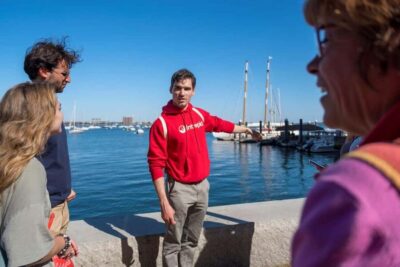
REVIEW · BERLIN
Berlin: Berlin Charité Guided History Tour
Book on GetYourGuide →Operated by Secret Tours Berlin · Bookable on GetYourGuide
Medical history can sound heavy. This one works because it’s Berlin, on foot, with real places.
You’ll like the way the tour connects centuries of science to daily human stories—life, suffering, and what medicine got right (and wrong). I especially appreciated the focus on Berlin’s major doctors and Nobel Prize winners—Rudolf Virchow, Robert Koch, Emil von Behring, and Ferdinand Sauerbruch—so it doesn’t feel like a random list of dates. Another big plus is the stop at a mysterious “medicine temple,” Berlin’s oldest surviving teaching building, hidden in a backyard.
One thing to plan for: the hospital itself is part of an active medical facility, so you’ll see a lot from outside. The tour also doesn’t go into the Charité Bed House, and the wider hospital grounds aren’t open for group access—so if you’re hoping for a full inside-the-hospital day, this won’t be that.
In This Review
- Key things I’d mark on your map before you go
- Why Berlin’s Charité history hits harder than you expect
- Meeting at Charité Tower: easy start, timed walk, smart pacing
- The plague-house origin: where the story starts (and why it matters)
- Charité as a scientific engine: Virchow to Koch to Behring to Sauerbruch
- Nobel Prize context without the heavy academic mood
- The hard chapter: medicine under the Nazi regime
- The Charité Bed House and why you won’t go inside
- The “medicine temple”: Berlin’s oldest surviving teaching building (inside access)
- Animal Anatomical Theatre (TAT): what to watch for
- Price and value: $28 for a two-hour medical history narrative
- Who this tour suits best (and who should choose differently)
- Should you book the Berlin Charité Guided History Tour?
- FAQ
- What is the duration of the Berlin Charité guided history tour?
- How much does it cost?
- Where do I meet for the tour?
- What language is the tour guide?
- Does the tour go inside the Charité Bed House?
- Are the hospital grounds accessible during the tour?
- What is the Animal Anatomical Theatre (TAT), and can it be closed?
- Can I get a refund if I cancel?
- Is there a pay-later option?
Key things I’d mark on your map before you go

- The 300-year timeline: you’ll connect plague-era origins to Charité’s modern role
- The scientist roll call: Virchow, Koch, Behring, Sauerbruch, and Nobel-winning context
- The hard chapters: you’ll hear about doctors’ collaboration with the Nazi regime
- A “medicine temple” you enter: Berlin’s oldest surviving teaching building, inside access included
- Animal Anatomical Theatre (TAT): a specialist stop that can shift hours on short notice
Why Berlin’s Charité history hits harder than you expect

Berlin Charité isn’t just a hospital. It’s an institution that shaped modern medicine—and it also survived the worst parts of German history. That’s why this tour feels different from the usual “old building” walk.
You start with the Charité’s early roots: a plague house in the 18th century that later developed into what became one of Europe’s most important university hospitals. The point isn’t to scare you. It’s to show how medical thinking evolves when cities face outbreaks, poverty, war, and political pressure.
I also liked how the guide keeps the story grounded. You’re not getting treated like a museum audience. You’re learning how scientists worked, what they believed, and what their discoveries meant in real time. If you’ve ever wandered Berlin’s streets and wondered why certain areas feel academically serious, Charité is a big reason.
You can also read our reviews of more guided tours in Berlin

Meeting at Charité Tower: easy start, timed walk, smart pacing

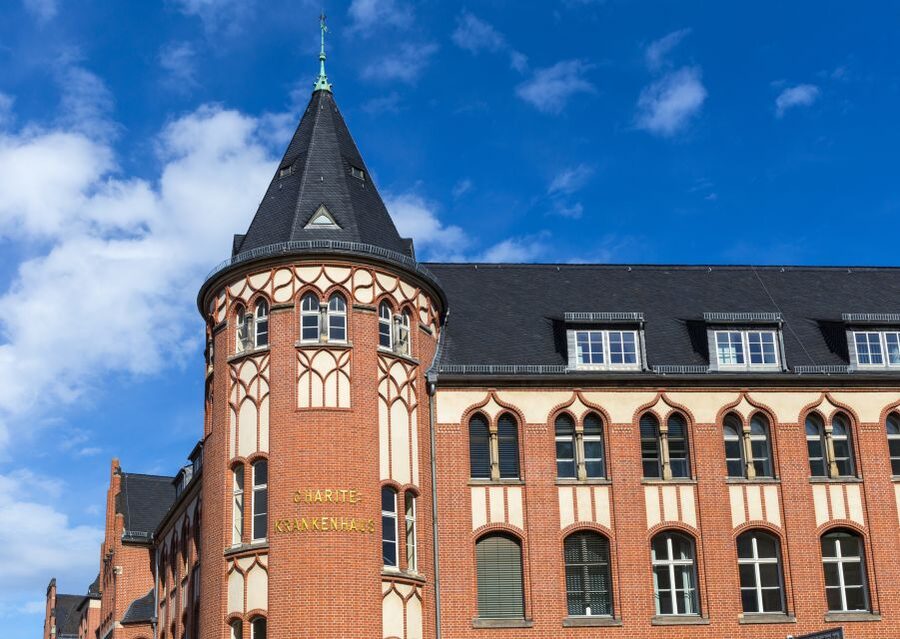
The tour starts in front of the Charité Tower at the crossroads of Schumannstraße / Charitéplatz / Charitéstraße. It begins on time, so I’d arrive a bit early and get your bearings fast—this part of Berlin can feel busy.
The schedule is built around a two-hour window. That matters because it shapes the pacing: you’ll move through the main story beats, then hit the most important physical anchors—places you can stand in front of and actually “see” what you just learned. If you’ve got limited time in Berlin, this format works well: it’s long enough to feel like a real story, not so long that it becomes a lecture you escape by posture.
The guide is live and German. If you don’t speak German, this can be a mismatch, since the experience is built around narration rather than visual handouts. If you do speak German, you’ll probably enjoy the confident storytelling style—people praised the guide’s delivery and the way the material sticks to the buildings.
The plague-house origin: where the story starts (and why it matters)
The tour’s opening idea is simple: the Charité you recognize today didn’t begin as a modern university hospital. It began with something much more urgent—a plague house.
That origin changes how you look at everything that follows. When you understand that the earliest mission was managing mass sickness, you start to see later developments (public health, anatomy, infectious disease research) as responses to repeated crises, not just academic progress.
From there, you’ll walk along Luisenstraße and across the university campus areas as the narrative moves forward in time. The value here isn’t only the facts. It’s the geography: Berlin’s academic and medical identity is literally woven into the city grid, and you get a guided way to notice it.
Charité as a scientific engine: Virchow to Koch to Behring to Sauerbruch
One of the strongest parts is the way the tour ties famous names to the institution rather than treating them like separate trivia.
You’ll hear about:
- Rudolf Virchow: a major figure in how medicine understood disease at the cellular level
- Robert Koch: central to germ theory and infectious disease thinking
- Emil von Behring: tied to breakthroughs in immunology-related work
- Ferdinand Sauerbruch: known for surgical innovation in his era
Even if you only know one of these names, the tour makes them feel connected to Berlin, not floating in history books. I like that the guide frames them as part of a place where ideas could be tested, argued, and scaled.
And here’s the practical payoff for you as a visitor: when you walk past older buildings and institutional grounds, you’ll have a mental map of what that architecture likely supported—teaching, research, hospital care, and the daily machinery of medical life.
Nobel Prize context without the heavy academic mood
The tour doesn’t just name Nobel Prize winners—it connects the recognition to what the institution produced and why Berlin became a magnet for scientific work. That makes the topic easier to follow.
You can think of it like this: Nobel-level science doesn’t come from one genius alone. It comes from systems—labs, teaching, hospitals, networks, funding, and public needs. Charité was the kind of institution that could attract talent and also give researchers a place to work directly with patients and diseases.
This is also why the tour’s tone matters. It’s described as informative and highly engaging, and you’ll feel that in how the guide strings events together so the city’s medical past becomes readable during the walk.
You can also read our reviews of more historical tours in Berlin





The hard chapter: medicine under the Nazi regime
Not every history tour includes the unpleasant parts. This one does, and it’s handled as part of the institution’s story.
You’ll learn about the dark times when doctors collaborated with the Nazi regime. Whether you already know German history well or you’re catching up, the impact is real because it reframes the whole institution: medicine isn’t automatically ethical just because it’s scientific.
For your experience, that means two things:
1) You’ll likely think about research ethics more than you expected.
2) You’ll understand why institutions today work so hard to define ethical standards and professional responsibilities.
The guide’s job here isn’t to shock. It’s to keep history accurate and complete. And you’ll leave with a more honest sense of how medical progress can exist beside grave wrongdoing.
The Charité Bed House and why you won’t go inside
Here’s what you can and can’t expect about the hospital buildings.
The tour does not go inside the Charité Bed House. It’s a hospital facility with protection and hygiene regulations, and that means you’ll get outside views instead of an interior look.
Also, the hospital grounds—Charité Campus Mitte—are not accessible for group tours. That restriction shapes the itinerary. You still get the core story because the guide uses key landmarks you can see, plus the special teaching building you can enter.
So if you’re the type who wants a full “walk through the hospital” day, temper that expectation now. If you’re more interested in the human and scientific narrative tied to place, you’ll still get a satisfying experience.
The “medicine temple”: Berlin’s oldest surviving teaching building (inside access)
This is the stop you’ll remember.
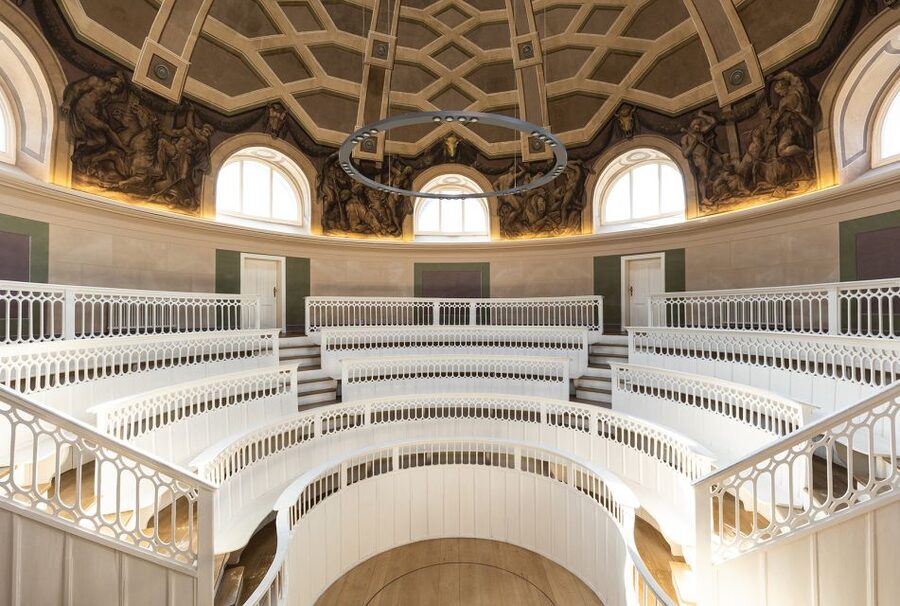
The tour takes you to a mysterious “medicine temple,” Berlin’s oldest surviving teaching building, hidden in a backyard. And yes—you’ll visit it from the inside.
That’s a big deal. Outside views are common in city tours, but inside access to a long-lived teaching structure lets you feel how medical education was meant to work: classes, anatomy learning, and the physical space where future doctors were shaped.
Even with only one interior visit, you get an “oh, that’s what this building was built for” moment. It’s the kind of stop that makes the rest of the story feel more real, and it’s a main reason people recommend the tour, even to Berliners who know the area well.
Animal Anatomical Theatre (TAT): what to watch for
During the walk, you’ll also visit the Animal Anatomical Theatre (TAT). This is a place that naturally fits the medicine theme because it connects directly to anatomical study and teaching.
One practical consideration: the TAT reserves the right to adjust opening hours at short notice, and it’s closed on public holidays. So don’t plan to treat the visit like a guaranteed timed theater show. Instead, think of it as a planned stop whose availability depends on the venue’s schedule.
If it’s open when you arrive, take your time and look at the space like a teaching tool, not just a photo backdrop. You’ll get more out of it if you keep the tour’s story in your head: medicine history isn’t only discoveries—it’s classrooms and methods.
Price and value: $28 for a two-hour medical history narrative
At $28 per person for a two-hour guided history tour, the value is mainly in the depth of storytelling, not in sightseeing volume.
What makes it feel worth it:
- You get a structured timeline from the 18th century plague-house era to modern Charité significance
- You learn the names that shaped the field—Virchow, Koch, Behring, Koch, Sauerbruch—and why Nobel context matters
- You get at least one interior visit (the “medicine temple”), which most area walks don’t include
- The tour is guided by a live storyteller in German, with high-quality delivery praised for clarity and rhetoric
Could it be more expensive if it included hospital interior access? Probably, but that access is limited by real-world facility rules. As it is, you’re paying for narrative + key landmarks + one interior teaching building, within a tight timeframe.
Who this tour suits best (and who should choose differently)
This is a good match if you:
- want Berlin history that’s different from the usual monuments loop
- enjoy science history and want the human stories behind it
- like guided walks with a strong narrative thread and clear takeaways
- are comfortable with a German-language live guide
It might be less ideal if you:
- don’t speak German and can’t follow a live German narration
- want lots of interior hospital spaces (this is constrained by facility access rules)
- are visiting on a public holiday when the TAT may be closed
Should you book the Berlin Charité Guided History Tour?
If your idea of a great Berlin day includes walking with a story and learning how a major institution shaped medicine over centuries, I think you should book it.
You’ll come away with a sharper sense of Charité’s role in scientific breakthroughs, plus the accountability side of history—especially the chapter on Nazi-era collaboration. And you’ll see the kind of architectural “teaching history” that you can’t get from photos alone, thanks to the interior stop at Berlin’s oldest surviving teaching building.
Just go in with the right expectations: it’s a guided history walk focused on landmarks and education spaces, not a full hospital interior tour. If that fits your style, this tour is strong value for $28 and a smart use of two hours in Berlin.
FAQ
What is the duration of the Berlin Charité guided history tour?
The tour lasts 2 hours.
How much does it cost?
It costs $28 per person.
Where do I meet for the tour?
Meet in front of the Charité Tower at the crossroads of Schumannstraße / Charitéplatz / Charitéstraße.
What language is the tour guide?
The live guide speaks German.
Does the tour go inside the Charité Bed House?
No. The tour does not go inside the Charité Bed House due to hospital protection and hygiene regulations.
Are the hospital grounds accessible during the tour?
No. The Charité Campus Mitte grounds are not accessible for group tours.
What is the Animal Anatomical Theatre (TAT), and can it be closed?
The tour visits the Animal Anatomical Theatre (TAT). It can adjust opening hours at short notice for closed events, and it is closed on public holidays.
Can I get a refund if I cancel?
Yes. You can cancel up to 24 hours in advance for a full refund.
Is there a pay-later option?
Yes. You can reserve now and pay later, keeping your travel plans flexible (pay nothing today).