REVIEW · BERLIN
Where It All Began: Berlin’s Queer & Trans History Tour
Book on Viator →Operated by BerlinGuide.de · Bookable on Viator
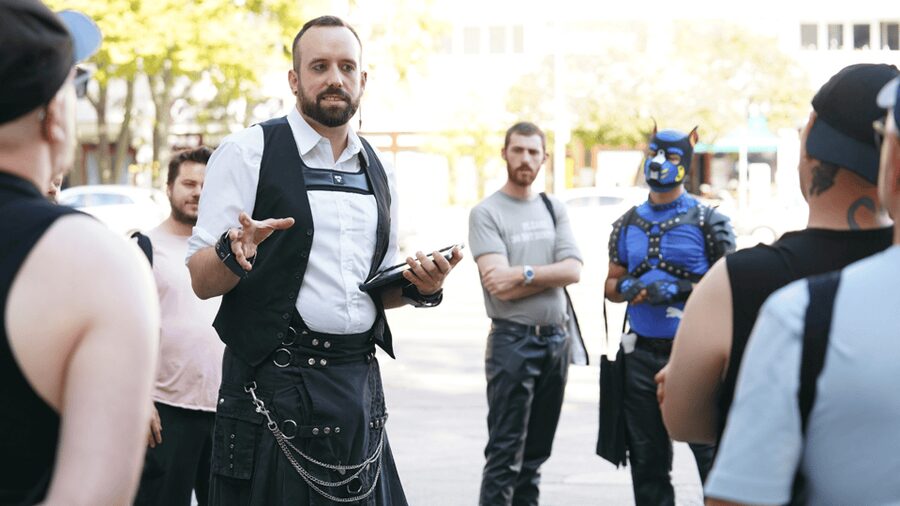
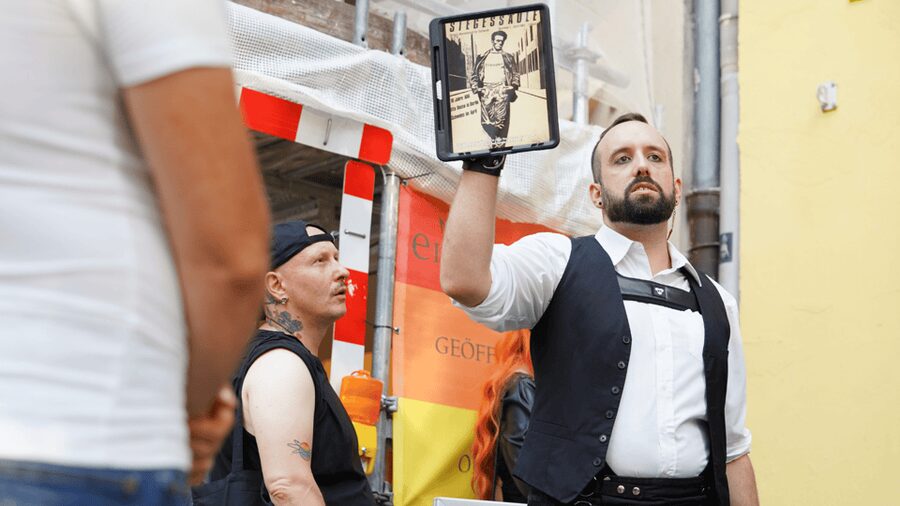
Berlin’s queer history starts before the word existed. This 3.5-hour walk is led by a queer activist and gender scholar, with iPad AR that overlays old photos right where you’re standing. I also really liked the small-group size (max 10), which keeps the tone personal and makes it easier to ask questions as the stories get heavy.
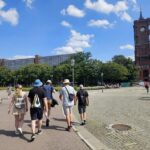
One thing to plan for: it’s a walking route and it’s designed for good weather, so wear shoes you can rely on and be ready for a few stops with real emotional weight.
In This Review
- Quick hits
- Why this Berlin queer and trans walk feels different
- Price and value of the $83.13 experience
- Route plan: from Else-Lasker-Schüler-Straße to Metropol
- Early queer activism at Karl-Heinrich-Ulrichs-Straße 1 and Magnus Hirschfeld’s legacy
- Nazi persecution at Nollendorfplatz and the reality of risk
- Lesbian life, cabaret defiance, and names you can place at Schwerinstraße 13
- Christopher Isherwood, the police angle, and the drag-bar story at Eldorado
- Post-war organizing: West-Berlin activism, SchwuZ, and Charlotte von Mahlsdorf
- The trans club revolution: Chez Romy Haag and the shape of nightlife today
- AIDS crisis at Internationale Stele and how Berlin handled a divided emergency
- Metropol, Pride, and gentrification battles you can feel in Kreuzberg and beyond
- Should you book this Berlin queer and trans history tour?
- FAQ
- How long is the Where It All Began: Berlin’s Queer & Trans History Tour?
- How many people are in the group?
- What language is the tour offered in?
- Where do I meet and where does the tour end?
- What’s included in the tour price?
- Are admissions required at the stops?
- What happens if the weather is bad?
Quick hits
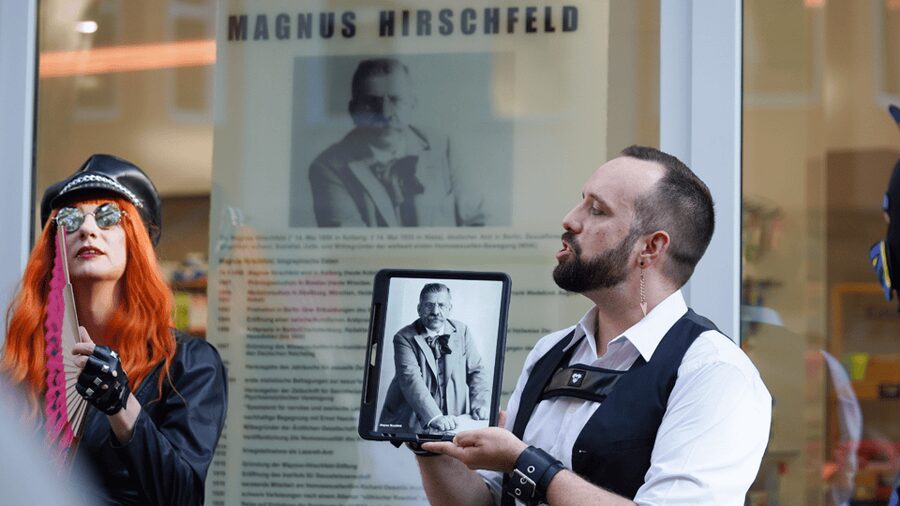
- iPad augmented reality that shows historical photos/videos in the exact spots you’re visiting
- Small group of 10 for a guide-to-group experience that feels human, not rushed
- 200+ rare archival images and video used throughout the walk
- Landmarks across eras, from early activism through Nazi persecution, post-war organizing, AIDS survival, and today’s queer nightlife
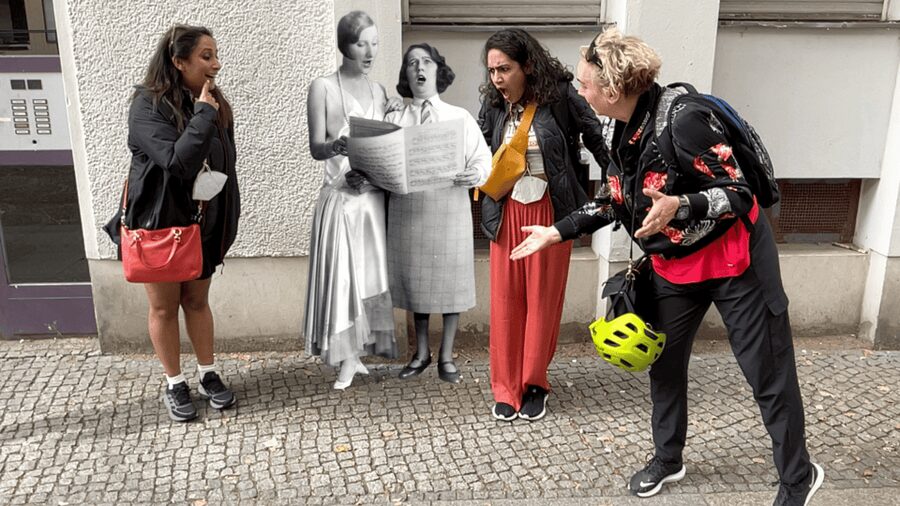
- Mixies AR photo moments so you get fun personalized pictures to take home, not just memories
Why this Berlin queer and trans walk feels different
Berlin can be a bit overwhelming if you’re trying to DIY it. This tour gives you a thread to follow, and that thread is about people who built language, community, and safety when the world was hostile to them.
I like that the guide doesn’t treat LGBTQ+ history as one straight line. You’ll move across different periods and see how attitudes changed, how some governments targeted queer people with law and violence, and how communities answered with organizing, art, and nightlife. The tour also brings in names you’ve probably heard in passing, like Christopher Isherwood, and connects them to real places where choices had consequences.
And the AR tool matters more than you might expect. When old images line up with modern streets, you stop thinking of history as distant. It starts looking like a place you could walk through today.
You can also read our reviews of more historical tours in Berlin


Price and value of the $83.13 experience
At $83.13 per person for about 3 hours 30 minutes, this isn’t one of the cheapest walks in Berlin—but it is heavily loaded for what you get.
You’re paying for three big things:
- A guided experience led by a queer activist and gender scholar
- On-site iPad augmented reality plus 200+ rare historical photos/videos/materials
- Mixies, which creates fun, personalized AR photos during the tour
Another practical value point: the stops you visit have free admission tickets, so the price is mostly about interpretation and materials, not museum fees. The tour also runs in English, which helps if you want the story and context without translation gymnastics.
The other value signal is how quickly it’s booked. On average, this gets reserved about 36 days in advance, so if you’re traveling in peak season, booking earlier is the smart move.
Route plan: from Else-Lasker-Schüler-Straße to Metropol
The tour starts at Alnatura Super Natur Markt, Else-Lasker-Schüler-Straße 18, 10783 Berlin. The end point is Metropol, Nollendorfpl. 5, 10777 Berlin, with the tour starting at 2:00 pm.
It’s a near-public-transport kind of route, so you’re not stuck far from transit before you start or after you finish. That matters in Berlin, where neighborhoods feel connected but your feet still do most of the work. Also, it’s capped at 10 travelers, so you won’t feel swallowed by a huge crowd.
The tour uses a mobile ticket, and service animals are allowed. If you’ve got any questions about whether you can comfortably do a walking tour, the posted info says most travelers can participate, but it’s still wise to treat this as a true walking experience.
And yes, it’s weather-dependent. If conditions are poor, you’ll be offered a different date or a full refund.
Early queer activism at Karl-Heinrich-Ulrichs-Straße 1 and Magnus Hirschfeld’s legacy
The first stop is Karl-Heinrich-Ulrichs-Straße 1, tied to Karl Heinrich Ulrichs—often described as one of the earliest public advocates for decriminalizing homosexuality. What I found compelling here is the framing: queer identity advocacy wasn’t always called by modern terms. People were already thinking, defining, and arguing for rights long before the language became mainstream.
From there, the tour’s story accelerates toward the work of Magnus Hirschfeld at Magnus-Apotheke, where the Institute for Sexual Science once operated. This isn’t just a political story. It’s also a story about research, gender theory, and what early activism looked like when it had institutional support.
You’ll learn about Hirschfeld’s Scientific-Humanitarian Committee, described as the first organization dedicated to queer rights and gender studies. The tour also touches on Hirschfeld’s concepts of sexual intermediaries and the idea of Berlin’s third gender.
One of the most striking parts is the discussion of gender-affirming surgeries connected to people including Dora Richter, Lili Elbe, and Karl M. Baer. The point here isn’t to turn this into spectacle—it’s to show that trans history includes medical and legal battles, not just nightlife and street activism. Then the story turns darker with the reminder that the institute was destroyed by the Nazis, wiping out a crucial chapter of queer scholarship.
If you care about the bigger picture, this segment is the tour’s backbone: it shows that rights movements weren’t invented later—they were argued for, studied, and built here.
Nazi persecution at Nollendorfplatz and the reality of risk
At Nollendorfplatz, the tour confronts LGBTQ+ persecution under Nazi rule. This stop centers on several names and threads at once—Adolf Brand, right-wing gay activists, and the complicated role of Ernst Röhm, including the unsettling idea of openly gay Nazis inside the regime.
Then you get the key event: the Night of the Long Knives, when Röhm and many other queer individuals within Nazi ranks were executed. That part matters because it reveals how power inside the Nazi state was not “one rule for everyone.” It was political, ruthless, and shifting—often using queer people as pawns until they weren’t useful.
The tour also explains what persecution meant beyond propaganda. You’ll hear about concentration camp targeting and the pink triangle forced on victims. This is one of those segments where AR and archival materials can feel like more than decoration. Seeing photographs used to document a vanished world can make the laws feel real, not abstract.
A note for your mindset: this portion is emotionally serious. If you want Berlin as a party city only, this walk isn’t built for that. If you want a full picture—what people endured and how communities survived—this stop is essential.

Lesbian life, cabaret defiance, and names you can place at Schwerinstraße 13
Next you’ll head to Schwerinstraße 13, focused on lesbian life in 1920s Berlin. The highlight here is visiting the site of Toppkeller, a famous lesbian bar. This is where the tour shifts from state violence to community spaces: where people found each other, built support, and made nightlife safer.
I like that the tour doesn’t reduce lesbian history to one kind of venue. It also discusses performance culture, including Claire Waldoff, a lesbian cabaret singer whose songs became anthems of defiance. When you hear it tied to a real location, it’s easier to picture queerness as something artistic and public, not only private.
There’s also Josephine Baker, discussed here as a bisexual performer who became a sex symbol for all genders. That inclusion helps you see how gender expression in Berlin’s queer orbit wasn’t one-size-fits-all.
At this stage, the tour becomes a practical tool for your own Berlin exploring. After learning where community spaces existed, you start spotting the city differently—less like a museum, more like a map of choices people made to be visible, safe, or both.
Christopher Isherwood, the police angle, and the drag-bar story at Eldorado
At Nollendorfstraße 17, the tour takes you into an unexpected corner of queer history: the homosexual department of the Berlin police. It’s surprising for many visitors, and that’s the point. Queer life has always been shaped by law and policing, not just culture.
You’ll connect this to gay male life in 1920s Berlin through stories including Christopher Isherwood and the way his experiences in Berlin helped inspire the famous cabaret that became a musical and film. The tour also covers his relationship with Heinz Neddermeyer, including their escape from Nazi Germany as queer refugees.
If you’re the kind of traveler who likes understanding how institutions worked, this stop gives you a key. It helps explain why some queer people had to navigate surveillance and risk long before they had public rights.
Then the tour turns to nightlife and performance at Magnus-Apotheke, tied to the former site of Eldorado, a drag bar from the 1920s. The story here is about gender-nonconforming people finding stage space and community, and it also includes the shocking paradox that Ernst Röhm—later central to Nazi persecution—was reported to have frequented the club.
That contrast is uncomfortable, but it’s also clarifying. It shows how regimes can tolerate something in one moment and destroy it in the next. It keeps your understanding of history honest.
Post-war organizing: West-Berlin activism, SchwuZ, and Charlotte von Mahlsdorf
When the tour reaches Prinz Eisenherz, it shifts to post-war LGBTQ+ organizing. You’ll learn about Homosexuelle Aktion West-Berlin, described as one of the first queer rights organizations after WWII. You also hear about the founding of SchwuZ, one of Berlin’s iconic queer clubs.
I like how this segment treats nightlife and organizing as linked. Clubs weren’t only for fun. They were meeting points, community infrastructure, and a place to test new forms of openness.
Then there’s Charlotte von Mahlsdorf, a trans woman highlighted for preserving Berlin’s queer history and creating safe spaces in East Berlin. This is a powerful way to cover a divided city without getting lost in political lectures. You see how one person’s preservation work became a kind of resistance—keeping culture from being erased.
Also, because the tour has AR elements and historical materials, you don’t just hear names. You’re encouraged to connect those people to physical Berlin locations, which makes it easier to remember and harder to dismiss.
The trans club revolution: Chez Romy Haag and the shape of nightlife today
The tour’s trans-focused storyline continues at Connection, centered on West Berlin’s trans community in the 1970s and 1980s. The featured reference point is Chez Romy Haag, described as a legendary trans-led nightclub that revolutionized Berlin nightlife.
This stop is about permission—what it meant to have a space where gender-diverse people could exist freely. And it frames how that culture feeds into later queer club identity in Berlin. Even if you never plan to go out late, you’ll likely walk away understanding why Berlin’s club scene became such an international reference point.
One thing I’d keep in mind: this isn’t a how-to party guide. It’s a cause-and-effect explanation. If you’re into social history—how spaces change what people can do—this section lands well.
AIDS crisis at Internationale Stele and how Berlin handled a divided emergency
At Internationale Stele GEGEN DAS VERGESSEN, the tour turns to the AIDS crisis in Berlin and how it hit differently across a divided city. The story focuses on how queer communities organized to fight for survival when the danger was immediate and resources were inconsistent.
You’ll also hear about activism by Rita Süssmuth, noted in the tour materials as one of the few politicians advocating for AIDS awareness. That detail helps you see the difference between street-level organizing and official public attention.
A memorable line in this stop is the idea that the Berlin Wall was metaphorically called the condom of the GDR. Even if you’ve never heard that comparison before, it’s a pointed way to highlight how East and West Berlin handled the crisis differently.
This section can be heavy, but it also gives context for why queer community organizing didn’t fade after older victories. The fight kept evolving.
Metropol, Pride, and gentrification battles you can feel in Kreuzberg and beyond
The final stop lands at Metropol, where the tour connects past queer nightlife to present-day activism. You’ll hear how the club ties into early gay community and the techno scene, plus its connections to today’s world-famous clubs such as Berghain and Lab.Oratory.
Then it broadens outward through other nightlife and event references, including SO36, Folsom Europe (described as Europe’s biggest fetish festival), Kreuzberg Pride, and the Dyke March.
The tour also brings in the city-level fight for affordability, including the Tuntenhaus squat. This matters because queer history in Berlin isn’t only about who partied and who protested. It’s also about who got priced out—and why current activists stay focused on housing and access.
If you’re planning your own Berlin evenings, you’ll leave with a better sense of what to look for. Not just club names, but the reasons communities keep showing up.
Should you book this Berlin queer and trans history tour?
Book it if you want more than photos and basic dates. This walk gives you names, places, and context across eras—from early activism and Hirschfeld’s institute to Nazi persecution, post-war organizing, trans-led nightlife, AIDS survival efforts, and modern Pride culture.
Skip it only if you’re looking for a light, casual stroll. The tour covers Nazi violence and the AIDS crisis, and it’s designed to make those realities part of the story, not a footnote.
One more practical nudge: because it’s a small-group tour and gets booked ahead (around 36 days on average), I’d lock in your spot early if your dates are firm. You’ll be glad you did.
FAQ
How long is the Where It All Began: Berlin’s Queer & Trans History Tour?
The tour lasts about 3 hours 30 minutes.
How many people are in the group?
The experience has a maximum of 10 travelers.
What language is the tour offered in?
It’s offered in English.
Where do I meet and where does the tour end?
You meet at Alnatura Super Natur Markt on Else-Lasker-Schüler-Straße 18, 10783 Berlin, and you end at Metropol on Nollendorfpl. 5, 10777 Berlin. The start time is 2:00 pm.
What’s included in the tour price?
Included are a guided walking tour led by a queer activist and gender scholar, augmented reality elements (iPad provided), Mixies personalized AR photos, 200+ rare historical photos/videos/archival materials, and insider tips on modern queer nightlife and events.
Are admissions required at the stops?
Admission ticket entry is listed as free at each stop.
What happens if the weather is bad?
The tour requires good weather. If it’s canceled due to poor weather, you’ll be offered a different date or a full refund.