REVIEW · MUMBAI
Best South Mumbai Heritage Walk
Book on Viator →Operated by Mumbai Dream Tours · Bookable on Viator
South Mumbai reads like an open-air textbook. This 3-hour walking heritage tour strings together colonial-era sights and photo stops, with just enough time at each place to actually look up and notice details. You’ll move at a slower pace than cars ever allow, so the streets and buildings feel personal instead of just passing scenery.
I love two things right away. First, the architecture variety is real: Victorian Gothic Revival style elements show up alongside neoclassical and grand Indo-heritage landmarks. Second, the route is built for close-up photos, not speed-walking, so you can stop for a shot and still keep the flow. Guides matter here too—Aakash, Gautam, Sandesh, and Sanika have all been highlighted for strong storytelling and friendly, engaging delivery.
One thing to consider: this is still a walking tour, so expect about three hours on foot. Also, while most outings run fine, there’s been at least one case where an experience was canceled without prior warning, so I’d keep flexible plans for that time window.
In This Review
- Key highlights worth caring about
- Why South Mumbai works so well on a walking tour
- Price and what you really get for it
- Getting started near CST and finishing in Colaba
- Gateway of India: the first stop and the big mood shift
- Kala Ghoda: where art and heritage share the same block
- Town Hall and the Asiatic Society Library: neoclassical order
- Flora Fountain and Hutatma Chowk: a quick, photo-ready pause
- Horniman Circle Garden: a short break with a purpose
- Bombay High Court (Principal Bench): architecture tied to power
- Taj Mahal Palace: luxury hotel energy at street level
- Chhatrapati Shivaji Terminus: the UNESCO finale you can linger at
- How to plan your day around a 3-hour heritage walk
- Who should book this South Mumbai heritage walk
- Should you book it? My practical take
- FAQ
- Is this tour offered in both morning and afternoon?
- How long is the South Mumbai Heritage Walk?
- How much does it cost?
- What’s included for tickets and entry fees?
- How big are the groups?
- Where do you meet and where does the tour end?
- Can I cancel for a full refund?
Key highlights worth caring about
- Morning and afternoon options so you can match the walk to your day.
- Free admission at every listed stop on the route, including major landmarks.
- Small group size (max 15) which makes questions and conversation easier.
- A real mix of styles from Victorian Gothic Revival to neoclassical civic buildings.
- Photo-first pacing with set time at each key monument.
- Standout guides named for history talk that stays friendly and useful.
Why South Mumbai works so well on a walking tour
South Mumbai is the kind of place where the best views are at street level. You’re not just staring at famous facades from across a road; you get to stand near them, read the shapes, and catch the city’s rhythm between landmarks. That’s the big win of this tour: it keeps you in the neighborhood, not stuck in a vehicle.
The route centers on how colonialism shaped the city’s look and institutions, using recognizable anchors like Chhatrapati Shivaji Terminus and the famed coastal stretches near Marine Drive. The guide helps connect the dots so the buildings stop being random postcards and start feeling like a story about power, trade, and identity.
At the same time, the tour stays practical. It’s only about 3 hours, and it’s structured with clear time at each stop. That matters in Mumbai, where you can easily burn time wandering without a plan.
You can also read our reviews of more walking tours in Mumbai


Price and what you really get for it
At $17.89 per person for roughly 3 hours, this is good value in Mumbai’s touring world. You’re not paying for transportation or a long lecture in one place. You’re paying for a guided walk that brings you close to major sights, with a mobile ticket and a group size capped at 15.
You also get a cost benefit that’s easy to miss: the listed stops include free admission (so you’re not stacking ticket fees on top of the tour price). For a first-time visit to Fort and Colaba-area heritage, that’s a smart way to cover a lot without turning your day into a checkout counter.
Getting started near CST and finishing in Colaba
The meeting point is in the Fort area, by CST Station near Azad Maidan, at a McDonald’s location inside Empire Building. You’ll find it next to the station area, which makes it straightforward if you’re using public transport. The walk ends in Apollo Bandar, Colaba, at Regal Cinema, which is a handy location for continuing the day around Colaba.
This start-to-finish setup also helps you avoid a common Mumbai problem: retracing your steps. You’re generally moving through a heritage belt that naturally leads toward Colaba’s more tourist-friendly streets.
Gateway of India: the first stop and the big mood shift
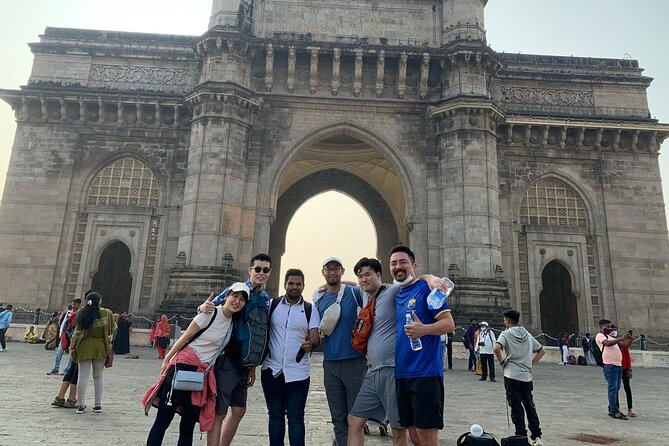
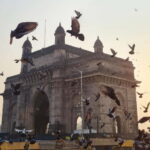
Your tour begins at the Gateway of India, with about 30 minutes to take it in. This is an arch-monument from the early 20th century, and it’s the kind of landmark that instantly sets expectations for the rest of the walk. Even if you think you already know what it looks like, being close changes the scale.
What’s worth doing here: slow down and notice the edges, the way the structure frames the surrounding harbor area, and how people use the space. A good guide will point out what to look for so you don’t just snap one photo and move on.
If you’re the type who likes photos with context, this is a great starting anchor. You’ll get a strong visual reference for the colonial-to-modern story the route is trying to explain.
Kala Ghoda: where art and heritage share the same block
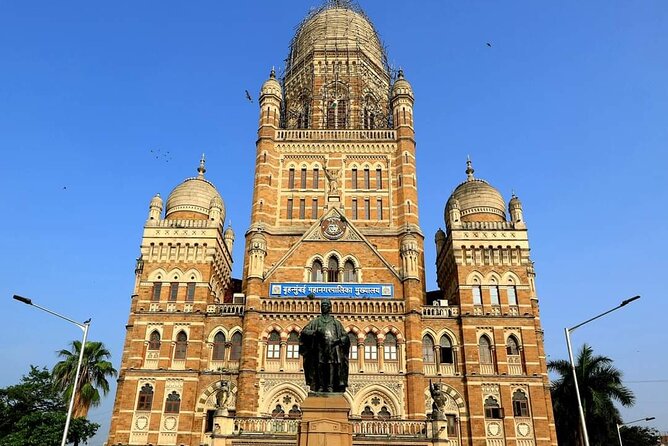
Next comes Kala Ghoda, with about 30 minutes. The area is known for the Kala Ghoda Arts Festival each February, which gives the neighborhood an identity beyond “just another heritage street.”
This stop works well for two reasons. One, it’s a change in pace from the grand monument feeling at the Gateway. Two, it helps you understand how cultural events keep the heritage zones alive, not frozen in time.
If you like street-level atmosphere, this is where you’ll feel Mumbai’s everyday energy around history. Use this time to look for architectural details, not just landmarks.
You can also read our reviews of more historical tours in Mumbai





Town Hall and the Asiatic Society Library: neoclassical order
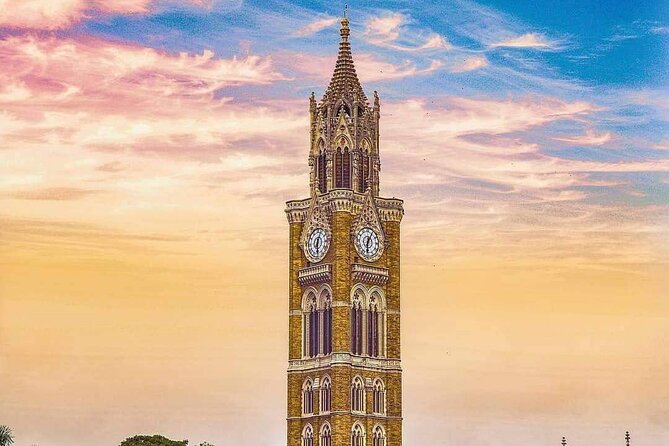
Then you hit Town Hall (Asiatic Society Library), another 30 minutes. This is a neoclassical building in South Mumbai’s Fort locality. Neoclassical often means you’ll see clean lines and balanced forms, and the guide’s job is to show you how that style fit into the city’s civic and colonial-era ambitions.
This stop is especially good if you enjoy how institutions show their importance through design. Don’t rush the façade. Take a minute to look at how the building’s structure communicates authority, then compare it mentally with the more ornate styles later in the walk.
From a practical standpoint, it’s also a nice mid-tour place to reset your focus. If you’re tired of photographing, this is where the “look longer, think more” approach pays off.
Flora Fountain and Hutatma Chowk: a quick, photo-ready pause
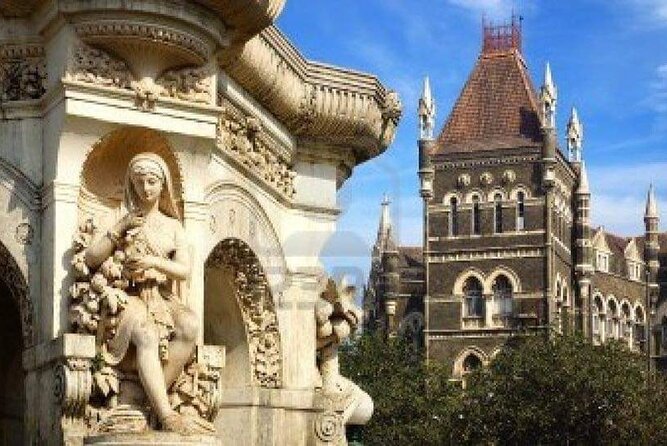
At Flora Fountain, you’ll have about 30 minutes. It’s located at Hutatma Chowk, and the key detail here is that the monument is described as an ornamentally sculpted heritage feature.
This stop is a good reminder that heritage isn’t only giant UNESCO sites. Sometimes it’s the street-corner moments that give a city its signature look. If you want one spot that blends architecture and public space, this is it.
Use your time to grab photos from different angles. Sculptural elements tend to look better when you shift your position, because the lighting and shadows change fast outdoors.
Horniman Circle Garden: a short break with a purpose
Next is Horniman Circle Garden, with about 10 minutes. It’s a compact park area in the Fort district, and the main value here is breathing room without leaving the heritage zone.
This is where you’ll feel the difference between “tourist rush” and “walking with attention.” The guide can help you interpret why this kind of green public space matters in a dense city.
Even in just 10 minutes, it’s useful. It lets your eyes rest, your feet recover a bit, and your mind reset before the more heavyweight monuments.
Bombay High Court (Principal Bench): architecture tied to power
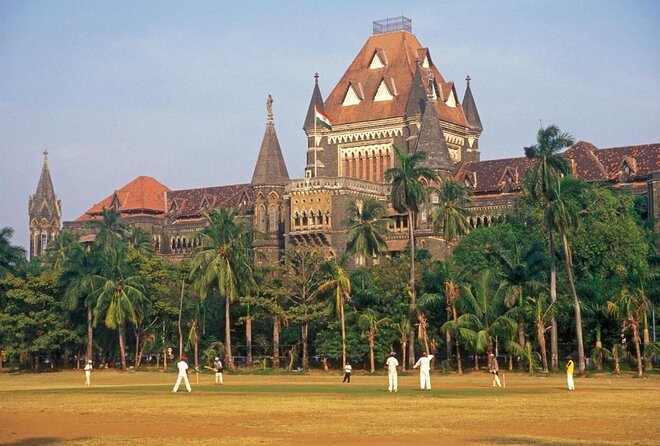
You’ll spend about 10 minutes at the High Court of Bombay, Principal Bench. This is the high court for the states of Maharashtra and Goa, so the building represents more than a pretty facade. It’s about institutions, law, and the way civic life gets shaped through architecture.
Ten minutes sounds short, but it’s enough for one solid pass: pause, look, take one or two photos, then move on with context. A strong guide can connect the place to how British-era governance and legal systems influenced what Mumbai built and where.
If you’re curious about how cities organize themselves around power, this is one of the most concept-heavy stops on the route.
Taj Mahal Palace: luxury hotel energy at street level
Then you approach The Taj Mahal Palace, Mumbai, with about 10 minutes. It’s a heritage five-star luxury hotel in Colaba. Even if you’re not staying there, the exterior presence tells you how history, wealth, and tourism intersect along Mumbai’s most famous streets.
This stop is useful for photography and for understanding the contrast between public institutions earlier in the walk and the private luxury world here. It also helps explain why Colaba feels different from Fort: different tone, different pace, different purpose.
Keep your expectations grounded. This is not a full interior visit, so treat it as a quick, close-up heritage look and a chance to frame your next photo session in Colaba.
Chhatrapati Shivaji Terminus: the UNESCO finale you can linger at
The walk concludes at Chhatrapati Shivaji Terminus (CST), with about 30 minutes. CST is a UNESCO World Heritage Site, and it’s the kind of location where the details reward your time.
This is where the “architecture styles” part really shows up. If Victorian Gothic Revival elements are mentioned in the tour’s focus, CST is the place where you’ll likely feel that influence in the structure and ornamentation.
If you like photos, plan to spend your best energy here. Stand back for the overall statement, then step in for close details like edges, stonework patterns, and the way the building massing fills the frame.
If your day has other plans after the tour, this is still a great end point because you’ll be done with your heritage arc while still in an area where you can eat and wander.
How to plan your day around a 3-hour heritage walk
This tour is best for travelers who want structure without getting stuck in one building. I’d treat it as a core activity for your first visit to South Mumbai. It gives you a guided overview across Fort and into Colaba, with enough time at each stop to take photos and actually notice architectural details.
Wear walking shoes. The tour is designed around being on foot, and the stops are outdoors or semi-outdoors where you’ll be standing and moving between points. If you’re sensitive to crowds, expect busy streets around the major landmarks.
Bring a camera or at least a phone you’re comfortable using outdoors. This walk is explicitly built for great photo opportunities, and the guides named in feedback are praised for steering people toward the best angles and visual context.
Who should book this South Mumbai heritage walk
You’ll enjoy it if you:
- Want a heritage introduction that connects landmarks instead of listing them.
- Like architecture and want help spotting styles like Victorian Gothic Revival.
- Prefer a guided walk with time to look, not a rushed bus-style checklist.
- Travel solo or as a couple and appreciate a small group with room for questions.
You might skip it if you hate walking, or if you only want one or two “must-see” stops with no interest in the broader story of how the city formed.
Should you book it? My practical take
Book this if it fits your schedule and you want an efficient way to cover Fort and Colaba’s most iconic heritage anchors in about three hours. The price is reasonable for the amount of major sightseeing you cover, and the free admission element at the stops helps the math work in your favor.
I’d book with a small day-buffer if you can, because you’ve got a fixed route and a walking format. But if you’re flexible and you like cities that reward attention, this is exactly the kind of experience that turns “I saw that” into “I understand why it’s there.”
FAQ
Is this tour offered in both morning and afternoon?
Yes. There are both morning and afternoon options so you can choose a time that matches your plans.
How long is the South Mumbai Heritage Walk?
The duration is about 3 hours (approx.).
How much does it cost?
The price is $17.89 per person.
What’s included for tickets and entry fees?
The tour notes that tickets are mobile, and the listed stops show admission free for each location.
How big are the groups?
The tour has a maximum of 15 travelers.
Where do you meet and where does the tour end?
You start at McDonald’s (Empire Building), next to CST/ Azad Maidan and end at Regal Cinema, Apollo Bandar, Colaba.
Can I cancel for a full refund?
Yes. You can cancel up to 24 hours in advance for a full refund.