REVIEW · MUMBAI
Private Jewish Heritage Tour
Book on Viator →Operated by Mystical Mumbai · Bookable on Viator
Mumbai’s Jewish story is easy to miss.
This private tour is a smart way to spot what most visitors walk right past. I like that it’s truly private for just your group, and you’re paired with an English-speaking guide who can translate the meaning behind places, not just point at them. You’ll also get smooth round-trip transfers in an air-conditioned car, which matters in Mumbai’s traffic.
One thing to consider: the experience is built around a set route of several religious sites, so you’ll want to plan for some walking and quiet, respectful visits. Also, like any local pickup-based tour, you’ll do best if you confirm the meeting spot clearly so everyone starts on time.
In This Review
- Key things to know before you go
- Why this tour feels different from the usual “sights-only” Mumbai plan
- Price and time: $75 per person and how to judge the value
- Getting rolling: pickup, your own group, and the comfort factor
- Gateway of India: a familiar starting point that sets the stage
- Taj Mahal Palace area: you’ll spot the “Tata-era” connection quickly
- Sassoon Dock: where trade and daily work meet the story
- Gate of Mercy Synagogue at Samuel Street: the Tipu Sultan link
- Magen David Synagogue: David Sassoon’s legacy in the details
- Magen Hassidim Synagogue: an active rhythm, not just a museum
- Kenneseth Eliyahoo Synagogue and a VIP-ready visitor experience
- David Sassoon Library: one of the tour’s best “quiet power” stops
- Chabad House: a modern support point in the same story
- What you should expect from the guide (and why good English matters here)
- Respectful visiting tips: how to get the most from synagogues and a graveyard
- Who this tour is best for (and who might want a different plan)
- Should you book this Private Jewish Heritage Tour?
- FAQ
- What places does the tour include?
- How long is the Private Jewish Heritage Tour?
- Is pickup and drop-off included?
- What is included in the tour price?
- Is food included?
- Is there free cancellation?
Key things to know before you go
- Private for your group: no mixing with strangers, and your guide can pace questions around you
- Synagogues + graveyard: you’re not just seeing buildings; you’re seeing community memory
- Free entry stops: multiple key sights are listed as admission-free during the route
- A guided narrative in English: meaning, names, and connections explained as you go
- Air-conditioned private vehicle: saves time and energy across Mumbai’s roads
Why this tour feels different from the usual “sights-only” Mumbai plan
Mumbai has a lot of famous landmarks, but Jewish heritage isn’t usually on the standard postcard list. This tour gives you a different lens: how a minority community shaped neighborhood life, schools, ritual spaces, and even the waterfront economy. That focus changes how you see the city.
I like that the route pairs big “you’ve probably heard of it” landmarks with community-specific sites. You start with the visual geography of Mumbai—Gateway of India and the Taj Mahal Palace area—then shift to the Jewish neighborhoods and institutions that kept culture and identity going through the centuries.
The guide’s job here isn’t just background facts. You’re looking at places tied to families, migration, trade, and faith. When someone explains connections—names, dates, and what certain synagogues were for—you’ll feel like you’re reading the city in layers instead of collecting photos.
You can also read our reviews of more private tours in Mumbai



Price and time: $75 per person and how to judge the value
At $75 per person for a 4 to 5 hour private tour, you’re paying for three things you often can’t get at this quality level on generic group tours: private pacing, an English-speaking guide, and door-to-door comfort. In Mumbai, time is real money, and car transfers matter. If you’re spending hours trying to self-navigate between neighborhoods, you’ll feel the value fast.
This also reads like a good fit if you care about context. Many short tours rush past houses of worship. Here, the stops are structured around Jewish institutions, each with a different role—active congregations, visitor-serving synagogues, community schools, libraries, and burial grounds. You’ll get more meaning per hour than a “just drive around” plan.
One note: food and drinks aren’t included. That’s normal for a half-day format, but it’s still a practical consideration. I’d plan your meal timing so you’re not hungry during quieter sections of synagogue or graveyard visits.
Getting rolling: pickup, your own group, and the comfort factor
The tour includes hotel pickup and drop-off plus a private vehicle with a professional driver. That’s the kind of inclusion that quietly improves your day. You spend less time negotiating transport and more time watching how the city actually works.
Because it’s private, you can also better control small things: bathroom breaks, photo stops, or slowing down for questions. You’re not fighting a group schedule. You’ll also notice that the tour is designed for a comfortable duration—about 4 to 5 hours—so it doesn’t feel like you’re trapped all day.
A practical consideration from real-world experiences: one guest reported difficulties with the operator finding them at pickup because there was no clear sign, leading to a long wait. So do your part: confirm the meeting point details ahead of time, and keep a screenshot or written note of the itinerary and pickup instructions on your phone.
Gateway of India: a familiar starting point that sets the stage

You begin at Gateway of India, one of Mumbai’s best-known monuments. It was built to welcome King George V and Queen Mary into India, so it’s a reminder of Mumbai’s role as a gateway city—ports, visitors, and global connections. Even if you’ve seen it from far away before, you get it as a narrative opening.
The tour uses this stop as a setup for contrast. From a place tied to colonial-era arrival and public ceremony, you move into the story of a community that built its own institutions nearby. It helps you understand that cities don’t have one history—they have many, layered side by side.
This stop is listed as free entry, and it’s short—about 15 minutes—so you won’t feel stuck there. Use the time to get your bearings: look at the shoreline direction and imagine the port networks that would later matter for places like Sassoon Dock.
Taj Mahal Palace area: you’ll spot the “Tata-era” connection quickly
Next is the iconic Taj Mahal Palace, famous enough that you likely know its name even if you haven’t been inside. The original building was commissioned by Jamshedji Tata and first opened to guests on December 16, 1903. That’s a specific date, and it makes the stop more than a pretty facade.
The value here is contrast again. The Taj Mahal Palace represents a high-profile slice of Mumbai’s public identity. Jewish heritage stops that follow are smaller, more community-centered. Put together, they show you how different social worlds coexisted.
This is also listed as free entry and brief—about 10 minutes. I’d use this short window for orientation photos, then be ready to focus: after the grand monuments, you’ll shift into the institutions where community life happened day-to-day.
You can also read our reviews of more historical tours in Mumbai



Sassoon Dock: where trade and daily work meet the story

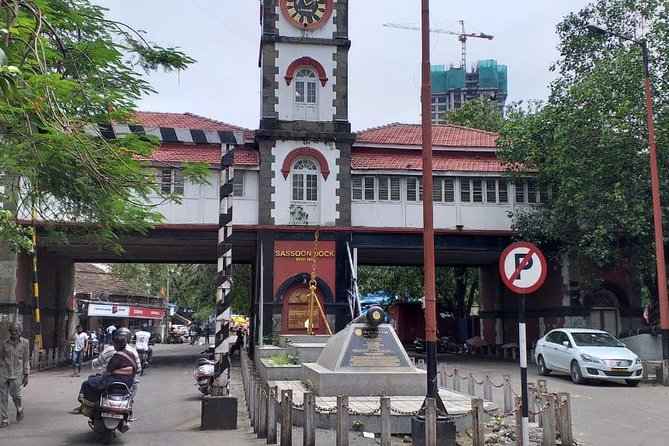
Sassoon Dock is where the tour turns more “local” and less “postcard.” It’s described as the largest fishermen port area in Mumbai and was donated by Sir Albert Sassoon in dedication to fishermen. There’s also a clock tower, and you get the chance to see the working port atmosphere from the viewpoints available.
Why this matters in a Jewish heritage tour: docks are where stories travel. They connect food, shipping, movement of people, and the flow of goods that support communities. Even without a long lecture, the setting gives you context. You can look at the busy working waterfront and understand why community neighborhoods developed around trade routes and economic needs.
The stop is about 30 minutes, and it’s admission-free. That’s the right amount of time for the sights and atmosphere without exhausting you before the synagogue visits.
Gate of Mercy Synagogue at Samuel Street: the Tipu Sultan link
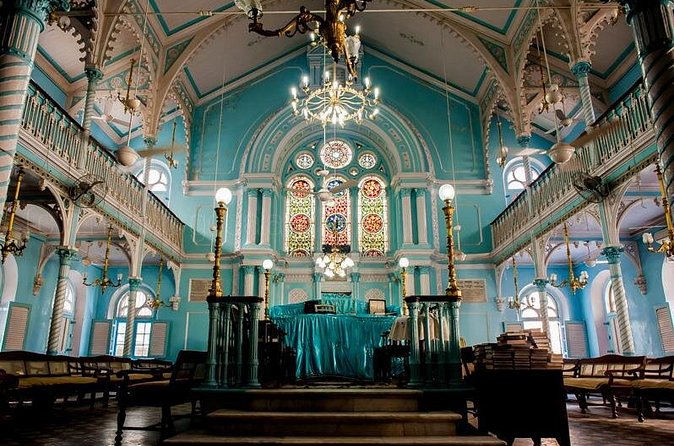
Now you’re in the heart of the tour’s meaning: religious institutions tied to broader local history. The stop at Gate of Mercy Synagogue (Samuel Street Masjid is mentioned in the tour details) is framed as an early synagogue with a connection to Muslim King Tipu Sultan, with religious importance behind its foundation.
Even if the exact chain of events isn’t spelled out at every moment, the point is clear. This tour isn’t treating Jewish sites as isolated islands. It’s showing intersections—how communities lived in a shared urban world.
This visit is listed at around 20 minutes and free entry. I’d keep expectations realistic: these are active sacred spaces. You’ll get more value if you keep your voice low, dress respectfully, and listen when your guide explains the connections. If you have questions, save the big ones for moments when you’re not in the middle of people’s prayer or movement.
Magen David Synagogue: David Sassoon’s legacy in the details
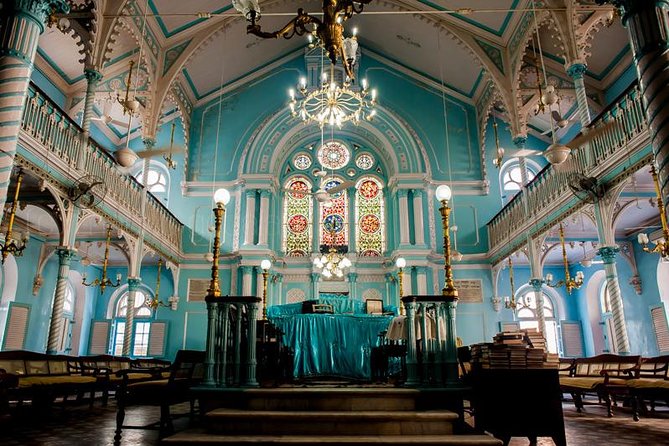
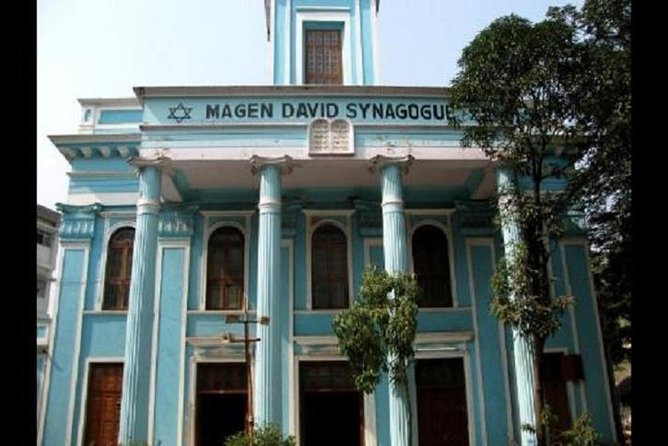
The Magen David Synagogue stop is described as the first synagogue built by David Sassoon himself, including a clock tower on the premises. It’s also connected to Jewish schools and a Jewish guest house, and you’ll be able to see the Baghdadi Jewish life that existed there.
That cluster of functions—synagogue, school, guest house—gives you a fuller picture than a building alone. Communities sustained themselves by educating young people, hosting relatives or visitors, and creating spaces where daily life and faith overlapped.
This stop is about 20 minutes and listed as free entry. If you enjoy learning through names, this is likely one of the more satisfying stops. David Sassoon is a powerful figure in Mumbai’s commercial and community narratives, and the site ties that influence to lived community routines.
Magen Hassidim Synagogue: an active rhythm, not just a museum
Next is Magen Hassidim Synagogue, described as one of the most active Bene Israeli synagogues, where marriages and other ceremonies take place.
That’s a major difference between seeing heritage and seeing living culture. A synagogue that hosts ceremonies isn’t merely an artifact from the past. It’s part of how families mark major moments now, and that makes the whole tour feel more real.
The listed visit time is about 20 minutes. Keep your eyes open for how the space is organized for community use—because that’s what tells you how the synagogue supports people, not just ideas.
If you’re the kind of traveler who likes a place to breathe, this is probably where the tour clicks.
Kenneseth Eliyahoo Synagogue and a VIP-ready visitor experience
Keneseth Eliyahoo Synagogue is described as a tourist synagogue, usually hosting delegates and other VIPs at a prime location, and offering services for visitors.
That doesn’t make it less interesting. In fact, it changes the angle: you’re seeing how Jewish heritage is presented for visiting communities and global visitors. It’s a reminder that heritage tourism is still “real life” here—just on a different scale.
This stop is listed as about 20 minutes and admission-free. I’d treat it like a guided listening moment: ask how the synagogue’s visitor-facing role works, and what that suggests about community outreach and visibility in Mumbai.
David Sassoon Library: one of the tour’s best “quiet power” stops
The David Sassoon Library is mentioned as another well-known building donated by Sir David Sassoon. The tour notes that it’s the only library worldwide open for all 365 days a year.
That claim is bold, and even if you don’t treat it as a trivia headline, the idea matters: knowledge access and education as a community priority. You’re not just touring faith buildings. You’re touring infrastructure for learning and continuity.
Because the tour includes several synagogues plus a graveyard, the library acts like a mental breather. It gives you a place to think about how communities planned long-term—through books, schools, and public learning—rather than only through ritual spaces.
If you like touching history through institutions, this is likely to stick with you long after the photos fade.
Chabad House: a modern support point in the same story
The tour summary also includes a stop at the city’s Chabad House. That gives the experience a contemporary layer, showing how Jewish life in Mumbai continues through organized community support and religious outreach today.
The exact on-site focus isn’t spelled out in the tour details you have, but the practical value is clear: you’re seeing how heritage doesn’t end at old buildings. It lives in ongoing services, visiting support, and a community presence that remains active.
This is one of those stops that’s easy to treat as “just another building.” Don’t. Ask your guide what role Chabad House plays for visitors and locals. That question alone can turn a quick stop into a meaningful one.
What you should expect from the guide (and why good English matters here)
You’ll feel the difference between a basic tour and a heritage tour when the guide can explain the names, connections, and why each synagogue matters. The most positive feedback highlights clear, friendly communication and a guide who shared personal-sounding context—one guest specifically praised Devi for being personable, kind, helpful, and for having perfect English. Another guest mentioned how articulate the guide was and how well he handled requests.
In plain terms: Jewish heritage sites can be detail-heavy. When the guide speaks clearly and explains meaning, you don’t just see architecture—you understand the community logic.
But keep an eye on organization. One unhappy experience described a guide who was surprised by the itinerary and needed the group to explain what they wanted, after an initial pickup issue where the operator couldn’t find them. That’s rare, but it’s a useful reminder: confirm your plan in advance, and arrive with the itinerary notes saved on your phone. Private tours are better when both sides do their part.
Respectful visiting tips: how to get the most from synagogues and a graveyard
This kind of tour works best when you treat it like a visit to people, not a checklist. Synagogues and a Jewish graveyard are places of memory and faith. You’ll get better answers if you show the right tone—quiet voice, slower pace, and patience if something is happening.
Dress matters because you’re inside religious spaces. If you’re unsure, choose modest clothing that covers shoulders and keeps things respectful. Also, bring your questions, but don’t turn every stop into an interview. Let the guide decide when it’s appropriate to talk and when it’s time to just take things in.
For the graveyard portion, keep your camera habits gentle. If you see instructions on site, follow them. If you don’t, ask your guide what they prefer. It’s the fastest way to avoid awkward moments.
Who this tour is best for (and who might want a different plan)
I’d strongly recommend this tour if you:
- care about Jewish heritage in a place most people ignore
- want a private setup with an English-speaking guide
- prefer guided meaning over chaotic self-navigation
- like a route that mixes major landmarks with community institutions
It may be less ideal if you want a long, unstructured wander or if you dislike visiting religious sites. This tour is designed for focused stops, and you’ll be happiest if you enjoy that kind of pacing.
Should you book this Private Jewish Heritage Tour?
If you want a short, guided, private introduction to Jewish Mumbai, this is a solid choice. The value comes from the mix: synagogues with different roles, a port-area context, and a supporting institution like the David Sassoon Library. You also get the practical win of a private car with pickup and drop-off, which is the kind of inclusion that makes a half-day plan actually feel easy.
I’d book it if your travel style matches thoughtful, respectful heritage visits. Just do two things: confirm your pickup instructions clearly, and come ready to listen. If you do, you’ll walk away with a much better map of Mumbai’s Jewish connections than you’d get from landmarks alone.
FAQ
What places does the tour include?
The tour includes visits to Magden Hassidim Synagogue, Gate of Mercy Synagogue, the local Jewish Graveyard, Kenneseth Eliyahoo Synagogue, and the city’s Chabad House. It also follows a route that starts at Gateway of India and includes stops such as the Taj Mahal Palace area and Sassoon Dock, plus the David Sassoon library.
How long is the Private Jewish Heritage Tour?
The tour duration is about 4 to 5 hours.
Is pickup and drop-off included?
Yes. Hotel pickup and drop-off are included, and you’ll travel in a private vehicle with a professional driver.
What is included in the tour price?
Included items are transport in an air-conditioned car, hotel pickup and drop-off, an English-speaking knowledgeable professional guide, a professional driver, and a private tour.
Is food included?
No. Food and drinks are not included.
Is there free cancellation?
Yes. You can cancel up to 24 hours in advance for a full refund. If you cancel less than 24 hours before the experience starts, the amount paid is not refunded.