REVIEW · MUMBAI
Victorian Gothic Heritage Quarter and Art Deco Walking Tour
Book on Viator →Operated by Cityscape Mumbai Tours · Bookable on Viator
Mumbai’s architecture tells stories fast. This walking tour strings together Victorian Gothic landmarks and Art Deco-era streets so you can read the city like a book. You’ll start at Regal Cinema in Colaba and finish near Churchgate, moving through the kind of Central Mumbai landmarks you’d otherwise see only from the outside.
I love the price-to-value here: for $18.88, you get a guided heritage walk, bottled water, a small group (max 15), and the listed stops are free to enter. I also like the guide-led storytelling—people mention clear English, smart answers to questions, and even fun photo help from guides like Abhi, Ravi, and Yash.
One thing to keep in mind: it’s built around quick, timed stops (often about 5 to 15 minutes each). If you want long indoor time or a slow museum-style pace, this may feel a bit brisk.
In This Review
- Key highlights you’ll actually feel
- The core idea: Victorian Gothic meets Art Deco in walking distance
- Price and value: why $18.88 can work (if you’re in the right mindset)
- Route basics: where you start, where you end, and how to pace yourself
- Stop 1: General Post Office (Mumbai GPO) and its Indo-Saracenic swagger
- Stop 2: Town Hall / Asiatic Society Library—neoclassical outside, scholarship inside
- Stop 3: Horniman Circle Garden—quiet reset from the stone and statues
- Stop 4: St. Thomas Cathedral—one of Mumbai’s oldest Anglican anchors
- Stop 5: Bombay High Court—Gothic Revival justice in stone
- Stop 6: Rajabai Clock Tower—when a clock is the whole point
- Stop 7: Oval Maidan—where Victorian Gothic and Art Deco share the same frame
- Stop 8: Kala Ghoda (Black Horse) precinct—street art and cultural stops
- Stop 9: Gateway of India—an arch built for a royal visit
- Stop 10: Taj Mahal Palace—finishing with 1903 glamour and sea air
- What the guides add (and why names like Abhi, Ravi, and Yash keep showing up)
- How to get the most out of a short walk (practical tips)
- Who should book this tour
- Should you book the Victorian Gothic + Art Deco walking tour?
- FAQ
- How long is the tour?
- Where does the tour start and end?
- What does it cost?
- Is admission included?
- What’s included in the tour?
- Is free cancellation available?
Key highlights you’ll actually feel
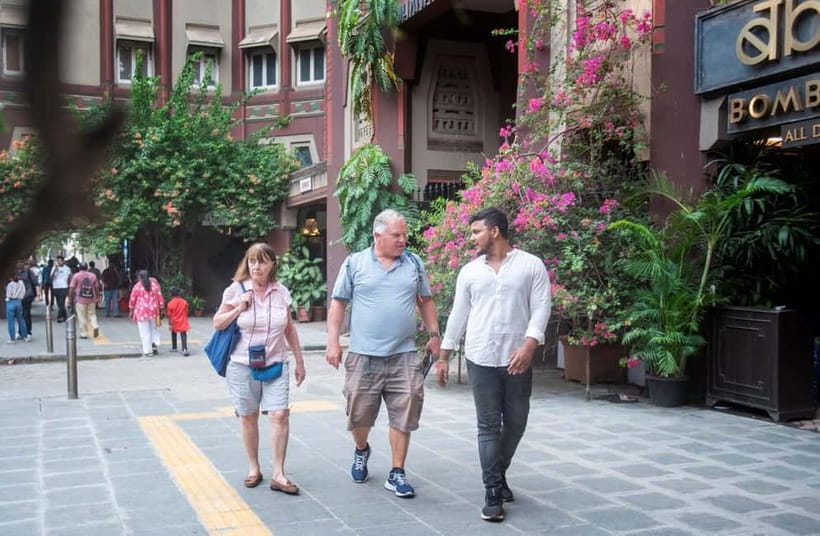
- A tight 2-hour route focused on Gothic Revival and Art Deco details across Central Mumbai
- Free entry at the listed stops plus bottled water included for the walk
- Photo-ready architecture like the Rajabai Clock Tower and Bombay High Court façade
- A local guide vibe with fluent English and room for questions (think Abhi/Ravi/Yash)
- A pause-and-watch moment at Oval Maidan, where Sunday cricket energy can pop up
- A classic finish at the Gateway of India and the Taj Mahal Palace area
The core idea: Victorian Gothic meets Art Deco in walking distance

This tour is basically a fast education in how Mumbai layers styles. You’ll see Gothic Revival stonework and clock-tower drama, then shift toward the more streamlined look of the Art Deco era—especially around the Oval Maidan area.
The best part is how much you can cover without needing private transport. It’s a walking route in a central corridor, designed to keep you close to what you’re learning. And since it’s capped at 15 people, you’re more likely to get answers than just listen and shuffle on.
You can also read our reviews of more walking tours in Mumbai


Price and value: why $18.88 can work (if you’re in the right mindset)
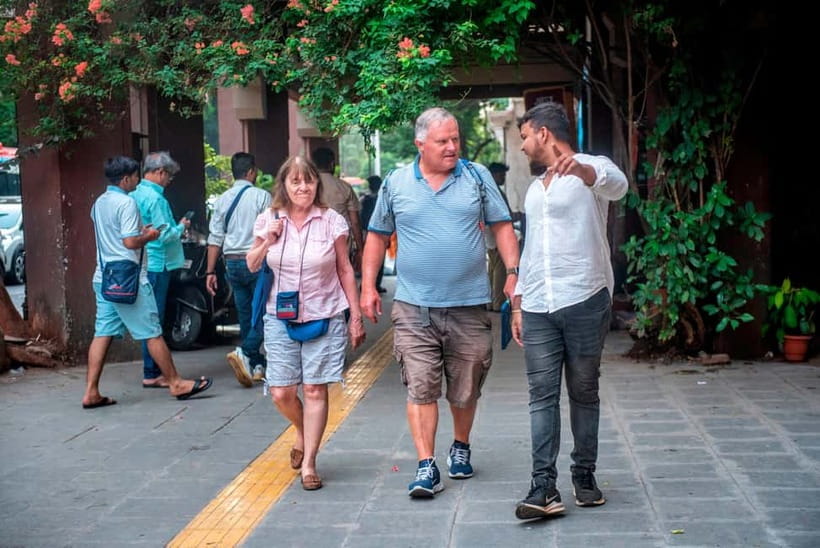
At $18.88 per person, this isn’t a “pay for comfort” tour. It’s a “pay for context” tour. The value comes from three practical things that add up: a live local guide, free admission at the listed stops, and a short walk that gets you oriented quickly.
You also get a couple of small perks that matter on a warm Mumbai day: bottled water is included, and the experience uses a mobile ticket. With group discounts available, it’s also the kind of booking that can make sense for pairs or small groups who want to stay together.
The trade-off is the time budget. You’re getting snapshots at each stop, not a full, slow deep-dive into one building.
Route basics: where you start, where you end, and how to pace yourself
You meet at Regal Cinema, Apollo Bandar, Colaba. That’s a handy starting point because it puts you close to the Colaba side of Mumbai, then you work your way toward Churchgate.
You finish near Churchgate Station. That’s useful because it tends to make onward plans easier—especially if you want to keep your day moving without a long commute back across town.
The tour is listed as about 2 hours, and some schedules can run a little longer when guides add a couple of unscheduled stops. Keep that in mind if you’ve got tight dinner plans.
Stop 1: General Post Office (Mumbai GPO) and its Indo-Saracenic swagger
The walk kicks off at the General Post Office Mumbai, an architectural landmark built in 1913. It’s known for Indo-Saracenic grandeur, and the building is credited to John Begg.
Why this stop matters: the GPO isn’t just a pretty façade. It’s tied to the city’s mail and communication story, so it becomes a real reference point for understanding Mumbai’s colonial-era infrastructure and urban growth.
Practical note: you’ll have about 15 minutes here. That’s enough time to spot signature details and get the “why it was built this way” explanation, but not enough for a long linger if you’re aiming to take every photo angle.
Stop 2: Town Hall / Asiatic Society Library—neoclassical outside, scholarship inside

Next is the Town Hall (Asiatic Society Library) area. The Asiatic Society Library traces back to 1804, and the focus here is neoclassical architecture.
This is a great stop if you like the idea of history that you can point to. The tour description highlights that it houses rare manuscripts, ancient texts, and valuable artifacts. Even if your time is short, you’ll come away with the sense that this isn’t just an old building—it’s part of Mumbai’s intellectual life.
Another plus: admission is listed as free, and your time slot is about 15 minutes. You’ll likely get a good overview of the architecture and what kind of collections the library is known for.
You can also read our reviews of more historical tours in Mumbai



Stop 3: Horniman Circle Garden—quiet reset from the stone and statues
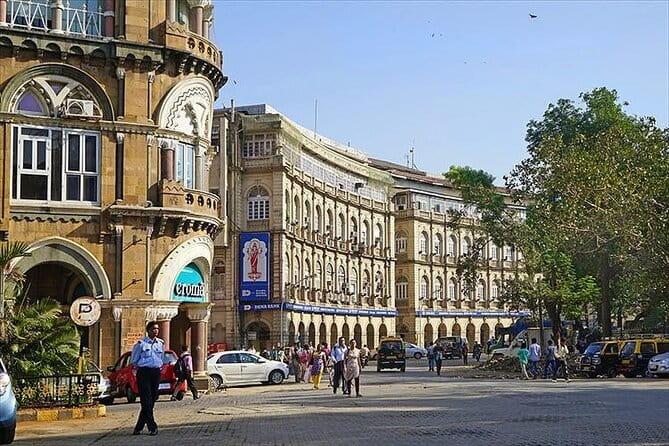
Horniman Circle Garden is a break. The garden was built in 1860, and it sits among grand colonial buildings.
It’s named after British editor Benjamin Horniman, which gives you a neat “how cities get names” thread to carry forward. It’s also simply a useful breathing space: you’re still in heritage territory, but the atmosphere turns gentler.
Expect about 15 minutes. In practice, that’s time to rest your feet, take a shaded photo if the light cooperates, and listen without competing with constant traffic noise.
Stop 4: St. Thomas Cathedral—one of Mumbai’s oldest Anglican anchors
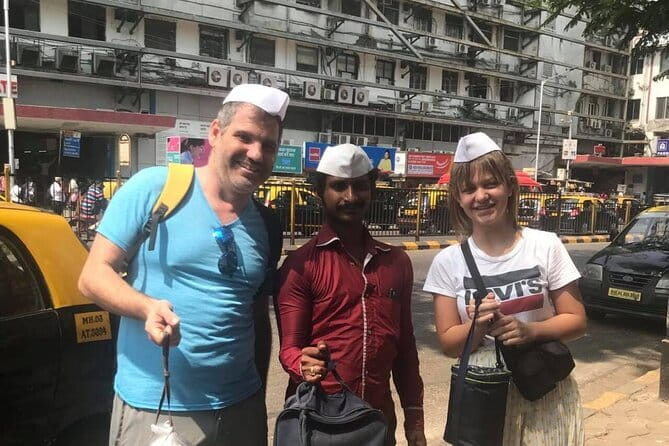
Then you reach St. Thomas Cathedral Mumbai, described as the city’s oldest Anglican church. It was consecrated in 1718, and it’s an example of British colonial architecture with an important religious role.
This stop gives your walk a different flavor: it’s not only about courts, clocks, and commerce. It’s about community institutions that helped shape the city’s social structure.
Your stop time is about 15 minutes, so treat it as an “observe and understand” moment—look at the form and details, then connect it to why the church mattered.
Stop 5: Bombay High Court—Gothic Revival justice in stone
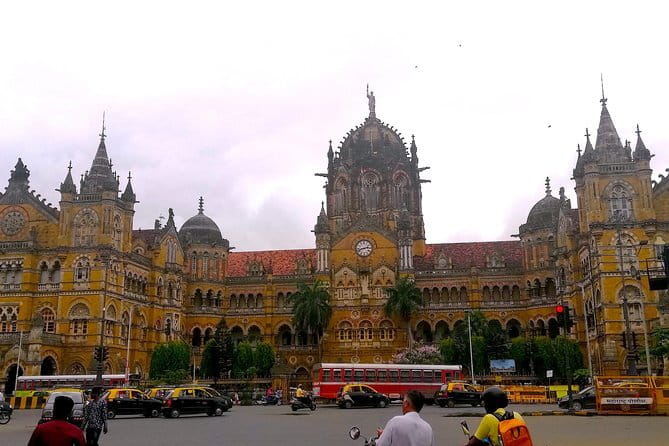
The tour heads to the High Court of Bombay, an iconic Gothic Revival structure inaugurated in 1879. The High Court is presented as a cornerstone of Mumbai’s judicial system.
This is one of those façades where the building itself becomes the lesson. Gothic Revival tends to use strong vertical lines and ornate detailing, and on the High Court, that style becomes a visual message about authority and permanence.
You’ll have roughly 15 minutes, and admission is listed as free. In most cases like this, you’re mainly soaking in the exterior architecture and the guide’s explanation, so come prepared to look closely.
Stop 6: Rajabai Clock Tower—when a clock is the whole point
At Rajabai Clock Tower, you’ll see another Gothic Revival star. The clock tower was completed in 1878 and designed by Sir George Gilbert Scott. Funding is credited to Premchand Roych.
This is a top photo moment. Even if you’re not a “clock person,” this tower anchors the skyline feel of the University of Mumbai area. The guide’s job here is to translate the architecture—why it looks the way it does, and what the clock tower symbolized for the institution.
Your time is around 15 minutes. Use it for a wide shot first, then step around for a tighter angle. The building rewards slow looking, even on a tight schedule.
Stop 7: Oval Maidan—where Victorian Gothic and Art Deco share the same frame
Next comes Oval Maidan, described as a historic recreational ground established in the 19th century. It’s flanked by Victorian Gothic buildings and Art Deco architecture.
This is where the tour’s title makes sense in real space. You’re seeing how styles sit side-by-side on the same public stage—streets, parks, and the “between buildings” feeling that helps you understand Mumbai as a lived city, not just a collection of monuments.
Your slot is shorter, about 10 minutes. That’s still enough to notice how the architecture changes across the open area. One review also mentions that on a Sunday, the park can have lots of cricket happening—so if your timing lines up, you may catch that local rhythm.
Stop 8: Kala Ghoda (Black Horse) precinct—street art and cultural stops
Then you move into Kala Ghoda, a cultural precinct known for art galleries, museums, and street art. It’s named after a statue of King Edward VII.
This stop works as a bridge. After the formal colonial buildings, you get a more creative district vibe—less “institution,” more “people using the area” for culture and art.
Your time is about 5 minutes. Don’t expect deep museum time here. Instead, use it to identify the type of neighborhood you’ll want to explore later if you enjoy galleries or street art.
Stop 9: Gateway of India—an arch built for a royal visit
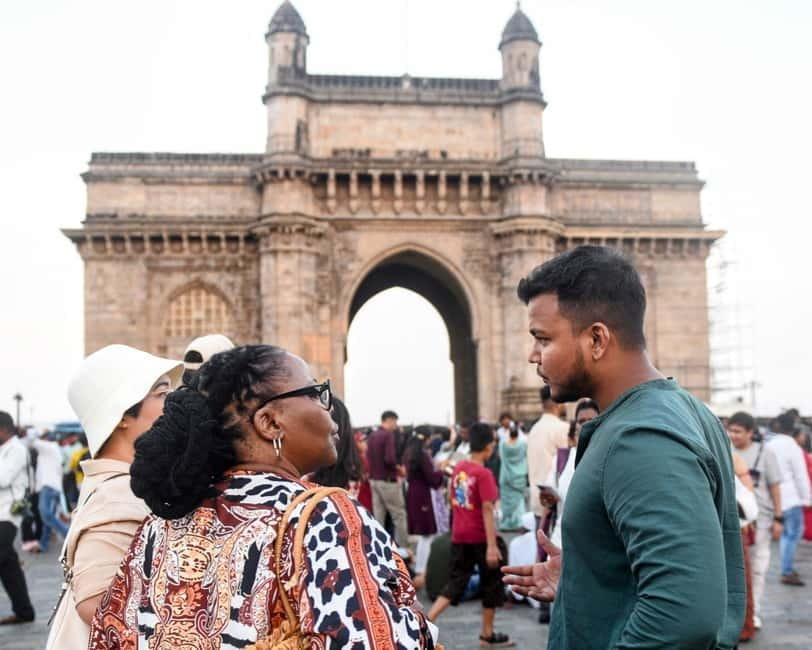
Next is the Gateway of India, an iconic arch monument built in 1924. The tour notes it was constructed to commemorate the visit of King George V and Queen Mary.
This is one of the most recognizable shapes in Mumbai, and the guide’s job is to connect that “photo spot” to the politics and planning behind it. The Gateway becomes a symbol of a certain era of imperial celebration—then it turns into a city landmark the world associates with Mumbai.
Your stop is about 10 minutes, and admission is listed as free. Think of this as your big visual reset: stand back for the full arch view, then look for details up close before you move on.
Stop 10: Taj Mahal Palace—finishing with 1903 glamour and sea air
Finally, you reach The Taj Mahal Palace, Mumbai, a historic luxury hotel built in 1903. The tour highlights its architectural beauty and the setting overlooking the Arabian Sea.
This ending matters because it changes the tone. Earlier stops skew toward public institutions and government structures. Ending with the Taj gives your walk a sense of how wealth, hospitality, and architecture all shaped the city’s identity.
Your time is about 5 minutes. That’s short, but it’s a strong final image—especially if you’re heading into the rest of your day along the water.
What the guides add (and why names like Abhi, Ravi, and Yash keep showing up)
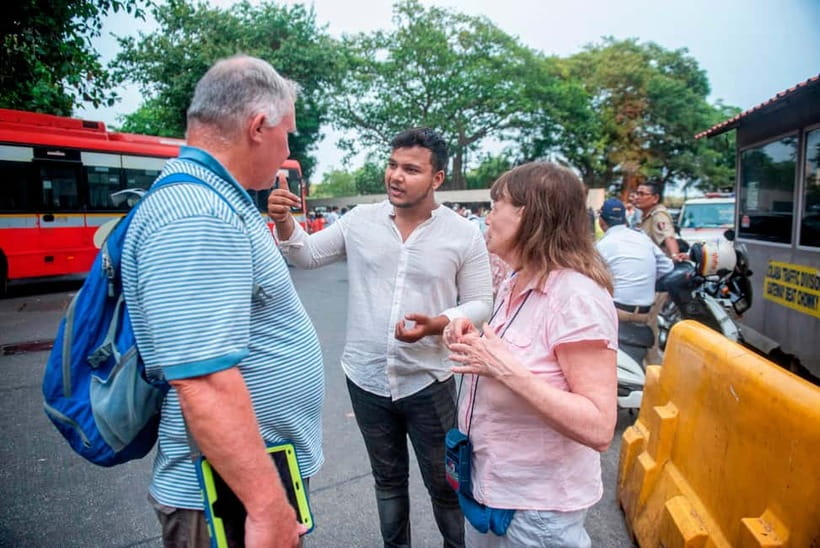
The biggest factor in a heritage walk is the person leading it. In feedback tied to this tour, guides such as Abhi/Abhishek, Ravi, and Yash are repeatedly called out for being friendly, answering questions, and explaining architecture in an easy-to-follow way.
You’ll also want to know this: some guides appear willing to add a small twist to the route—one review mentions a couple of unscheduled stops, and another mentions meeting spots like Cat Chowk and a black magic house style story thread. I can’t promise those extras every day, but it’s a clue about what you’re paying for: not just “stand here and read a sign,” but actual storytelling.
If you want the experience to land, come ready with one or two questions. Ask about why Gothic Revival shows up here, or how Art Deco fits into the same city blocks. Guides tend to enjoy that.
How to get the most out of a short walk (practical tips)
You only have about two hours, so your job is to stay in “active observation” mode. I’d do this:
- Wear comfortable walking shoes. You’re moving through multiple blocks.
- Bring a hat and water. Water is included, but your body still needs shade and breaks.
- Take one wide photo, then two detail shots at each major stop. It saves time and makes your photos better.
Also, don’t rush the transitions. The value here isn’t just each building. It’s how the style changes as you walk from one landmark to the next.
Who should book this tour
This is a great fit if:
- You’re in Mumbai for a short time and want a quick orientation to major architectural styles.
- You like architecture, institutions, and “how cities work” stories.
- You want a guided walk that keeps the group small and questions possible.
It’s less ideal if:
- You’re hoping for long indoor access or museum-level time at multiple stops.
- You want a slow pace with heavy reading and deep interior detail at every location.
Should you book the Victorian Gothic + Art Deco walking tour?
Yes, if your goal is a compact, budget-friendly way to see Central Mumbai’s architectural story arc. The combination of free admission at the listed stops, a small group size, and strong guide mentions (Abhi, Ravi, Yash) makes this feel like good value rather than just a “grab-and-go” stroll.
If you’re picky about depth and you hate being rushed, consider either booking it early in your trip (so you can add extra self-guided time later) or look for a longer-format heritage tour. This one is best as your fast “get your bearings” walk—then you build from there.
FAQ
How long is the tour?
The duration is listed as about 2 hours (approx.). Some schedules may run a little longer depending on the pace and any extra stops your guide includes.
Where does the tour start and end?
It starts at Regal Cinema, Apollo Bandar, Colaba and ends near Churchgate Station.
What does it cost?
The price is $18.88 per person.
Is admission included?
The stops listed for the tour show free admission ticket for each location mentioned.
What’s included in the tour?
The tour includes bottled water.
Is free cancellation available?
Yes. You can cancel up to 24 hours in advance for a full refund. If you cancel less than 24 hours before the start time, the amount paid is not refunded.