REVIEW · MUMBAI
Jewish Heritage and Mumbai Highlights Private Full-Day Tour
Book on Viator →Operated by Jewish India Tours · Bookable on Viator
Mumbai has more Jewish stories than you expect. You’ll get real synagogue access and a guide who connects names like Magen David, Tiphereth Israel, and Keneseth Eliyahoo to everyday life in the city, and I like that you also hear personal community perspective. The one drawback: there’s no lunch, so you’ll want a food plan before or after the tour.
This private format keeps things relaxed. You’ll ride in an air-conditioned vehicle, meet at 9:30 am, and spend about five hours moving through Mumbai’s key sights—Fort-area Jewish landmarks, Dhobi Ghat, and a stop at Mani Bhavan.
In This Review
- Key Things I Found Most Useful Before Booking
- Why This Route Makes Sense for First-Time Mumbai
- Victoria Terminus Pass-By: Setting the Scene in 20 Minutes
- Magen David Synagogue: The Daily Minyan Detail That Changes Everything
- Tiphereth Israel Synagogue: An Active Jewish Center in the City
- Dhobi Ghat: Mumbai’s Outdoor Laundry and a Bigger View of Coexistence
- Mani Bhavan Gandhi Museum Stop: Why It Belongs on a Jewish Heritage Day
- Keneseth Eliyahoo Synagogue: Architecture with a Name and a Backstory
- David Sassoon Library and Reading Room: The Philanthropy Angle You’ll Want
- Gateway of India: Wrapping Up With Harbour Views
- Guides and Personal Stories: The Part That Feels Like More Than a Tour
- Price and Value: What You’re Really Paying For at $106.87
- Small Practical Tips That Make the Day Easier
- Should You Book This Jewish Heritage and Mumbai Highlights Tour?
- FAQ
- How long is the Jewish Heritage and Mumbai Highlights private tour?
- What time does the tour start?
- Is pickup and drop-off included?
- Is this tour private?
- Which Jewish sites are included in the tour?
- Are entry fees included for the stops?
- Is lunch included?
- What is included in the price?
- When will I get confirmation, and how does cancellation work?
Key Things I Found Most Useful Before Booking

- Daily minyan at Magen David Synagogue: a living practice, not just a photo stop
- Fort-area Jewish architecture: Keneseth Eliyahoo (1884) and the Sassoon legacy nearby
- Guides who add context: you may be with a guide like Hanna or Joshua, praised for warm, personal storytelling
- A tight, high-impact route: synagogues plus Dhobi Ghat and Mani Bhavan in one day
- Free site entries on the route: the places covered are listed as free of entry fees
Why This Route Makes Sense for First-Time Mumbai
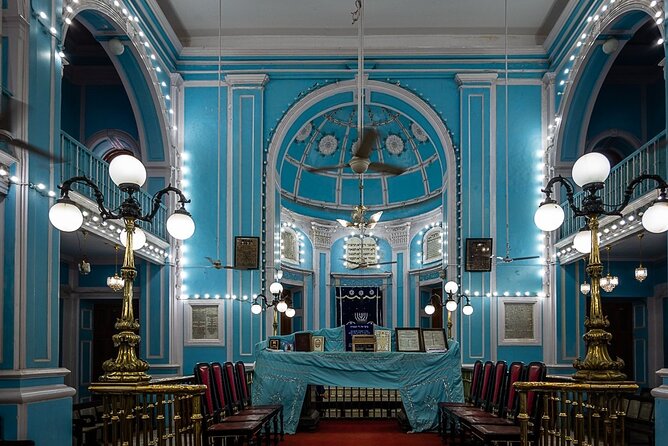
Five hours sounds short, but the stops are grouped like a good walking circuit—just with car time between them. The tour focuses on one theme: Jewish presence in Mumbai, then places that theme into the wider city story by mixing in major landmarks.
What I like about the pacing is that you’re not rushing to 20 tiny stops. You get focused time at the synagogues and key institutions, then you get a couple of famous Mumbai scenes—Dhobi Ghat and Mani Bhavan—to help you understand the city the Jewish community lived alongside.
One practical thing to note: most of the tour happens outdoors or in public-facing areas (Dhobi Ghat especially). So build your day around it. Wear comfortable shoes, and plan for the fact that Mumbai traffic can shift exact timings even if your itinerary stays on track.
You can also read our reviews of more private tours in Mumbai



Victoria Terminus Pass-By: Setting the Scene in 20 Minutes
You start with a drive past Victoria Terminus, including sights like Mumbai University and the Victoria Terminus Railway Station. This station is widely known because it was filmed in Slumdog Millionaire, so even if you’ve never been here, you’ll likely recognize the vibe.
This first stop is short, but it’s smart. It helps you get oriented in Mumbai’s colonial-era architecture before the tour turns to the older Jewish neighborhoods around the Fort area. If you like photos, this is an easy moment to get your first “wow” without spending a long time in a line or waiting for tickets.
If you’re sensitive to city traffic or sudden noise, treat this opening segment as your buffer. By the time you reach the synagogues, you’ll be in a calmer rhythm.
Magen David Synagogue: The Daily Minyan Detail That Changes Everything
The most specific, standout detail here is that Magen David Synagogue is the only synagogue with a daily minyan. That’s not just a trivia point. It signals something important: this isn’t only heritage tourism. It’s a place where Jewish worship is practiced on a regular schedule.
You’ll have about 30 minutes here, which is enough time to take in the interior and hear the significance without feeling dragged. A guide’s job on a day like this is to connect symbols to real life—why a daily minyan matters, and how community routines keep culture alive across generations.
One thing to consider: synagogue visits can be quiet, and you may be asked to follow the space’s rules. Keep your phone ready for quick shots, but expect that listening matters more than filming.
Tiphereth Israel Synagogue: An Active Jewish Center in the City
Next up is Tiphereth Israel Synagogue, described as one of the city’s most active Jewish centers. You’ll spend about 30 minutes here, which helps you compare what you saw at Magen David: how different congregations shaped community life, and how synagogues functioned as social hubs, not just religious rooms.
In practical terms, this stop is where the tour starts to feel personal. Guides often explain the human side—stories of how people lived with Hindu and Muslim neighbors and formed daily connections. It’s not presented as distant history. It’s presented as lived community.
If you enjoy architecture, you’ll likely appreciate how a working synagogue can look different from a purely museum setting. You’re seeing a place that still has a role, even when tourists are nearby.
Dhobi Ghat: Mumbai’s Outdoor Laundry and a Bigger View of Coexistence
Dhobi Ghat is a sharp shift from religious sites, and that’s the point. You get about 15 minutes here to marvel at a massive outdoor laundry scene.
This stop works for me because it grounds the day in what Mumbai was like day to day—work, routines, and the shared urban environment where multiple communities lived side by side. If you’re hoping to understand Jewish history in Mumbai beyond names and dates, this kind of landmark helps.
Photo-wise, Dhobi Ghat can be intense. You’ll be close to real activity, so keep an eye on your footing and your belongings. And because time is short, go for a few strong photos rather than trying to capture everything.
You can also read our reviews of more historical tours in Mumbai



Mani Bhavan Gandhi Museum Stop: Why It Belongs on a Jewish Heritage Day
Then you head to Mani Bhavan Gandhi Museum for about 30 minutes. This is a major Mumbai site tied to Mahatma Gandhi, and it adds a political and social lens.
The value here is perspective. A guide can connect the idea of coexistence and community life in Mumbai to the broader Indian story—how people negotiated identity, freedom, and social change. Even if Gandhi is not your main focus, it helps you place Jewish community life inside the larger currents shaping the city.
If you like museums, you might want a bit more time here. But on a packed five-hour route, 30 minutes is a workable snapshot. Use it to get the main context, then let the synagogue conversations do the more emotional work.
Keneseth Eliyahoo Synagogue: Architecture with a Name and a Backstory
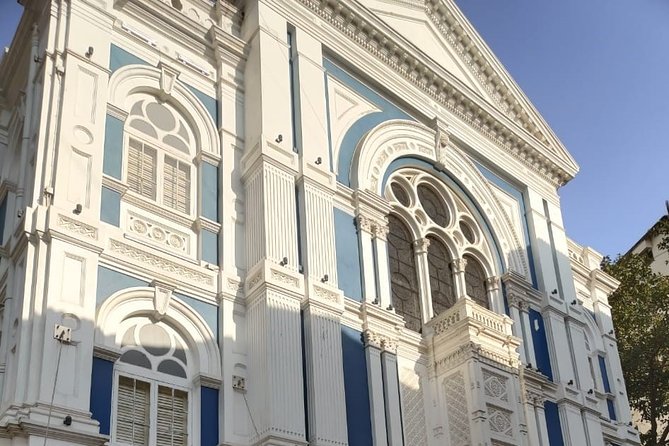
Keneseth Eliyahoo Synagogue gets a solid 30 minutes, and it comes with a clear lineage. The synagogue was built in 1884 by Jacob Sassoon in memory of his father, Elias Sassoon. It’s also described as one of the most magnificent structures around the Fort area.
This stop is where the day turns from “what” to “why this matters.” When you hear the Sassoon family connection tied to the building itself, the architecture stops being just ornate. It becomes a record of family memory, community support, and the way Baghdadi Jewish wealth and philanthropy shaped Mumbai’s public identity.
If you’re into urban history, you’ll also appreciate the location’s feel. The Fort area vibe tends to make the past look close. Your photos here will likely look different from the modern Mumbai shots, which gives your day a nice visual variety.
David Sassoon Library and Reading Room: The Philanthropy Angle You’ll Want
Right after the synagogue, you visit David Sassoon Library and Reading Room. It was built in honour of David Sassoon, described as a well-known Baghdadi philanthropist.
A library and reading room is a powerful counterpoint to temple buildings. It tells you the community invested in learning and knowledge, not only worship. In a five-hour tour, this stop gives you something many visitors miss: how Jewish life in Mumbai also centered on education, literacy, and cultural continuity.
You’ll have about 20 minutes here. Use that time to focus on the guide’s explanations rather than rushing through the space. Even if you don’t catch every detail, the overall point is simple and important: community survival depends on more than prayer—it depends on institutions that keep minds active.
Gateway of India: Wrapping Up With Harbour Views
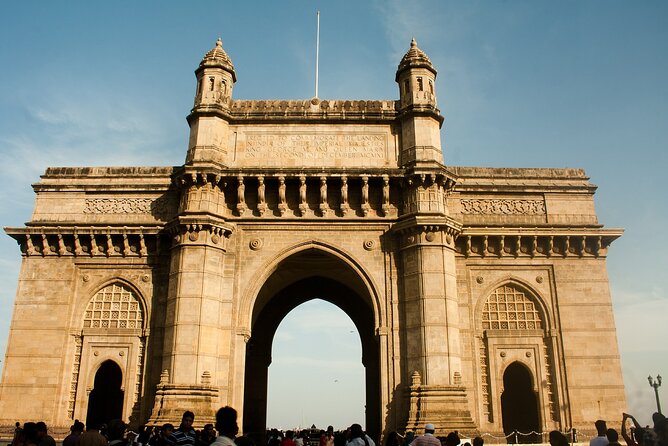
Finally, you drive to the Gateway of India, a grand monument overlooking Mumbai harbour, with about 30 minutes allotted.
This ending works because it’s a visual release. Your day has been about specific communities and specific buildings. Then you get the big-sky Mumbai view—one of those places that makes you realize you’re in a city that has always been connected to movement: ports, ships, trade routes, and travelers.
If your timing feels tight earlier, this last stop is a good moment to slow down. Even if you only take a few photos, you’ll come away with the “where am I” feeling that makes all the history stick.
Guides and Personal Stories: The Part That Feels Like More Than a Tour
The best Jewish heritage tours are built around people, not only places. This one is designed that way. You’re set up to hear stories about Jews who lived peacefully with Hindu and Muslim neighbors, and you also have the chance to meet members of the Jewish community to hear their stories first hand.
In the past, guides named Hanna and Joshua were praised for being warm, welcoming, and deeply knowledgeable about both Jewish life and Mumbai itself. One highlight from their approach is how they shared personal family rituals and what it means to be Jewish in Mumbai, not just facts from a page.
If you’re the kind of traveler who loves context—how people actually live—this tour will likely feel worth it. If you only want architecture facts and museum-style commentary, you might find the personal stories more than you bargained for. Most people find it humanizing.
Also, the tour mentions meeting community members and includes a local Jewish guide (subject to availability). That can change the flow, so think of the experience as part scripted route, part community conversation.
Price and Value: What You’re Really Paying For at $106.87
At $106.87 per person for about five hours, this tour is priced like a specialty private experience rather than a generic city drive. The value comes from a few things that add up fast in Mumbai:
- Pickup and drop-off are included, which saves time and hassle when you’re trying to coordinate your day
- An air-conditioned vehicle matters in heat and traffic
- An English-speaking guide handles the connections between sites
- Bottled water is included
- Tax is included
- Most importantly, the tour lists no entry fees applicable for the places covered, so you’re not paying extra at each stop
What’s not included is lunch. That’s the main cost you’ll need to plan for on your own. If you already have a nearby lunch spot, your total spending will stay close to the advertised price.
Because this experience is private, you’re also not stuck in a large group. You can ask questions and adjust pacing slightly—within reason. And because it’s booked far in advance on average, I’d recommend you reserve early so you can lock in your preferred day.
Small Practical Tips That Make the Day Easier
Here are the things I’d do if I were doing this exact route again:
- Start the day hydrated. Water is provided, but Mumbai sun and walking at Dhobi Ghat can add up.
- Bring a phone camera strap or secure pockets. Dhobi Ghat can be crowded and active.
- If you care about photos at the synagogues, tell your guide politely and quickly. You’ll get better timing without slowing the group.
- Keep expectations realistic about time inside each site. Most visits are 20–30 minutes, so it’s a highlight reel, not a long study session.
Also, if you’re hoping for maximum Jewish-specific depth, ask your guide one question that matters to you—like how the community maintained traditions while living alongside major local religions. You’ll usually get an answer that makes the rest of the route click.
Should You Book This Jewish Heritage and Mumbai Highlights Tour?
Book it if you want a focused, human-scale way to learn Jewish history in Mumbai, with synagogue visits and real community storytelling. It’s especially a good fit if you like tours where the guide can connect architecture, names, and social life in a way that feels current, not just historical.
Skip it or consider a different option if you’re mainly looking for long museum time or you don’t want a tour that includes a non-Jewish landmark like Mani Bhavan and a working-city stop like Dhobi Ghat. This is a cultural route, not a pure synagogue-only day.
FAQ
How long is the Jewish Heritage and Mumbai Highlights private tour?
It runs for about 5 hours.
What time does the tour start?
The start time is 9:30 am.
Is pickup and drop-off included?
Yes. Pickup and drop-off from your accommodation are included.
Is this tour private?
Yes. It’s a private activity, and only your group will participate.
Which Jewish sites are included in the tour?
The tour includes visits to Magen David Synagogue, Tiphereth Israel Synagogue, and Keneseth Eliyahoo Synagogue, along with the David Sassoon Library and Reading Room.
Are entry fees included for the stops?
The tour information notes that there’s no entry fee applicable for the places covered.
Is lunch included?
No, lunch is not included.
What is included in the price?
The tour includes an air-conditioned vehicle, an English speaking experienced guide, bottled water, pickup and drop-off, and presently applicable tax.
When will I get confirmation, and how does cancellation work?
You’ll receive confirmation within 48 hours of booking, subject to availability. You can cancel for free up to 24 hours in advance of the experience start time for a full refund.