REVIEW · BUDAPEST
Budapest Jewish Heritage: Synagogues, Shoes, Secrets & Flódni
Book on Viator →Operated by Fungarian · Bookable on Viator
Budapest keeps its Jewish stories close. This walking tour strings together synagogues and World War II memorial stops in the Jewish Quarter, guided by a Jewish historian who makes the details feel human. You get insider context without rushing through big-city checklists.
I love how the route mixes architecture and history in a way that actually helps you see Budapest differently. I also like the ending: a real flódni finish that feels like part of the culture, not just a snack break.
One heads-up: entrance tickets aren’t included for most of the synagogues on the route, so you’ll want to budget a bit extra.
In This Review
- Key things that make this tour worth your time
- Start at the right place: Herzl Square to the Jewish Quarter
- Dohány Street Great Synagogue: Europe’s largest, and more
- Rumbach Street Synagogue with Otto Wagner’s design
- Carl Lutz Memorial: the story of rescue in wartime Budapest
- Kazinczy Street Orthodox Synagogue: art nouveau inside a working place of faith
- Shoes on the Danube Bank: a memorial you don’t rush
- The Jewish Quarter and the ghetto wall: seeing what’s still here
- Flódni finale on Dohány Street: history you can taste
- Price and value: what $102.95 really covers
- What the best guides do: questions, pacing, and personal connection
- Practical tips so the tour feels smooth
- Who should book this Budapest Jewish Heritage tour
- Should you book?
- FAQ
- What language is the tour offered in?
- Is this tour private?
- How long is the experience?
- Are synagogue entrance tickets included?
- Is hotel pickup included?
- Is flódni included?
- Can I bring a service animal?
Key things that make this tour worth your time
- Three synagogues, three different styles: the Great Synagogue (Dohány Street), Rumbach Street, and an Orthodox synagogue on Kazinczy Street.
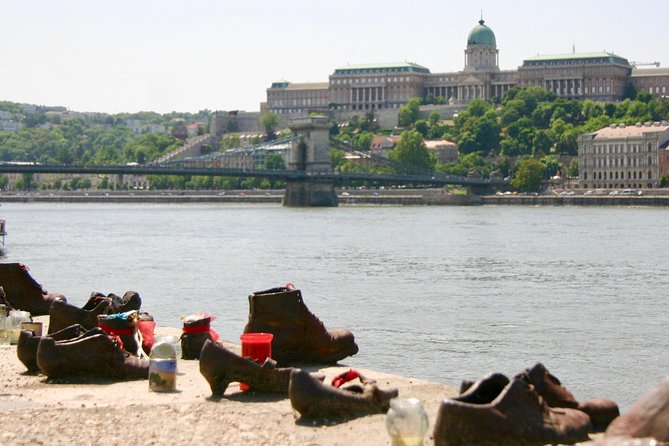
- Big, specific wartime memory stops: Carl Lutz memorial and the Shoes on the Danube Bank site.
- A guide who brings lived context: the tour is led by a genuine Jewish guide, and named guides from past groups include Gabriella L., Miklós, Peter, Kata, and Edith.
- A comfortable, personal pace: it’s a private tour, so questions don’t get lost in the shuffle.
- Flódni is built in: you end with a traditional Jewish pastry, linked to the same neighborhood you just learned about.
Start at the right place: Herzl Square to the Jewish Quarter
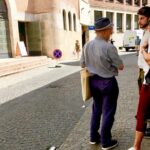
The tour begins around Herzl Square and the Great Synagogue area, then you walk into the Jewish Quarter landmarks at a steady, guided pace. This matters because the neighborhood’s layout can feel like a maze if you’re doing it alone. With a guide, you connect what you’re seeing to what happened here, especially around 1944.
You’ll spend the first part getting bearings fast: the guide frames what you’re about to see, then moves stop by stop through the places that tell different chapters of the community’s story. In a short time, you’re not just collecting sights—you’re building a timeline you can hold onto later.
You can also read our reviews of more historical tours in Budapest
Dohány Street Great Synagogue: Europe’s largest, and more
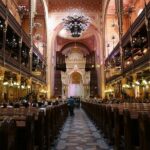
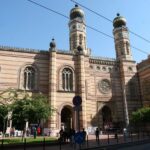
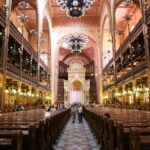
Your first major stop is the Great / Central Synagogue, also called the Dohány Street Synagogue (Nagy Zsinagoga). This is the one people picture when they think of Budapest Jewish life: it’s the largest synagogue in Europe, seating about 3,000 people, and it’s a center of Neolog Judaism.
What I like most is that the visit isn’t only about the impressive size. You’ll learn why the building is unique architecturally, and you’ll also hear about the fate of Hungarian Jewry during the Second World War. The guide also points out how many internationally known figures had Hungarian Jewish roots, which is a smart way to show you this wasn’t a small story—it spread across arts, business, and public life.
Ticket note: admission for the Great Synagogue isn’t included, so factor that into your planning budget.
Rumbach Street Synagogue with Otto Wagner’s design
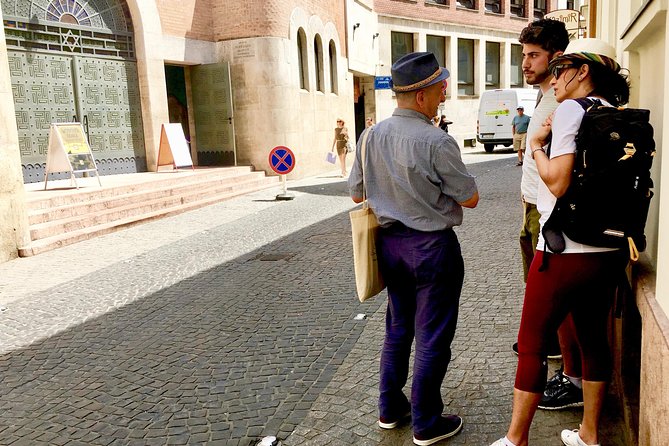
Next comes the Rumbach Street Synagogue, in the area tied to the Moorish-style Rumbach Sebestyén utca Synagogue. This one was built in 1872 by Austrian Secessionist architect Otto Wagner for the moderate Conservative community.
This stop is a good palate cleanser after the Great Synagogue because the vibe shifts. You’re not seeing the same visual language twice. The interior decorations also get special attention—especially the fact that the synagogue received a long-overdue facelift, so you’re seeing it refreshed rather than tired-looking.
Ticket note: admission for Rumbach Street Synagogue isn’t included.
Carl Lutz Memorial: the story of rescue in wartime Budapest
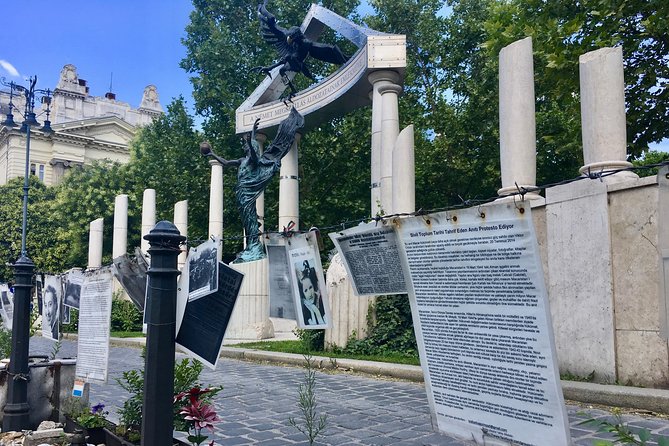
Then you move to the Carl Lutz Memorial, located in the area of the former Budapest ghetto. During the war, Carl Lutz—a Swiss diplomat—helped save tens of thousands of Jews in Budapest from persecution and deportation, and the memorial is dedicated to his memory.
This stop hits differently than a building visit. Instead of architecture, it’s about action—what some individuals did when systems were failing. Even though the time here is short, it gives the tour balance: not only fear and loss, but also rescue, paperwork that mattered, and choices that helped people live.
Good to know: admission here is free.
Kazinczy Street Orthodox Synagogue: art nouveau inside a working place of faith
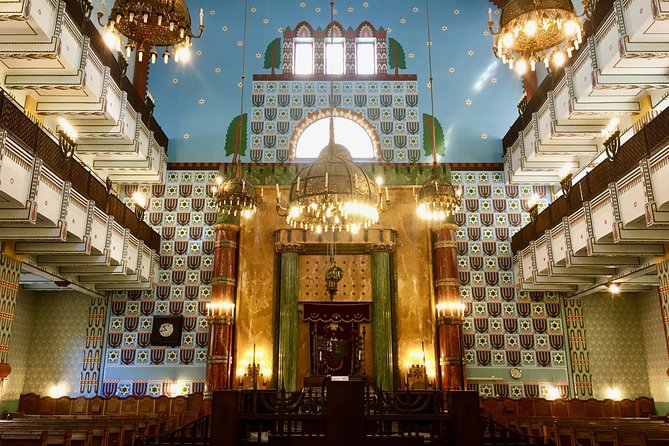
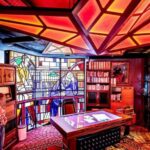
A smaller side-street stop follows at the Kazinczy Street synagogue, the Orthodox synagogue built in 1913. The design was modern for its era, with late art nouveau touches and bright colored décor throughout. There are also stained-glass windows in the ceiling designed by Miksa Róth.
I like this stop because it rounds out the “synagogue-only-as-a-single-thing” problem. If you’ve only seen one synagogue from the outside, it’s easy to assume they all feel the same inside. Here, you learn that different branches and communities shaped how worship spaces looked and felt.
Ticket note: admission for this synagogue isn’t included.


Shoes on the Danube Bank: a memorial you don’t rush
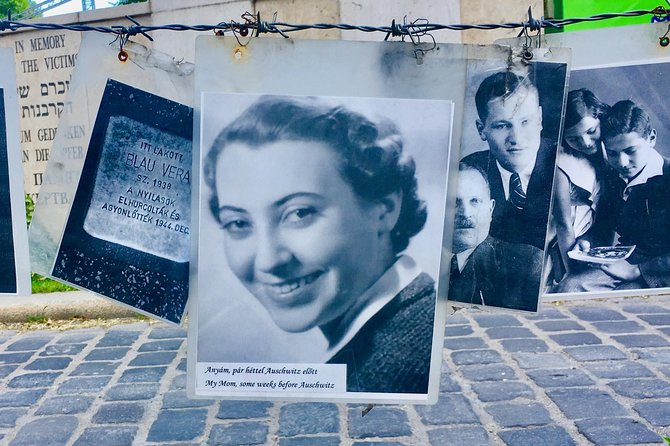
After the synagogues, you’ll stop at Shoes on the Danube Bank. The memorial was unveiled on April 16, 2005, and it remembers Jewish victims murdered at this riverside location during World War II. The key idea is brutal and simple: victims were forced to remove their shoes before being shot at the riverbank, and the bodies were carried away by the Danube.
This is one of those places where the guide doesn’t need theatrics. The memorial’s message is direct, and the story lands in your body more than your brain. The tour gives you time to pay respects and absorb what you’re seeing, without turning it into a quick photo moment.
Ticket note: admission is included for this stop.
The Jewish Quarter and the ghetto wall: seeing what’s still here
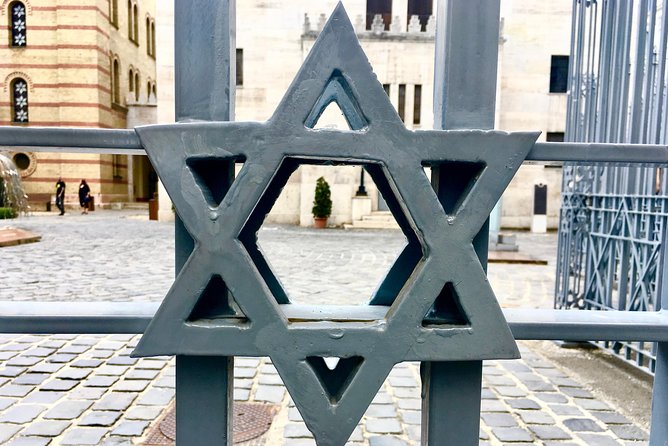
Towards the end, the tour shifts into the broader story of the Jewish Quarter during WWII. You’ll hear how, near the end of the war, Jews in Budapest were herded into a ghetto, and you’ll learn about how a small section of the ghetto’s wall still stands in the heart of the city.
This part is valuable because it helps you understand the neighborhood as a lived space, not just an old postcard. Even if the original look of the streets has changed over time, the guide’s explanations help you “read” what you’re walking past. It turns the city into evidence.
Good to know: this stop is free.
Flódni finale on Dohány Street: history you can taste
The tour ends with a bite of history: flódni, a traditional Jewish pastry. It’s served as the final stop with about 20 minutes allocated for this sweet payoff.
This is a thoughtful way to close the loop. After architecture and memorials, you shift to food—one of the easiest ways to connect to daily life, family traditions, and the rhythms of a community. If you’re the type who remembers a trip better through flavors, this ending does real work.
Good to know: flódni is included as part of the experience.
Price and value: what $102.95 really covers
The listed price is $102.95 per person for a tour around 2 hours 45 minutes. For that, you get an expert historian guide, snacks via the flódni finale, and hotel pickup. You’ll also get a mobile ticket and group discounts.
The main value point is that this isn’t just a “see synagogues” stroll. The stops are selected to link community life, different synagogue styles, and wartime memory into one coherent walk. That kind of context is hard to recreate on your own unless you’re a deep-history researcher.
The main cost consideration is entrances. Admission tickets aren’t included for the Great Synagogue, Rumbach Street Synagogue, and the Orthodox synagogue on Kazinczy Street. The Shoes memorial admission is included, and the ghetto wall area stop is free. So your final out-of-pocket cost can depend on how much you pay for synagogue entries.
What the best guides do: questions, pacing, and personal connection
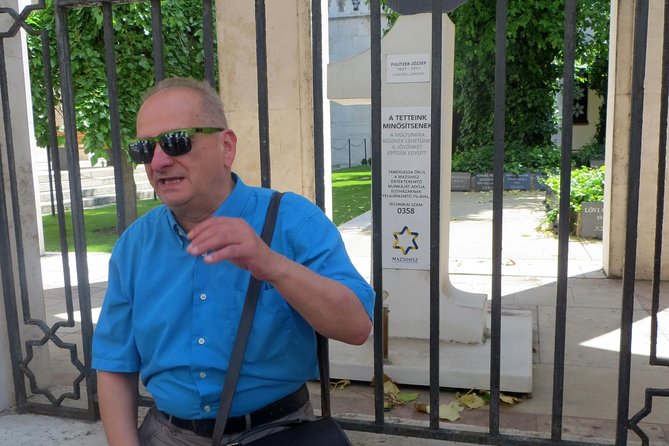
A clear theme from past experiences is that the guide matters a lot here. Guides named in past groups—Gabriella L., Miklós, Peter, Kata, and Edith—are praised for warm delivery and strong storytelling, not just reciting dates. The tour is also private, so you can ask questions and steer the conversation a bit.
This is especially helpful at emotionally heavy stops. You want time to process, and you want a guide who can explain without turning it into a lecture. Based on the way this tour is presented, that’s exactly what you’re paying for: human pacing plus historical structure.
Practical tips so the tour feels smooth
Start with your expectations set correctly. This is a walking tour with several short stops. The total duration is just under three hours, so you’ll want comfortable shoes and a light bag.
Bring cash or a card mindset for synagogue entrances since those aren’t included for most sites. Also, plan to dress respectfully for working worship spaces. If you’re sensitive to memorial content, take a breath at the Danube site and move slowly after.
Who should book this Budapest Jewish Heritage tour
This fits best if you want:
- A guided, story-led tour of Budapest’s Jewish Quarter
- Architecture plus history, not only one or the other
- A private group format where you can ask questions
- A food ending with flódni rather than a rushed street-snack stop
It may be less ideal if you’re hoping for extremely detailed “how people survived step-by-step” narratives. The tour’s focus is heritage and historical context across the neighborhood, with specific wartime memorial emphasis.
Should you book?
If you want a focused introduction to Budapest’s Jewish heritage—synagogues, wartime memory, and the remaining traces in the streets—this is a strong choice. The private format, historian guidance, and the flódni finale make it feel complete for the time you spend.
I’d book it if you’re doing Budapest with limited time and you want the Jewish Quarter explained in a way that connects buildings to what happened here. I’d skip or pair it with something else if your top priority is a much deeper, day-to-day Holocaust survival story that goes far beyond the tour’s heritage-and-memorial arc.
FAQ
What language is the tour offered in?
The tour is offered in English.
Is this tour private?
Yes. It’s a private tour/activity, and only your group participates.
How long is the experience?
The tour runs about 2 hours 45 minutes (approx.).
Are synagogue entrance tickets included?
Entrance tickets are not included for the Great Synagogue, Rumbach Street Synagogue, and the Kazinczy Street Orthodox synagogue. Shoes on the Danube Bank is included, and the ghetto wall area is free.
Is hotel pickup included?
Yes. Hotel pickup is included.
Is flódni included?
Yes. You end the walk with a traditional Jewish dessert, flódni.
Can I bring a service animal?
Service animals are allowed.