REVIEW · CHARLESTON
Charleston History Tour-Small Groups Only-History & Alleys
Book on GetYourGuide →Operated by Tour Charleston With Adam · Bookable on GetYourGuide
Charleston’s alleys hide stories. On this small-group walk, you trade quick facts for connected storytelling tied to real people and real turning points, from the early streets of Old Town to later conflicts shaping the country. You’ll follow the same kind of routes Charleston has seen for centuries, including the British, American Patriots, the enslaved, Confederate soldiers, Union soldiers, and politicians and Presidents such as George Washington.
What I like most is that the tour is built for conversation, not just listening. Adam Moore is the licensed guide, does the tours himself, and mixes humor with history in a way that makes you actually remember what you heard. Second, the small group size (up to 10) keeps the pace comfortable enough for questions, and you’re not stuck watching the back of someone else’s head the whole time.
A possible drawback: it’s still a walking tour. You’ll want comfortable shoes and a weather-ready attitude, because you’re out on Charleston streets and alleyways for about 2 hours.
In This Review
- Key things that make this tour worth your time
- Starting At 151 Meeting St: how the pace really works
- Circular Congregational Church to Powder Magazine: setting the story in Old Town
- Philadelphia Alley and Dock Street Theatre: where the lanes feel alive
- Pink House Gallery, Old Slave Mart Museum, and Old Exchange: the stops that land
- Rainbow Row to 44 Broad St: spotting what you missed at first glance
- Waterfront Park wrap-up: turning stops into understanding
- Price and value: why $27 can feel like a bargain in Charleston
- Who should book this Charleston history and alleys walk
- Quick, practical tips before you go
- Should you book this tour or skip it?
- FAQ
- FAQ
- Where does the tour start?
- How long is the Charleston history walking tour?
- How big is the group?
- Who is the guide?
- Which language is the tour in?
- What stops are included on the route?
- Is the tour wheelchair accessible?
- What should I bring or wear for the walk?
- Do I need to arrive early?
- Can I cancel and get a refund?
Key things that make this tour worth your time
- Adam Moore leads every tour and connects each stop to larger national moments
- Small group of up to 10 means more direct answers and an easier pace
- Old Town streets dating back to 1680 show up in the route, not just in a sentence
- Alleys plus landmarks: Philadelphia Alley and big-photo stops like Rainbow Row both matter here
- You’ll see major sites tied to slavery and imprisonment, not just pretty buildings
- The tour stays moving with quick-but-not-rushed stops across multiple neighborhoods
Starting At 151 Meeting St: how the pace really works
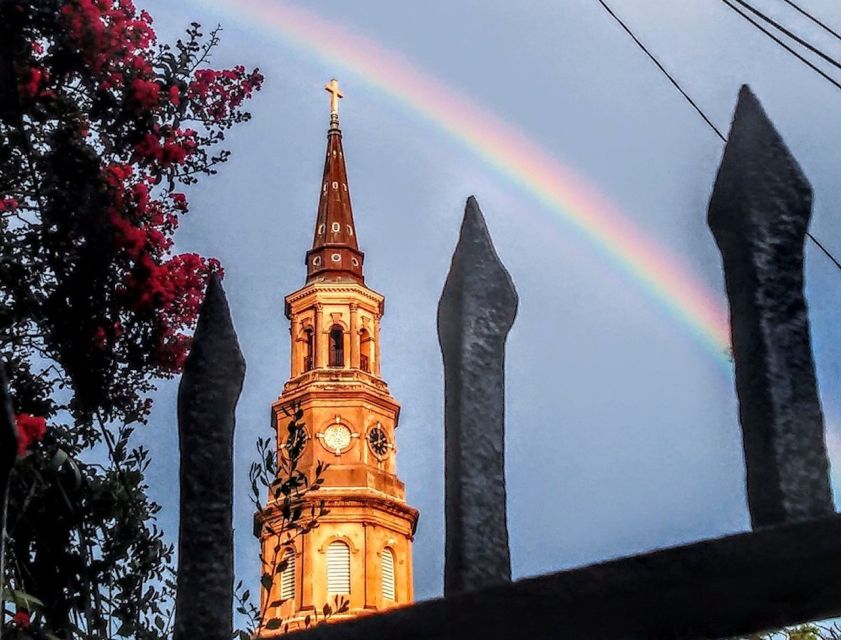
The tour meets outside 151 Meeting Street, and you’ll do best if you arrive about 10 minutes early. That early buffer matters because once you’re walking, the flow is part of the experience: Adam builds the story like a route map, so each corner feels like it has a reason.
Expect a steady rhythm. The stops are short—some around 5 to 10 minutes, others up to about 20—so you keep moving while still getting enough time for context. That pacing is ideal if you want a walk that doesn’t drag, but it also means you should come with a little curiosity rather than expecting long museum-style time at every stop.
If you’re visiting in colder weather, don’t assume your tour disappears. In one cold snap, the tour still ran and stayed enjoyable even when many shops and restaurants were shut—because the point here is the walking and the stories, not shopping time.
You can also read our reviews of more historical tours in Charleston



Circular Congregational Church to Powder Magazine: setting the story in Old Town
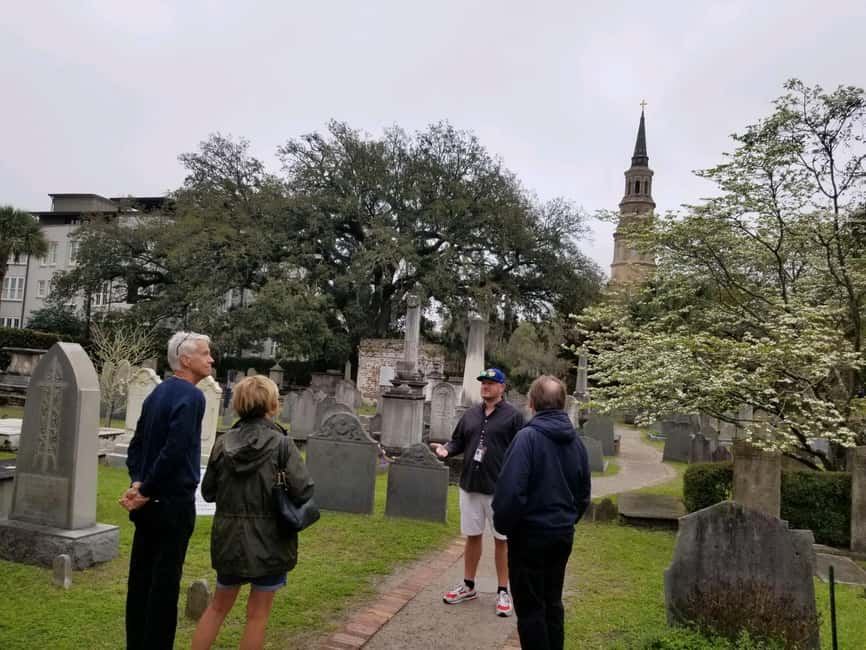
The walk begins with a visit to Circular Congregational Church for about 10 minutes. This isn’t presented as a standalone photo-op. It’s the first chapter of the tour: the guide uses early Charleston streets and their layered residents to help you understand how later events grew out of these beginnings.
Next comes Powder Magazine, Charleston for about 15 minutes. This is one of those stops where the value is less about memorizing details and more about hearing how the guide frames what happened around the city and how that connects beyond South Carolina. If you like history that explains cause-and-effect, this stop is a good early signal that the tour is story-first, not trivia-first.
Even if you’re not a history fanatic, this section works because it gives you a mental map. By the time you reach the alley portion later, you’ll know what kind of storyline you’re walking through—British and American resistance dynamics, and the way different groups lived through the same city.
Philadelphia Alley and Dock Street Theatre: where the lanes feel alive
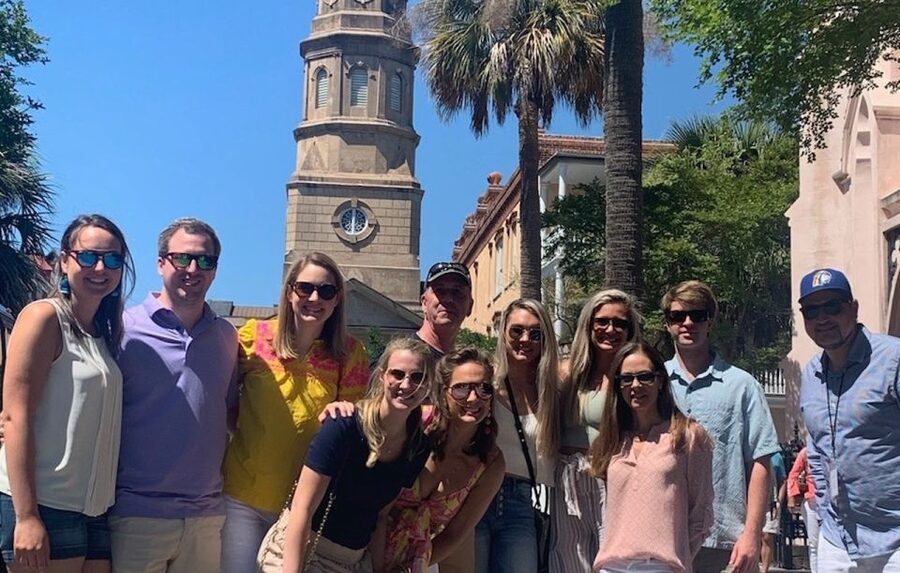
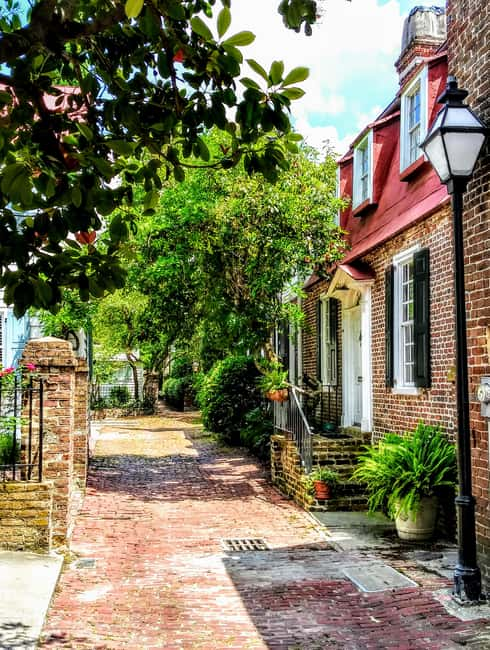
Then you turn from bigger landmarks into the kind of space that makes Charleston feel like Charleston: tight streets and tucked-away passageways. Philadelphia Alley is a brief stop (about 10 minutes), but it’s the kind of place where a quick halt can change how you see the city. You’re not just looking at narrow walls—you’re learning how Charleston’s layout shaped daily life and social order.
After that, you’ll spend around 20 minutes at Dock Street Theatre. This stop stands out because the tour’s theme widens beyond simple military or political milestones. You’ll hear stories tied to major national impact, but the guide also connects them to how Charleston functioned as a community—so the city doesn’t feel like a backdrop. It feels like a player.
One practical tip: this portion of the route is where small-group pacing pays off. With fewer people, you can hear the guide clearly even if the group stops in a slightly awkward spot. And because the tour is designed around storytelling, you’ll get more out of paying attention with your whole body—walking, stopping, turning—rather than trying to multitask with photos.
Pink House Gallery, Old Slave Mart Museum, and Old Exchange: the stops that land
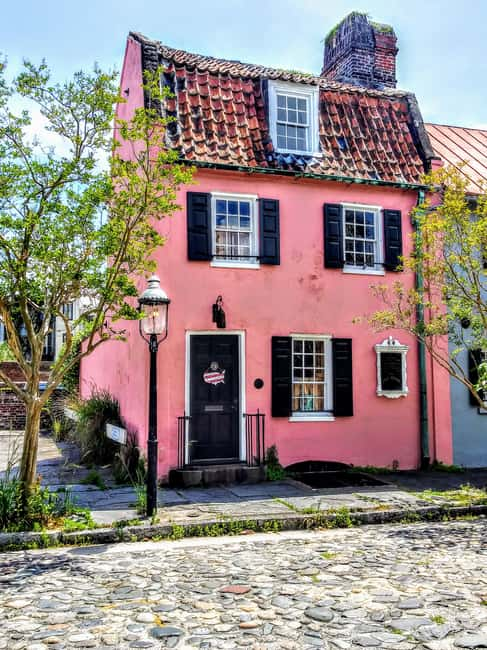
Not every part of this tour is light. Pink House Gallery is short (about 5 minutes), and it’s placed like a quick breather in the middle—just enough time to re-set your eyes after the heavier sites.
Then the tour moves to Old Slave Mart Museum for around 10 minutes. This is where the experience becomes more serious. The guide is focused on real stories, and here you should expect to sit with the human impact behind the words. It’s the kind of stop where you come away understanding that history isn’t just old buildings. It’s systems that shaped lives and the nation.
A little later you visit Old Exchange & Provost Dungeon for about 10 minutes. This is another anchor site where the tour keeps its promise of connecting what happened locally to bigger national outcomes. The dungeon is not a casual stop, so if you’re sensitive to heavy topics, plan to take a breath between sections and let the story settle before you move on.
Here’s what makes this portion valuable: the guide doesn’t treat slavery and imprisonment as side notes. The tour explicitly includes the enslaved and later soldiers and political power. That matters because it keeps the city’s narrative from being sanitized into a postcard.
Rainbow Row to 44 Broad St: spotting what you missed at first glance
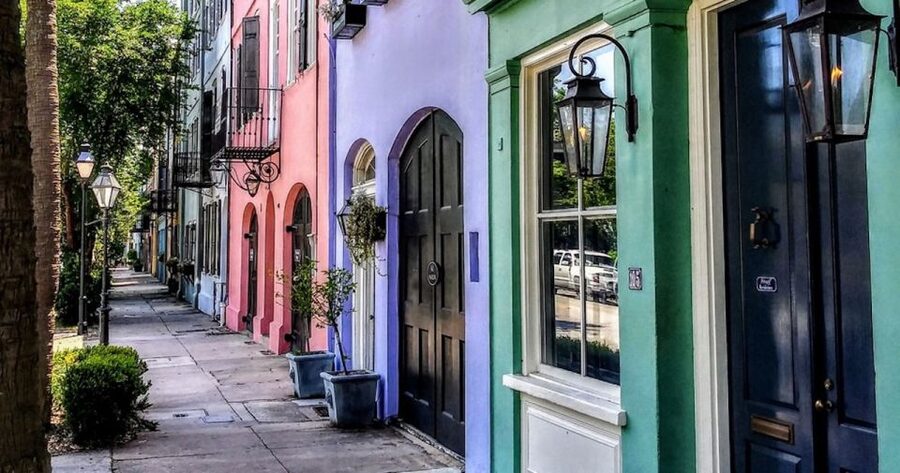
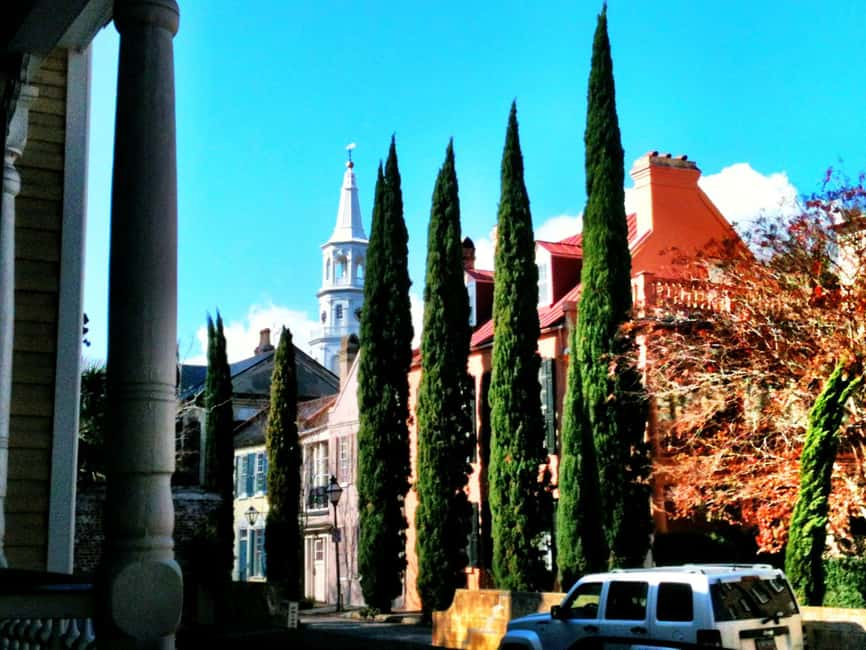
Now you shift toward the iconic Charleston you’ve probably seen in photos: Rainbow Row, with about 10 minutes here. This stop is short, but it works because you’re arriving with new context. Instead of just appreciating the look of the row, you’ll understand how people and power left fingerprints on the city over time.
Then you move to 44 Broad St for about 5 minutes. It’s a quick stop, but it’s placed deliberately. The guide ties these major-address landmarks back to larger stories—especially the connection to politicians and Presidents, including George Washington. Even if you only get a few minutes at this exact spot, the value is the way it links the city’s famous frontage to national history.
If you like smart “look closer” moments, this is one of the best parts of the tour. You’ll start noticing how the city’s prominence and the way people moved through these spaces fit into the overall timeline you heard earlier, back to the streets dating to 1680.




Waterfront Park wrap-up: turning stops into understanding
The last stop is Waterfront Park, with about 15 minutes of guided walking and explanation. This ending makes sense. Earlier, you were moving through alleys and landmark points. Here, you get a chance to regroup your understanding and see how Charleston’s layout and story fit together as one connected place.
This is also where the guide’s Q-and-A energy pays off. Because the group stays small, you can ask questions about what you just learned—especially if you’re trying to make sense of how the British, Patriots, enslaved people, and later soldiers all show up in the same city narrative.
You’ll finish with a clearer mental map, plus a sense of what to notice if you go back out on your own. That’s the real souvenir: you won’t just have photos. You’ll have connections.
Price and value: why $27 can feel like a bargain in Charleston
At $27 per person for about 2 hours, the value is tied to two things: the time and the storytelling style. A lot of walking tours in popular cities spend most of their energy on speed—hit the big points, move on, don’t answer questions. This one uses the opposite approach: shorter stops but fuller explanations.
The other value lever is the small group limit—10 participants. When you’re paying for a guide, you’re really paying for access: hearing answers, understanding the context, and getting your questions handled without rushing. In practice, the tour feels less like a lecture and more like a guided walk with a smart local who’s trained to talk history in a human way.
Also, Adam Moore’s education in business and history at the University of South Carolina shows up in how he structures the stories. He’s not just reciting dates. He’s framing how decisions and power played out in real places.
Who should book this Charleston history and alleys walk
This tour is a strong fit if you want:
- Story-driven history instead of a list of dates
- A walk that includes both iconic sights and the harder, real sites
- A small-group experience where you can ask questions
- An Old Town route that reaches back to the city’s early era (dating to 1680)
It may be less ideal if you’re looking for long stays at specific museums. The stops are intentionally time-limited so you can cover more ground and keep the story thread moving.
Quick, practical tips before you go
Bring:
- Water
- Bug spray
- Footwear you enjoy walking in
Wear:
- Something you can walk comfortably in for a couple of hours
If your travel timing is weather-dependent, plan to dress for the day. Even in a cold snap, the tour still ran, because the core experience is outside walking and storytelling.
Should you book this tour or skip it?
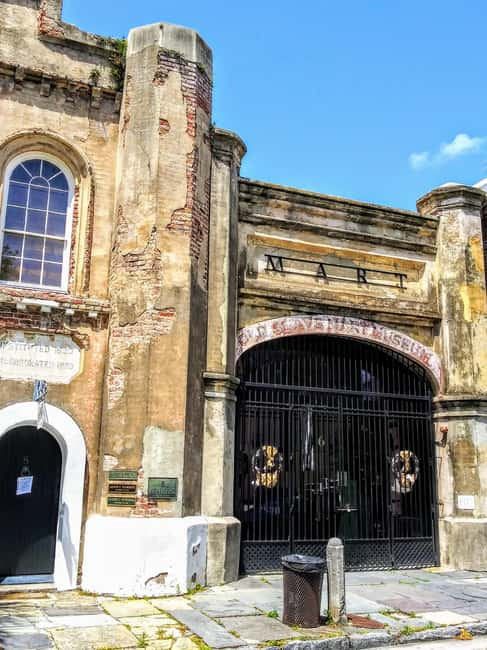
I’d book it if you want a Charleston walk that treats history like a living storyline, not a speedrun through landmarks. The combination of Adam Moore’s engaging delivery, small group size, and a route that blends alleys, theaters, and major historic sites—including Old Slave Mart Museum and Old Exchange & Provost Dungeon—gives you a better sense of the city than you’ll get from rushing around solo.
Skip it only if you hate walking, want purely light entertainment, or are hoping for long, museum-style time at each location. For most people who want an honest, guided way to see Charleston, this is a solid buy.
FAQ
FAQ
Where does the tour start?
The tour meets outside 151 Meeting Street.
How long is the Charleston history walking tour?
The duration is about 2 hours.
How big is the group?
The tour is a small group limited to 10 participants.
Who is the guide?
The tour is led by licensed tour guide Adam Moore, and he performs the tours himself.
Which language is the tour in?
The tour is conducted in English.
What stops are included on the route?
You’ll visit Circular Congregational Church, Powder Magazine, Philadelphia Alley, Dock Street Theatre, Pink House Gallery, Old Slave Mart Museum, Old Exchange & Provost Dungeon, Rainbow Row, 44 Broad St, and Waterfront Park.
Is the tour wheelchair accessible?
Yes, the tour is wheelchair accessible.
What should I bring or wear for the walk?
Bring water and bug spray, and wear comfortable walking shoes.
Do I need to arrive early?
Yes. You should arrive about 10 minutes before the tour starts.
Can I cancel and get a refund?
You can cancel up to 24 hours in advance for a full refund.