REVIEW · ROME
Colosseum with Arena guided tour up to 14 people
Book on Viator →Operated by VIVICOS INTERNATIONAL TRAVEL SRL · Bookable on Viator
The Colosseum is loud in your imagination. This small-group visit gives you Arena access and a real local guide who ties gladiator stories to emperors, with headsets so you actually hear the key details.
I love that the essentials are handled for you: entrance fees are built in, and you use pre-purchased named tickets to avoid the worst ticket-desk lines. The one thing to consider is that Palatine Hill and the Roman Forum are self-guided, so you’ll want to plan how you’ll cover that time on your own.
In This Review
- Key Highlights Worth Planning For
- Semiprivate Colosseum Arena Tour for Up to 14 (and How Crowds Feel Here)
- Check-In, Security, and the Stuff That Can Make You Lose Time
- Entering the Colosseum With an Arena Ticket (What You’re Actually Paying For)
- The Guided Part: How the Guide Makes the Stone Feel Like a Timeline
- Palatine Hill and Roman Forum: Self-Guided Access Means You Need a Plan
- Price and Value: Why $33 Can Be More Than a Ticket
- Best Guide Fit: Stories of Gladiators and Emperors (and Headsets That Help)
- Who Should Book This Colosseum Arena Tour (and Who Might Skip It)
- Quick Reality Check: Tips That Improve Your Experience
- Should You Book This Tour?
- FAQ
- What’s included in the Colosseum Arena guided tour?
- How long is the tour?
- Is the Palatine Hill and Roman Forum portion guided?
- Do I need an ID to enter?
- What if I arrive late?
- Will I have trouble hearing the guide?
- What should I wear or bring for the visit?
Key Highlights Worth Planning For
- Semiprivate pacing (up to 14 people) for a more human Colosseum experience
- Arena ticket included (with reservation built into the price)
- Named pre-purchased tickets to skip the ticket counter line
- Headsets provided for clear guide audio inside the site
- Itinerary order can change (Forum may come before Palatine Hill)
- Your passport/ID must match your booking name for entry checks
Semiprivate Colosseum Arena Tour for Up to 14 (and How Crowds Feel Here)
This tour is designed as a smaller-group experience. The concept is up to 14 people, which usually means less time waiting around for stragglers and more time standing where the story makes sense. The operator also lists a maximum higher cap, so on some dates the group could feel larger than you’d expect—but the intent is still “small group,” not a busload.
Why that matters: the Colosseum is not a quiet museum. Even with a guide, you’ll be navigating security lines, uneven stone, and people moving in every direction. A tighter group helps you keep your orientation, follow the guide’s route without getting separated, and hear the important context when you’re standing in the right spots.
Also note the walking level. You’ll be on uneven surfaces, so this is best for people with moderate physical fitness. If you have walking disabilities, the tour is not recommended based on the listed conditions.
You can also read our reviews of more guided tours in Rome
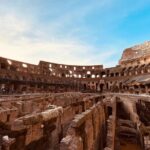
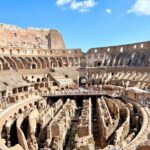
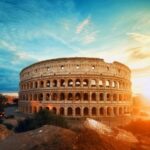
Check-In, Security, and the Stuff That Can Make You Lose Time
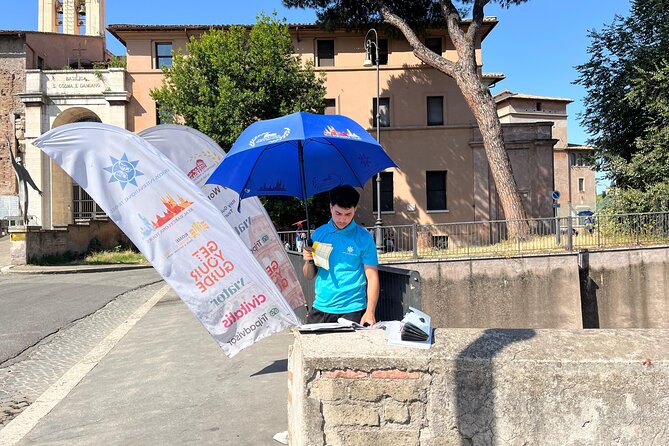
Before you see anything, you’ll need to do the practical bits: meet, check in, and get through security. The meeting point is listed near Santi Cosma e Damiano on Via dei Fori Imperiali (and the tour notes an operator office at Via Frangioane 30 for starting the experience). Either way, the theme is the same: arrive early.
The guidance is to be at the meeting point at least 15 minutes before the tour start for check-in. If you’re late, you may lose your entrance or part of the tour. One caution worth taking seriously: there’s a stated risk of denied entry if full names don’t match what’s on your tickets, so don’t assume it’s “just details.” The site checks names at entry.
Bring:
- A valid passport or ID that matches the booking names
- No oversized backpacks (they won’t be admitted)
Security at the Colosseum includes a metal detector. It’s normal for that to create a short wait. The good news: your tickets are pre-purchased and reserved, which helps avoid the longer ticket-counter bottleneck.
Entering the Colosseum With an Arena Ticket (What You’re Actually Paying For)
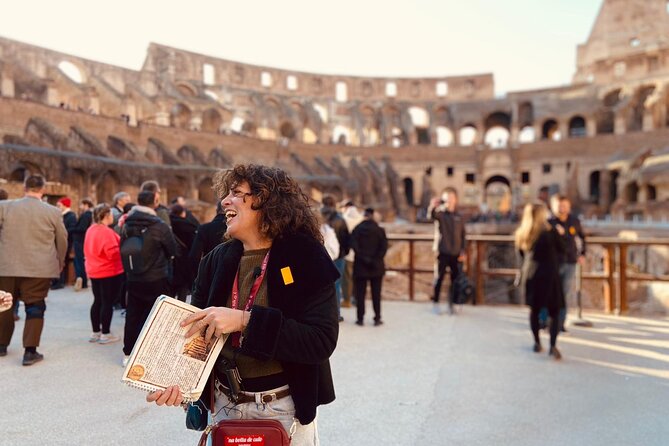
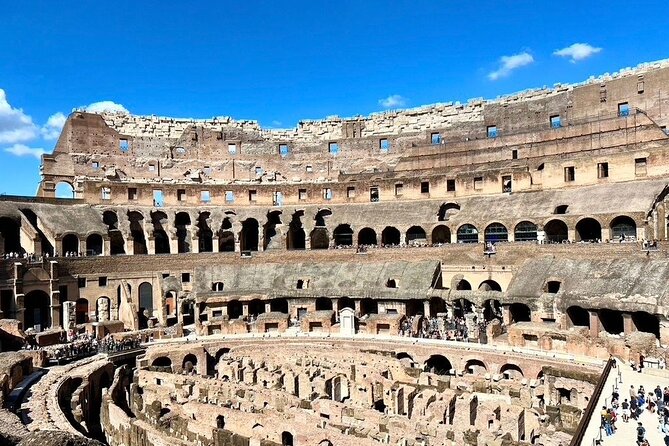
The headline for this experience is the Colosseum visit with the Arena ticket, plus a live guide inside the amphitheater area. Your package includes admission fees as follows: Colosseum Arena ticket (24 euros) plus 2 euros for reservation. That’s a clue about why the tour isn’t priced just like a basic walking tour. You’re paying not only for stories, but also for the paid access component and the reserved logistics that let you enter without haggling at the ticket counter.
You also get named tickets that are pre-purchased so you can skip the line of tickets’ desk counter. That’s one of the best “value multipliers” in Rome. When you save even 20–30 minutes on a major site, you gain usable time for exploring, photos, and sanity.
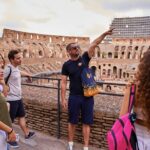
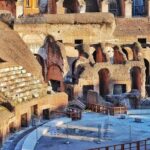
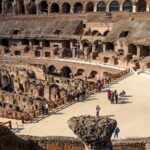
Once you’re inside, your guide uses the Arena experience to make the place feel real: the scale, the layout, and why gladiator combats were such a big deal to ancient Romans. The tour is described as fun and story-driven—gladiator combat explanations, plus anecdotes about Roman emperors. The headset support matters here. Colosseum stone can swallow sound, and crowd noise is real, so the included headsets make it much easier to follow the guide’s thread rather than just “looking around.”
One small practical note: you should plan on going at your own pace for your needs. There are no bathroom stops inside the Colosseum noted in an example review, so it’s smart to use facilities before you step into the main sections.
The Guided Part: How the Guide Makes the Stone Feel Like a Timeline
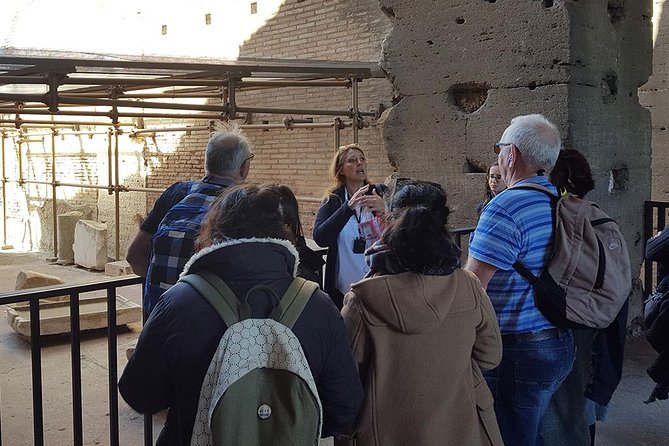
The guided portion focuses on the Colosseum first. You’ll start with a brief introduction about Ancient Rome, then move toward the Colosseum’s most iconic areas. The guide’s job isn’t just to list facts. The tour is set up so you’re not wandering randomly—you’re moving with context.
What I like about this format is how it respects the reality of the site. If you’ve ever tried to “self-tour” the Colosseum, you can end up staring at walls and forgetting what matters. With a guide, you get anchored on:
- what you’re looking at (and why it was built that way)
- how combat and spectacle worked
- how emperors shaped what the public saw
You’ll also notice the tour’s time discipline. The experience is short on paper (about 1 hour 15 minutes), but on some days your real time inside may stretch depending on flow and how long you pause at key points. The big goal is that the guide helps you maximize your Colosseum time—meaning you don’t waste it trying to figure out where to stand for the best views and the most sense-making explanations.
Guides can vary, but there’s a consistent theme: people respond well when the guide is attentive and shows the key parts efficiently. One guide name that has come up positively is Alessandro, described as excellent and attentive—showing key areas of the Colosseum and Roman Forum with confidence.
Palatine Hill and Roman Forum: Self-Guided Access Means You Need a Plan
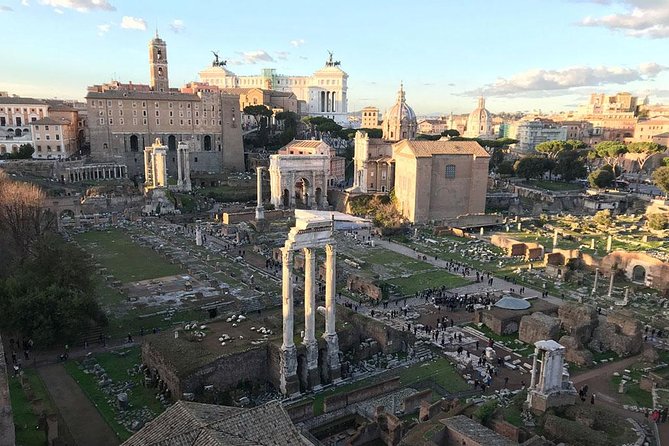
Here’s the part that changes how you experience the tour after the main guided time. You’ll get access to the Palatine Hill and the Roman Forum on your own—with no guided narration for those areas.
That can be a drawback if you’re hoping for the same storytelling style across the entire ancient center. But it can also be great if you like flexibility—pausing for photos, wandering to your favorite corners, and controlling your own rhythm.
A few practical points to make this self-guided section work:
- The order may change. The tour notes it’s possible you’ll visit the Forum first and then Palatine Hill.
- Self-guided doesn’t mean “no structure.” You’ll still want a basic route in mind, because the Forum complex can feel like overlapping rooms without a clear path.
- Give yourself time for the emotional effect. The Forum hits different once you see the scale and imagine the political life happening around you.
Bathrooms are another reality check. If the Colosseum has limited options once you’re inside, plan for that before you spend time across the Forum and Palatine. Also, the terrain is uneven across this area. Comfortable walking shoes matter more than you’d think.
If you want a fully guided experience for the entire arc from Colosseum through Forum and Palatine, this might not be your best match. But if you’re happy to switch from guided to self-paced once you’ve gotten the Colosseum context, the design can work well.
Price and Value: Why $33 Can Be More Than a Ticket
Let’s talk value plainly. You’ll pay $33 (as listed), and included in that are key elements:
- the guided Colosseum visit
- the Colosseum Arena ticket with reservation components
- pre-purchased named tickets to help you skip the ticket counter line
- headsets for listening quality
Not included: transportation, hotel pickup/drop-off, and food and drinks. That’s normal for Rome walking tours.
So where is the value? In Rome, the Colosseum is a time-and-process problem as much as it’s an attraction. When you bundle:
- access to specific sections (Arena)
- reserved entry logistics
- skip-the-counter tickets
you reduce the friction that makes “just buy tickets later” stressful.
Could you buy everything yourself? Sure. But then you’re taking on the planning burden and the risk that your timing doesn’t line up with your preferred entry slot. This tour shifts that work to the operator.
One caution: the overall time can feel tight. If you’re the type who wants slow strolling, lots of bathroom breaks, or long photo sessions at every viewpoint, a packed schedule can feel rushed. The most common complaint you might want to guard against is the sense that you’re moved along quickly. That’s not about the guide doing a bad job—it’s often about timed entry flow and route choices.
If you’re okay with a “see the essentials, then explore more on your own” plan, the price is easier to justify.
Best Guide Fit: Stories of Gladiators and Emperors (and Headsets That Help)
This tour leans into narrative. You’re not just there to confirm you’re standing in the Colosseum. You’re there to understand why it mattered, through gladiator combat stories and anecdotes about Roman emperors.
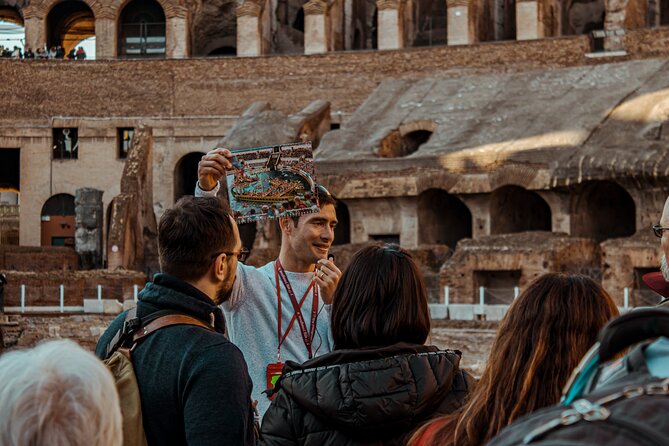
The included headsets are a big quality-of-life detail. Without them, you can end up doing the worst kind of listening: craning your neck toward the guide while surrounded by loud crowds. With headsets, you can focus on what the guide points out, which helps you remember what you saw rather than just collecting photos.
Language is also a factor. This tour is described as Spanish-speaking. If you need another language, double-check what’s offered at booking time so you’re not stuck relying on partial understanding.
Who Should Book This Colosseum Arena Tour (and Who Might Skip It)
I’d point this tour toward you if:
- you want Arena access without figuring out complex ticket steps
- you like guided structure for the Colosseum itself
- you’re comfortable switching to self-guided Forum and Palatine
- you appreciate small-group pacing (up to 14 is the target)
I’d reconsider if:
- you want a fully guided tour through all three areas with uninterrupted narration
- you’re sensitive to being on a schedule
- you need more time for mobility pauses (the surfaces are uneven, and the tour isn’t recommended for walking disabilities)
Also, if you’re visiting on a day when crowds are intense, the Arena entry process and security wait can add pressure. The smartest move is arriving early—seriously. Don’t try to “thread the needle” on timing.
Quick Reality Check: Tips That Improve Your Experience
A few habits make a difference here:
- Arrive early for check-in (at least 15 minutes).
- Keep your bag situation simple. Oversized backpacks won’t be admitted.
- Bring the right ID and make sure the name matches your booking.
- Plan bathroom time before you’re deep inside, because options inside the Colosseum can be limited.
- Wear shoes that handle uneven surfaces.
- When your guided portion ends, decide how you’ll cover the Forum and Palatine right away. Self-guided goes better with a route plan.
And if you’re worried about hearing the guide in a noisy setting, relax: headsets are included.
Should You Book This Tour?
Book it if you want a small-group Colosseum experience with Arena access and the payoff of skip-the-counter, named tickets. The price makes more sense when you factor in the reserved access component and the fact that Rome’s major sights can eat time fast.
Skip it (or consider an alternative format) if you expect a guided tour of the Roman Forum and Palatine Hill as well. This one gives you guidance where it matters most in the Colosseum, then hands you the keys for the ancient city center.
If you go, do two things: show up early, and plan your self-guided route right after the Colosseum segment. That combination turns a potentially rushed visit into a satisfying day that actually sticks in your memory.
FAQ
What’s included in the Colosseum Arena guided tour?
The tour includes a guided visit of the Colosseum, a Colosseum Arena ticket (24 euros plus 2 euros for reservation), pre-purchased named tickets to skip the ticket counter line, and headsets. You also get access to Palatine Hill and the Roman Forum on your own (not a guided tour).
How long is the tour?
The duration is listed as approximately 1 hour 15 minutes, though actual timing can vary based on site availability.
Is the Palatine Hill and Roman Forum portion guided?
No. Palatine Hill and the Roman Forum are accessible on your own, with no guided narration for those areas.
Do I need an ID to enter?
Yes. You must present a valid passport or ID document that matches the full names provided at booking.
What if I arrive late?
If you arrive late, you might lose your entrance or a part of the tour. The tour notes that late arrival can affect entry timing.
Will I have trouble hearing the guide?
Headsets are provided to help you listen clearly during the tour.
What should I wear or bring for the visit?
You should dress appropriately for weather and wear shoes for uneven surfaces. Oversized backpacks will not be admitted. You should also be ready for a security check that includes a metal detector.