REVIEW · NEW DELHI
Delhi: Qutub Minar UNESCO World Heritage Site Walking Tour
Book on GetYourGuide →Operated by Crystal India Holidays · Bookable on GetYourGuide
One towering landmark changes your whole pace. This Delhi Qutub Minar walking tour pulls you into the early-13th-century details of a UNESCO World Heritage Site. You’ll walk close enough to actually read the patterns and spot the smaller landmarks that many people miss when they just rush for photos.
I love how the design of Qutub Minar changes storey by storey, so you’re not looking at one pretty tower—you’re watching rulers build on each other’s choices. I also like the way the guide ties the Mamluk carvings to what you’re seeing on the ground, including Arabic inscriptions and geometric patterns that feel precise, not decorative.
One consideration: it’s a walking tour at an outdoor heritage site, so expect uneven stone areas and a bit of sun exposure depending on the time of day. Wear grippy shoes and plan for a shorter tour time that still packs a lot of looking.
In This Review
- Key highlights worth showing up for
- Getting oriented at the base of Qutub Minar
- Walking the changing designs storey by storey
- Mamluk carvings: Arabic inscriptions and geometric patterns
- Quwwat-ul-Islam Mosque: first-mosque-in-India and reused pillars
- The Iron Pillar: rust-resistant metallurgy at close range
- Alai Darwaza and the unfinished Alai Minar project
- Timing, group size, and comfort on a 2–3 hour walk
- Price and value: what $9 buys you in practice
- Choosing the right fit for this Qutub Minar tour
- Should you book this Qutub Minar walking tour?
- FAQ
- How long is the Delhi Qutub Minar walking tour?
- Is a professional guide included?
- What languages are the live guides available in?
- What sights are included besides Qutub Minar?
- Is this tour at a UNESCO World Heritage Site?
- Is private car transfer included?
- Is the tour wheelchair accessible?
- What is the cancellation policy?
- Is there an option to reserve without paying right away?
- Is this a private group tour?
Key highlights worth showing up for
- 73-meter scale: You start at the base and your brain keeps recalibrating upward.
- Mamluk-era ornament: Arabic inscriptions and geometric patterns you can actually study up close.
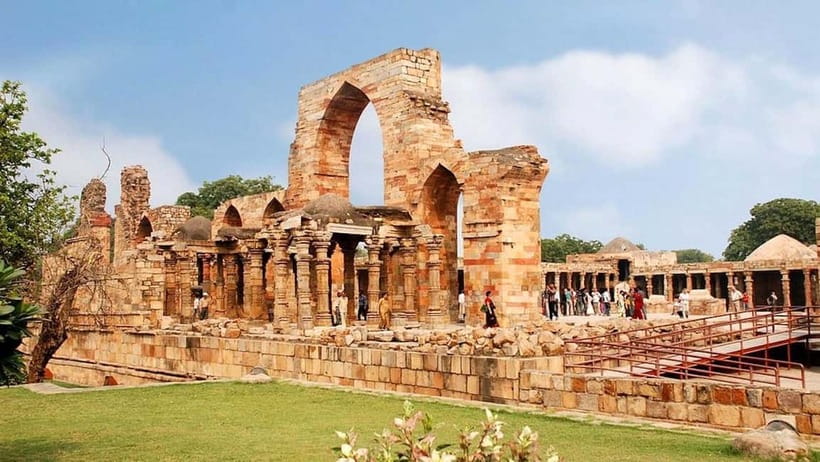
- Quwwat-ul-Islam Mosque: First-mosque-in-India energy, with arched gateways and pillars taken from earlier temples.
- Iron Pillar mystery: A rust-resistant surface that still gets people asking questions.
- Alai Darwaza and Alai Minar: Stunning architecture plus an unfinished ambition you can see with your own eyes.
Getting oriented at the base of Qutub Minar
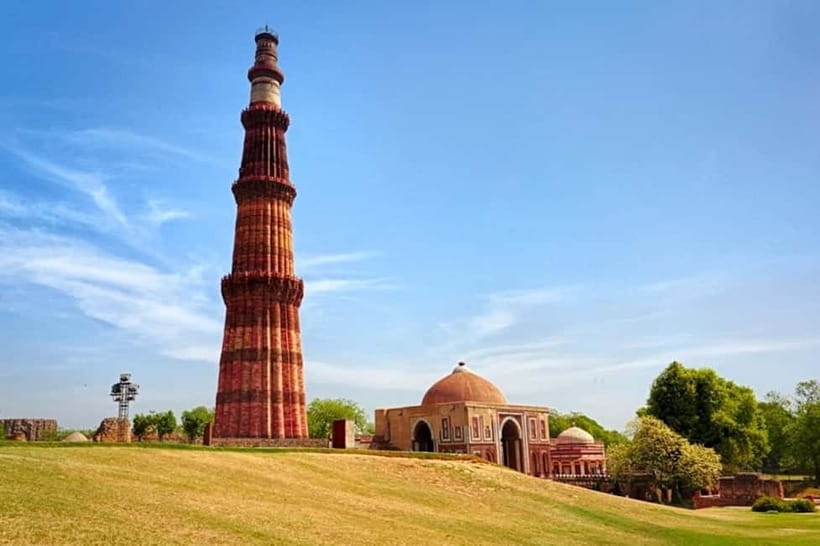
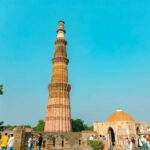
The tour starts at the ground level, which is the right way to experience Qutub Minar. At about 73 meters tall, the minaret dominates your view, but you also get the chance to notice the materials—red sandstone and marble—and how they hold up through centuries of weather and wear.
This is also where context helps. Even in a short 2–3 hours, you’ll learn that the site isn’t one single “moment.” It’s a set of connected monuments built and reshaped by different rulers, which makes your walk feel like a guided timeline instead of a checklist.
If you’re the type who likes to understand what you’re looking at, you’ll appreciate the professional guide approach here. English and Hindi commentary keeps things clear whether you want the basics or you want the deeper reasons behind the design.
You can also read our reviews of more walking tours in New Delhi



Walking the changing designs storey by storey
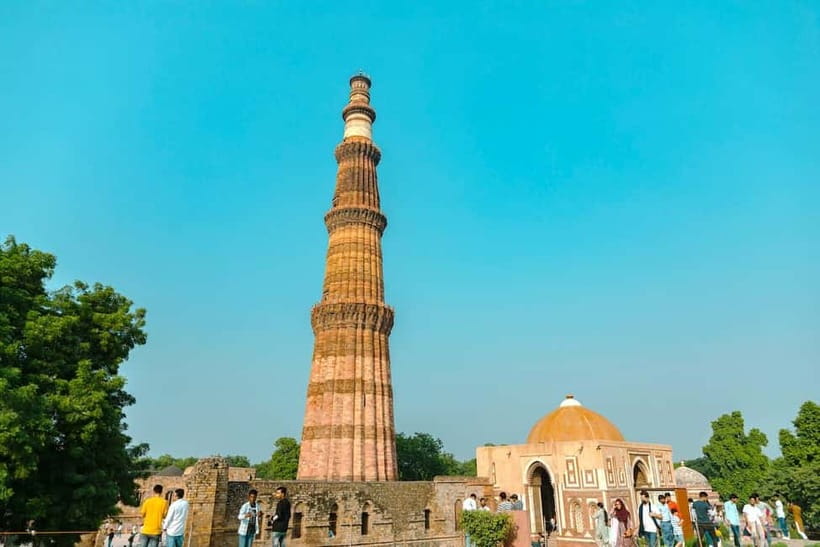
Around the minaret, you start seeing something that’s easy to miss when you only glance up for the iconic shot. Each storey has its own look and patterning, so you’re basically reading a visual upgrade plan across time.
One practical trick: move slowly enough that you can compare one level to the next. That’s how the design shifts become obvious—shape, pattern density, and the way surfaces catch light. The guide’s job is to point out what matters, especially when you’re standing close enough to see carvings without needing binoculars.
And yes, your neck might feel a little tired. That’s normal. The minaret is meant to pull your attention upward, but the real payoff is when the guide shows you the craftsmanship at human height too.
Mamluk carvings: Arabic inscriptions and geometric patterns
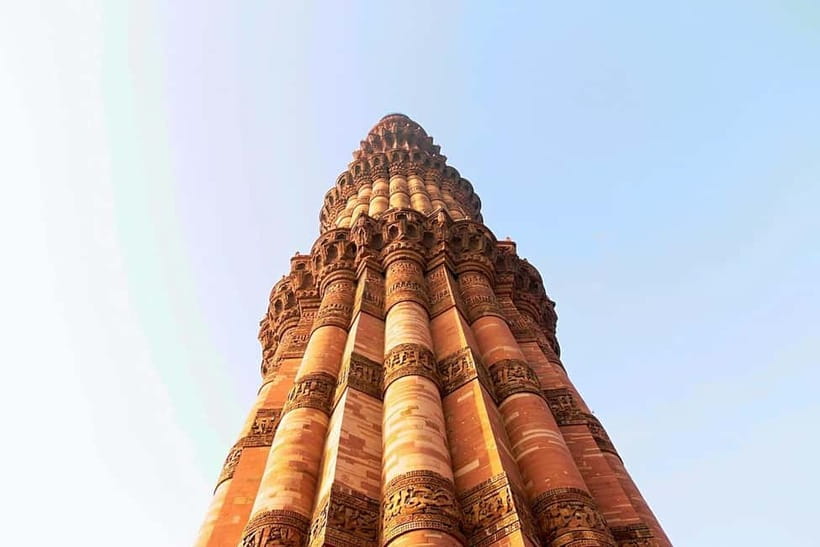
The minaret’s surface work is the star for people who like details. You’ll get close to intricate carvings—Arabic inscriptions and geometric patterns tied to the Mamluk dynasty style. From a distance, you can think of ornament as “pretty.” Up close, it becomes information: a sense of order, measurement, and technique.
What I like about how these details are presented is that they don’t feel random. The patterns repeat with purpose, and the guide helps you connect them to the era’s artistic thinking rather than treating them like decoration-only.
This is where the tour earns its low price. With a professional guide, you’re not just photographing. You’re learning what to look for, which turns a quick stop into a real understanding of why the carvings matter.
Quwwat-ul-Islam Mosque: first-mosque-in-India and reused pillars
Next you’ll move to the Quwwat-ul-Islam Mosque, described as the first mosque built in India. The key experience here isn’t only the Islamic architecture—it’s the visible blend of traditions.
You’ll see arched gateways and pillars, and you’ll also learn about something that can surprise first-time visitors: materials reused from earlier Hindu and Jain temples. That means the mosque isn’t just a new build; it’s a physical record of cultural change, including how stonework and craftsmanship were carried forward.
As you walk through this area, keep an eye out for differences in carving style and proportions. When you can compare elements side by side, the reuse becomes obvious. The guide’s explanations help you avoid the common trap of seeing it as either purely one tradition or purely another.
The Iron Pillar: rust-resistant metallurgy at close range
Then comes the Iron Pillar, one of those sights that sounds almost mythical until you stand near it. The big idea is simple: it’s known for a rust-resistant surface, which points to ancient Indian metallurgy doing something that still feels impressive today.
What makes this moment work on a walking tour is the contrast. You’ve just spent time with carved stone and architectural design. Now you’re looking at metal that has survived in a recognizable form. That shift keeps your brain engaged.
The guide’s role matters here too. Instead of just pointing it out, the commentary connects the pillar to why people find it mysterious—because the long-lasting surface invites questions about materials and methods.
You can also read our reviews of more historical tours in New Delhi




Alai Darwaza and the unfinished Alai Minar project
The tour ends with two linked stops that feel like a mini drama. First you’ll see Alai Darwaza, noted for stunning Indo-Islamic architecture. Then you’ll find the unfinished Alai Minar, an ambitious project that was started but not completed.
This pairing is smart because it gives you a before-and-after story in the same walk. Alai Darwaza shows what the rulers aimed for stylistically. The unfinished minaret shows what happens when plans don’t fully come to fruition.
When you’re in this section, slow down and let the contrast land. The unfinished project can feel less exciting at a glance, but once you compare the intention against what’s left, it becomes one of the most human moments in the whole complex. It reminds you that even massive construction plans had constraints—political, practical, or both.
Timing, group size, and comfort on a 2–3 hour walk
The tour is 2–3 hours, which is a useful length for this kind of site. You won’t be trapped in an all-day schedule, and you’re less likely to get tired of standing and looking. Still, this isn’t a “sit and see” experience. You’ll spend time moving between monuments, then stopping to inspect details.
It’s also a private group. That’s a big deal for value. With fewer people, the guide can answer questions without rushing, and you can move at a sensible pace rather than being pulled along by a larger crowd flow.
You can also plan around the tour format because it includes a live guide in English and Hindi. That helps if you want the main storyline without struggling with translation gaps.
Wheelchair accessibility is listed, so the provider intends this to be workable for mobility needs. You’ll still want to wear comfortable shoes, because outdoor heritage sites involve uneven terrain even when they’re accessible in principle.
Price and value: what $9 buys you in practice
At $9 per person, this tour is priced like a “no-brainer add-on” for anyone already in Delhi, but the value comes from what’s included. You’re not paying only for access to the grounds. You’re paying for a professional tour guide who can translate architecture into understandable meaning—especially when there are multiple layers of building and design.
There’s also an optional transfer in a private car if you choose that add-on. That matters if you’re juggling time between neighborhoods or if you simply don’t want to spend energy on local transport for a short visit.
Here’s the practical way to think about the cost: at this price, you’re basically buying the guide’s ability to point out what you should look for. If you show up without guidance, it’s possible to walk around and still miss why certain elements are there. With the guide, the site clicks faster.
And because the group is private, you’re not competing for attention. That makes even a short tour feel more “complete” than you’d expect for the time.
Choosing the right fit for this Qutub Minar tour
This walking tour is a great match if you:
- Like architectural details and want help interpreting what you’re seeing
- Prefer a shorter plan that still covers major landmarks at the Qutub complex
- Want a guide who can explain connections between buildings rather than just narrating facts
It’s also a smart option if you’re a history-curious person, but you don’t want a long lecture. The monuments here are strong on their own—you just need someone to point out the story cues: Mamluk carvings, reused temple pillars in the mosque, the Iron Pillar’s metallurgy mystery, and the unfinished Alai Minar ambition.
A note on guides: one past guide named Madhuvan has been highlighted for being engaging and for explaining the complex background in a way that helps the buildings make sense together. If that style matters to you, this tour format is likely to click.
Should you book this Qutub Minar walking tour?
Yes—if you want a short, well-guided walk through the key monuments at the Qutub complex, this is a strong choice. The low price plus a live professional guide means you’re paying for interpretation, not just a stroll around famous landmarks.
Book it if you care about details like the Mamluk carvings, the reuse visible in the Quwwat-ul-Islam Mosque, and the Iron Pillar’s rust-resistant mystery. Consider it carefully if you’re expecting a mostly “relax and look up” experience, because the value here comes from the guide’s explanations and the time spent actually inspecting.
If you’re planning your first trip to Qutub Minar, take the guided option—you’ll understand more in fewer hours.
FAQ
How long is the Delhi Qutub Minar walking tour?
The tour lasts 2 to 3 hours.
Is a professional guide included?
Yes. A professional tour guide is included.
What languages are the live guides available in?
The live tour guide is available in English and Hindi.
What sights are included besides Qutub Minar?
You’ll visit Quwwat-ul-Islam Mosque, the Iron Pillar, Alai Darwaza, and the unfinished Alai Minar.
Is this tour at a UNESCO World Heritage Site?
Yes. Qutub Minar is part of a UNESCO World Heritage Site, and the tour focuses on the Qutub Minar complex.
Is private car transfer included?
Transfer in a private car is included only if you select that option.
Is the tour wheelchair accessible?
Wheelchair accessibility is listed for this activity.
What is the cancellation policy?
Free cancellation is available up to 24 hours in advance for a full refund.
Is there an option to reserve without paying right away?
Yes. Reserve now & pay later is offered, so you can book and pay nothing today.
Is this a private group tour?
Yes. The group type is private.