REVIEW · ROME
Exploring Rome’s Rich Heritage: The Pantheon
Book on GetYourGuide →Operated by CheckandGo Tours · Bookable on GetYourGuide
One perfect dome changes how you see Rome. I like that you get skip-the-line entry and a guide who walks you straight to the oculus, explaining why the opening and dome feel mathematically right. With headsets, you hear the details clearly without fighting the noise.
Big caveat: the dress code is strict, and the tour is not suitable for wheelchair users or people with mobility impairments. Also, at about 1 hour total, it is not a slow, linger-at-your-own-pace museum day.
In This Review
- Key highlights to look for
- Starting at Piazza della Rotonda: where the Pantheon story begins
- Skip-the-line entry: faster access, smarter use of your hour
- Walking into the Pantheon’s geometry: dome, oculus, and the “why” behind it
- The pagan temple to Christian church shift you can actually see
- Tombs and names: where kings and Renaissance figures rest
- How the guide brings the Pantheon to life (Maria and Mariangela examples)
- Time plan: 45 minutes on-site, about 1 hour total
- Price and value: what $41 buys you in the real world
- Practical tips that save your day at the Pantheon
- Who should book this Pantheon tour?
- Should you book this Pantheon guided tour?
- FAQ
- Where is the meeting point?
- How long is the tour?
- Do I need to wait in line?
- What is included in the price?
- Which languages are available?
- What documents should I bring?
- What clothing is not allowed?
- Is this tour suitable for wheelchair users or mobility impairments?
- Can I pay later and cancel?
Key highlights to look for

- Perfect proportions made human: you’ll learn how the dome and opening relate like a giant measuring tool.
- The 9-meter oculus moment: your guide explains what happens to light inside at different angles.
- Temple-to-church transformation: you’ll connect the pagan past to the Christian present without it feeling like a history lecture.
- Tombs you can actually find: kings, plus Renaissance and royal names tied to the building’s legacy.
- Real storytelling with headsets: English or Spanish guides, delivered clearly through included audio.
Starting at Piazza della Rotonda: where the Pantheon story begins
The experience starts right where the Pantheon dominates your view: Piazza della Rotonda (address: Piazza della Rotonda, 2). The meeting point matters here. If you try to find the entrance on your own, you can lose time circling and guessing where the separate queue is.
I also like that you’re not left hunting for answers. Your guide’s name and contact details are shared the day before the tour, so you can double-check you’re actually meeting the right group. Rome has a way of making simple logistics feel like a side quest, and this reduces the stress.
You can also read our reviews of more historical tours in Rome



Skip-the-line entry: faster access, smarter use of your hour

The big practical win is the skip-the-line tickets with a separate entrance. You still need to show up on time, and you still have to go through on-site rules (like the required attire), but you cut the worst of the waiting. For a 45-minute guided visit inside, saving even 20 to 30 minutes can be the difference between enjoying the building and feeling rushed.
Once you’re in, you’re not stuck just standing there trying to interpret architecture with guesswork. You have headsets so you can follow the guide clearly, which is a big deal in a busy, echo-y monument like this.
Walking into the Pantheon’s geometry: dome, oculus, and the “why” behind it

The Pantheon is famous for a reason, but a guide turns the wow into understanding. You begin with the grand approach: the majestic portico and its tall granite columns. It’s the kind of front that makes you stop walking even if you promised yourself you’ll only take one photo.
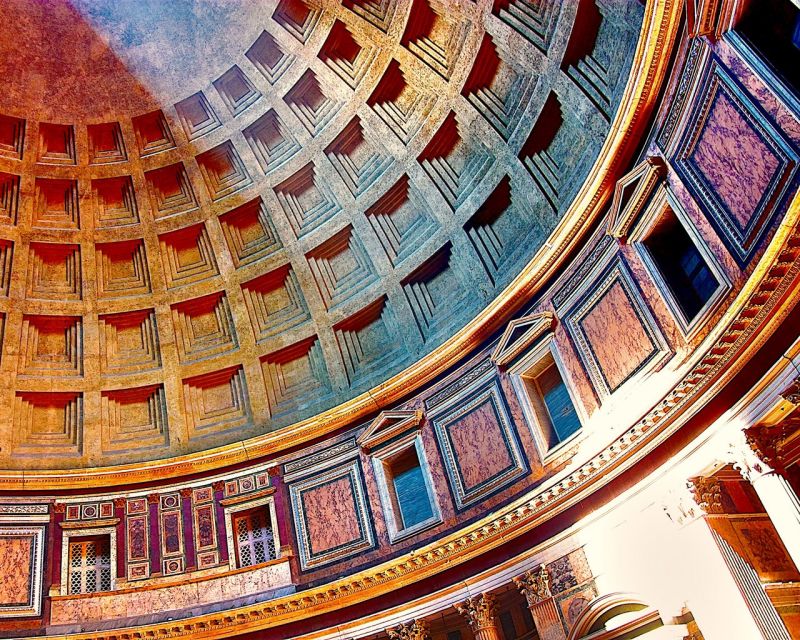
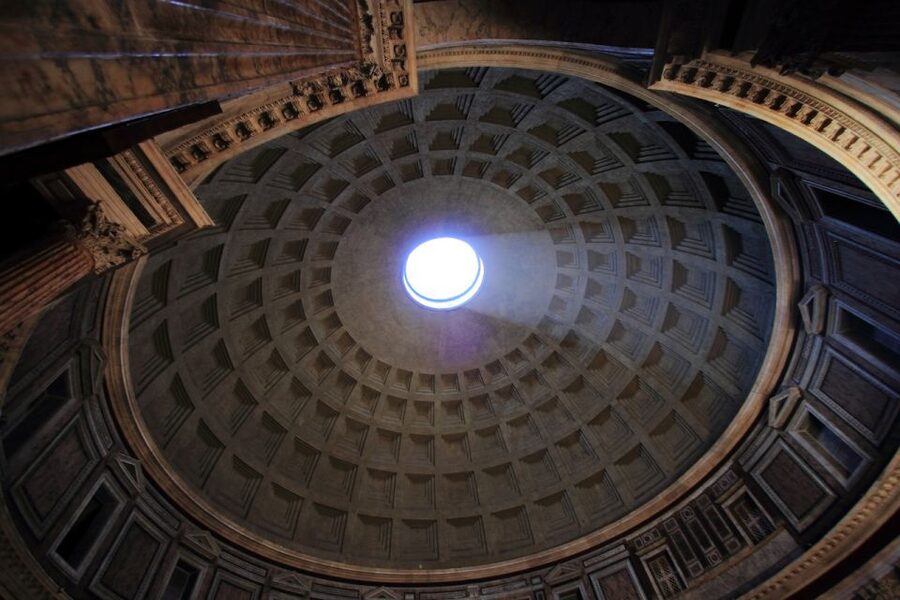
Then comes the main event: the dome and the famous oculus. The opening is 9 meters wide, and your guide will show you how the light acts like a controlled spotlight. You’ll also get the engineering context: this dome is known as the largest unreinforced concrete dome in the world. Even if you don’t care about structural details, the guide’s explanations connect that engineering to how the space feels.
Here’s what I find valuable: you’re not just told numbers. You get a sense of proportion. The Pantheon is often described as near-mathematical in balance, and that is exactly what you should pay attention to as you look up. With the guide pointing out key relationships, the building becomes easier to “read” with your eyes.
The pagan temple to Christian church shift you can actually see
One of the most interesting parts of the Pantheon story is how its purpose changed while much of the structure stayed recognizable. You’ll explore the transformation from a temple to all gods to a consecrated church, and you’ll hear how that shift affected what people came for and what meanings the space carried.
Instead of treating this as a dry timeline, the tour frames it as continuity and reuse. You can stand in one spot and feel how an ancient Roman civic-religious monument became a Christian place of worship. That’s a very Rome lesson: the past doesn’t vanish—it gets repurposed.
The guide also covers how the Pantheon survived major upheavals, including stories tied to Rome’s fall. That survival angle matters because it explains why the building you’re seeing today is still so intact. It’s not just a pretty ruin. It’s a survivor.
Tombs and names: where kings and Renaissance figures rest
Inside, the Pantheon isn’t only about domes. It’s also about memory. You’ll learn about the tombs of major historical figures, including Raphael and Victor Emmanuel II. The tour also references the final resting places of kings and Renaissance masters, which helps you place the monument in a longer cultural chain than ancient Rome alone.
I like this part because it gives you something concrete to locate. It’s easy to wander around a famous room thinking about shapes and forgetting the people tied to the space. With a guide, the tombs become anchors. You leave with a mental map, not just a blurred impression of impressive stone.





How the guide brings the Pantheon to life (Maria and Mariangela examples)
This tour leans hard on interpretation, not just sight-seeing. A passionate guide handles the big job: turning Roman engineering into something you can actually follow in real time.
You’ll have live guiding in English or Spanish, and the headsets make the narration easy to track. In past groups, guides such as Maria and Mariangela have been praised for making the history feel simple but complete. One highlight from an earlier experience: Maria also spoke Italian very well for that group, which is a nice reminder that guides can be flexible when language needs come up.
There’s also a story thread worth knowing: one guide’s approach has included a stroll through the nearby Jewish Ghetto streets alongside the Pantheon explanation. That may not be the main focus every day, but it’s a good example of the style of guide you’re hoping to get—someone who connects this monument to the streets around it, not just the building itself.
Time plan: 45 minutes on-site, about 1 hour total
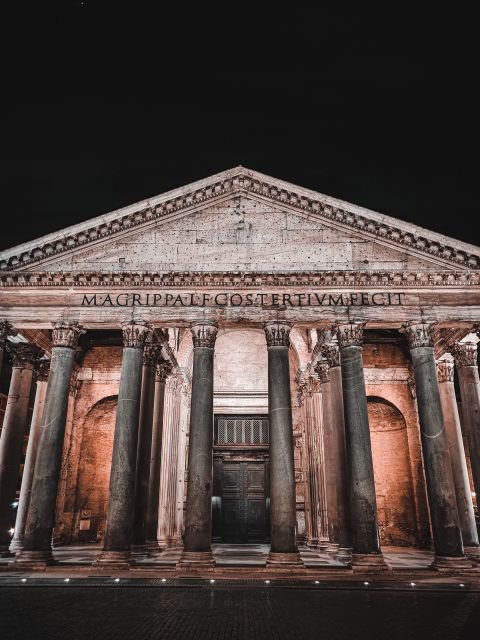
The structure is simple: you meet at the starting location, then you get a guided tour of about 45 minutes at the Pantheon. The overall experience is listed as 1 hour, which usually means you’re spending just enough time to see the key architectural moments, plus a little time for guided context.
This timing is ideal if you want depth without burning your whole morning. It’s not ideal if you want an ultra-slow, no-pressure visit where you can stand silently for long stretches and re-visit details over and over. If you’re the type who likes to linger, consider pairing this with a little extra unstructured time nearby—after the guided portion ends.
Price and value: what $41 buys you in the real world
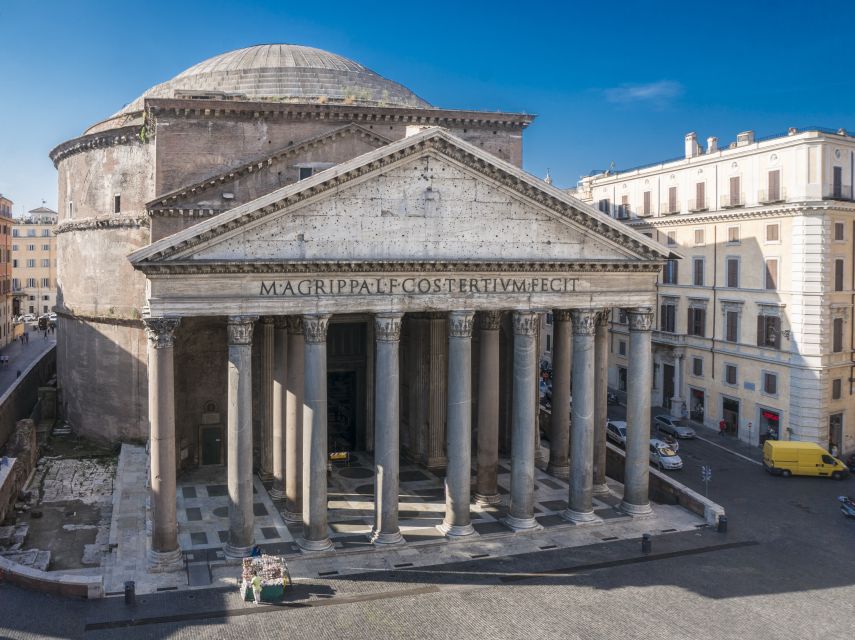
At $41 per person, you’re paying for more than entry. You’re getting:
- Skip-the-line access through a separate entrance
- A guided tour inside
- Headsets to hear clearly
In Rome, time is money, and waiting is energy. For a famous monument like the Pantheon, cutting the line matters. Add the headset audio, and you’re not paying just to stand in a famous room—you’re paying to get the building explained in a way that sticks.
Could you see the Pantheon for less by going on your own? Sure, but then you’re doing the interpretation work yourself. With this tour, you’re buying a translator for the architecture: the dome, the oculus, the transformation to a church, and the tombs all become a connected story.
Practical tips that save your day at the Pantheon

Before you go, read the rules closely. They’re not suggestions.
Dress code checks
Access is only permitted with suitable attire. That means no hemline above the knees and no vests or sleeveless tops for both men and women. The activity also lists items not allowed like shorts, short skirts, and sleeveless shirts. Rome can be warm, but the Pantheon is not the place to test how flexible staff will be.
What to bring
Bring your passport or ID card. It’s the kind of requirement that can ruin the day fast if you assume you won’t need it.
Not allowed
Pets are not allowed. Also, weapons or sharp objects are not allowed.
Service timing changes
The Pantheon can have anticipated closures, postponed openings, or special events such as masses and concerts that may vary service time. If your visit time is tight, build in a buffer.
Who should book this Pantheon tour?
I think this works best for you if:
- You want the Pantheon’s major moments explained clearly in English or Spanish
- You care about architecture and the “why,” not only the “what”
- You prefer a guided path so you don’t miss tombs and key details
I’d rethink it if:
- You have mobility concerns. This experience is explicitly listed as not suitable for people with mobility impairments and wheelchair users
- You’re hoping for a long, slow, self-paced tour. The guide format is efficient, and the on-site time is limited
Should you book this Pantheon guided tour?
If you want your Pantheon visit to feel organized, informative, and efficient, I’d book it. Skip-the-line entry, headsets, and a guide who can connect dome engineering to the church transformation and the tombs make the ticket feel like real value—not just access to a famous landmark.
Just plan for the reality of Rome: dress code rules are real, and the tour is not designed for wheelchair users or those who need extra mobility support. If you’re in the right condition and dressed appropriately, you’ll get exactly what you came for: the Pantheon, explained so you look up smarter when the oculus opens your view to the sky.
FAQ
Where is the meeting point?
The meeting point is Piazza della Rotonda, 2.
How long is the tour?
It’s listed as 1 hour total, with about 45 minutes of guided time at the Pantheon.
Do I need to wait in line?
No. You get skip-the-line tickets and use a separate entrance.
What is included in the price?
Included are the skip-the-line tickets to the Pantheon, headsets, and a guided tour of the Pantheon.
Which languages are available?
The live guide is available in English and Spanish.
What documents should I bring?
You should bring a passport or ID card (also for children).
What clothing is not allowed?
Shorts, short skirts, sleeveless shirts, and vests are not allowed. Access also requires attire with no hemline above the knees.
Is this tour suitable for wheelchair users or mobility impairments?
No. It is listed as not suitable for people with mobility impairments and wheelchair users.
Can I pay later and cancel?
Yes. You can reserve now & pay later, and you can cancel up to 24 hours in advance for a full refund.