REVIEW · ROME
Private Tour of the Colosseum Forums Palatine Hill & Ancient Rome
Book on Viator →Operated by Rome City Tours · Bookable on Viator
Three Rome sites, one smart guide. This private tour hits the Colosseum, Roman Forum, and Capitoline Hill with an art historian and multimedia-style visuals that turn ruins into story. You’re not just looking—you’re learning how Rome’s imperial center worked in political, religious, and social life.
I love two things most: the way your guide helps you get through entry lines efficiently, and the way the graphic reconstruction style visuals make the Forum easier to understand. On the same route, I’ve seen guides like Sara, Claudia, and Marta keep their explanations clear, friendly, and paced—so it feels full, not rushed.
One thing to plan for: your entry depends on the full names you provide and having an ID that matches. If details are off, you can be denied entry to the Colosseum and Roman Forum.
In This Review
- Key things you’ll care about
- A private art-historian approach to Rome’s power center
- Arriving at the Colosseum: the Flavian Amphitheatre in one hour
- Roman Forum walk on original streets with graphic reconstructions
- From the Forum to Capitoline Hill: Michelangelo’s square and Marcus Aurelius
- Timing, meeting point, and what to do before you go
- Value for $356.23 per person: what’s included and why it’s worth it
- Who this tour fits best (and who might not love it)
- Should you book this Colosseum, Forum & Capitoline Hill private tour?
- FAQ
- How long is the private tour?
- Is this a private tour?
- Is it offered in English?
- What admission is included?
- Where do we meet, and where does it end?
- Do I need to provide names and ID for entry?
- Is transportation or hotel pickup included?
- What’s the refund or change policy?
Key things you’ll care about
- Private and English-led: only your group, with a professional art historian style guide
- Efficient entry: built around getting you inside without wasting time
- Visual aids that do the heavy lifting: multimedia help for both the Colosseum and Forum
- Walking the real route through the ruins: original streets toward the Forum’s main square
- Capitoline Hill finale: Michelangelo’s square plus the Statue of Marcus Aurelius
- Value includes core access: Colosseum entrance and reservation fees are part of the price
A private art-historian approach to Rome’s power center
Rome’s ancient “center of gravity” isn’t spread out randomly. It’s concentrated power, ritual, and public life stacked close together. This tour is built around that idea, so you move through three major zones and come out with a clearer sense of how the whole system fit.
What makes it work is the guide style. You get a local guide plus a professional art historian guide, and that combination matters in big ruins. Instead of guessing what you’re looking at, you’re given explanations tied directly to the landmarks in front of you.
Also, it’s private. If you want to pause, ask a question, or slow down for details, you can. And if your group includes different ages, the format tends to land well because it’s structured and guided, not a free-for-all.
You can also read our reviews of more private tours in Rome
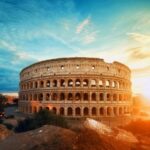
Arriving at the Colosseum: the Flavian Amphitheatre in one hour
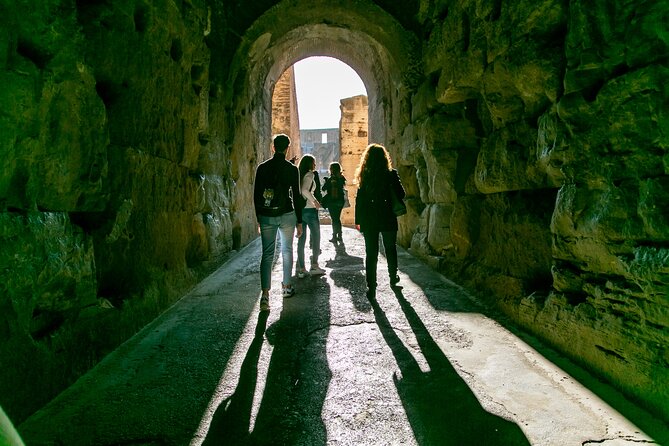
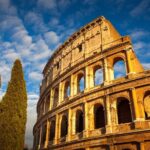
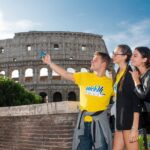
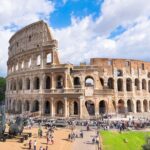
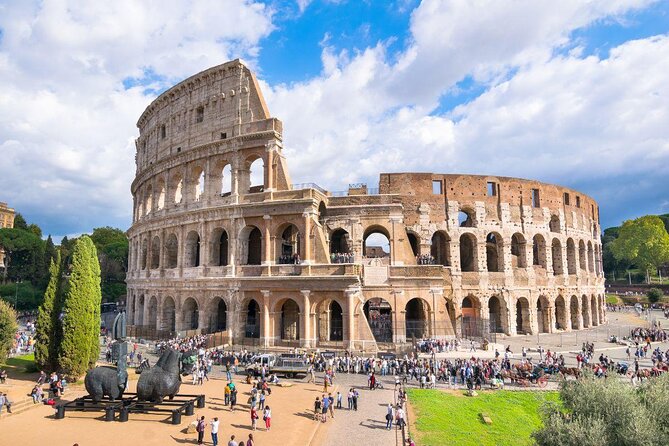
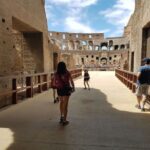
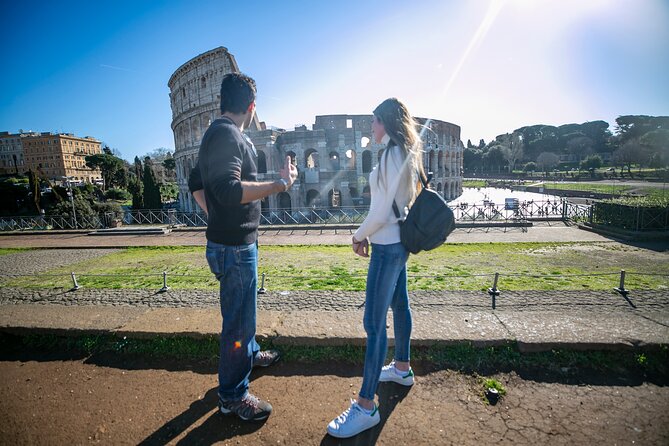
Your first stop is the Colosseum, with the meeting point set at Via dei Fori Imperiali, 21, Roma. You meet your guide at the entrance and go right to the main experience—about one hour here.
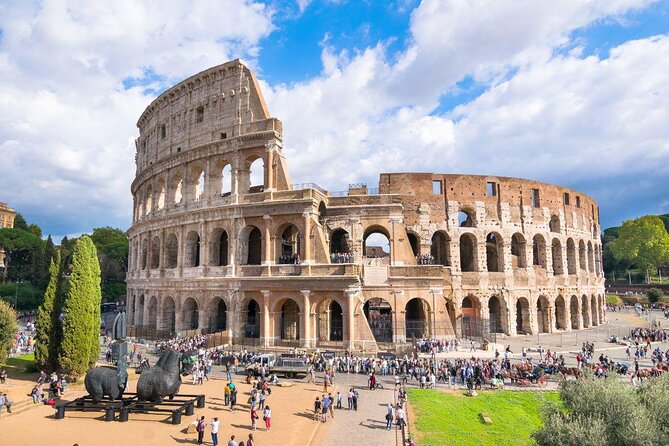
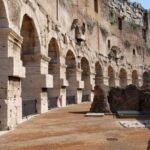
You’ll hear the key facts you need to orient yourself fast. The Colosseum was originally named the Flavian Ampitheatre. It had 80 entrances and could house 50,000 spectators. Those numbers aren’t trivia for trivia’s sake. They help you picture how massive crowds moved in and out, and why this place dominated Roman public life.
You’ll also use multimedia-style visual aids during the visit. That’s a practical advantage. Ruins can feel like random piles until someone helps you connect the shapes to how the building once worked. With this kind of presentation, you’re more likely to leave knowing what you saw—not just that it was impressive.
What I like here, especially for people short on time, is that the guide focuses on the “greatest hits” without turning it into a checklist. In the kind of feedback you can expect from this experience, guides are praised for answering questions and keeping entry-line stress low.
Possible consideration: the Colosseum area is crowded and you’re walking around a major site. Comfortable shoes and a steady pace help a lot, even if the tour is guided and structured.
Roman Forum walk on original streets with graphic reconstructions
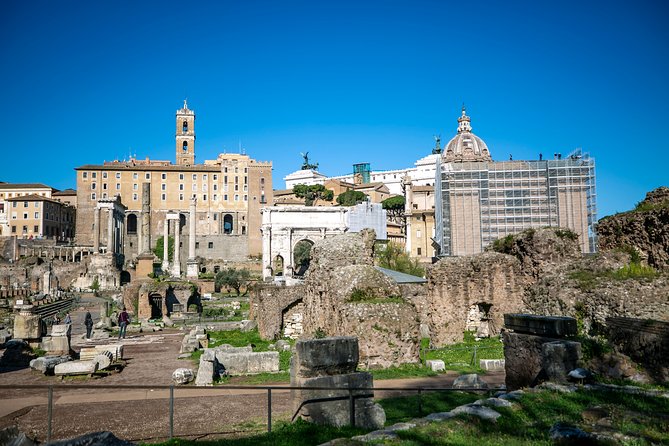
Once you’ve taken in the Colosseum, you head to the Roman Forum for another hour. This is where Rome stops being an arena and becomes a public stage—politics, religion, and society all layered together.
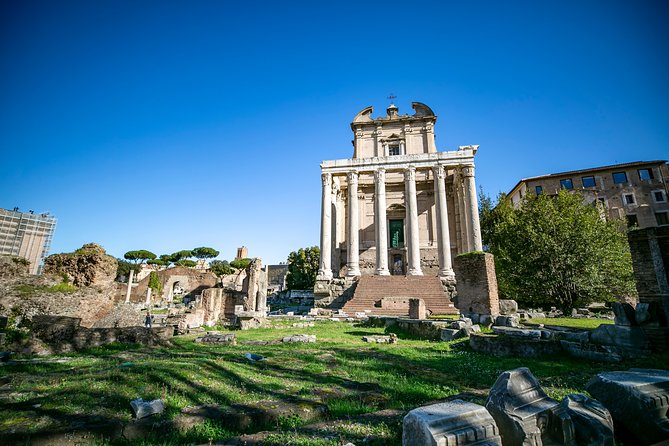
Here’s what you’ll do: you walk on original streets toward the Forum’s main square. Around you are ruins of major buildings and monuments, and the guide points them out in a way that helps you track what’s what.
You’ll see a lineup of landmark sites, including:
- the Senate House
- the Temple of Vesta
- the Temple of Saturn
- the Altar of the Divine Julius Caesar
- the Temple of Gemini
- the Basilica Emilia
- the Arch of Septimius Severus
- and more
The big value-add is the graphic reconstruction element. The ruins are magnificent, but they can also be hard to read unless you’re given a “then and now” visual. With reconstruction support, you get a real vision of how the Forum looked in ancient times, not just how it looks in fragments.
You’ll probably find this stop works particularly well if you like history but don’t want to study it for months first. The structure turns the Forum into a narrative route: you stand where those functions were, and the guide connects them to life in Rome’s imperial capital.
Drawback to keep in mind: ruins mean uneven ground and lots of walking. Even with a moderate-fitness-friendly pace, you’ll be on your feet and moving between points.
From the Forum to Capitoline Hill: Michelangelo’s square and Marcus Aurelius
The tour wraps at Capitoline Hill, with the final hour focused on Rome’s religious centerpiece. You’ll reach the area where temples dedicated to the most important Roman gods were located.
This part also adds a “Rome over time” contrast. You’ll be able to see Michelangelo’s beautiful square and the Statue of Marcus Aurelius. That’s a helpful bridge for your brain: you’re not only looking at ancient remains. You’re also seeing how later Rome shaped and framed these spaces.
Capitoline Hill is often where you start to feel the scale of Rome as a living city. The guide ties the ancient religious meaning to what you can still recognize nearby, and that connection helps the last leg feel like a conclusion—not a detour.
At the end, the activity ends back at the meeting point. So you’re not stuck figuring out public transport right after you’ve walked through three big zones.
Timing, meeting point, and what to do before you go
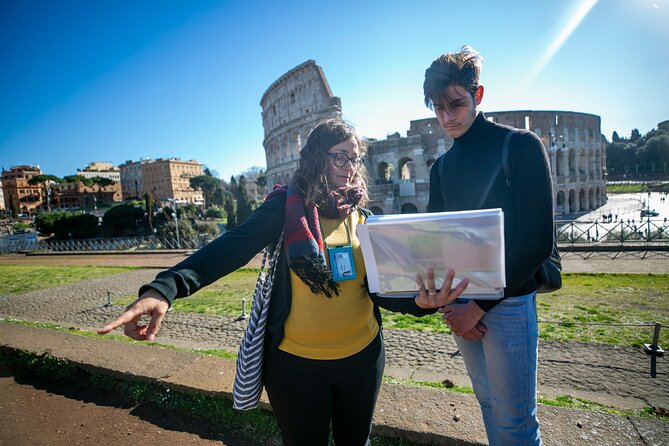
This experience runs about 3 hours total, and the schedule is built around three main stops of roughly one hour each. That’s a smart length if you want depth without giving up your whole day to ancient stone and museum crowds.
You’ll meet your guide at Via dei Fori Imperiali, 21. Since the meeting point is near public transportation, you should have an easier time getting there than with options that start somewhere hard to reach.
One very practical note: when booking, you must provide the full names of all travelers. Failure to present a voucher with all travelers’ full names at the ticket office before entry may result in denied entry to the Colosseum and Roman Forum. Each traveler must also present a valid passport or ID document that matches the name used at booking.
That sounds fussy, but it’s common for major sites. The good news is it’s easy to prevent: double-check spelling and make sure everyone’s ID matches.
Finally, you should have a moderate physical fitness level. Not because the tour is extreme, but because the sites involve standing, walking, and navigating uneven surfaces typical of historic ruins.
Value for $356.23 per person: what’s included and why it’s worth it
At $356.23 per person, this is not a bargain-basement sightseeing option. But it’s also not just paying for someone to hold a map.
Here’s what the price covers:
- a private tour
- a local guide
- a professional art historian guide
- local taxes
- Colosseum entrance ticket (valued at €18 per person)
- Colosseum reservation fee (valued at €2 per person)
- and the remaining cost covers other services
That ticket-and-fee inclusion matters. Many tours advertise “tickets included” but then make you pay reservation logic separately. Here, the Colosseum admission and reservation fees are already built in, and you’re spending more of your money on expert time and guiding.
You’re also getting mobile ticket support. That can make day-of entry simpler, especially when combined with the kind of line-handling your guide is praised for in feedback.
And because it’s private, you’re not sharing the pacing with random strangers. If your family has a few different comfort levels—or if you just want more direct answers—privacy has real value.
If you’re traveling as a group, check whether group discounts apply to your party size. The tour is designed to be flexible for groups, and that can bring the per-person math down.
Who this tour fits best (and who might not love it)
This tour is a great fit if you want:
- a structured route through the Colosseum → Roman Forum → Capitoline Hill in about 3 hours
- art historian style explanations that connect landmarks to how Rome functioned
- multimedia and graphic reconstructions to make ruins easier to understand
- a guide who answers questions and keeps a relaxed pace (without dragging)
It may be less ideal if:
- you want long, slow roaming with lots of free time to wander on your own
- you dislike the idea of needing exact ticket names and matching ID for entry
- your group prefers transportation and hotel pickup bundled into the experience
Transportation isn’t included. The tour also doesn’t include hotel pickup or drop-off, so you’ll want to plan how you’ll arrive at Via dei Fori Imperiali and how you’ll leave after the tour ends back there.
Should you book this Colosseum, Forum & Capitoline Hill private tour?
I’d book it if you want a clear, guided path through three heavy-hitter Rome sites without turning your day into an endurance test. The combination of an art historian approach, multimedia support, and a tight route is ideal when you want both beauty and understanding in a limited window.
Skip it and choose something else if you already know the sites inside out and you mainly want casual wandering. This tour is built to explain. If you don’t want that, you might feel pushed by the structured stops.
If you’re willing to plan the ID and full-name details carefully, you’ll get a smooth entry experience and a way of seeing the Colosseum and Forum that’s more than just photos.
FAQ
How long is the private tour?
The tour runs for about 3 hours.
Is this a private tour?
Yes. It’s private, and only your group participates.
Is it offered in English?
Yes, the tour is offered in English.
What admission is included?
The Colosseum entrance ticket is included, along with the Colosseum reservation fee.
Where do we meet, and where does it end?
You meet at Via dei Fori Imperiali, 21, Roma RM, Italy. The activity ends back at the meeting point.
Do I need to provide names and ID for entry?
Yes. You must provide the full names of all travelers when booking, and each person needs a valid passport or ID document that matches the name used for entry.
Is transportation or hotel pickup included?
No. Private transportation and hotel pick up and drop off are not included.
What’s the refund or change policy?
This experience is non-refundable and cannot be changed for any reason.