REVIEW · ROME
From Gladiators to Emperors: Colosseum & Ancient Rome Guided Tour
Book on Viator →Operated by Italy Pass tours · Bookable on Viator
Rome hits hard in three hours.
This guided run through the Colosseum and two nearby UNESCO sites is ideal when you want big Roman scenes without a lot of map work. I like that the tour cost includes your entrance tickets (plus the Colosseum reservation fee), so you’re not juggling extra lines and extra payments. I also like the way the pacing keeps you moving while still giving you enough time to read the stone and understand what you’re looking at.
A small group matters here, and so does the guide’s on-the-ground timing. You’ll get headsets, which is a lifesaver when you’re surrounded by crowds and wind. It also helps that people have praised guides such as Paola, Francesco, Olga, and Victoria for keeping the tour lively—even on bad weather days.
The main drawback to consider is logistics. Some guests reported trouble locating the meeting point or mismatched ticket details for specific group members, and one person had trouble hearing due to a radio/headset issue. You’ll reduce your risk a lot by coming early and double-checking your names match your documents.
In This Review
- Key things to know before you go
- Why this Rome combo works: Colosseum, Forum, and Palatine Hill in one run
- Entering the Colosseum with tickets, reservations, and headsets
- Roman Forum in 45 minutes: politics, religion, and public speeches
- Palatine Hill in 45 minutes: myth, elite homes, and big views
- Price and value: what $62.48 covers (and what it doesn’t)
- Timing, meeting point, and group size at Piazza del Colosseo
- What the best guides do at these stops
- A smart checklist to avoid the common headaches
- Who should book this tour (and who should choose differently)
- Should you book From Gladiators to Emperors: Colosseum & Ancient Rome Guided Tour?
- FAQ
- What’s included in the tour price?
- How long does the tour last and where does it go?
- What should I bring for entry to the Colosseum and Roman Forum?
- Is the tour in English?
- How big is the group?
- Can I cancel and get a full refund?
Key things to know before you go
- Included entry tickets for the Colosseum, Roman Forum, and Palatine Hill: less stress, more sight time.
- Colosseum reservation fee included: helps with smoother entry planning.
- Headsets provided: you can focus on the guide instead of straining your voice.
- Small group size (max 20): better odds of hearing details and keeping your place.
- Strict name matching for tickets: ID must match the full names on your booking to avoid denied entry.
Why this Rome combo works: Colosseum, Forum, and Palatine Hill in one run
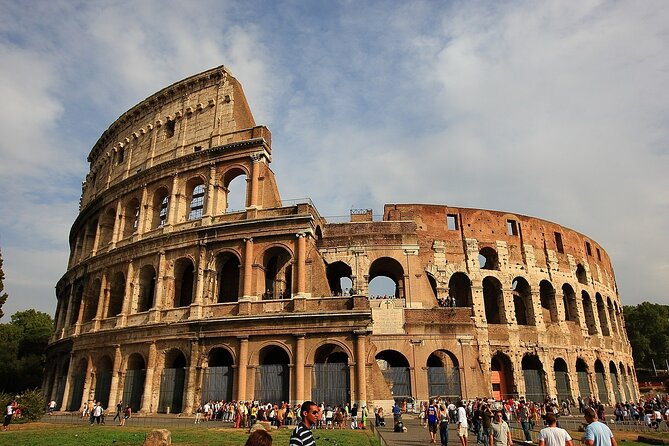
Rome’s best “wow” moments cluster close together, which is why this format is smart for first-timers. You hit three different layers of the city in one trip: spectacle and power at the Colosseum, civic life at the Roman Forum, and the myth-and-elite-domestic world at Palatine Hill. When you do them as one guided loop, you stop thinking about navigation and start thinking about meaning.
This tour is also built for time pressure. With about 3 hours total, you’re not trying to “do everything” across Rome in one day. Instead, you’re choosing three of the most important stops that most visitors would struggle to connect on their own.
You can also read our reviews of more guided tours in Rome
Entering the Colosseum with tickets, reservations, and headsets
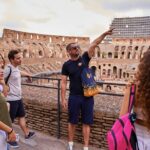
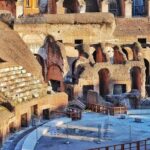
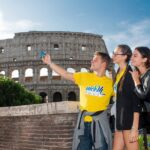
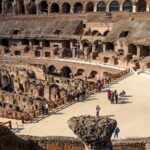
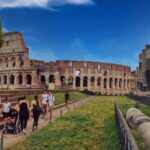
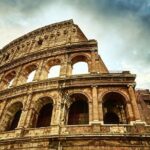
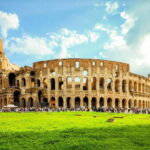
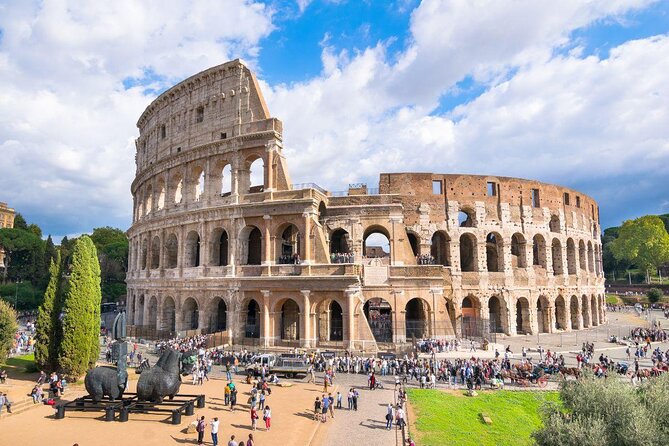
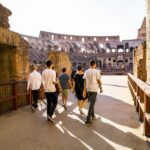
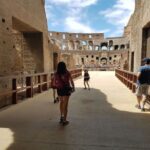
The Colosseum is the headline, and it deserves that role. You’ll spend about an hour there with a ticket included, so you’re not wasting your precious start time hunting for paperwork or figuring out which line goes where. The visit is long enough to get past the first snap-photo urge and start noticing the architecture and the way the space was designed for crowds.
One practical win: headsets. Reviews mentioned cases where guests had a tough time hearing the guide when the headset/radio worked poorly, so I’d treat this like a quick checklist item. When you receive your headset, test it right away. If you can’t hear clearly in the first few minutes, ask the guide staff right away so you’re not stuck straining for the whole session.
Another big point is entry accuracy. The tour notes that your passport or ID must match the full name provided at booking, and missing or incomplete full names can lead to denied entry to the Colosseum and Roman Forum. That’s not a small detail. It’s the difference between walking in with your group and getting shut out.
What you’ll likely get from the best guides here is story with structure: how the arena worked, what kinds of events took place, and what this building meant to emperors and citizens. Several guests praised guides like Paola and Francesco for turning the visit into an explanation you can carry with you after you leave.
Roman Forum in 45 minutes: politics, religion, and public speeches
After the Colosseum, the Roman Forum can feel like a change of pace—but it’s the logic behind the spectacle. You’ll have about 45 minutes here, with admission ticket included, and the Forum is where Rome’s public life happened. It wasn’t just ruins you “walk through.” It was the central space for politics, religion, and social events.
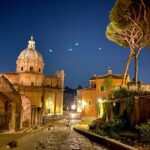
This stop is especially useful if you want to understand what you’re seeing around you. Many major structures were connected to governance and ceremony, including the Senate House (Curia), temples such as Saturn and Vesta, the Basilica Julia, the Rostra platform for speeches, and the Arch of Septimius Severus. In short: the Forum helps explain how power worked in daily life, not just during big public events.
Time is tight, so here’s how to make it count. Use your 45 minutes like a guided scavenger hunt: listen for what each area was used for, then look for the clues in the layout. Even if you can’t identify every ruin on sight, you’ll start to recognize the big idea—Rome wasn’t one building of greatness. It was a whole system of places where people governed, argued, worshipped, and celebrated.
A few people also reported organization hiccups between stops. For example, one guest described waiting at the Forum after the Colosseum portion. That’s a reminder that this tour is about keeping your timing. If you want to stay relaxed, aim to stay with the group at handoff points and don’t wander to take a detour photo unless the group clearly pauses.
Palatine Hill in 45 minutes: myth, elite homes, and big views
Palatine Hill is where Rome turns more personal. It’s one of Rome’s Seven Hills and sits about 40 meters above the Forum, which means you’ll get sightlines over the complex below. You’ll have about 45 minutes here, again with admission included, and it’s a great choice for anyone who likes ruins with context.
There’s mythology attached to this hill: Roman tradition connects it to Romulus, the legendary founder of Rome, in 753 BCE. Even if you only take the myth as a storytelling layer, it still helps because Palatine isn’t just “old.” It’s tied to who Romans imagined they were.
The excavations you’ll encounter include imperial palaces and elite residences. The tour mentions areas like the House of Augustus and the House of Livia. That makes Palatine valuable even if you already know the Colosseum is famous. You’re seeing where emperors and power lived, not just where they performed.
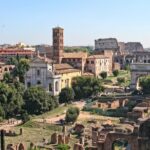
And don’t skip the views. From the hilltop you can look down toward the Roman Forum and Circus Maximus. This is one of those moments where a guide’s explanation helps you place the city in your head. If you prefer photos, time your pictures during the moments the guide pauses. If you try to sprint around after, you’ll miss the chance to connect the landscape to the story.
Price and value: what $62.48 covers (and what it doesn’t)
At $62.48 per person for about 3 hours, this tour sits in the “worth it if you want convenience” category. Tickets for the three sites are described as included, valued at €18 per person, plus a Colosseum reservation fee valued at €2 per person. In other words, a chunk of what you pay is the entry itself.
The rest of the price is what you’re really buying: an official local guide, headset gear, and on-the-ground coordination between major sites. If you planned it yourself, you’d spend time figuring out entry logistics and ticket timing. This tour is designed to remove that friction.
So when is it good value?
- When you want a one-day, high-impact Roman history route without overplanning.
- When you’ll actually use the headset (crowds can make plain listening hard).
- When you want the guide to explain what matters at each site so you don’t just “see stones.”
When might it feel overpriced? If you’re the type who likes self-paced exploration and already has your ticket strategy nailed. Also, if you end up in a day with headset/radio problems, the “guided” part loses value fast. That’s not guaranteed, but it’s a real caution based on reported issues.
Either way, it’s priced for visitors who want their time respected. For most first-timers, that’s the sweet spot.
Timing, meeting point, and group size at Piazza del Colosseo
The tour starts at the Arch of Constantine (Piazza del Colosseo, 00184 Roma). That’s a busy, crowded zone, and some guests reported difficulty finding the guide at the meeting point. You can fix a lot of this with one simple habit: arrive early and don’t show up at the last possible moment.
The group maximum is 20, which should help you stay organized. In a crowd like this, 20 is a manageable size for a guide to keep together—assuming the day runs smoothly. One guest described a situation where the group didn’t wait and they had to visit without the assigned guide. That’s not the norm you should plan on, but it does underline why you should stay attentive during transitions.
Also remember the tour is offered in English, and you’ll have headsets. If you arrive already exhausted or worried about noise, check your comfort level with guided walking and crowded entrances.
Near public transportation, yes. But Rome crowds don’t care that you took the tram. This day is still a lot of standing and walking between sites.
What the best guides do at these stops
The Colosseum, Forum, and Palatine Hill all reward the same thing: clear explanations tied to what you can see. Guests praised guides who keep that link tight—like Paola on a rainy day, Francesco for making the experience feel more valuable, and Olga and Victoria for keeping the tour engaging.
Even if you don’t get one of those named guides, the pattern matters. The most satisfying tours do two things well:
- They explain what the place was for (not just what it looks like).
- They help you connect ruins across stops, so the story doesn’t feel chopped into three unrelated visits.
If you’re the kind of visitor who likes to ask questions, a smaller group helps. The tour’s format supports that more than a giant bus-style crowd.
A smart checklist to avoid the common headaches
This is where you can protect your day. The tour data is clear that the full names for all travelers must be provided, and the names on your voucher must match what you show at the ticket office. Also, each traveler must present a valid passport or ID document matching the name provided.
So before you leave:
- Confirm your booking names are spelled exactly as on your passport/ID.
- Bring the exact document you used for the name on your booking.
- Arrive early at the Arch of Constantine meeting area to spot your guide.
- When you get the headset, test audio quickly so you’re not stuck later.
Also keep expectations realistic. The tour includes entry tickets and a guide, but it doesn’t include food or drinks. If you plan to eat afterward, schedule it for later in the day so you’re not rushed.
Who should book this tour (and who should choose differently)
This tour is a great match if you:
- Are visiting Rome for the first time and want the big Roman landmarks in one shot.
- Have limited time and hate planning.
- Like guided context that helps you understand what you’re staring at.
- Prefer smaller groups and headsets over shouting across crowds.
You might consider a different approach if you:
- Want fully self-paced time with no group timing.
- Already know Roman history well and prefer deeper archaeology reading on your own.
- Are extremely sensitive to poor audio—because one reported issue involved radios/headsets being hard to hear for much of the tour.
Still, for most visitors, the convenience wins—especially because tickets for multiple major sites are included.
Should you book From Gladiators to Emperors: Colosseum & Ancient Rome Guided Tour?
Yes, if you want an efficient, high-impact Rome day with tickets included and a guide to connect the dots. The value is strongest when you treat it as convenience plus interpretation: you’re paying not just for entry, but for reducing planning stress and getting guided context across the Colosseum, Forum, and Palatine Hill.
Book it confidently if you:
- Have your ID and names exactly right.
- Can arrive early to the Arch of Constantine meeting point.
- Want a guided explanation rather than walking solo through ruins.
Consider shopping around or adding a backup plan if you’re worried about missing group logistics or if your trip depends on one single ticketed entry with no room for error. With the name-matching rules, you don’t want surprises.
If you’re the kind of traveler who likes your Rome days organized and your questions answered, this tour is a solid pick.
FAQ
What’s included in the tour price?
The price includes entrance tickets for the Colosseum, Roman Forum, and Palatine Hill (valued at €18 per person), plus the Colosseum reservation fee (valued at €2 per person). You also get an official local guide and headsets.
How long does the tour last and where does it go?
It lasts about 3 hours. You visit the Colosseum (about 1 hour), the Roman Forum (about 45 minutes), and Palatine Hill (about 45 minutes).
What should I bring for entry to the Colosseum and Roman Forum?
Bring a valid passport or ID document, and make sure your full names match exactly what you provided at booking. If the voucher names don’t match, entry may be denied.
Is the tour in English?
Yes. The tour is offered in English.
How big is the group?
The tour has a maximum of 20 travelers.
Can I cancel and get a full refund?
Yes. You can cancel up to 10 days in advance for a full refund. If you cancel less than 10 full days before the start time, the amount paid isn’t refunded.