REVIEW · ROME
Percy Jackson and Ancient Myths Tour at the Capitoline Museums with Alessandra
Book on Viator →Operated by Alessandra Tours · Bookable on Viator
Mythology turns into a game at Rome’s Capitoline Museums. This tour with Alessandra mixes Percy Jackson-style storytelling with real ancient art, so kids aren’t just sitting through lectures. I especially love the interactive mini-quests and scavenger hunts, and I also like that an art-historian angle is folded into the fun.
One thing to keep in mind: the tour is recommended for kids age 6+, and it runs about 2.5 hours. If your little one struggles with staying focused, plan for short resets.
In This Review
- Key Highlights You’ll Care About
- Percy Jackson Meets Real Roman Myth at the Capitoline Museums
- Where You Start: Piazza del Campidoglio, and Why That Location Helps
- What the Alessandra-Led Format Feels Like in the Galleries
- The Wolf Origins of Rome: Romulus, Remus, and the Lupa Moment
- Gods, Goddesses, and the Greek-to-Roman Translation Trick
- Cyclops Inside the Museum: A Monster Hunt Moment
- Hercules, Love and Psyche, Satyrs, and Centaurs: What You’ll Be Looking For
- Views Over the Forum: When a Museum Stop Looks Outward
- Timing, Flexibility, and How the 2.5 Hours Works for Families
- Price and Value: Is $239.38 per Person Worth It?
- Who Should Book This Tour
- Quick Practical Tips Before You Go
- Should You Book the Percy Jackson and Ancient Myths Tour at the Capitoline Museums?
- FAQ
- How long is the Percy Jackson and Ancient Myths Tour?
- Where does the tour meet?
- Is admission to the Capitoline Museums included?
- Is the tour in English?
- What age is the tour recommended for?
- Are food and drinks included?
- Is the tour private for my group?
Key Highlights You’ll Care About
- Percy Jackson-themed scavenger hunts that turn famous statues into answers kids can find
- Greek and Roman gods in plain language, with stories of Jupiter, June, and Minerva
- The wolf origins of Rome—you’ll get the Romulus and Remus tale and see the Lupa
- A Cyclops sighting inside the museum, tied into the myth-fun theme
- Kid-first pacing with adult payoff, since the art connections land for grown-ups too
- Capitoline Museums views that include the Forum, so it’s not just objects behind ropes
Percy Jackson Meets Real Roman Myth at the Capitoline Museums
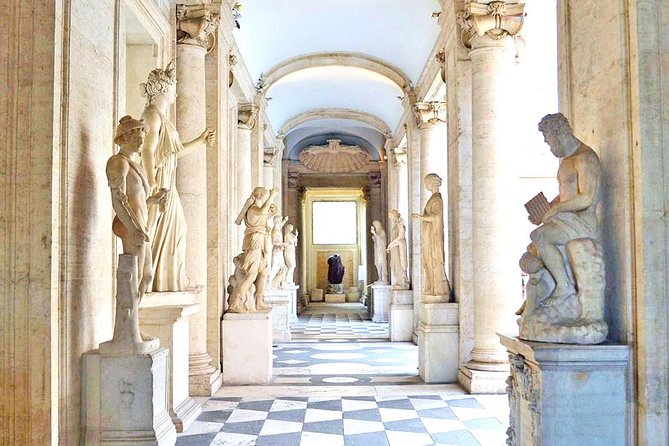
The Capitoline Museums are exactly the kind of place where myths feel less like bedtime fantasy and more like part of Rome’s daily DNA. This experience leans into Percy Jackson and the broader Greek-Roman myth world, but it does it through art you can actually stand in front of. That matters, because myths stick better when you connect them to a face, a statue pose, or a symbol you can point at.
What I like most is the balance: it’s not only for kids, and it’s not only an art lesson. You’ll get storytelling about gods and heroes, then you’ll move through galleries with games that keep attention from drifting. The result is a 2.5-hour route that feels like a guided mission rather than a museum walk.
The other big plus is the way the tour team is described: you’re not just getting one guide type. You have a professional kid-friendly guide plus an art historian guide, which is a smart combo for families. Kids get clarity and momentum; adults get context without having to translate everything themselves.
You can also read our reviews of more tours and experiences in Rome.


Where You Start: Piazza del Campidoglio, and Why That Location Helps
You meet at Piazza del Campidoglio (00186 Roma RM), and the tour ends back at the same meeting spot. Starting right in the historic heart of the Capitoline complex helps you waste less time figuring out where you are and more time looking at what’s around you.
This matters in Rome, where you can spend energy just relocating. A fixed start point also helps if you’re traveling with kids who need a clear “we’re here, we do this, then we’re done” structure. It’s also near public transportation, which is practical if you’re juggling schedules.
The tour uses a mobile ticket, which is handy when you’re bouncing between sights. Still, I’d plan to have your ticket ready on your phone before you arrive so you’re not dealing with screens right when you need to join the group.
What the Alessandra-Led Format Feels Like in the Galleries
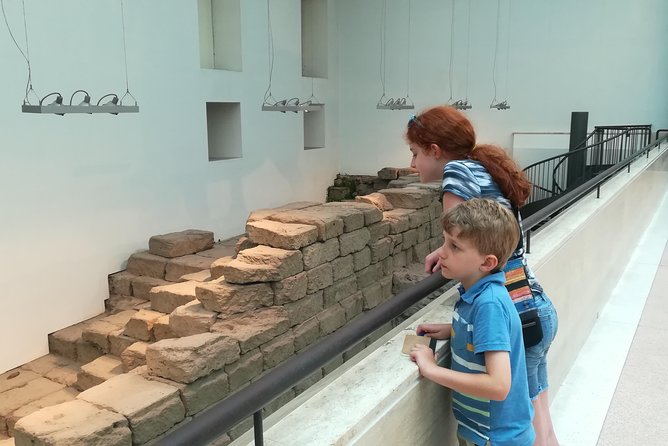
This is a kid-focused guided tour inside the Capitoline Museums, led with energy and participation in mind. The core idea is simple: your group doesn’t just listen; you answer questions, play games, and look for specific pieces tied to the myth theme. That kind of active format keeps kids from treating the museum as a long waiting room.
You’ll also notice the guide’s role is clearly described as kid-friendly by design. The tour isn’t presented as a one-size-fits-all script. It’s described as having activities and scavenger hunts tailored to kids’ ages and needs. That’s a meaningful detail: it’s one reason Percy Jackson fans can feel included instead of bored.
It also helps that the museum itself is full of visually strong characters—heroes, monsters, and myth creatures. When a guide can point to something dramatic like Hercules, satyrs, centaurs, or Love and Psyche, the story has a concrete anchor. Kids understand the plot quicker because the art does part of the work.
And yes, adults get something too. One of the nicest “family bonus” moments is when you realize the jokes and quizzes are playful, but the myth connections are solid. When you leave a museum thinking you finally understood what you saw, that’s good value.
The Wolf Origins of Rome: Romulus, Remus, and the Lupa Moment
If you want the myth that feels most Rome-specific, you can’t skip the wolf story. This tour includes the original story of Romulus and Remo—and then you’ll see the authentic Lupa.
This is where the Percy Jackson theme pays off in a clever way. Kids who know the vibe of myth quests instantly recognize the pattern: abandoned hero(s), survival against odds, and destiny in myth form. But you’re not only getting the modern interpretation—you’re connecting it to the museum’s art and the Roman versions of the legend.
For parents, this is a win because it’s not a random myth detour. The wolf origins are one of the foundational stories for Rome’s identity, so learning it while standing in front of the museum’s related pieces feels more “real” than hearing it in the abstract.
One practical note: if you’re bringing younger kids, this is a great portion to watch how your guide handles participation. This is the kind of scene that lends itself to quick questions and visual recognition, which reduces the chance of kids tuning out.
Gods, Goddesses, and the Greek-to-Roman Translation Trick
The tour explicitly mentions stories involving major gods and goddesses like Jupiter, June, and Minerva, plus others. That’s more than name-dropping. It’s an opportunity to learn the Greek-to-Roman translation that often confuses people.
Kids tend to think in character identities. Adults often think in timelines and cultures. Having a guide connect the dots between Greek gods and Roman counterparts gives you a mental map that sticks, especially if you’ve got a Percy Jackson fan in the group.
This portion also fits the tour’s overall format: the guide uses myth as the “why” behind each stop. Instead of treating each statue like a separate trivia question, you get a thread. You move from one myth figure or symbol to the next, so it feels like one story unfolding.
If you’ve ever tried to read museum labels with a kid hovering nearby, you know how fast that can fall apart. This tour’s approach is built for that reality: you get the meaning in conversation, then you see the art.

Cyclops Inside the Museum: A Monster Hunt Moment

Yes, this experience includes a chance to find a Cyclops inside the Capitoline Museums. The “gotcha” here is that myth creatures are often described in vague terms. In a museum setting, you can encounter the artwork representation directly, which makes the myth feel specific rather than generic.
I like this kind of stop because it naturally turns into an activity. Monster stories invite questions: What does it look like? What makes it a Cyclops? Why would ancient artists depict it? Once kids can point to the features, the learning gets more concrete.
This is also one of those “it’s fun even if you don’t know the books” moments. Even if your child isn’t deep into Percy Jackson, they can still enjoy the mystery of searching for the creature and then hearing how the story connects to the broader myth world.
Hercules, Love and Psyche, Satyrs, and Centaurs: What You’ll Be Looking For
The itinerary description highlights you’ll see statues connected with characters like Hercules, Love and Psyche, satyrs, and centaurs. These aren’t random decoration categories. They’re major myth ingredients, and they help you experience the museum as a gallery of personalities rather than a list of objects.
Here’s what makes this part particularly useful: these myth figures have distinct visual traits. Satyrs and centaurs are visually recognizable, and Hercules is tied to action and strength. Love and Psyche can be more symbolic, which gives adults something thoughtful while kids enjoy the story angle.
The tour also frames these encounters as part of games and mini-quests. That means you’re not only looking—you’re “finding,” which is a different mental mode. It helps kids feel successful in real time, and it keeps the group moving at a pace that fits attention spans.
If you have a Percy Jackson fan, this is also where the cross-over joy happens. Many kids remember the general vibe of the books. Seeing these myth figures as actual art in a Roman museum makes the stories feel upgraded from entertainment to a real cultural trail.
Views Over the Forum: When a Museum Stop Looks Outward
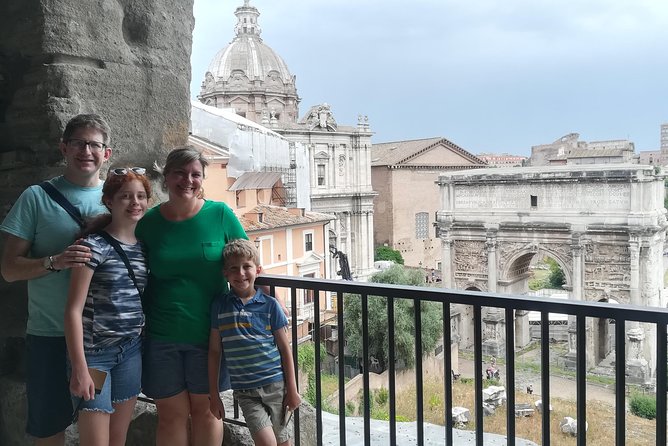
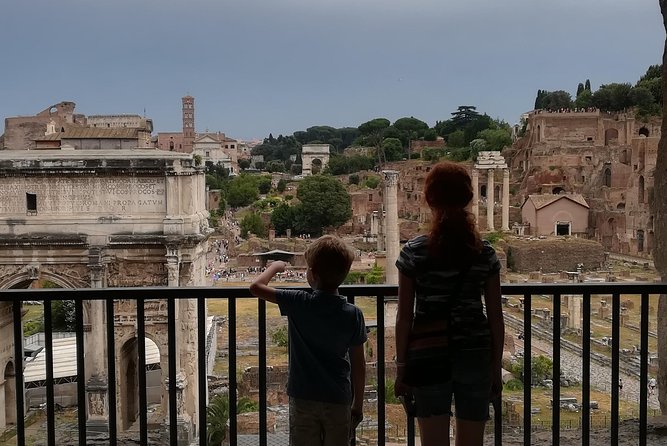
One review note mentions that the museum provides some of the best views of the Forum. Even if you’re not standing there for hours, Rome’s visual scale can hit you in a single glance. You see how the city’s layers connect, and you start to understand why Rome’s ancient stories got preserved in public art and public imagination.
This is practical sightseeing value. A view like that helps you place the museum you’re inside into the bigger Roman setting outside. You don’t want your trip to feel like a series of buildings with no relationships. A good sightline repairs that.
So when you plan the day, don’t rush past windows and terraces. Give yourself a minute to look out, especially if you have kids who are starting to get museum-stir-crazy.
Timing, Flexibility, and How the 2.5 Hours Works for Families
The tour runs about 2 hours 30 minutes, with options for morning and afternoon tours. Flexibility matters when traveling with kids because energy levels aren’t always predictable. An afternoon option can be perfect if you’re doing mornings around parks or getting the energy out first.
The tour is also described as private, meaning it’s for your group only. That can make a difference for family comfort. In a private format, the guide can respond to your group’s pace instead of steering through a crowd rhythm.
It’s recommended for kids age 6+, so if your children fall in that range, the timing usually makes sense. If you’re traveling with younger kids, the tour may still work, but you should expect that the “active” format may be the make-or-break factor.
As for adults, you’ll still be listening and walking, so it’s not a drop-and-shop kid activity. It’s a family experience where you’re part of the story, not an observer on the sidelines.
Price and Value: Is $239.38 per Person Worth It?
At $239.38 per person for roughly 2.5 hours, this isn’t a bargain-basement add-on. But the price has several value supports that matter for families.
First, it includes admission ticket access. That removes one of the common hidden costs for museum tours.
Second, the guide team described is layered: Blue Badge guide, local guide, a professional art historian guide, and a professional kid-friendly guide. Even if you don’t see every role playing out all at once, you’re paying for a designed method. You’re not just hiring someone to lead you through rooms; you’re getting a format built around both education and kid engagement.
Third, Percy Jackson fans are getting a structured mythology tour in a place that makes those stories feel grounded. If your child is into the books, the tour isn’t only “museum time.” It’s museum time with a built-in hook. That can keep your day from turning into a costly exit from a museum because kids are bored.
So I think the value is strongest when:
- you have kids age 6+ who genuinely like mythology or Percy Jackson
- you want your museum visit to feel like an activity, not a test of patience
- you’d rather pay for a guide who can translate art into story for kids and adults
If you’re visiting solo as an adult with no interest in the Percy Jackson angle, you might find better options. But for families, the price starts to feel reasonable.
Who Should Book This Tour
This is a great fit if you’re traveling with kids age 6 and up and want a guided experience that actively involves them. It’s also described as requiring children be accompanied by an adult, so it’s built for family groups.
It’s especially good for:
- Percy Jackson fans who want to connect book characters and myth creatures to real-world art
- families who prefer playful learning over long silent museum time
- adults who want solid explanations without having to manage a child’s focus alone
It’s less ideal if you’re traveling with very young kids who can’t handle the activity-based pace. A tour that includes questions, scavenger moments, and searching will be great when kids can participate. It can be frustrating if they can’t.
Quick Practical Tips Before You Go
- Pack for walking inside and between rooms. Museums aren’t stroller-friendly in every spot, and your guide will keep moving through exhibits.
- Bring a water bottle. Food and drinks aren’t included, so plan a snack timing that doesn’t clash with the tour flow.
- For Percy Jackson fans, it helps to review a few names the night before: Jupiter, Minerva, and the wolf story. Your kid won’t need a quiz night, but it makes the first stops feel familiar.
- If you’re traveling after a long flight, know the guide style is described as accommodating and interactive. That’s exactly what you want on day one.
Should You Book the Percy Jackson and Ancient Myths Tour at the Capitoline Museums?
If you want a museum day that feels like an adventure, I’d book it. The combination of Percy Jackson myth framing, real Capitoline Museum art, and a kid-friendly guide approach is a smart way to keep kids engaged while still learning something meaningful.
Choose it when your family will care about mythology and you’d like your visit to include active participation. This tour is also a solid option for first-timers at the Capitoline Museums, because a guide helps you see what matters and how the pieces connect.
Skip it if your group wants a quiet, label-reading museum experience with minimal interaction. This tour is built for energy, questions, and movement—so it’s best when your group likes that style.
FAQ
How long is the Percy Jackson and Ancient Myths Tour?
It lasts about 2 hours 30 minutes.
Where does the tour meet?
The meeting point is Piazza del Campidoglio, 00186 Roma RM, Italy.
Is admission to the Capitoline Museums included?
Yes. An admission ticket is included.
Is the tour in English?
Yes, it’s offered in English.
What age is the tour recommended for?
It’s recommended for children aged 6 and over.
Are food and drinks included?
No, food and drinks are not included.
Is the tour private for my group?
Yes, it’s described as private, so only your group participates.