REVIEW · JAIPUR
Guided Jaipur Heritage & Food Walk with Shopping
Book on Viator →Operated by India Guided Tours · Bookable on Viator
This guided walk through the Pink City mixes landmarks with real street life, so the city feels like a moving picture instead of a museum display. I like how it starts with iconic places you’ll recognize fast, then threads straight into markets and temples where daily routine takes over. You’ll also get a guide who knows how to pace things and, in my experience, makes smart swaps based on what you want to focus on, including local extra stops with a guide named Ali.
What I really like is the food plan. You’re not just offered one item; you get a chain of stops built around Rajasthani favorites, from sweet lassi to masala tea and kulfi, with plenty of chances to sample without feeling like you’re guessing.
The one thing to consider is that this is a short, packed run of streets and viewpoints, so if heat, crowds, or lots of food would stress you out, you may want to pick a cooler time of day and come hungry (but not too hungry).
In This Review
- Key highlights you’ll feel right away
- A 3–4 Hour Jaipur Hit of Heritage and Food
- Price and value: why $11.34 can feel like a steal
- Getting around: pickup, private transport, and a rickshaw-style feel
- Stop 1: Raj Mandir Cinema, the quick culture jolt
- Stop 2: Lassiwala for sweet lassi before the streets
- Stop 3: Ajmeri Gate, where the city’s structure shows up
- Stop 4: Choti Chaupar, a market square with a purpose
- Stop 5: Tripolia Gate and the edge of royal space
- Stop 6: Tadkeshwar Mahadev Temple, a quieter break
- Stop 7: Sahu Tea Stall with kachori and samosa pairing
- Stop 8: Badi Chaupar, markets for crafts and snacks
- Stop 9: Wind View Café, Hawa Mahal from a terrace
- Stop 10: Hawa Mahal Road walk near Hawa Mahal
- Stop 11: Pandit Kulfi for the sweet finish
- Stop 12: Jal Mahal, a peaceful palace in the water
- Stop 13: Albert Hall Museum for an architectural close
- What Ali (and a good guide) changes for you
- Who this tour suits best (and who should be cautious)
- Should you book this Jaipur heritage and food walk?
- FAQ
- How long is the Jaipur heritage and food walk?
- Is pickup and drop-off included?
- What food and drinks are included?
- Are the stops ticketed or included in the price?
- Is this tour private?
- Can I cancel for free?
Key highlights you’ll feel right away
- Pink City gates and squares in a tight loop, with the story behind each stop
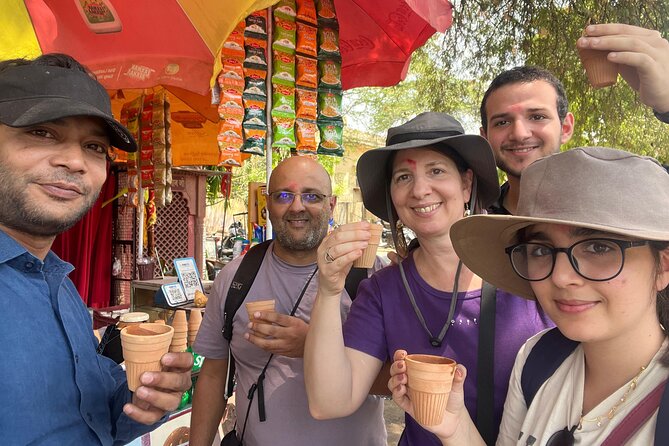
- Food cadence that keeps you fed: lassi, tea, snacks, and kulfi are part of the flow
- Cinematic stop at Raj Mandir Cinema for a quick dose of Jaipur pop culture
- Hawa Mahal views from a café terrace, then market walking right after
- Jal Mahal + Albert Hall Museum for a calmer final stretch with big architectural moments
- Pickup + drop-off so you spend less time figuring out transport and more time exploring
A 3–4 Hour Jaipur Hit of Heritage and Food
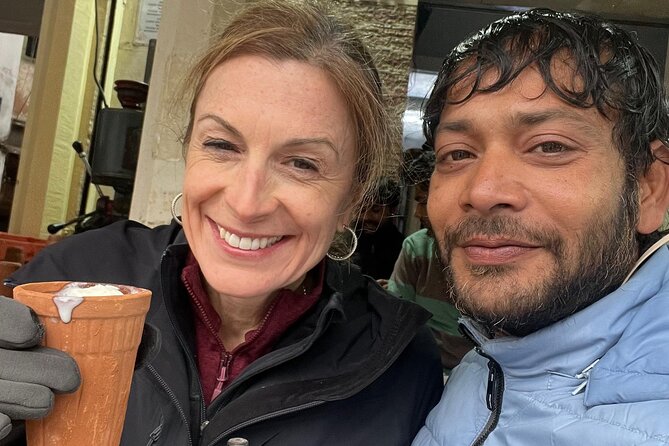
This is the kind of Jaipur tour that works when you have limited time but still want more than photos. You’ll spend a few hours bouncing between old gates, central squares, temples, and lookout points, and you’ll keep getting food and drink breaks that make the walking feel natural instead of rushed.
The pacing is smart for first-timers. The early stops help you orient yourself, and then the route tightens into the walled-city core. By the time you reach the Hawa Mahal area, you’ll understand why Jaipur’s architecture and street life are linked: the city was designed to funnel movement through gateways and public spaces, and that structure still shapes the day.
You also get pickup and drop-off from your hotel or a location you choose in Jaipur. That matters more than it sounds. In a city like Jaipur, saving time on navigation lets you enjoy the sights instead of burning energy on transit.
You can also read our reviews of more walking tours in Jaipur



Price and value: why $11.34 can feel like a steal
At $11.34 per person for a guided walk that lasts around 3 to 4 hours, the value is the big story. You’re not just paying for someone to talk. You’re also getting a guided route that includes food and drinks along the way, plus bottled water.
The included items matter here:
- Tea, coffee, snacks, and multiple street-food tastings
- Bottled water
- Transport support via private tuk-tuk or car, based on your preference
- A mobile ticket, so you’re not stuck hunting for paperwork
Even if you’re a confident independent traveler, this kind of plan helps you avoid the most common problem: spending too much time figuring out where to eat and what to prioritize. Here, the route does that thinking for you.
Getting around: pickup, private transport, and a rickshaw-style feel
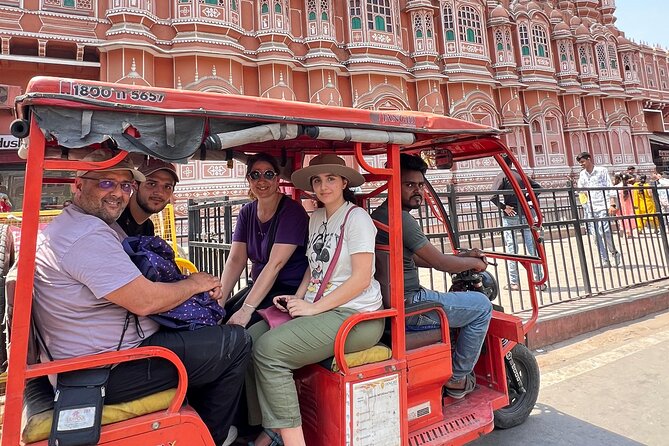
You can expect pickup and drop-off, plus private transport in a tuk-tuk or car depending on your preference. That flexibility is useful because parts of Jaipur are easier with a short ride, while other parts are better on foot.
The overall experience is built around moving through the walled city’s lanes and markets, with a mix of small stops and short viewpoint moments. You’ll spend enough time walking to feel the city, but not so much that it turns into an all-day grind.
Also, it’s private for your group. That’s a practical perk if you want a guide who can adjust pace and interests without negotiating with strangers.
Stop 1: Raj Mandir Cinema, the quick culture jolt
The walk typically kicks off at Raj Mandir Cinema, an iconic landmark known for its dramatic theatre architecture. It opened in 1976, and it’s often referred to as the Temple of Cinema, which tells you what kind of pride Jaipur puts into its entertainment spaces.
This stop is short, about 15 minutes, and admission is listed as free. I like it because it’s not the usual gate-temple-only start. It gives you a sense of Jaipur as a living city with modern celebration layered over older traditions.
If you’re someone who reads architecture visually, you’ll also enjoy how the theatre’s presence anchors your sense of where you are before you move into older areas.
Stop 2: Lassiwala for sweet lassi before the streets

Next comes a classic Jaipur pit stop: Lassiwala. You’ll have a sweet lassi here, a refreshing break that helps you reset before the market walk begins.
It’s about 15 minutes and admission is listed as free. This is smart tour design. Food and drink early keeps energy up, and lassi is the kind of local taste that makes you feel like you’re starting the day with the city, not arriving after.
Practical tip: if you’re sensitive to dairy or very sweet drinks, you can still try a small serving, but keep an eye on your comfort level.
You can also read our reviews of more food & drink experiences in Jaipur

Stop 3: Ajmeri Gate, where the city’s structure shows up
Ajmeri Gate (also known as Ajmeri Darwaza or Kishan Pole) is the first of the southern gates in the historic system. You’ll spend around 10 minutes here.
This stop is valuable because it’s a fast orientation lesson. Gates aren’t just pretty entrances; they shaped movement, controlled flow, and marked boundaries that still matter in how Jaipur feels today.
If you’re trying to understand the Pink City quickly, gates like this are the shortcut. You’ll see how the old city’s layout guides what you experience next.
Stop 4: Choti Chaupar, a market square with a purpose

Choti Chaupar is one of the lively squares in the old town. You’ll spend about 15 minutes here, and the focus is the intersection of history and trade.
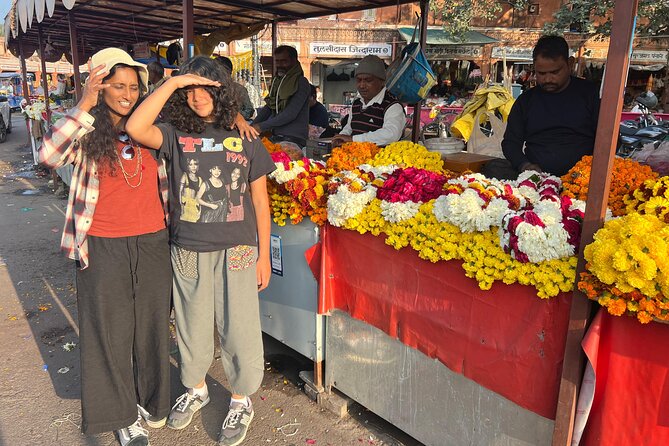
This is where you start to notice the pattern: public squares act like social engines. They pull in commerce—flowers, snacks, and everyday activity—while staying close to major sight lines.
One consideration: squares can be busy, and you’ll be close to foot traffic. Wear comfortable shoes and keep your pace steady. Your guide will help you navigate, but your legs still do the work.
Stop 5: Tripolia Gate and the edge of royal space
Tripolia Gate is a key landmark in Tripolia Bazaar, and it sits near the City Palace area. You’ll spend about 30 minutes at this stop, longer than many others.
That extra time is worth it because the gate isn’t isolated. It’s part of the royal-adjacent geography of Jaipur. When you understand where the palace sits relative to bazaars, the city stops feeling random.
If you like photo stops, this is one of them. Also, since it’s in a market zone, you’ll feel the push-and-pull between official structures and everyday life.
Stop 6: Tadkeshwar Mahadev Temple, a quieter break
Then you shift from bazaars to a temple stop: Tadkeshwar Mahadev Temple, dedicated to Lord Shiva. You’ll spend about 15 minutes, with admission listed as free.
You get a moment of change in atmosphere, and the tour includes local context—like the temple’s name being linked to palm trees that once grew in the area, according to tradition. It’s the kind of detail that makes a quick temple stop feel more grounded instead of rushed.
If you’re respectful about temple etiquette (quiet voices, appropriate attention to your surroundings), you’ll likely enjoy this part most.
Stop 7: Sahu Tea Stall with kachori and samosa pairing
At Sahu Tea Stall, you’ll enjoy masala tea and local favorites like kachori and samosa. This stop is about 10 minutes.
This is one of the best examples of why a guided food walk beats random wandering. Tea plus snacks are a small, practical meal rhythm. You’re not just tasting; you’re learning how these flavors fit together in real eating patterns.
If you’re keeping your food budget tight, you’ll appreciate that snacks are built into the route rather than stacked as separate purchases.
Stop 8: Badi Chaupar, markets for crafts and snacks
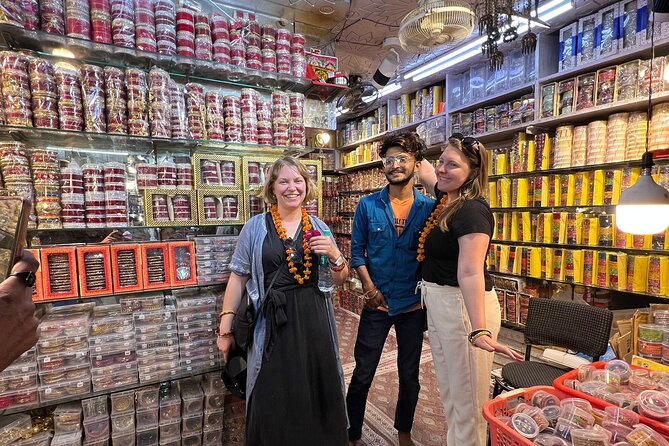
Badi Chaupar is at the heart of Jaipur’s old town and surrounded by markets. You’ll spend around 15 minutes here, with a chance to see traditional craft shopping like silver jewelry and handcrafted quilts, plus local snacks.
This stop works well if you enjoy browsing without committing to big purchases. You can also use it as a palate reset after the tea-and-snacks stop, because the market environment tends to pull your attention in multiple directions.
A practical thought: if you plan to shop, go with a simple strategy. Check prices, don’t feel rushed, and keep your priorities narrow so you don’t get overwhelmed.
Stop 9: Wind View Café, Hawa Mahal from a terrace
Now comes one of the most scenic transitions: a stop at Wind View Café for a terrace view of Hawa Mahal. You’ll spend about 15 minutes here.
This is a smart move because it turns a famous monument area into a break instead of another sprint. You can relax while enjoying coffee and snacks in a café setting with the view doing the heavy lifting.
If you’re coming at a sunny time of day, this stop can be the difference between enjoying Hawa Mahal and just surviving it.
Stop 10: Hawa Mahal Road walk near Hawa Mahal
From the café, you’ll stroll along Hawa Mahal Road and explore the nearby markets. You’ll spend about 30 minutes here.
Hawa Mahal is one of Jaipur’s signature sights, and the surrounding street energy is part of the experience. Expect lots to look at—craft shops and traditional Rajasthani goods—so give yourself time to slow down.
If your priority is pure sightseeing, you might focus on angles and façades. If your priority is shopping, you’ll have time to browse without feeling like you’re missing the monument.
Stop 11: Pandit Kulfi for the sweet finish
Next is Pandit Kulfi, where you’ll savor Indian ice cream. The stop runs about 15 minutes.
Kulfi is the right kind of ending treat: cold, flavorful, and easy to enjoy even if you’ve already eaten plenty. It’s also a taste that feels distinctly Indian compared to standard ice cream.
If you’re heat-sensitive, this is a great strategic stop—cool down while keeping the tour moving.
Stop 12: Jal Mahal, a peaceful palace in the water
Jal Mahal is a stunning palace situated in the middle of Man Sagar Lake. You’ll drive to it and spend about 15 minutes.
This stop gives you the tonal shift you need late in the tour. After gates, markets, and temples, the lake setting feels calmer. It’s also visually striking, with architecture framed by water.
One note: since the time here is short, go for the views and photo angles, not a long sit-down. Your guide will keep you on schedule for the final museum visit.
Stop 13: Albert Hall Museum for an architectural close
You’ll finish at Albert Hall Museum, one of Jaipur’s oldest and most impressive museums. You’ll spend around 30 minutes here, with admission listed as free.
The museum is known for its Indo-Saracenic architecture, and the stop gives you a more structured look at culture and artifacts. It’s a good final act because you can absorb what you learned through landmarks and daily life, then anchor it in a place built for collecting and interpreting history.
If you’re museum-leaning, you’ll likely appreciate this ending. If you’re not, just treat it as a grand architecture stop and enjoy the building.
What Ali (and a good guide) changes for you
A guide can make a good tour feel personal, and that’s where Ali comes in. The experience is designed for flexibility, so if you care more about street life, photography angles, or specific kinds of food, you can often get small adjustments rather than a rigid script.
That matters in Jaipur because the city is layered. You’ll see the plan on paper, but the streets bring surprises—light, crowd flow, and the moment-to-moment vibe outside each gate.
A practical approach: tell your guide what you care about most at the start. You’ll get a smoother tour and fewer missed opportunities.
Who this tour suits best (and who should be cautious)
This guided heritage and food walk is ideal if you:
- Want a fast, structured way to understand the walled city
- Like tasting street food in a planned, low-stress way
- Prefer guided direction over navigating markets alone
- Are short on time but still want both architecture and local flavor
You might reconsider if you:
- Don’t want to eat multiple tastings in a short window
- Are sensitive to heat or crowded lanes
- Prefer long, slow museum time over mixed street stops
Should you book this Jaipur heritage and food walk?
If you want a high-value introduction to Jaipur that mixes famous landmarks with real food stops, this is a strong pick. The price is low enough that you’ll feel good about the food portion, and the route length fits a short day.
I’d book it if your goal is to get your bearings fast and leave with specific tastes and sights—not just generic photos. If your ideal trip is all quiet, one big monument at a time, then you may want something slower and more spread out. But for most first-timers, a guided walk like this is exactly the kind of smart start that makes the rest of your Jaipur days easier.
FAQ
How long is the Jaipur heritage and food walk?
It lasts about 3 to 4 hours.
Is pickup and drop-off included?
Yes. Pickup and drop-off are offered from your hotel or another preferred location in Jaipur.
What food and drinks are included?
The tour includes tea, coffee, snacks, and a variety of street foods, plus bottled water.
Are the stops ticketed or included in the price?
The itinerary lists admission ticket free for the included stops such as Raj Mandir Cinema and Albert Hall Museum.
Is this tour private?
Yes. It’s private for your group, and only your group participates.
Can I cancel for free?
Yes. You can cancel up to 24 hours in advance for a full refund. If you cancel less than 24 hours before, there is no refund.