REVIEW · WARSAW
Private tour: Jewish heritage in Warsaw
Book on Viator →Operated by Polish Wonders · Bookable on Viator
A short walk can carry heavy stories. This private guided tour of Warsaw’s Muranów district links major WWII sites with street art that points to lives that were erased. I like the private setup—your group stays together and you can ask lots of questions on the spot. I also like the mix of big, well-known memorials and smaller, off-the-beaten-path spots you’d likely miss on your own.
One thing to plan for: Nożyk Synagogue entry is not included, and you only have about 15 minutes there. If you want a longer stop inside, build in extra time before or after the tour.
In This Review
- Key points to know before you go
- Muranów: where Warsaw’s Jewish past sits in plain sight
- Price and group size: what you’re paying for
- Stop 1: Kino Muranów and the street art that fills in the gaps
- Stop 2: Pomnik Bohaterów Getta—the uprising’s starting point
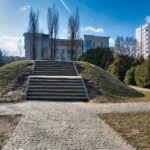
- Stop 3: Umschlagplatz and why the memorial matters
- Stop 4: Two fragments of the ghetto wall in a backyard
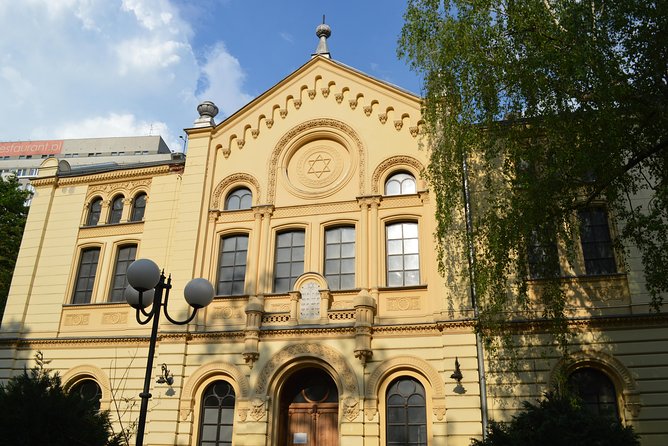
- Stop 5: Nożyk Synagogue—the WWII survivor in Warsaw
- The guide matters: Anna’s clear answers and thoughtful pacing
- How long it really feels: timing and what to do with it
- What I’d pack (and what you’ll likely want)
- Who this tour is for
- Should you book it?
- FAQ
- How long is the Private tour: Jewish heritage in Warsaw?
- How much does the tour cost?
- Is this tour private?
- What’s the meeting point and end point?
- Do I need an admission ticket for all stops?
- Is there a mobile ticket?
- Are service animals allowed?
- Can I cancel for a full refund?
Key points to know before you go
- Muranów is built on the ruins of the Warsaw Ghetto, so the district itself teaches the story
- Pomnik Bohaterów Getta is tied to the start of the Ghetto Uprising and the deportations to Treblinka
- Umschlagplatz shows the place where thousands were deported in 1942—now marked with a memorial
- Two ghetto wall fragments are hidden in a backyard, turning “history” into something you can physically see
- Street art dedicated to Poland’s Jewish community adds a modern, human layer to the memorial stops
- Private group up to 10 with plenty of room for questions
Muranów: where Warsaw’s Jewish past sits in plain sight
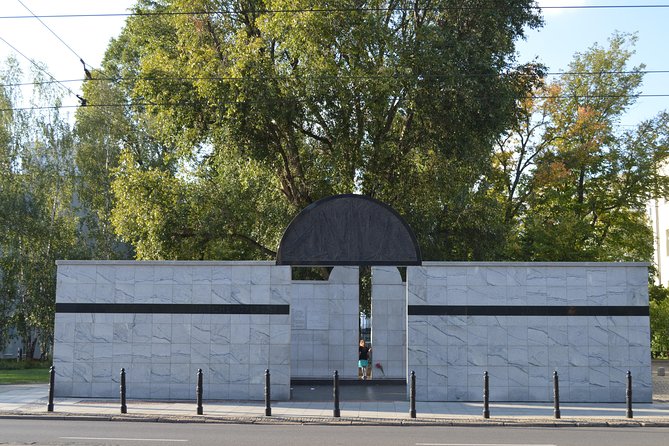
If you care about real context, Muranów is a smart place to start. This district was built on the ruins of the Warsaw Ghetto, so you’re not just looking at history behind glass. You’re walking through a part of the city that still carries those traces—sometimes in obvious memorial form, sometimes in quieter ways.
That’s what makes this tour work: it doesn’t treat WWII as a checklist. It moves between three types of stops—sites tied to major events, surviving fragments that feel oddly personal, and street art that keeps the story present in modern Warsaw. I also like that the pace is private. A small group means your questions don’t get swallowed by a larger crowd, and the guide can steer you toward what you care about.
Time-wise, you’re looking at about 2 hours 30 minutes. That’s long enough to cover several meaningful stops, but short enough to keep the story tight rather than tiring.
You can also read our reviews of more private tours in Warsaw


Price and group size: what you’re paying for
The price is $161.95 per group (up to 10). That’s not just a random number—it’s how you get value in a private format. If you’re traveling with family or friends (or you just want a “small group” feel without paying for individual tickets), the per-group structure can make this easier to justify than a per-person tour.
Also note the practical stuff:
- Mobile ticket (useful in a city where meeting points can be busy)
- You’ll start at Kino Muranów, Gen. W. Andersa 5, 00-147 Warszawa
- You’ll finish at Plac Grzybowski, Pl. Grzybowski, Warszawa
And yes, this is private in the real sense: only your group participates.
One more timing note: the tour is commonly booked about 63 days in advance. If your dates are tight, don’t wait until the last minute.
Stop 1: Kino Muranów and the street art that fills in the gaps
You begin at Cinema Muranów (Kino Muranów). From here, the guide sets up the core idea of the whole tour: this is a district built from the ground where the ghetto once stood. The city did rebuild—but it didn’t rebuild without leaving marks.
This stop gives you about 40 minutes, and the admission ticket is listed as free. That’s a good thing, because it gives you time for both the story and the atmosphere—plus time to actually look around. A lot of WWII tours race. This one allows you to notice details that make the memory feel anchored in place.
The other big draw here is the street art. Expect commemorations tied to the people who used to live here—most of them Polish Jews—with artwork that behaves like a public memory wall. For you, that means you get a kind of visual bridge: you’re not jumping from today’s streets straight into memorial plaques. You’re learning while you look.
Practical consideration: you’ll want to keep your eyes up as well as ahead. Street art works best when you slow down for a moment and let it register.
Stop 2: Pomnik Bohaterów Getta—the uprising’s starting point
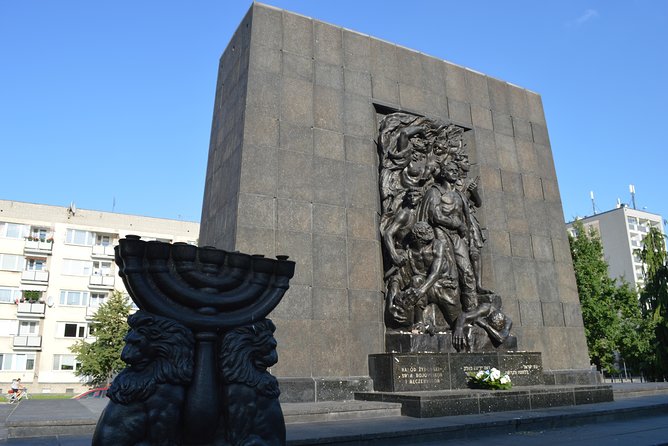
Next comes the Monument to the Ghetto Heroes (Pomnik Bohaterów Getta), where the tour focuses on the place where the Warsaw Ghetto Uprising started.
You’ll have about 20 minutes here, with free admission. This stop is intense by nature, because the guide connects specific events from 1942 and 1943 to what happened next: deportations to Treblinka death camp and the heroic fight of the Jewish insurgents against the Nazis.
What you get from a guide (and what you often don’t get on your own) is the ability to connect timeline dots while you’re standing at the site. The monument isn’t just a statue; it’s a point on a story arc. In a private tour, you can ask for clarification without feeling like you’re holding anyone up.
If you’re sensitive to heavy history, keep your pace gentle. You don’t have to rush through this part to prove you’re strong.
Stop 3: Umschlagplatz and why the memorial matters
Then it’s Umschlagplatz, described as the place from which thousands were deported to Treblinka in 1942. These are the kinds of sites where the ground itself feels like a source of evidence. Today, there’s now a memorial, and the guide explains what it represents.
You’ll spend about 20 minutes, again with free admission.
Here’s why this stop is valuable for you: it turns the big, abstract words—deportation, transports, death camps—into a specific location. That specificity is what helps the story stick. You can picture where people were processed and sent, not just that it happened somewhere in the Nazi system.
A private guide also helps you avoid the common trap of turning every memorial into a blur of sadness. Instead, you’re understanding the sequence of what happened and why these places were marked.
You can also read our reviews of more historical tours in Warsaw


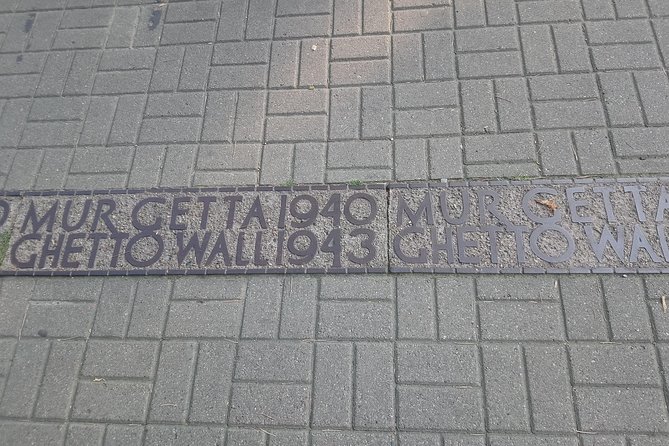
Stop 4: Two fragments of the ghetto wall in a backyard
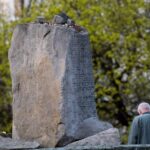
Next is a smaller stop, but it can hit harder because it’s physical. You’ll see a Fragment of Ghetto Wall—specifically two fragments hidden in a backyard.
This is only about 15 minutes and the admission is free. But it’s the kind of stop that changes how you see the rest of the tour. Looking at surviving wall fragments makes the history feel less like a chapter in a book and more like something that once stood inches away from everyday life.
For your planning: don’t skip your careful looking here. Take a minute. Let your brain adjust from monuments and plaques to something that feels like a remnant of the real structure.
Stop 5: Nożyk Synagogue—the WWII survivor in Warsaw
The tour’s final major stop is Nożyk Synagogue. It’s described as the only synagogue that survived WWII in Warsaw, and it’s the kind of fact that makes your visit feel important even before you step inside.
You’ll have about 15 minutes at this stop. Here’s the practical snag: the admission ticket is not included. So you should plan to pay separately if you want to enter, and you may want a bit of flexibility in your schedule if the line or entry rules change that day.
This stop also gives you a different angle on heritage than the memorial sites. The ghetto and deportations are central to the story, but the existence of a surviving synagogue adds another dimension: continuity. It’s a reminder that Jewish religious life and community identity didn’t start after the war. It existed before, endured through unimaginable disruption, and left traces behind.
If you’re interested in architecture, religious spaces, or how Warsaw’s Jewish community persisted in some form, this is the stop that can make the whole tour feel more human and less only historical.
The guide matters: Anna’s clear answers and thoughtful pacing
The best part of a private tour is usually the guide. In this case, the guide—often referenced as Anna—is a big reason this tour earns such strong recommendations.
One theme that comes through is her ability to explain things clearly and answer questions without dodging the tough parts. Another is flexibility. If the weather is warm, the tour can pause so you can grab a cool drink. That sounds minor, but it matters when you’re walking between emotionally heavy sites.
You’ll also find that the stories aren’t forced to stay inside the ghetto boundaries. The guide tends to connect what you see to wider Polish context across different eras, including wartime and later periods. That broader framing can help you understand why certain places are still marked the way they are, and how memory changes as a country changes.
In a private format, you can steer the conversation: want more about what happened in 1942 versus 1943? Ask. Want help understanding the urban geography of the district? Ask.
How long it really feels: timing and what to do with it
On paper, you’re scheduled for about 2 hours 30 minutes. In real life, it can feel like a sequence of emotional “beats”:
- a longer orientation and visual learning at Kino Muranów
- shorter, high-impact stops at the monument and Umschlagplatz
- a quiet, tangible experience at the ghetto wall fragments
- a final, historically significant stop at Nożyk Synagogue
If you want to get the most out of it, plan your day so you’re not rushing to the next train immediately afterward. The sites you’re seeing aren’t the kind where you’ll want to sprint away to save time.
You’ll end at Plac Grzybowski, which is useful because it puts you back in a more central area for an easy transition to food or public transit.
What I’d pack (and what you’ll likely want)
The tour is mostly about walking and looking. So keep it simple:
- Comfortable walking shoes
- Water, especially in warm weather (the tour can include pauses)
- A charged phone for your mobile ticket
- A willingness to ask questions rather than just absorb
If you plan to enter Nożyk Synagogue, remember that the ticket is not included, so having payment sorted ahead of time can save you stress.
Who this tour is for
This is a strong fit if you want:
- a private way to learn Warsaw’s Jewish heritage without feeling rushed
- the big WWII memorial sites plus smaller remnants like the ghetto wall fragments
- a guide who can handle questions and adapt the pace
- context that connects the ghetto story to the wider story of Poland across eras
It’s also a good choice if you like street art as a form of remembrance, and you want Warsaw today to be part of your understanding of yesterday.
The tour notes also say most travelers can participate, it’s near public transportation, and service animals are allowed. So it’s not one of those niche experiences that only works for a narrow set of travelers.
Should you book it?
I’d book this tour if you want more than a quick “see the sights” version. The real value is how the tour stitches together multiple types of evidence—memorials, deportation-site context, surviving wall fragments, and modern street art—into one coherent walk through Muranów.
Book it sooner rather than later if your dates are limited, since it’s commonly reserved about 63 days in advance. And just plan for the one real cost wrinkle: Nożyk Synagogue admission is not included, so you’ll want to budget for that and expect a short visit unless you add extra time later.
If you prefer only major, formal museum-style stops and you’re not interested in street art or smaller remnants, then you might find the mix less aligned with your expectations. But for most people who want meaningful context in a compact amount of time, this is a smart, high-impact choice.
FAQ
How long is the Private tour: Jewish heritage in Warsaw?
It’s approximately 2 hours 30 minutes.
How much does the tour cost?
It costs $161.95 per group, up to 10 people.
Is this tour private?
Yes. Only your group will participate.
What’s the meeting point and end point?
Start is at Kino Muranów, Gen. W. Andersa 5, 00-147 Warszawa. The tour ends at Plac Grzybowski, Pl. Grzybowski, Warszawa.
Do I need an admission ticket for all stops?
Most stops list free admission tickets. Nożyk Synagogue is noted as having an admission ticket that is not included.
Is there a mobile ticket?
Yes, the tour includes a mobile ticket.
Are service animals allowed?
Yes, service animals are allowed.
Can I cancel for a full refund?
You can cancel for a full refund if you cancel at least 24 hours before the experience’s start time. If you cancel within 24 hours, the amount paid is not refunded.