REVIEW · LISBON
Queer Lisbon Historical Tour
Book on Viator →Operated by Queer Lisbon Tour · Bookable on Viator
Lisbon’s queer past is written into the streets. This 4-hour Historical Tour connects monuments, neighborhoods, and social power—religion, dictatorship, and modern activism—so you don’t just see sights, you understand why they matter. You’ll follow an English-speaking local guide and end in Graça, where the story lands in a queer-owned space.
I love the way the guide turns each stop into a clear, human-sized lesson. I also like that you get a Queer Map of Lisbon (PDF) to keep exploring on your own after the walk.
One thing to think about: this is a walking tour with moderate fitness needs, and it requires good weather to run. Plan for hills and bring comfortable shoes.
Key highlights
- Six thoughtfully chosen stops that connect LGBTQ+ life to Portugal’s bigger political and religious story
- Small group size (maximum 20) for easier conversation and questions
- Outdoor, monument-based pacing so you’re not stuck paying entrance fees all afternoon
- Day-to-night neighborhood discussion, including how access and privilege shape who feels safe
- Ends at a queer-owned venue with attention to Black queer resistance in Graça
- Free Queer Map PDF that’s actually useful for follow-up exploring
In This Review
- Why This Queer Lisbon Walk Feels More Like Understanding Than Sightseeing
- Price and Logistics: What You’re Really Paying For
- Meeting Point in Misericórdia to Finishing in Graça
- Principe Real: The Homophobia Memory Site and Portugal’s Early Pride
- Bairro Alto, Bica, and Cais do Sodré Views: Inclusion Changes by Time and Privilege
- Largo Trindade Coelho: Padre António Vieira, Church Power, and Sexual Norms
- Largo do Carmo: Dictatorship, the Revolution Site, and LGBTQ+ Resistance
- Martim Moniz to Graça/São Vicente: Current Queer Movements and Black Queer Resistance
- What to Expect From the Guide and the Group Dynamic
- Who This Tour Suits Best (and Who Should Skip It)
- Should You Book the Queer Lisbon Historical Tour?
- FAQ
- Where does the tour start and where does it end?
- How long is the Queer Lisbon Historical Tour?
- What language is the tour offered in?
- How big is the group?
- Is dinner included?
- What’s included in the price besides the guide?
- Does the tour run in poor weather?
- Can I cancel for free?
Why This Queer Lisbon Walk Feels More Like Understanding Than Sightseeing
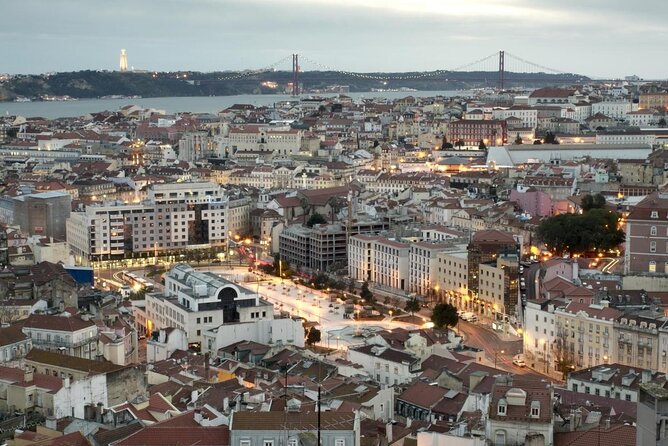
I like tours that don’t just point at landmarks. This one works because it treats Lisbon like a living classroom: power shows up in streets, churches, monuments, and public squares. Instead of treating LGBTQ+ history as a side note, you get it threaded through major Portuguese moments—early Pride and public demonstrations, dictatorship-era social rules, and today’s organizing.
You also get the best kind of guide energy: serious enough to educate, relaxed enough to keep moving. The tour is paced across a few recognizable areas—Principe Real, Bairro Alto/Bica/Cais do Sodré zone, Trindade Coelho, Largo do Carmo, Martim Moniz, and finally Graça/São Vicente—so you get both story and context. And because the group stays small, it’s easier to ask questions and actually talk through the harder parts, like how inclusion can look different depending on who you are and what power you hold.
There’s another value piece people sometimes skip: you leave with an updated Queer Map of Lisbon (PDF). That’s not just a souvenir. It’s a practical tool to keep building your own route after the tour ends in Graça.
Possible snag: if you want a party-night tour vibe only, this isn’t that. It’s history and social change first. But if you want Lisbon that makes sense—politically, culturally, and personally—you’re in the right place.
Price and Logistics: What You’re Really Paying For
At $72.29 per person for about 4 hours, this price sits in the “you’re paying for guide time + local knowledge” category. You’re not paying extra admission along the way either—the stops are marked as free entry. That matters because it keeps your budget steadier. The cost mostly covers the guided storytelling, small group format, and the included PDF map.
Also, the tour uses a mobile ticket, so you’re not scrambling for paper on your first day. You’ll gather at a meeting point in Misericórdia (Juniper tree arbor, 1250-095 Lisboa) and finish in Graça, Lisbon. That start-to-finish route is a nice design choice: you’re not doing a loop back to the same exact street. It helps you see more of the city without burning time on repeat transit.
Group size is capped at 20, which is big enough to feel lively but small enough for the guide to keep an eye on the conversation. The tour also notes a moderate physical fitness level. In plain terms: Lisbon hills exist. Plan for walking on uneven streets and take breaks if you need them.
One practical tip: because it ends in Graça/São Vicente area, it’s smart to arrange your evening plans nearby. You’ll already be “in” the neighborhood emotionally by the time you arrive at the final stop.
You can also read our reviews of more historical tours in Lisbon


Meeting Point in Misericórdia to Finishing in Graça
You start at the Juniper tree arbor in Misericórdia (1250-095 Lisboa). This is a handy area to connect from using public transport, and the tour is noted as being near public transportation. If you’re doing this on your first full day, it’s a good way to get orientation fast—especially because you’re moving through several hills-and-squares neighborhoods.
The route runs for about 4 hours, with multiple pauses along the way. Some stops are short, but they’re meaningful. The tour uses that short format on purpose: you get context without dragging people through long lecture blocks. It also helps keep the group together.
You’ll end in Graça, at a queer-owned venue linked to Black queer resistance—specifically the Criolense Kitchen Club brought to the Graça neighborhood. That ending is thoughtful: the tour doesn’t just stop at the past. It points you toward what’s happening now, in real community spaces.
Since you end in a neighborhood rather than back at your starting point, you should think about how you’ll get back. If you’re staying elsewhere, check your transit options from Graça/São Vicente in advance so you’re not guessing at the end of a focused walk.
Principe Real: The Homophobia Memory Site and Portugal’s Early Pride
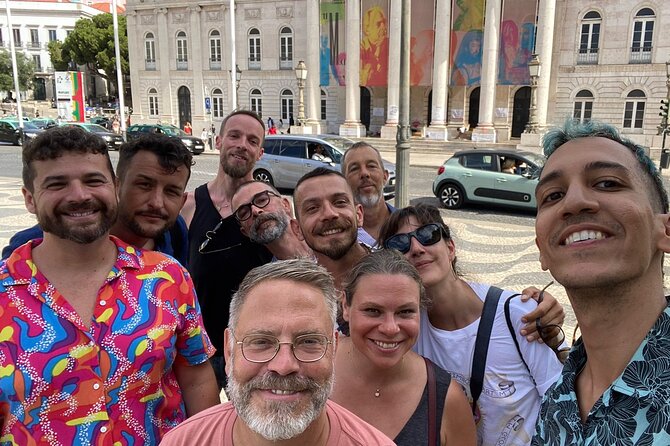
Principe Real sets the tone right away. You’ll gather at a monument honoring victims of homophobia, then get an introduction to the tour’s theme: LGBTQ+ rights and public visibility in Portugal. This opening isn’t just ceremonial. It reframes what comes next. You’re reminded that rights movements grow in response to real harm, and public organizing is rarely “just an idea.”
From there, the guide talks about the beginnings of the LGBTQ+ movement in Portugal, including the first Pride March and public demonstrations. That’s a powerful combo because it links events you may have heard about with the social atmosphere around them. Instead of treating Pride as a single annual festival, you see it as something rooted in earlier public courage.
Why this stop matters for you: it gives you a baseline. Once you understand that earlier visibility was earned under pressure, later discussions about religion, dictatorship, and modern activism make more sense. You’re not hearing random criticism. You’re seeing a timeline of how people pushed back and what they had to overcome.
Practical note: this stop is described as about 30 minutes, so it’s one of your longer pauses. If you like getting oriented early, you’ll appreciate how the guide sets the frame before you start moving through busy streets.
Bairro Alto, Bica, and Cais do Sodré Views: Inclusion Changes by Time and Privilege
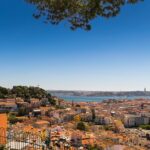
Next you shift into the city’s vertical world—Bairro Alto, Bica, and the Cais do Sodré area. You’ll pause at a viewpoint to take in the hills and Lisbon’s spread. The view break is more than scenic. It gives your brain room to hold what the guide is saying about neighborhoods as social spaces.
The core conversation here is about how a LGBTQ+ neighborhood can feel different from day to night—and how that difference connects to access, privilege, and safety. The guide also discusses patriarchal and colonial mindsets that still show up in everyday behavior. And then you’re pushed to think about inclusion in real terms: is it truly for everyone? Is there a way to make it better?
That line of questioning is what makes this stop valuable. Lisbon isn’t one uniform queer scene. It’s a patchwork shaped by who feels welcome, who gets policed, and who gets protected. Talking through that while standing in the neighborhood helps you notice details you might otherwise ignore—who controls the tone, who gets seen, and who is expected to shrink.
One consideration: the stop here is around 20 minutes, so you’ll want to stay alert even if you’re tempted to zone out during the viewpoint. The conversation is the point, not just the scenery.
Largo Trindade Coelho: Padre António Vieira, Church Power, and Sexual Norms
At Largo Trindade Coelho, you’ll observe a monument to Padre António Vieira. This isn’t a name-drop moment. It’s a launch point for a discussion about the church’s role in regulating sexuality and shaping societal attitudes toward homosexuality and other expressions that don’t fit a straight-line norm of “homogeneity.”
If you’ve ever wondered why some countries seem to treat queer identity as a moral debate rather than a human rights issue, this stop helps explain the machinery. It’s about social control—how ideas get repeated until they feel like common sense. And once that happens, it affects everything from family expectations to public behavior.
Why I think this stop works: it doesn’t just blame institutions. It connects cultural attitudes to visible symbols in public space. You’re learning to read the city like a document, not just a map.
This part is listed at about 20 minutes, so it’s concise. Still, it’s one of the sharper conceptual stops on the walk. If you like tours that respect your intelligence and won’t skip uncomfortable topics, you’ll probably appreciate this one.





Largo do Carmo: Dictatorship, the Revolution Site, and LGBTQ+ Resistance
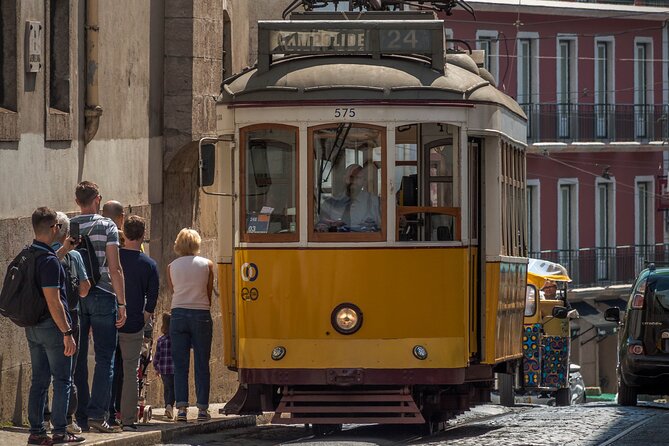
Then you head to Largo do Carmo, a place tied to where the Portuguese revolution began. From there, you get the darker context: a dictatorship that lasted a long time in Europe and how it shaped societal thinking.
The tour focuses on a strict family model—man, wife, and happy children—and how the regime enforced ideas that left little room for difference. This is also where the guide highlights resistance by key LGBTQ+ figures during the dictatorship era. The point isn’t only oppression. It’s also agency: people pushed back, even when it was risky.
For you, this is where the tour earns its “historical” title. You’ll stop seeing modern Pride discourse as something that appeared out of thin air. It’s shown as a response—built from earlier resistance and the desire to live openly without punishment.
A small note to keep in mind: because this stop is about 20 minutes, the guide can’t cover every single detail. But the structure is still useful. It gives you landmarks to research later using that PDF map and your own curiosity.
Martim Moniz to Graça/São Vicente: Current Queer Movements and Black Queer Resistance

At Praca Martim Moniz, the story turns to the present. You’ll talk about contemporary queer movements that challenge structures and raise questions about how society is built. You’ll also connect that to immigration—how newcomers and immigrants bring new strength and perspectives into LGBTQ+ organizing.
This matters because it frames queer life as something shaped by migration, labor, language, and community building—not only by legal changes. It’s a reminder that activism is often collective work across different backgrounds, not a single storyline.
From there, the walk ends in Graça and São Vicente at a queer-owned venue. You’ll pay homage to Black queer resistance associated with Criolense Kitchen Club and the impact it brought to Graça. This final stop is a strong close because it bridges past and present. The tour isn’t only about what Lisbon used to be like. It’s also about where queer community power shows up now—through food, gathering, and cultural presence.
This stop is described as about 20 minutes, but the choice of ending location gives it emotional weight. After hours of monuments and political context, landing in an active community space helps you process the story as lived experience, not just facts.
What to Expect From the Guide and the Group Dynamic
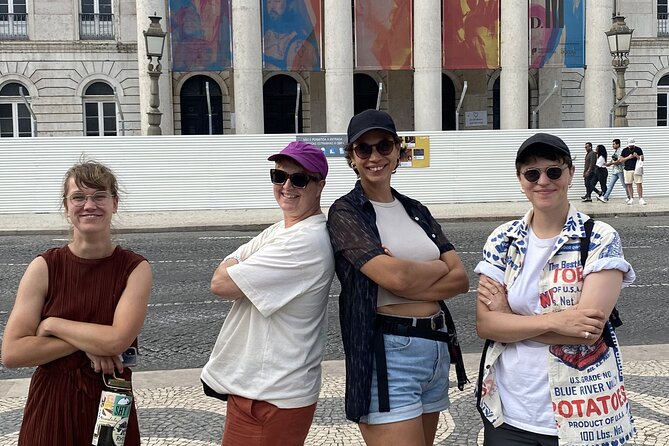
This tour is led by a Portuguese and English-speaking local guide, and the experience is offered in English. In practice, that usually means you get clear explanations without needing to guess at terms. It also helps if you have questions—especially around the more sensitive themes like regulation, dictatorship-era social rules, and privilege.
The tour also lists service animals allowed, which is good to know for planning.
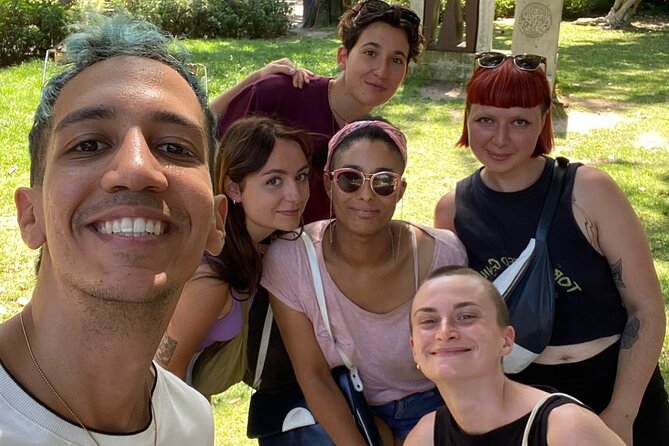
What I really take from the people behind it is the energy. The best feedback you’ll find about this tour highlights that it’s earnest, informative, and run by young entrepreneurs. That combo often works well: you get passion without sacrificing structure. And the group vibe is described as fun and welcoming—useful if you’re nervous about talking in a small group on a topic that can feel personal.
Also, with a maximum of 20 travelers, you’re unlikely to feel like you’re stuck behind someone’s shoulder. You can actually hear and follow the transitions between stops.
Who This Tour Suits Best (and Who Should Skip It)
This is a great fit if you want LGBTQ+ history in Lisbon tied to real places. If you like learning how ideas get enforced—by religion, by political regimes, by everyday social behavior—this tour will give you a framework that sticks.
It’s also a smart choice if you value practical follow-up. The included Queer Map PDF is the kind of thing you’ll use later for your own wandering. Ending in Graça at a queer-owned venue also makes it easy to continue your day in a neighborhood that matches the tour’s themes.
Consider skipping (or at least weighing another option) if:
- you’re looking for a nightlife-focused itinerary rather than historical context
- you don’t do well with walking and Lisbon’s hills (the tour calls for moderate physical fitness)
- you hate discussions that raise uncomfortable questions about privilege, inclusion, and power
Should You Book the Queer Lisbon Historical Tour?
Yes, if you want Lisbon’s LGBTQ+ story explained through monuments, neighborhoods, and social power, not just a list of dates. The price is fair for what you get: a small-group English guided walk, free-entry outdoor stops, and a Queer Map PDF you can use afterward.
Book it especially if you like tours that ask real questions—about inclusion and who gets access to safety—while still staying organized and easy to follow. Just come with comfortable shoes, and keep an eye on the weather since the tour needs good conditions to run.
FAQ
Where does the tour start and where does it end?
It starts at the Juniper tree arbor in Misericórdia (1250-095 Lisboa) and ends in Graça, Lisbon.
How long is the Queer Lisbon Historical Tour?
It runs for about 4 hours (approx.).
What language is the tour offered in?
The tour is offered in English. The local guide is listed as Portuguese and English-speaking.
How big is the group?
The tour has a maximum of 20 travelers.
Is dinner included?
No. You’ll pay for your own meal and drinks at the restaurant.
What’s included in the price besides the guide?
You get an updated Queer Map of Lisbon (PDF) and a local guide.
Does the tour run in poor weather?
The experience requires good weather. If it’s canceled due to poor weather, you’ll be offered a different date or a full refund.
Can I cancel for free?
Yes. You can cancel up to 24 hours in advance for a full refund. If you cancel less than 24 hours before the start time, the amount paid won’t be refunded.