REVIEW · JODHPUR
Jodhpur Blue City Heritage Walking Guided Tour
Book on Viator →Operated by Blue City Adventures · Bookable on Viator
Blue streets, old water, and quick stories—easy walking. In under two hours, you’ll work your way through the Blue City lanes, hit key Mehrangarh-area landmarks, and see the water systems that shaped everyday life in Jodhpur. It’s the kind of tour where good local context turns pretty sights into something you can actually place in time.
I like the pacing for a first look at Jodhpur: the group is kept to 15 travelers max, so you’re not just herded between photos. I also like that you get an English/Hindi speaking licensed guide, with names and dates attached to what you’re seeing—like Fateh Pol Road’s 1707 victory over the Mughals.
The main consideration is logistics and guide behavior. There’s at least one complaint about a guide trying to start earlier than the booked time, so I’d confirm the exact start time and meet right at the Clock Tower on time, not five minutes later and not at some side entrance.
In This Review
- Key Highlights You’ll Care About
- Clock Tower Meeting Point: Where You’ll Start and Re-Start
- Fateh Pol Road and the Mehrangarh Fort Gate Story
- Ranisar and Padamsar Lakes: Jodhpur’s Water Math in Stone and Water
- Navchokiya Lanes: Finding Your Bearings in the Blue City
- Toor Ji Ka Jhalra Stepwell: Ancient Engineering You Can Actually See
- Gulab Sagar Lake: A Break From the Streets
- Clock Tower Market and Sardar Market: Shop Where the Day Lives
- The Walk in Real Life: Time, Hills, and Photo Stops
- Guides Make or Break It: What to Look For (and How to Handle It)
- Price and Value: Why $13.39 Can Be a Smart Use of Time
- Who This Jodhpur Blue City Walk Suits Best
- Should You Book This Jodhpur Blue City Heritage Walking Guided Tour?
- FAQ
- FAQ
- How long is the Jodhpur Blue City Heritage Walking Guided Tour?
- How much does the tour cost?
- What language do the guides speak?
- Where does the tour start and end?
- What’s included on the tour?
- Is the ticket mobile?
- How many people are in the group?
- Is admission included for the stops?
- Is gratuity included in the price?
Key Highlights You’ll Care About
- Small group size (max 15): more room for questions and fewer bottlenecks in narrow lanes
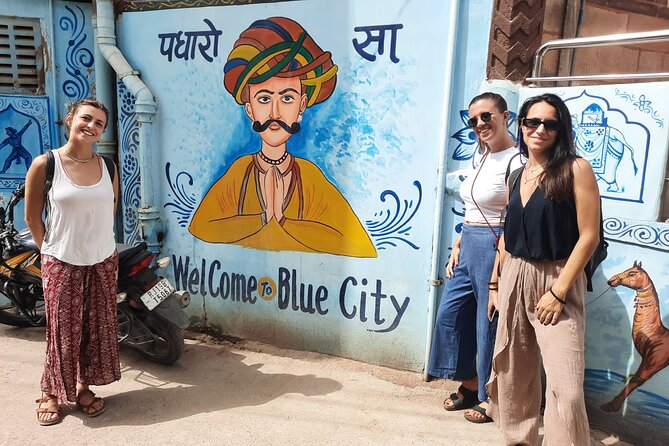
- Blue City orientation fast: you’ll get street-level context around Makrana Mohalla and the old quarter
- Water stops with purpose: Ranisar and Padamsar Lakes and Toor Ji Ka Jhalra explain how Jodhpur managed dry conditions
- Mehrangarh-area history on the route: Fateh Pol Road ties your walk to the fort complex and a specific 1707 event
- Clock Tower Market finish: you end where the action is—handicrafts, textiles, spices, and local snacks
- Mobile ticket + group discounts: practical for a low-cost tour when you’re moving through a busy city
Clock Tower Meeting Point: Where You’ll Start and Re-Start
Your tour starts (and ends) at the Clock Tower area—at 72XF+37C Clock Tower, near Makrana Mohalla, behind Pal Haveli in Jodhpur’s Old City. The Clock Tower is your easy anchor point, and it’s also right by Sardar Market, where you’ll see shopping and snack energy.
Why that matters: with walking tours in old cities, you want a meeting point that doesn’t require a scavenger hunt. This one is a major landmark, so you can re-check location fast if your hotel directions are fuzzy or your phone signal is spotty.
Bring a little patience for street life. This part of Jodhpur is active, and the walk connects quieter historic corners to a market center. If you’re the type who gets stressed by crowds, plan to breathe slow and keep your spot near your guide as you move from lane to lane.
You can also read our reviews of more walking tours in Jodhpur



Fateh Pol Road and the Mehrangarh Fort Gate Story
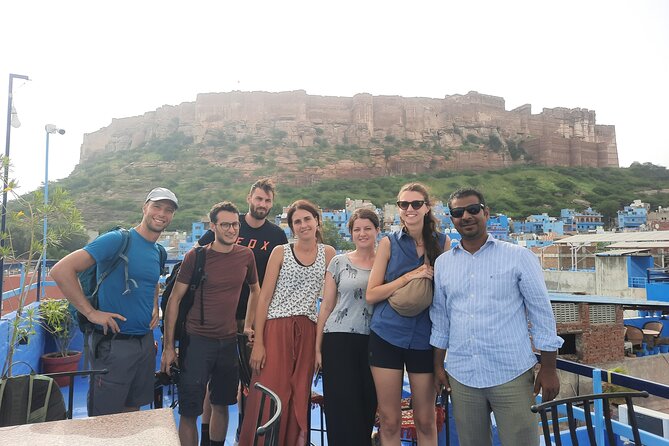
The walk begins with Fateh Pol Road, named for Fateh Pol, one of the gates connected to Mehrangarh Fort. It commemorates a victory over the Mughals in 1707, and the gate is decorated with intricate carvings—details you can miss if you’re just walking past.
What you’ll get from this stop is “where you are” context. Mehrangarh isn’t just a big fort in the background; it’s part of the living geography of Jodhpur. When your guide links this gate’s symbolism to the architecture around you, the rest of the Blue City lanes start making more sense.
Practical note: this is an iconic place to spot photos from angles that show stonework and carvings. Just don’t forget you’re walking a full route after this—avoid lingering too long if your group is moving on schedule.
Ranisar and Padamsar Lakes: Jodhpur’s Water Math in Stone and Water
Next you’ll see Ranisar and Padamsar Lakes, two interconnected bodies of water beside Mehrangarh Fort. They were built in the 15th century to conserve water in an arid region, and that “why” is the whole point of this stop.
When you understand water management here, the city feels less random. Jodhpur’s historic neighborhoods make more sense because you’re seeing what people built to survive dry seasons—water storage you can still view and connect to the way the city grew.
This is one of those stops that can be relaxing if the timing is right. It’s not just sightseeing; it’s explanation in a place where you can visually track the design. Also, the plan notes admission ticket free for this segment, which helps keep the tour simple and low-cost.
Navchokiya Lanes: Finding Your Bearings in the Blue City
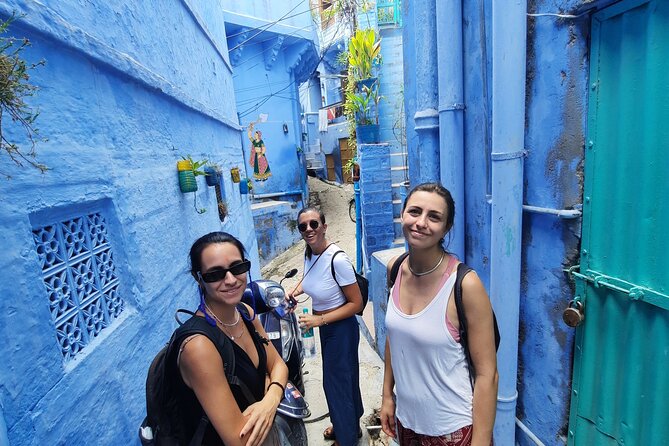
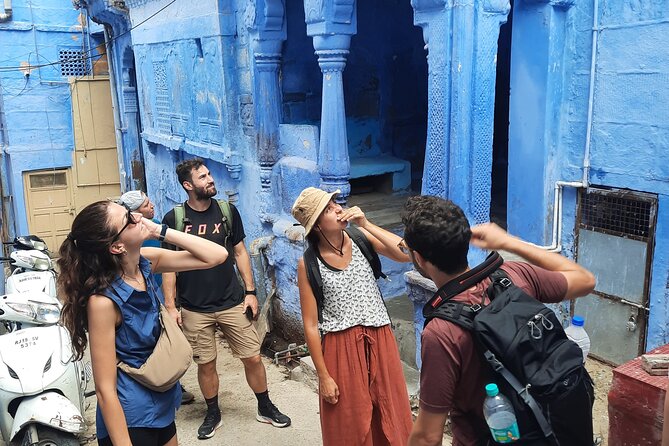
Then the tour shifts into the maze of the Blue City, especially around Navchokiya. You’ll be guided through narrow lanes and the signature indigo-toned homes that make Jodhpur instantly recognizable.
This is where a local guide earns their keep. Without context, Blue City streets can feel like a sea of color. With a guide, you’re more likely to understand what you’re seeing—how neighborhoods function, what’s old, and why certain areas look the way they do.
In one example of a route you might encounter, the walk included moving between temple areas and then down into the Blue City lanes. Even if your exact path differs slightly, expect the experience to be a mix of street-level wandering and viewpoint moments.
Photo tip: the lanes can be tight, so take photos quickly and keep your feet moving. Don’t block pedestrians or you’ll end up with an impatient crowd behind you.
Toor Ji Ka Jhalra Stepwell: Ancient Engineering You Can Actually See
One of the standout landmarks on the route is Toor Ji Ka Jhalra, a stepwell built in the 18th century by a queen consort. Stepwells in Rajasthan are more than architecture—they’re practical solutions for wells, heat, and water access. Here, you also get intricate carvings, which makes the structure worth slowing down for.
If you like design details, this is the place. A stepwell is basically a built landscape of steps and storage. When your guide explains how it worked and why it was made, you’re no longer just looking at stairs—you’re reading a system.
Potential drawback: stepwell sites often involve uneven ground. Wear shoes you trust. If you’re carrying a bag, keep it secured and don’t let it swing into other people’s paths.



Gulab Sagar Lake: A Break From the Streets
After the stepwell, the route brings you to Gulab Sagar, a lake built in the 18th century that functions as a water reservoir. The name is tied to the calm, and the setting gives you a moment to reset before the market bustle.
This stop works well because it balances out the walk. You’ve had close-up architectural details; now you get open space and views. Even if you don’t linger long, you’ll feel the change in pace.
The value here is emotional as much as educational. The Blue City can be intense—color, stone, people, smells. A lake stop helps you absorb the whole day in smaller chunks.
Clock Tower Market and Sardar Market: Shop Where the Day Lives
The tour centers on Clock Tower Market, also known as Sardar Market, around the late 19th-century Clock Tower built by Maharaja Sardar Singh. This is the lively heart of the area, and it’s also an easy place to connect the historic and everyday sides of Jodhpur.
From the tour description, you’ll find plenty of variety nearby, including handicrafts, textiles, spices, and local delicacies. Even if you don’t buy much, it’s a useful way to understand what “tourist goods” look like when they’re sold alongside real daily needs.
If you want to shop, do it with a simple plan:
- Ask the guide what’s worth looking at first.
- Compare small items before you commit to bigger purchases.
- Keep an eye on your schedule so the walk stays enjoyable and not stressful.
The Walk in Real Life: Time, Hills, and Photo Stops
The tour runs about 1 hour 40 minutes to 2 hours. That’s long enough for meaningful context, but short enough that you don’t feel like you’ve spent your whole day on your feet.
One thing to expect: parts of Jodhpur are hilly, and some routes you may encounter can include temple areas and downhill stretches back into the Blue City. In one case described with a guide named Imtiaz, the walking included an uphill segment to temples (including Chamunda Devi, and also Jwalamukhi and a Hanuman temple on a different route) before returning down toward the blue lanes.
So plan like this:
- Wear comfortable shoes (not just “nice” shoes).
- Use water if it’s warm.
- Keep your camera strap secure; lane crowds make quick movements awkward.
Guides Make or Break It: What to Look For (and How to Handle It)
This tour uses licensed guides who speak English/Hindi. That’s a practical advantage because you’re not stuck piecing together history from signs. Good guiding also helps you avoid wasting time staring at things without understanding what you’re seeing.
A positive example: one guide named Imtiaz is described as very knowledgeable and focused on the story behind the city, with extra effort to show off-the-path places and viewpoints. Another experience highlighted an intimate feel where the guide managed the arc of the walk well, including temple areas and a return by auto-rickshaw afterward.
Now the careful part. There’s an isolated complaint about a guide contacting someone prior to arrival and trying to start earlier than booked, plus a comment about a bandage. I can’t ignore that kind of signal. If you choose this tour, be clear on your start time, meet at the Clock Tower location, and trust your instincts. If something feels off, speak up early rather than waiting for the full two hours to pass.
Price and Value: Why $13.39 Can Be a Smart Use of Time
At $13.39 per person, this is priced like a budget-friendly introduction—especially because it includes a licensed guide and a structured walking route through major historic points.
What’s driving the value:
- Short duration means you’re not spending a whole day on logistics.
- Small group limit (max 15) often improves the quality of explanations.
- Several key listed landmarks show admission ticket free in the plan (including Fateh Pol and the lakes).
- You’re also not forced into endless “pay to see everything” moments.
It’s also a good cost choice if you’re already doing other big-ticket Jodhpur activities like forts. This walking tour helps you understand the city’s everyday bones without consuming your budget or a full day.
The biggest “cost” is time and comfort. You’re walking. If you’re dealing with mobility issues or you hate stairs/uneven ground, factor that in.
Who This Jodhpur Blue City Walk Suits Best
This tour fits best if you:
- Want a first-orientation walk through Jodhpur’s Blue City without getting lost
- Care about how architecture connects to specific events and water systems
- Prefer a guide-led route rather than bouncing between sites on your own
- Like the Clock Tower Market area as a natural end point for snacks and browsing
It’s also a solid option for people who want a manageable group. With up to 15 travelers, it’s usually easier to ask questions, get directions, and keep up.
If you’re expecting a museum-like experience with lots of indoor stops, you might feel like the tour is mostly outdoors. But if you enjoy street-level history, this works well.
Should You Book This Jodhpur Blue City Heritage Walking Guided Tour?
I’d book it if you want a structured, low-cost way to connect the dots in Jodhpur’s old neighborhoods. The combination of Mehrangarh-adjacent history (Fateh Pol), real water infrastructure (Ranisar/Padamsar Lakes and Toor Ji Ka Jhalra), and a finish at Sardar Market makes the route practical and memorable.
Skip it (or at least reconsider) if you:
- Are highly sensitive to guide behavior or meeting-time changes and want zero uncertainty
- Don’t like walking on uneven ground
- Need long breaks and air-conditioned stops (this is a walking route)
My best advice: show up at the Clock Tower meeting point right on time, wear comfortable shoes, and treat the guide’s explanations as part of the experience—not background noise. Do that, and this short walk turns into a strong Jodhpur “map in your head.”
FAQ
FAQ
How long is the Jodhpur Blue City Heritage Walking Guided Tour?
The tour lasts about 1 hour 40 minutes to 2 hours.
How much does the tour cost?
It’s listed at $13.39 per person.
What language do the guides speak?
The tour includes an English/Hindi speaking licensed tour guide.
Where does the tour start and end?
It starts and ends at the Clock Tower (72XF+37C Clock Tower), near Makrana Mohalla, behind Pal Haveli, in Jodhpur’s Old City (near Gulab Sagar).
What’s included on the tour?
Included are Clock Tower Market, Ranisar and Padamsar reservoirs, Toor Ji Ka Jhalra (step well), the Blue City, and Gulab Sagar.
Is the ticket mobile?
Yes, the tour offers a mobile ticket.
How many people are in the group?
The tour has a maximum of 15 travelers.
Is admission included for the stops?
For at least some parts of the route, the plan lists admission ticket free (including Fateh Pol Road and the Ranisar/Padamsar lakes). For any other sites, the tour includes them as part of the walking route; just be prepared to check for any on-site entry signage.
Is gratuity included in the price?
No. Gratuities for the guide tip are not included.