REVIEW · JODHPUR
Jodhpur Blue City Heritage Walking Tour
Book on Viator →Operated by Jodhpur Blue City Heritage Walking Tour · Bookable on Viator
Blue alleys, stepwells, and snacks in one walk. The Jodhpur Blue City Heritage Walking Tour strings together old-town sights with lively storytelling, and you get the best blue-house views without getting lost. I love how the guide turns the streets into a map of meaning, not just a checklist.
At Toorji Ka Jhalra, I like the way the stepwell’s architecture links directly to daily life and water in Jodhpur. I also really enjoy the food finish—ghee ki kachori with chai—so the tour ends with something you’ll actually remember, not just pictures.
One heads-up: this is a short, active walk (about 2 to 3 hours). Plan for good weather and bring comfortable shoes, because you’ll be moving through old lanes and viewpoints that can feel steep or uneven.
In This Review
- Key highlights you’ll feel right away
- Why this blue city walk feels more local than a photo route
- Getting oriented at the Clock Tower meeting point
- Clock Tower Market (Sardar Market): crafts, textiles, and the old-town pulse
- Toorji Ka Jhalra stepwell: water, architecture, and a 1740 story
- Pachetia Hill viewpoint: blue houses from 400–500 years ago
- Shri Gangshyam Ji Maharaj Mandir: a 350-year-old Krishna temple with paintings
- Naarayan Mishtan Bhandar (Lal Bhatti Wale): ghee ki kachori and a sweet finish
- Pace, private-group feel, and what you should bring
- Price and value: $11.24 per group (up to 2) plus smart inclusions
- Who this fits best (and who might want a different plan)
- My booking advice for your Jodhpur day
- FAQ
- How long is the Jodhpur Blue City Heritage Walking Tour?
- Where does the tour start?
- Is this tour private?
- What does the tour cost?
- What’s included in the price?
- What food or snacks do you try on this tour?
- Do you get a mobile ticket?
- Is it near public transportation?
- What is the cancellation and weather policy?
Key highlights you’ll feel right away
- Start at Ghanta Ghar (Clock Tower) so you’re oriented fast in the old town
- Toorji Ka Jhalra stepwell built in 1740, explained in a way that sticks
- Pachetia Hill viewpoint for blue houses dating back 400–500 years
- A 350-year-old Krishna temple with paintings and crafts you’d miss on your own
- Food stops that make sense: market bites plus a famous dessert kachori
- Private tour for your group with a simple pace and bottled water included
Why this blue city walk feels more local than a photo route
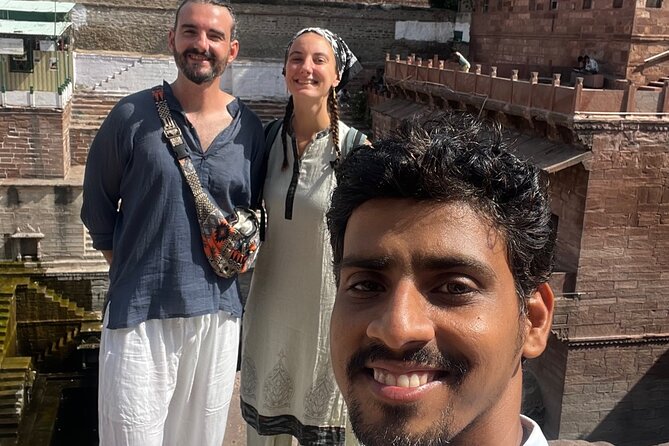
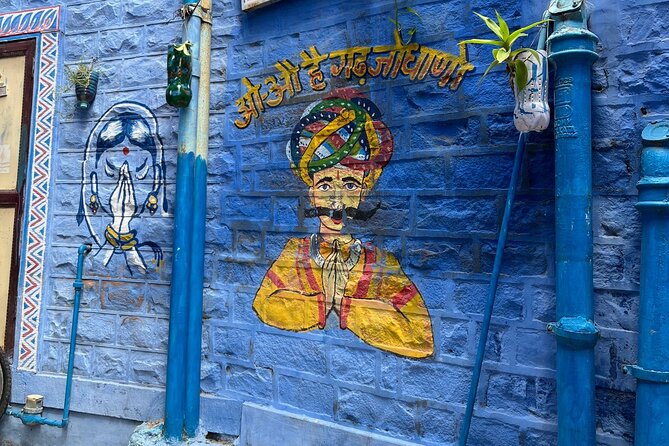
This tour works because it’s not just “look at this blue wall.” You get a guided thread through the old city: market life, water engineering, hilltop views, temple art, and finally food. It’s the kind of walking route where each stop answers the next question in your head.
I like that the experience is interactive and conversation-driven. Guides such as Rahul and Prabhat Singh are known for sharing stories in strong English and keeping the pace comfortable. That matters in Jodhpur, because the lanes are busy, the sights are close together, and you don’t want to spend your time guessing what you’re looking at.
Also, the timing is friendly. A 2 to 3 hour window means you still have energy for later plans—whether that’s exploring more neighborhoods, shopping, or just finding a quiet spot to digest the kachori.
You can also read our reviews of more walking tours in Jodhpur



Getting oriented at the Clock Tower meeting point
You begin around the Ghanta Ghar (Clock Tower) area, near the start point listed as Golu gol gappe on Ghanta Ghar Rd, by the Clock Tower in Rawaton Ka Bass. This is useful because you’re starting in the center of old-town activity, not on the far edge of nowhere.
The tour is private, so only your group participates. That typically makes it easier to ask questions on the spot—like how old the buildings are, why the stepwell matters, or what to look for in the painted doorways and carved windows.
It’s also near public transportation, so if you’re bouncing between sights in Jodhpur, you’re not stuck in a far-off area. You’ll receive a mobile ticket, which keeps things easy once you’re there.
Clock Tower Market (Sardar Market): crafts, textiles, and the old-town pulse
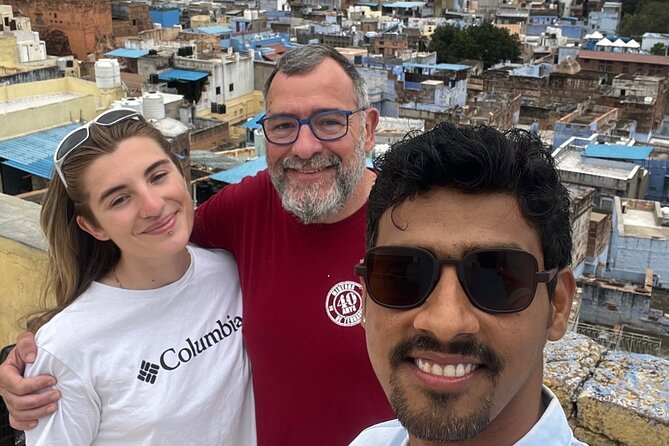
The walk kicks off at Clock Tower Market, described as one of Jodhpur’s oldest markets and located in the center of the old town. This stop is short—around 15 minutes—but it sets the tone fast.
What you’ll notice here:
- Textiles and local art sold in the market lanes
- Wooden handicrafts and everyday items made for local use, not just souvenirs
The small admission is included for this portion, so you’re not juggling tickets while your eyes are busy. More importantly, the market stop helps you understand the city’s rhythm. When you later see elaborate architecture up on hills and in temples, you’ll start thinking about who made it, who used it, and why it’s still part of daily life.
Possible drawback: if you’re the type who hates crowds, this market area can feel a bit lively. The trick is to stay close to the guide and let them point out what’s worth slowing down for.
Toorji Ka Jhalra stepwell: water, architecture, and a 1740 story
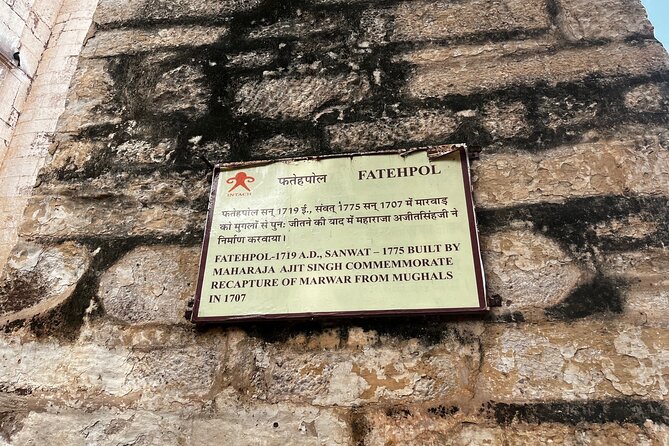
Next comes Toorji Ka Jhalra, also called Toorji’s Step Well. You spend about 15 minutes here, and there’s no admission ticket cost for this stop. That’s a nice perk because the stepwell is one of the most visually satisfying places on the route, even in a short visit.
The guide’s explanation matters because a stepwell isn’t just stairs down to water. It’s architecture designed around water needs and community use. This one is tied to a specific moment in time: it was founded by Rani Tawarji, wife of Abhay Singh, in 1740.
What makes it special in this tour is the way the guide connects design to purpose. You’ll likely see the structure in a new light—less like an old monument and more like an engineered solution that shaped life in the city.
Watch-outs that help: depending on how the stairs are set up in your visit, it may involve uneven steps and a little walking. I’d treat it like a light stair stop, not a casual stroll.
Pachetia Hill viewpoint: blue houses from 400–500 years ago
About 1 hour 10 minutes is devoted to the Pachetia Hill segment, and it’s your big “wow” stop. You head up to see old blue houses and get one of the best views of the city.
The real value here is the details:
- You’re looking at houses described as 400–500 years old
- The architecture includes carved features and elements like jharoka (those projecting window features), plus pillars and columns
- You get a viewpoint where the blue houses make more sense as a neighborhood, not random buildings
Even if you know what blue city photos look like, this stop helps you understand the scale. From up here, the city becomes a layout. You can spot where the old areas cluster and how the hill contributes to the look.
Tip that saves time: keep your phone handy, but don’t spend the whole time framing shots. Let the guide point out the carved and window details, then take photos after you understand what you’re seeing. Otherwise, it turns into quick picture-taking instead of real observation.
You can also read our reviews of more city tours in Jodhpur


Shri Gangshyam Ji Maharaj Mandir: a 350-year-old Krishna temple with paintings
This stop is around 15 minutes at Shri Gangshyam Ji Maharaj Mandir, a 350-year-old Lord Krishna temple. There’s no ticket cost for this segment.
It’s a great contrast after the hill. Here, you’re focused on art and craft. The temple is described as having strong painting work and impressive architectural craftsmanship. It’s the kind of place where the guide’s commentary helps you notice what’s going on—patterns, styles, and how the space feels built for devotion, not display.
If you’re into architecture and iconography, this is worth your full attention for the short time you have. Even if you’re not, it helps round out the walking theme: you saw markets making goods, stepwell architecture serving people, and now you see temple art expressing belief and identity.
Naarayan Mishtan Bhandar (Lal Bhatti Wale): ghee ki kachori and a sweet finish
The last stop is for food, and it’s one of the most direct “yes” moments on the tour: Naarayan Mishtan Bhandar (Lal Bhatti Wale).
This part is about 10 minutes and is ticket-free. The focus is a famous dessert item: ghee ki kachori—described as a well-known desert (dessert) treat—and it’s paired with the overall food theme of the walk, which includes local sweets and snacks such as kachori, samosa, and chai.
What makes the food stop work (and not feel random) is that it’s timed as a reward after the sightseeing. You’ve walked, looked up, looked closely, and now your body gets the right message: sit for a moment, taste something local, and let the flavors close the loop.
A smart move: if you’re picky about spices or oil levels, take one small bite first. You’ll get the idea quickly without committing to a full sugar-and-fat sprint.
Pace, private-group feel, and what you should bring
The tour runs about 2 to 3 hours total, and it’s designed to keep things moving without feeling like a race. In the past, guides such as Rahul and Prabhat Singh have been praised for maintaining a comfortable pace and explaining things clearly in strong English.
Because it’s private, you can ask direct questions without feeling like you’re stealing attention from a larger crowd. This is a big deal on walking tours—small-group energy tends to create better conversations, and you remember stories more than you remember directions.
What’s included that you’ll appreciate:
- Bottled water
What you should bring anyway:
- Comfortable shoes (old lanes and hills don’t do your footwear favors)
- Sun protection if you’re going in warm hours (the route involves outdoor time)
- A light layer if you’re sensitive to morning breezes or evening cooling
Also note: the tour requires good weather. If it’s not ideal, it may be rescheduled or refunded, so don’t plan it as the one single fixed anchor on a bad-weather day.
Price and value: $11.24 per group (up to 2) plus smart inclusions
At $11.24 per group (up to 2), this tour is priced like a no-drama local experience. The value comes from how much you get for the time: multiple meaningful stops, a food finish, and guided context so you don’t miss the point.
Here’s where the inclusions help:
- You get bottled water
- At Clock Tower Market, there’s an admission ticket included for that stop
- Other key sites on the route are described as admission-free for this experience
Most walking tours in India cost more once you add entry fees, and many don’t include a proper food moment. This one gives you both sightseeing and tasting, which is often what makes a tour feel complete.
One more value factor: the tour is often booked about 5 days in advance on average. That suggests it’s a popular, easy fit, so I’d lock it in sooner rather than later, especially during peak seasons.
Who this fits best (and who might want a different plan)
This tour is ideal if:
- You want an easy way to experience the blue city without getting lost
- You like street-level culture: markets, food, everyday architecture details
- You care about meaning—why a stepwell exists, what you’re seeing on a hill, and what a temple’s art conveys
You might consider a different option if:
- You want long stays at fewer places (this is a compact route)
- You hate walking in tight lanes or prefer fully indoor sightseeing
- You’re planning on a day with questionable weather
It’s also a strong pick for first-time visitors because it covers multiple sides of Jodhpur in a single morning or afternoon, with a guide who can tailor the focus to your interests.
My booking advice for your Jodhpur day
If your goal is to understand the blue city instead of just photographing it, book this walk. The stops are well matched: market life, water architecture, hilltop views, temple art, then a satisfying food ending.
I’d especially book it if you’re the type who likes asking questions and getting answers on the spot. Guides like Rahul and Prabhat Singh are praised for clear English and adapting to what you’re interested in, which turns the route from generic sightseeing into a story you can repeat later.
If the weather looks shaky, consider flexibility and plan to keep an alternate slot open. Otherwise, get your comfortable shoes on, accept that old lanes can be bumpy, and enjoy a small slice of Jodhpur that feels lived-in.
FAQ
How long is the Jodhpur Blue City Heritage Walking Tour?
The tour runs about 2 to 3 hours.
Where does the tour start?
The meeting point is listed near Golu gol gappe (Ghanta Ghar Rd, Ghantaghar, Clock Tower, Rawaton Ka Bass, Jodhpur, Rajasthan 342001, India).
Is this tour private?
Yes. Only your group will participate.
What does the tour cost?
It’s priced at $11.24 per group (up to 2).
What’s included in the price?
Bottled water is included. Also, admission for the Clock Tower Market stop is included.
What food or snacks do you try on this tour?
The tour includes local food and dessert such as sweet items like kachori and samosa, and chai. The dessert stop is Naarayan Mishtan Bhandar (Lal Bhatti Wale), known for ghee ki kachori.
Do you get a mobile ticket?
Yes, the tour uses a mobile ticket.
Is it near public transportation?
Yes, it’s near public transportation.
What is the cancellation and weather policy?
You can cancel for free up to 24 hours in advance for a full refund. The experience requires good weather, and if it’s canceled due to poor weather, you’ll be offered a different date or a full refund.