REVIEW · JODHPUR
Heritage walk blue city
Book on Viator →Operated by India Uncharted · Bookable on Viator
Blue walls can feel like a tourist costume, until you hear why they exist. This Heritage Walk through Jodhpur’s old lanes gives you the story behind the Blue City look, plus the small views you’d miss if you only rode around.
I especially like the way the route strings together Mehrangarh’s area waterworks, a high 360-degree viewpoint, and then back down into market streets. You also get a real sense of place thanks to guides who explain the Marwar context with clarity, like Mr Singh did for some guests.
The main thing to keep in mind: the blue houses are no longer everywhere, so you may find only a couple of especially photogenic spots rather than a full-on blue-city wall-to-wall moment.
In This Review
- Key highlights
- Why Jodhpur’s Blue Color Makes Sense on a Walking Tour
- Price and What You Really Get for $15 in 2.5 Hours
- Starting at Wilburys Café, Ending by Clock Tower Road
- Stop 1: Ranisar Padamsar Lakes at Rani Sagar (30 Minutes)
- Stop 2: Pachetia Hill’s 360-Degree Blue City View (45 Minutes)
- Stop 3: Ghanta Ghar and the Sardar Market Alley-to-Bazaar Walk (45 Minutes)
- Stop 4: Toorji Ka Jhalra Step Well (30 Minutes)
- The Real Star: Your Guide and How the Marwar Story Lands
- Small Patch Reality: Photo Expectations vs. Street-Level Truth
- Weather, Comfort, and Who This Walk Suits Best
- Should You Book the Heritage Walk Blue City?
- FAQ
- FAQ
- How long is the Heritage Walk Blue City?
- What does the tour cost?
- Is pickup included?
- Is this tour private?
- Where does the tour start and end?
- Do I need admission tickets for all stops?
- Will I receive a ticket on my phone?
- What if the weather is bad?
- What is the cancellation policy?
Key highlights
- Ranisar Padamsar Lakes at Rani Sagar: manmade water in the quarry of Mehrangarh
- Pachetia Hill: a 360-degree viewpoint in the middle of the city
- Ghanta Ghar and Sardar Market: clock tower energy and alley-to-bazaar walking
- Toorji Ka Jhalra: step well tied to Maharaja Abhai Singh Rathore’s reign
- Private group feel with a local guide and a compact 2.5-hour pace
Why Jodhpur’s Blue Color Makes Sense on a Walking Tour
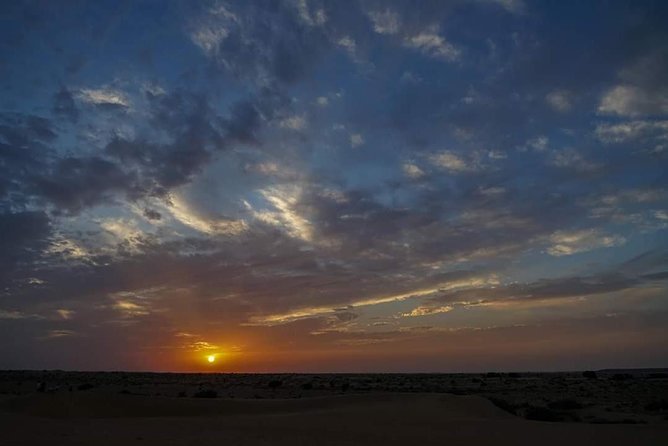
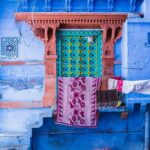
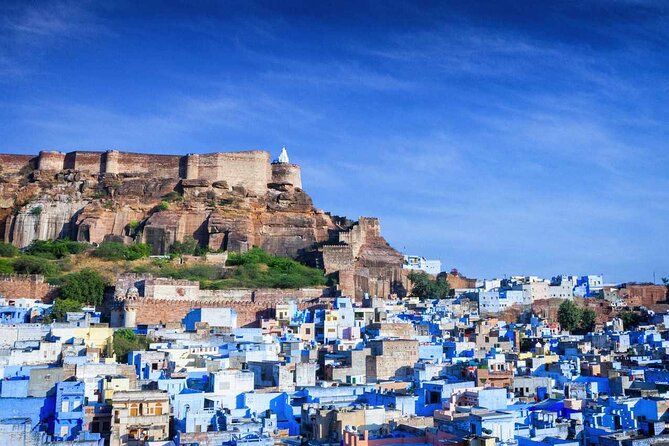
Jodhpur is famous for the Blue City nickname, but the color isn’t just decoration. In the old part of town, you’ll see houses, havelis (traditional mansion-style buildings), temples, and other structures painted in vivid shades of blue. A commonly told explanation is that this style helped the Brahmin caste identify their homes from others.
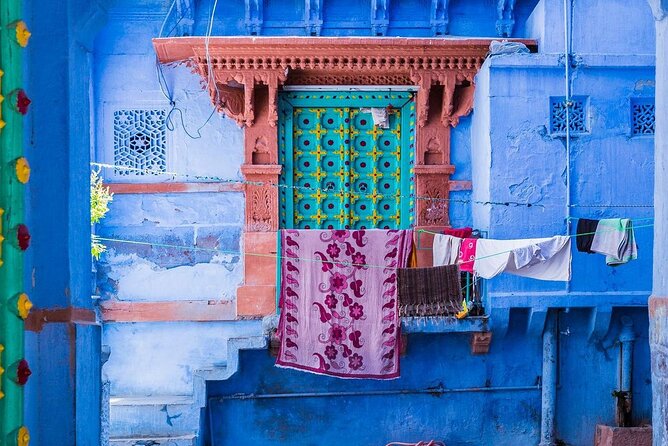
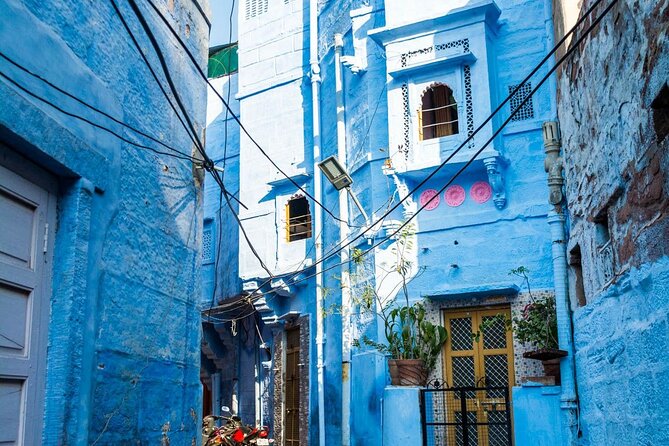
Walking is the secret sauce here. From street level, blue shows up in fragments: a doorway, a rooftop edge, a little temple wall you’d never notice from a vehicle. And because the old city is made of narrow, winding lanes, you naturally slow down. That makes the color feel less like an Instagram theme and more like a living visual tradition.
You can also read our reviews of more walking tours in Jodhpur



Price and What You Really Get for $15 in 2.5 Hours
At about $15 per person for roughly 2 hours 30 minutes, this is a budget-friendly way to orient yourself in Jodhpur’s older neighborhoods. It’s not a day-long program, so it’s ideal if you want heritage and viewpoints without burning the whole morning or afternoon.
The value is also in how the time is portioned. The walk includes three stretches that each change the mood: water and quarry-side history, a hilltop panoramic look, and then market streets around the clock tower. Even if you’re short on time, you get a full loop of “see it, look from above, then experience it at ground level.”
One more value note: the tour uses mobile tickets and offers pickup, which reduces friction. In a place where finding the exact lane by yourself can take longer than expected, that kind of practical support matters.
Starting at Wilburys Café, Ending by Clock Tower Road
This tour begins at Wilburys Café and restaurants around Adgaron ka Mohalla, Killi Khana, Gulab Sagar, Jodhpur (342001). If you’re using Google Maps, it can help to search the exact area and then connect visually once you’re nearby. The route ends on Clock Tower Road, near Shahi samosa in the Rawaton Ka Bass area.
Because it’s a private tour/activity for only your group, you’re not stuck in a crowd moving at someone else’s pace. It’s also listed as near public transportation, which helps if you’re combining it with other parts of your day.
If you’re the type who hates rushing, the 2.5-hour length is a sweet spot. You get the main heritage points without ending the tour feeling like you sprinted through Jodhpur.
Stop 1: Ranisar Padamsar Lakes at Rani Sagar (30 Minutes)
Your first major stop is Ranisar Padamsar Lakes, also known as Rani Sagar. It’s described as a manmade lake located in the quarry of Mehrangarh, in Brahmapuri, the oldest part of Jodhpur.
Why this stop works on a walking tour: it shows how royal and community life depended on engineered water in a rocky environment. A quarry setting also makes the place feel grounded and real. You’re not just looking at a view; you’re looking at how the city managed water where it needed it.
Time-wise, you’re there for about 30 minutes, so it’s enough to take in the setting and photos without turning it into a museum-like pause. The admission ticket is included at this stop, which is useful if you don’t want to juggle payment details mid-walk.
Stop 2: Pachetia Hill’s 360-Degree Blue City View (45 Minutes)
Next comes the height advantage: Pachetia Hill. The big promise here is a 360-degree view over the Blue City, and it’s scheduled for about 45 minutes.
This is the viewpoint that helps you connect the dots. From the lower lanes, blue can feel patchy. From above, you start to understand how the old city sits and spreads. You also get a better sense of the urban shape around Mehrangarh’s area and how the neighborhoods cluster.
Pachetia Hill is free admission, so you can focus on the actual experience: standing, looking, and letting your guide point out what you’d otherwise miss. If you want photos, this is usually the best moment to get your bearings and then decide what to shoot later at street level.
You can also read our reviews of more city tours in Jodhpur



Stop 3: Ghanta Ghar and the Sardar Market Alley-to-Bazaar Walk (45 Minutes)
From the hilltop perspective, you drop back into street life at Ghanta Ghar, the clock tower area. The description notes that the Sardar Market is close, and from there narrow alleys lead into a bazaar-style shopping stretch.
This segment is about energy and movement. Clock tower neighborhoods tend to act like a magnet for local commerce, and the lane connections matter. You’re not just walking past shops; you’re passing through the connective tissue of the city’s everyday rhythm.
Expect about 45 minutes here, with admission ticket included for this stop. It’s a good time to watch how the streets funnel traffic and how people navigate without slowing down for tourists. If you’re worried about the tour being too “heritage plaque,” this is the part that keeps it grounded.
Stop 4: Toorji Ka Jhalra Step Well (30 Minutes)
The walk finishes at Toorji Ka Jhalra, also known as Toorji’s Step Well. This one is tied directly to a ruling era: it was built during the reign of Maharaja Abhai Singh Rathore.
Step wells are a clever heritage category because they’re practical. They were designed for water access and temperature control before modern plumbing. In Jodhpur’s hot months, that logic becomes easy to appreciate just by standing there and thinking about how people once used it.
You’ll have around 30 minutes for this stop, and admission is included. This ending choice is smart. After market streets and a hilltop view, you end with a slower, more architectural and historical object—something you can look at from multiple angles and then carry with you as a “last image” of the tour.
The Real Star: Your Guide and How the Marwar Story Lands
A walking tour like this lives or dies by the guide. The best part is how the explanations connect color, caste context, and city geography into one coherent story. In multiple accounts of this experience, guides were praised for loving Jodhpur and sharing deep knowledge of history and culture across the Marwar region.
One guest singled out Mr Singh by name and pointed out how informative the city talk was. Even if you don’t remember every detail later, the benefit is that the tour gives you context fast. Instead of seeing blue walls as a random trend, you understand what the city is trying to communicate through color and built form.
The tour also keeps the human side front and center. The guide’s attitude is repeatedly described as polite and upbeat. That matters because you’re walking through a tight lane network where a good guide can help you move smoothly, not just talk.
Small Patch Reality: Photo Expectations vs. Street-Level Truth
Here’s the honest planning thought: the blue theme isn’t necessarily “everywhere, all the time” in the old city. One point that comes up is that many houses may have changed color, so you might end up with only 2–3 highly photogenic spots rather than a continuous blue panorama.
That doesn’t mean you’ll feel cheated. In fact, it can make the tour more satisfying if you approach it the right way. Think in terms of composition, not saturation. Look for blue where it makes architectural sense—around windows, along courtyard-style fronts, on temple elements, and in the contrast between old walls and newer paints.
If photography is your goal, prioritize your shots during the viewpoint moment at Pachetia Hill, then come back down for details at street level. Your guide can also help you spot where the color still holds up best.
Weather, Comfort, and Who This Walk Suits Best
This experience is noted as requiring good weather. If weather is poor, you’re offered a different date or a full refund. That’s a practical tip: if you’re traveling during a season with unpredictable showers, build flexibility into your schedule so you can take the walk when the lanes are walkable.
In terms of comfort, it’s a walking tour through the old city’s narrow lanes, so wear shoes you trust. The duration is about 2.5 hours, which is manageable for most people, and the listing says most travelers can participate.
This tour is best for:
- First-timers who want a heritage orientation without long museum time
- People who like walking street grids and small historic stops
- Budget travelers who still want a guide and a guided route, not just a self-walk
Should You Book the Heritage Walk Blue City?
If you want a short, focused way to understand why Jodhpur is called the Blue City, I think it’s a smart pick. For $15 and about 2.5 hours, you get a balanced mix: water history near Mehrangarh, a hilltop 360-degree view, the clock tower market area, and a famous step well connected to Maharaja Abhai Singh Rathore.
The only reason to pause is if you’re expecting an uninterrupted sea of blue for every photo. The color can be patchy now, and the tour doesn’t promise full coverage. But if you’re here for context, viewpoints, and authentic old-city walking, this is exactly the kind of experience that pays off fast.
FAQ
FAQ
How long is the Heritage Walk Blue City?
The tour runs about 2 hours 30 minutes (approximately).
What does the tour cost?
It costs $15.00 per person.
Is pickup included?
Pickup is offered.
Is this tour private?
Yes. It’s a private tour/activity, and only your group will participate.
Where does the tour start and end?
It starts at Wilburys Café and restaurants near Adgaron ka Mohalla, Killi Khana, Gulab Sagar, Jodhpur and ends on Clock Tower Road, near Shahi samosa.
Do I need admission tickets for all stops?
No. Some stops have admission included, and Pachetia Hill is free.
Will I receive a ticket on my phone?
Yes. You’ll have a mobile ticket.
What if the weather is bad?
This experience requires good weather. If it’s canceled due to poor weather, you’ll be offered a different date or a full refund.
What is the cancellation policy?
The experience is non-refundable and cannot be changed for any reason. If you cancel or ask for an amendment, the amount paid won’t be refunded.