REVIEW · ATHENS
10 Day Private – The Ultimate Ancient Greece Tours Experience
Book on Viator →Operated by Ancient Greece Tours & Transfers · Bookable on Viator
History has a way of feeling closer here. This is a fully private 10-day route across mainland Greece that leans on one smart idea: you let your driver handle the long stretches while you focus on the stops that matter. You’ll hit the big names like Meteora, Delphi, Olympia, Epidaurus, Mycenae, Corinth, and Athens, plus scenic side trips such as Cape Sounion and Nafplio.
I especially like two things. First, the day-to-day pacing feels realistic because you’re not chaining buses and transfers all day long. Second, the tour includes the kind of small comfort touches that actually help on multi-day drives: WiFi on board, bottled water, refreshing wipes, and fresh handmade Greek biscuits. One thing to consider is that site entrance fees and most meals are not included, so you’ll want to budget for tickets and dining (and you may need to double-check the airport transfer details).
In This Review
- What makes this private Greece plan work so well
- Key things that stand out
- The Thermopylae opener: walking into a turning point
- Meteora at sunset: monasteries that feel like they’re watching you back
- Delphi: the Oracle’s world plus a museum worth your time
- Olympia’s temples: the Olympic myth in real stone
- The Peloponnese switch: from mythology to medieval sea cliffs
- Limeni and Diros caves: sea time, then cool underground air
- Nafplio: Venetian fortress views and a harbor full of stories
- Epidaurus and Asclepius: the theatre that actually works
- Mycenae: Lions Gate and the power behind Agamemnon
- Ancient Nemea: temples plus a wine-country vibe
- Acrocorinth and Ancient Corinth: Sisyphus vibes, then Apollo’s temple
- Corinth Canal and the return drive: engineering and sea air
- Athens in one day: marble, museums, squares, and the Acropolis
- Cape Sounion: Temple of Poseidon and a proper sea-ending
- Price and value: what you’re really paying for
- Who this private tour fits best
- Should you book this 10-day Ancient Greece route?
- FAQ
- How long is the private tour?
- Where does the tour start and what time?
- Is this a private tour?
- Are hotel pickups included?
- Is WiFi provided during the drives?
- Are entrance fees included for the sites?
- Are skip-the-line tickets included?
- Is accommodation included?
- What about airport transfers?
- Can you cancel and get a full refund?
What makes this private Greece plan work so well
This is designed for people who want “best of” Greece without turning their vacation into a logistics project. A private luxury vehicle plus pickup and drop-off means you start moving faster, and you can keep your own rhythm when you reach each site.
The itinerary also mixes famous ancient sites with places that feel lived-in and scenic. You’ll trade some time in big ticket museums for moments like the Meteora sunset, a waterfront dinner in Limeni, and the views from Acrocorinth above Corinth.
If you want maximum ancient-site time every single day, you might wish for a tighter route. But if you want variety and less fatigue, this format is a strong fit.
Key things that stand out
- Private door-to-door transfers across a wide loop, so you spend less time wrestling with schedules
- Meteora + Delphi + Olympia in one trip, with fewer days lost to transit
- Peloponnese depth: Monemvasia, the Mani, Limeni, Nafplio, Epidaurus, Mycenae, Corinth
- Real breaks in the scenery: Cape Sounion, Corinth Canal area, Athens Riviera drive-by views
- Convenience add-ons on request, like skip-the-line tickets when available
You can also read our reviews of more private tours in Athens
The Thermopylae opener: walking into a turning point
You start at Thermopylae, and it’s a smart first stop because it sets the tone. This is where the narrow coastal passage mattered in antiquity, and the famous battle between an alliance led by King Leonidas of Sparta and Xerxes’s Persian forces gave Greece a headline moment that echoes far beyond the region.
Even if you’re not a battle-history person, the site has layers you can actually see and feel: the monument of Leonidas, created in 1955 by sculptor Vasos Falireas, plus the Thermopylae museum. You’re looking at a place where myth and history sit close together, with the “Gates of Fire” concept tied to hot springs and Hades imagery from Greek mythology.
Practical note: you’ll likely want good walking shoes. Some areas can be a bit uneven, and you’ll appreciate having the stamina early in the trip.
Meteora at sunset: monasteries that feel like they’re watching you back
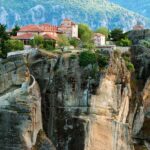
From Thermopylae, the tour moves you toward Meteora, the “Hanging Monasteries.” The approach alone is part of the payoff: you get to see how these monasteries were built on rock formations high above the valleys.
On day one, you’ll cover 1 to 2 monasteries with time to explore Kalambaka and Kastraki. The big highlight is the Meteora sunset, which is timed so you can enjoy the view when the light turns dramatic. If you care about atmosphere, this stop is doing the most work for your memory bank.
On day two, you return for the rest of the monasteries. So you don’t have to rush “see it all” in one go. Instead, you get that slower, layered feel: first arrival and orientation, then the full set.
Trade-off to know: Meteora days can mean stairs and uneven terrain, depending on which monastery(s) you visit and what you choose to climb.
Delphi: the Oracle’s world plus a museum worth your time
Delphi is the kind of place where your brain starts asking questions before you even enter the main site. It was one of the most important ancient Greek archaeological centers, tied to the oracle and later to major games and cultural events.
At the Delphi archaeological site, you’ll focus on major structures and spaces like the Temple of Apollo, the Ancient Theater (with its impressive layout), the Stadium, and treasuries such as the Athenian Treasury. You’ll also see parts of the Sanctuary of Athena Pronaia and other key areas that help explain why Delphi mattered.
Then comes the Delphi Archaeological Museum, where you get to see important artifacts from excavations. This is how Delphi becomes more than a postcard. Even if you only spend a couple of focused hours, it helps you connect the ruins with what people carried, built, and honored there.
Practical note: entrance fees aren’t included, so bring that expectation with you. If you’re doing a lot of sites across the trip, buying the right tickets ahead of time (or asking about skip-the-line where possible) can save you stress.
Olympia’s temples: the Olympic myth in real stone
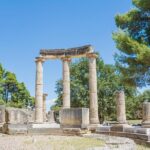
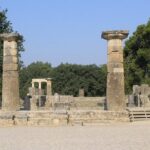
Olympia is where the ancient “sports meets religion” idea comes alive. You’ll visit the archaeological site and then key monuments like the Temple of Zeus, built in the Doric style, and the Temple of Hera (the Heraion), dating to around 590 BCE.
The trip also includes the Philippeion, a circular building dedicated to Zeus by Philip II of Macedon. It’s one of those spots that makes you pause because it’s specific in a way that general descriptions don’t capture.
If you’re wondering what you’ll do here day-to-day: this is the sort of stop where you can wander and learn at your own pace, without trying to catch a moving train of people. With a private driver model, you’re not forced into a single herd-like rhythm.


The Peloponnese switch: from mythology to medieval sea cliffs
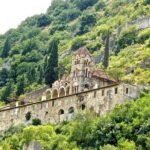
After Olympia, the tour pivots toward the far south mood of Greece. A highlight is Monemvasia, often called The Rock, because the town and castle sit like a fortress in the sea-facing landscape.
You start with Monemvasia Castle, then explore medieval corners including the Christos Elkomenos Church and the Christos icon. You’ll also have time around St. Sofia and the Ritsos family area, plus a stop that turns into a rest moment: Vathysfero cafe with refreshments and local delicacies while you look out toward the Myrtoan Sea.
Lunch is built into the day at Matoula’s, with village-style food and panoramic views. Then you continue to the Mani peninsula and check in at a boutique-style hotel in Limeni.
This whole day is valuable for one simple reason: you get ancient Greece energy, but you also get the Greece that looks like it was waiting for movie sets. It’s not just about temples; it’s about how people built where the land is steep and the sea is close.
Limeni and Diros caves: sea time, then cool underground air
In Limeni, the focus turns more local and slower. You’ll have breakfast, then time to explore Diros caves. Caves are a welcome change of pace after days of open-air stone sites. Expect the temperature shift and the sense of moving into a different kind of wonder.
You’ll also have time in Aeropoli and then free time for sea and sun in Limeni. Dinner is by the water at an authentic fish taverna, which is exactly the kind of meal that makes a long trip feel worth it.
The main drawback here is also the nature of the area: this is a place built around curves, stairs, and viewpoints. If you dislike walking or have mobility limits, you’ll want to plan carefully which stops you prioritize each day.
Nafplio: Venetian fortress views and a harbor full of stories
Nafplio is one of those towns that feels like it earns your camera time, but it also works for wandering. You drive there after breakfast and check in at your chosen hotel.
The day’s highlights include Palamidi Castle, built by the Venetians above the city. It’s famous for the 999 steps up to the top. You don’t have to chase the number for the view to be worth it, but it does help you understand why people talk about it for years.
You’ll also see Freedom Square (with a monument tied to the French contribution in the War of Independence), Constitution Square, and Bourtzi, the water fortress in the harbor.
Practical value: Nafplio gives you a break from “big-ticket ancient sites” while still staying in Greece’s older layers of power and design. It’s a different flavor, not a detour.
Epidaurus and Asclepius: the theatre that actually works
Epidaurus is one of the best places in Greece to feel how construction can be science. The amphitheatre is famous for its acoustics, and the tour’s description of how a coin or pin can be heard even from the last seats gives you a sense of what to test once you’re inside.
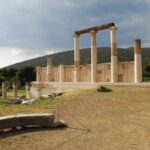
You’ll also visit the Epidaurus Archaeological Museum, which is known for reconstructions and columns with inscriptions. Then you move to the Asclepius sanctuary, a place tied to healing and medicine in ancient Greek culture.
This is one of the more meaningful days because you’re not only looking at power structures. You’re seeing a different kind of ancient purpose: health, ritual, and what people believed could help them.
Mycenae: Lions Gate and the power behind Agamemnon
Next is Mycenae, the late Bronze Age kingdom associated with stories attributed to Agamemnon in Homeric epics. Here, you’ll focus on the Lions Gate, royal burial circles (A and B), the Cyclopean Walls, and the Royal Palace.
It’s especially good if you like sites that feel built for defense. The huge stonework and the feel of the citadel make the past feel physical, not abstract.
Time note: you’ll spend around 1.5 hours at key areas. If you love Mycenae, you might wish you had longer. But as part of a 10-day loop, it gives you the essentials without draining the rest of the itinerary.
Ancient Nemea: temples plus a wine-country vibe
On the same broader day, you’ll visit Ancient Nemea. What makes this stop interesting is the combination of ancient athletics, religion, and a setting that feels like it has vineyards and long views.
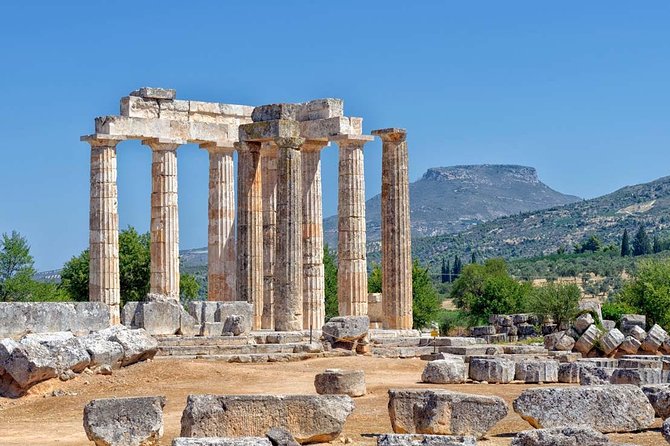
You’ll see the Temple of Zeus (with three columns still standing), plus areas like ancient baths and the Apodyterium. It’s a strong “stretch your legs” stop because it’s not only ruins—it has the sense of a place built for athletes and gatherings.
This is one of those stops that can feel like a reset between heavier sites like Mycenae and Corinth.
Acrocorinth and Ancient Corinth: Sisyphus vibes, then Apollo’s temple
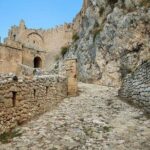
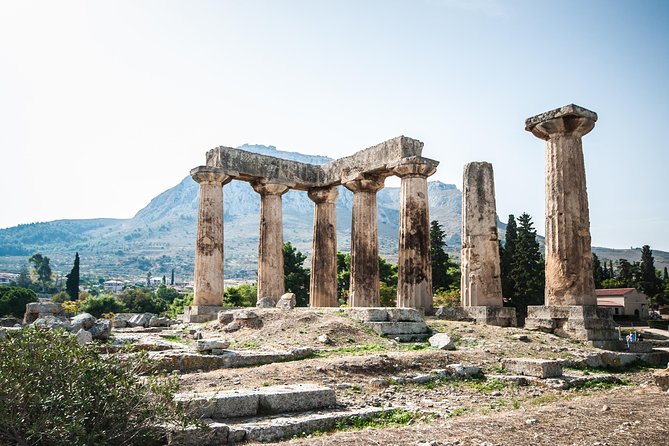
Corinth hits hard because it’s a crossroads city in almost every era. You’ll start with Acrocorinth, the acropolis on a monolithic rock above Corinth. This is where you get the feel of a defensive stronghold built over centuries, with circuit walls, towers, and remains from different periods.
You’ll also visit Peirene Spring inside the walls and see traces of a Temple of Aphrodite at the highest point. The Frankish Tower and other preserved remains add another timeline to what you’re seeing.
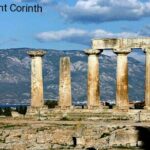
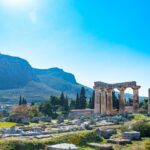
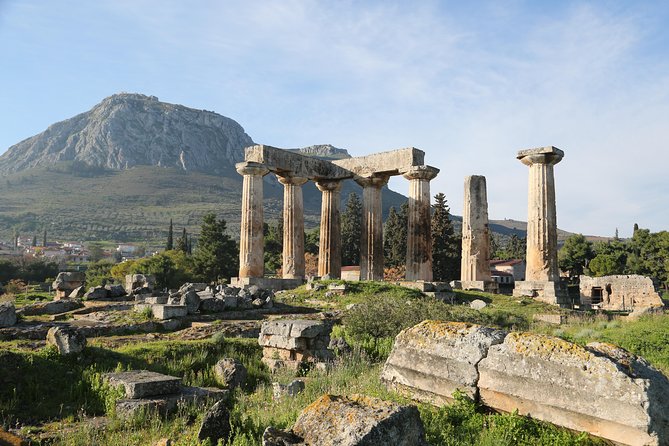
Then you move to Ancient Corinth itself. The plan includes the archaeological museum, the Temple of Apollo, the Agora, and key features like the Bema area connected with Apostle Paul’s teaching around 52 AD.
If you’ve ever wondered how one city can matter to so many different stories, Corinth is where that becomes clear.
Corinth Canal and the return drive: engineering and sea air
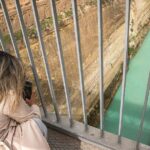
After the acropolis and the ancient city, you’ll hit the Corinth Canal. It’s described as a major 19th-century engineering project with an important role in Mediterranean trade.
Then you drive toward Kechries Port, tracing the footsteps of St Paul. You stop for lunch by the Saronic Sea at the Baths of Helen of Troy village area, and then you return to Athens.
This is a valuable pacing choice: you get one last “big wow” sight before you shift into Athens city mode.
Athens in one day: marble, museums, squares, and the Acropolis
Day nine is Athens packed, but it’s structured so you can pick your pace a bit. You’ll start with pickup from your chosen hotel or apartment.
You’ll drive by the Temple of Olympiad Zeus, then visit Kallimarmaro, the Olympic Stadium built entirely of marble. After that, you’ll go to Mount Lycabettus for panoramic views.
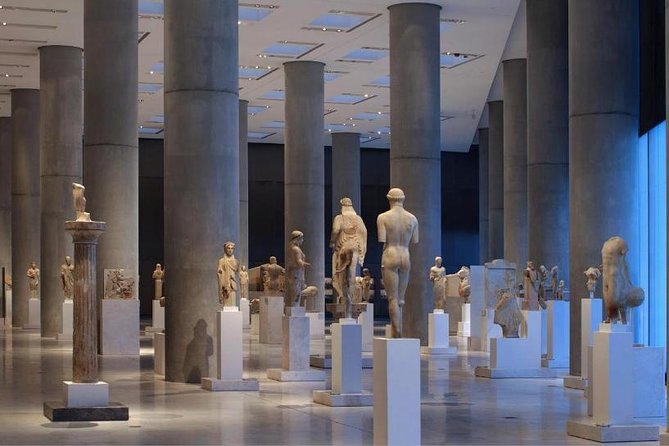
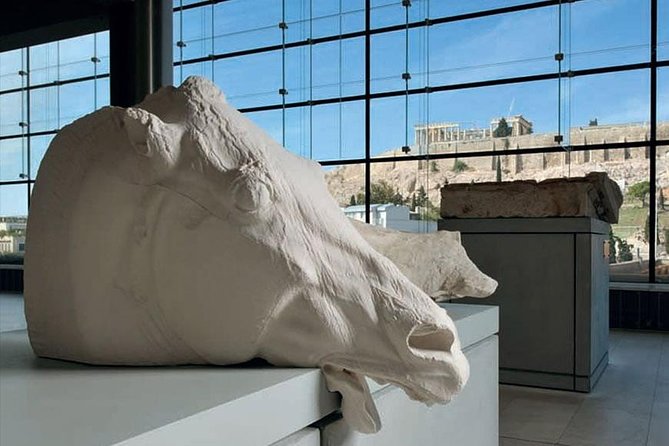
The itinerary then includes the National Archaeological Museum (with an option to visit the Acropolis Museum instead). This museum stop is a big deal because it helps connect Greek artifacts across different sites, so the earlier days start to “talk to each other” in your head.
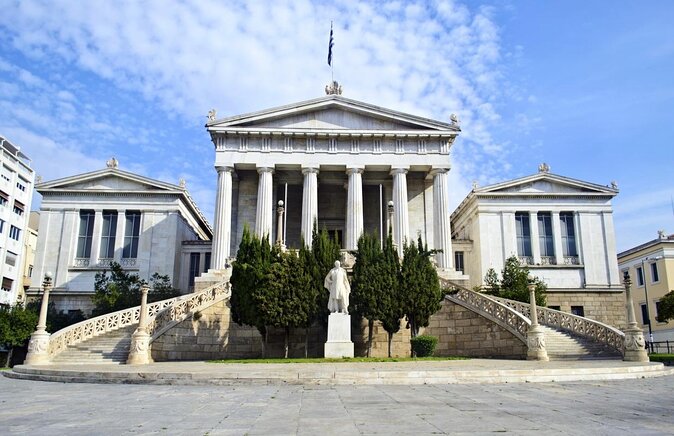
You also get a classic Athens walk rhythm: drive-by the architectural trilogy (National Library, Athens University, Academy of Athens), Stadiou Street, and then Hellenic Parliament for Constitution Square and changing of the Royal Guards.
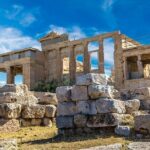
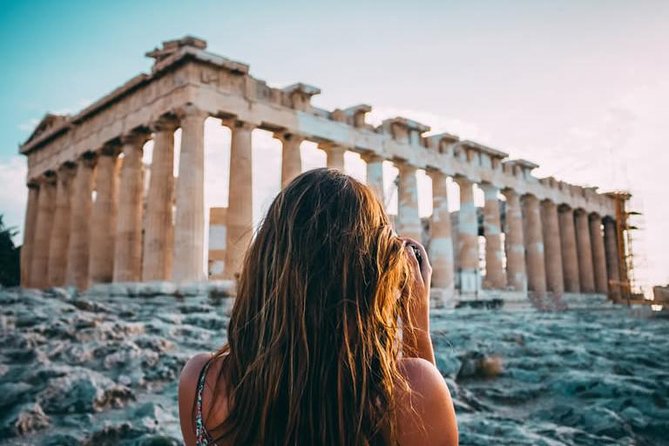
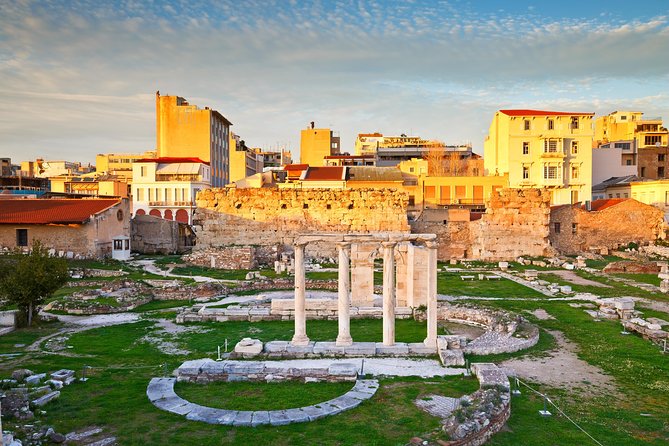
Lunch is in Monastiraki square (authentic Greek lunch is mentioned), then you have time for shopping and wandering in Monastiraki and Plaka. The schedule also includes the Ancient Agora of Athens and then the Acropolis and Parthenon.
Time note: many of these are listed as fairly short visits. That’s not a problem if your goal is “see the key pieces.” If your goal is slow studying, Athens will feel rushed. The upside is you’ll still feel the city’s scale and layout.
Cape Sounion: Temple of Poseidon and a proper sea-ending
To cap it off, you head to the Athens Riviera area for views and then up to Cape Sounion. The highlight is the Temple of Poseidon, built around 444–440 BC, presented here as the crowning jewel with the setting over the sea.
You’ll also enjoy an evening dinner at the Athens Riviera by the Saronic sea. This last night style matters: it turns the trip from “tour mode” into “memory mode.”
Price and value: what you’re really paying for
The price is $3,758.43 per person for a private 10-day experience. That number can feel steep until you map what’s actually covered.
Here’s what you get in the price: fully private multi-day touring, professional English-speaking and multi-lingual drivers, hotel/port pickup and drop-off, private luxury transportation, WiFi on board, bottled water, refreshing wipes, handmade Greek biscuits, and the option for skip-the-line tickets on request.
What you don’t get (and you should budget for): site entrance fees, food and drinks, and accommodation for 9 nights (with an option to help reserve a hotel on request). Also, the fine print mentions airport pick-up/drop-off as additional cost, even though the day 10 schedule includes an airport transfer—so it’s worth confirming exactly what’s included for your departure day.
So is it good value? If you hate travel stress and you’d rather pay for convenience than burn energy on logistics, the private-driver model makes sense. If you’re traveling as a solo backpacker on a strict shoestring, you’ll likely find cheaper options. But for couples and small groups who want to see a lot without feeling constantly behind, this price can be justified by saved time, comfort, and the ability to move between regions smoothly.
Who this private tour fits best
This one suits you if:
- You want a lot of classic sites across Greece without relying on public transport
- You prefer a private rhythm with your group rather than a fixed group bus schedule
- You like variety: temples, museums, medieval towns like Monemvasia, and scenic stops like Cape Sounion
It may not suit you as well if:
- You want lots of free time at each site to read everything slowly
- You’d rather spend your money on lodging upgrades than on a private driver
Should you book this 10-day Ancient Greece route?
I’d book it if you want the big ancient highlights with a serious reduction in travel hassle. The way it mixes Meteora, Delphi, Olympia, Epidaurus, Mycenae, and Corinth with Monemvasia and the Mani gives you a trip that feels like Greece across eras, not just a single track.
Before you commit, do two quick checks: confirm how entrance fees will be handled for your exact dates, and verify whether airport transfer is truly included for your pickup/drop-off plan. If those details line up, this is a strong choice for a memorable first trip to Greece or a “see more” follow-up.
FAQ
How long is the private tour?
The tour is listed as 10 days (approx.).
Where does the tour start and what time?
It starts with a 10:00 am meeting time.
Is this a private tour?
Yes. It’s a private tour, and only your group participates.
Are hotel pickups included?
Yes. Hotel/port pick-up and drop-off service is included.
Is WiFi provided during the drives?
Yes. WiFi is provided on board.
Are entrance fees included for the sites?
No. Entrance fees to the sites are not included.
Are skip-the-line tickets included?
Skip-the-line tickets are available on-request. They’re listed as included, but the request part matters.
Is accommodation included?
No. 9 nights accommodation are not included, though there’s an option to reserve a hotel upon request.
What about airport transfers?
Airport pick-up and drop-off is listed as not included (additional cost). The day 10 schedule includes an airport transfer, so it’s best to confirm what’s included for your booking.
Can you cancel and get a full refund?
Yes. You can cancel up to 6 days in advance for a full refund. Full refund requires canceling at least 6 full days before the experience’s start time.