REVIEW · ATHENS
4-Days Argolis,Ancient Olympia,Delphi,Meteora private tour from Athens
Book on Viator →Operated by Luxury Greek Tours · Bookable on Viator
Four days across mainland Greece, with zero stress. This is a private plan that strings together the big hitters from the Peloponnese to central Greece, with pickup from Athens and an air-conditioned ride doing the heavy lifting. I like that you get personalized pacing and transport, plus an English-speaking driver and WiFi onboard to keep the day running smoothly.
I also like the way the route mixes major archaeological sites with “place you can feel” towns. You’ll spend time in Mycenae and Epidaurus, then shift to Olympia’s stadium atmosphere, finish at Delphi’s oracle landscape, and top it off with Meteora’s monasteries and Thermopylae’s memorial setting. The main thing to consider is that site and museum entry fees are not included, and lunch, dinner, and passenger accommodation are also not part of the package.
In This Review
- Key highlights at a glance
- Why this Athens-to-Meteora route feels efficient (and not chaotic)
- Day 1: Corinth Canal, Ancient Corinth, Mycenae, Nafplio, and Epidaurus theatre
- Corinth Canal: the quick wow stop
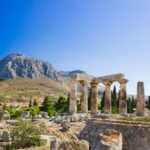
- Ancient Corinth: city-state scale, compact time
- Mycenae and the Treasury of Atreus: Bronze Age power in stone
- Acronauplia and Nafplio: views and a real working town
- Epidaurus: the theatre that still works
- Day 2: Olympia’s stadium-and-Zeus focus, plus Archimedes and Lepanto
- Olympia archaeological site and museum: 2 hours that actually matter
- Archimedes Museum: smarter than you expect
- Nafpaktos (Lepanto): a war-shaped harbor town
- Day 3: Delphi’s oracle atmosphere and Arachova’s mountain break
- Delphi Archaeological Museum: the omphalos and the Pythia
- Arachova: tradition and mountain proximity
- Day 4: Meteora monasteries on pillars, then Thermopylae’s hot-gates story
- Meteora: monasteries built on rock pillars
- Thermopylae Museum: Leonidas, the pass, and the monument across the road
- Price and logistics: what you’re paying for, and what you should budget for
- Hotels, meals, and the food rhythm you’ll actually follow
- How to get more out of every stop (without burning out)
- Should you book this private 4-day mainland Greece tour?
- FAQ
- FAQ
- How many people are in the private tour group?
- Where does the tour start?
- Is pickup from Athens included?
- What language support do you get?
- Are admission fees included?
- Which stops have free admission on this plan?
- Is lunch included?
- Is dinner included?
- Is accommodation for passengers included?
- Does the tour last the full 4 days?
Key highlights at a glance
- Private, air-conditioned transportation across multiple regions, with bottled water and WiFi onboard
- Pickup from Athens with a driver who’s set up to coordinate your day
- Archaeology-heavy itinerary: Mycenae, Epidaurus, Olympia, Delphi, plus Meteora and Thermopylae
- English-speaking driver support, and a licensed guide can be requested depending on availability
- Some stops are free on the plan, so you can save on entry where the route allows
- Expert stories on the road, plus time built into scenic viewpoints like Acronauplia
Why this Athens-to-Meteora route feels efficient (and not chaotic)
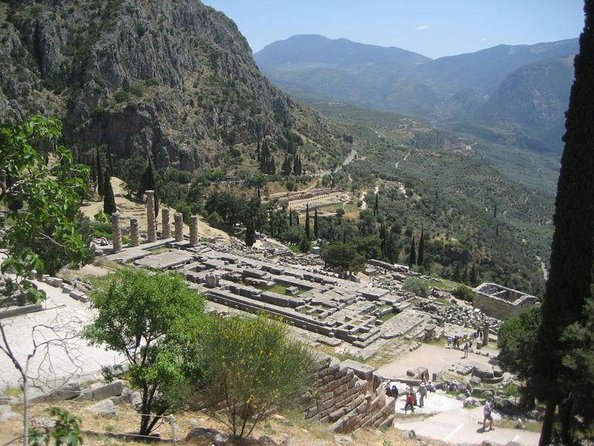
This tour works because it’s designed around how you actually travel on the Greek mainland: long drives, lots of sun, and sites that reward slow attention. The private format matters. Instead of shoehorning yourself into transfers and group timing, you travel as one unit, with an onboard setup (WiFi and bottled water) that keeps breaks from feeling random.
It’s also a smart “mainland greatest hits” mix. You’re not just doing one theme. You’re moving through connected worlds: the Peloponnese’s Bronze Age power at Mycenae, the medical sanctuary of Epidaurus, the athletic myth-cycle at Olympia, the oracle geography at Delphi, and the spiritual cliffside drama of Meteora. By the time you reach Thermopylae, the ancient world doesn’t feel like a highlight reel. It feels like a chain.
One more practical note: the plan states a driver who speaks English, but the driver isn’t licensed to accompany you inside every site. That means the experience may lean more on the scheduled format, and you’ll want to confirm whether you’ll have a licensed guide at the stops where you care most. The good part is that a licensed tour guide can be arranged upon request depending on availability.
You can also read our reviews of more private tours in Athens
Day 1: Corinth Canal, Ancient Corinth, Mycenae, Nafplio, and Epidaurus theatre
Day 1 is all about the Peloponnese’s history hitting you from several angles in one sweep. You start with an eye-catcher, then build into deep archaeology, and end with a classic seaside town and one of Greece’s most impressive theatres.
Corinth Canal: the quick wow stop
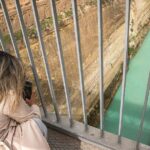
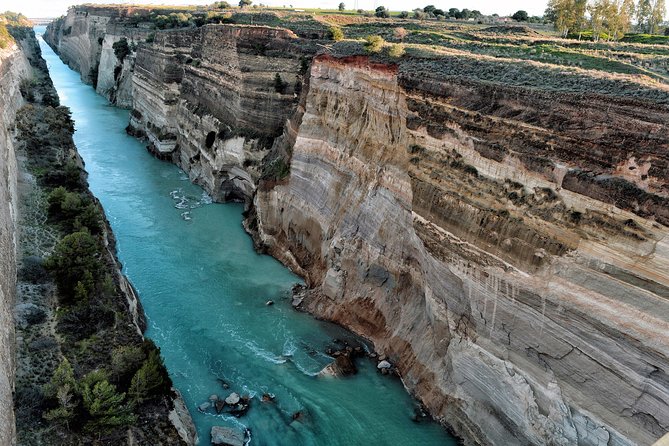
The Corinth Canal is short—around 20 minutes—and free on the plan. Even if you’ve seen photos, it’s one of those places where you suddenly grasp geography: the canal connects the Gulf of Corinth with the Saronic Gulf, cutting through the narrow Isthmus of Corinth. It’s a simple stop, but it sets the mental map for everything that follows—why this region mattered for movement, control, and trade.
Ancient Corinth: city-state scale, compact time
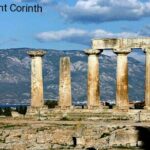
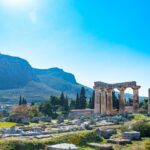
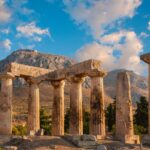
Next is Ancient Corinth (Archaia Korinthos) for about 35 minutes, with admission not included. This is the kind of site where timing matters. You won’t cover every corner in a half hour, so focus on what your guide points out and what you can connect to the stories—Corinth as a key city-state on that connecting strip between the Peloponnese and mainland Greece.
Mycenae and the Treasury of Atreus: Bronze Age power in stone
Then you move into Mycenae (about 35 minutes, admission not included). This is a major Bronze Age centre, described as a military stronghold that dominated much of southern Greece, Crete, the Cyclades, and parts of southwest Anatolia. That range of influence makes Mycenae feel bigger than its location.
After that comes the standout: Citadel and Treasury of Atreus (around 10 minutes, admission not included). The “Tomb of Agamemnon” name is part of the site’s fame, but even without getting caught up in legend, it’s the engineering that impresses—this tholos (beehive-style) tomb on Panagitsa Hill, with a stone lintel weighing about 120 tons. It’s also noted as being referenced by Pausanias in the 2nd century AD, and still visible in 1879 when Schliemann discovered shaft graves. That kind of continuity is rare.

Acronauplia and Nafplio: views and a real working town
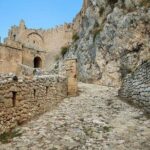
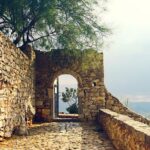
You’ll then get a change of pace in Acronauplia (about 10 minutes, free). It’s described as a rocky peninsula fortress with Venetian roots and a layered history through different conquerors. The practical point: you’re there for the view—Nafplio’s cityscape and the sea.
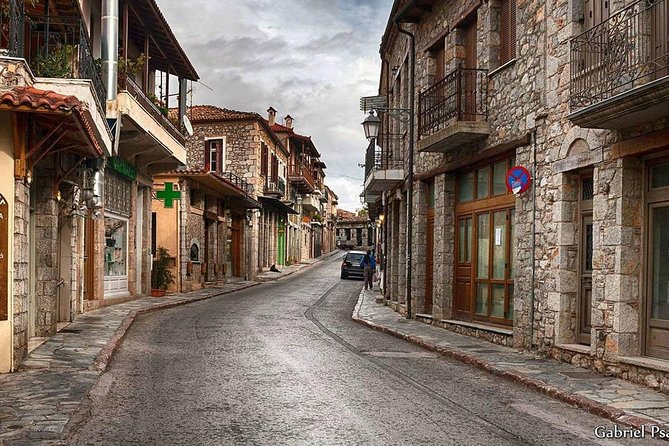
After that, you land in Nafplio itself (about 35 minutes, free). This is a port town with a hill-clinging feel, and it has serious historical weight: Middle Ages lordships, Venetian and Ottoman rule, and even being the capital of the First Hellenic Republic and the Kingdom of Greece from 1821 to 1834. You’re not expected to “tour a museum” here; it’s more about atmosphere and letting the day breathe.
Epidaurus: the theatre that still works
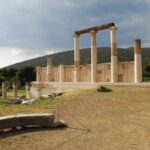
Day 1 ends at The Ancient Theatre of Epidaurus (about 30 minutes, admission not included). This is tied to the sanctuary of Asclepius, the ancient Greek god of medicine. The theatre is described as especially important for acoustics and aesthetics. If you’re the type who loves structures that feel like they were built for humans—not just rulers—this stop is a good match.
Tradeoff to consider: Day 1 is packed. If you hate rushing, you may want to prioritize what you care about most—Mycenae and Epidaurus are the strongest “stand and take it in” moments on the plan.
Day 2: Olympia’s stadium-and-Zeus focus, plus Archimedes and Lepanto
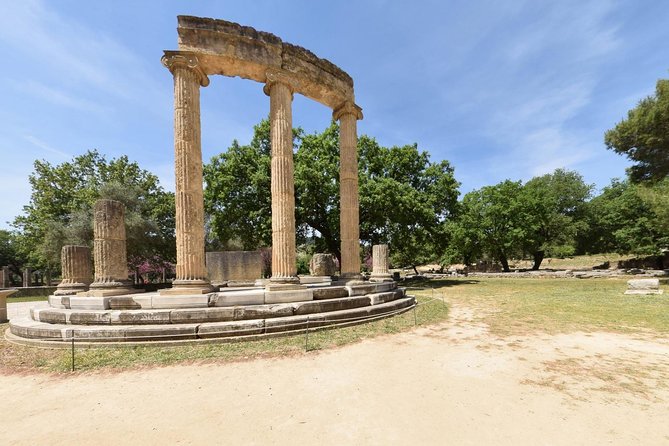
Day 2 is a blend of athletic myth, museum learning, and a coastal town shaped by wars.
Olympia archaeological site and museum: 2 hours that actually matter
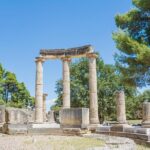
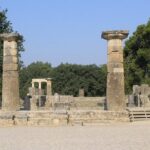
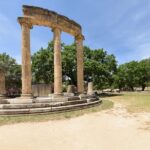
At Olympia, you’re scheduled for about 2 hours without admission included. This is the birthplace of the Olympic Games, held every four years from 776 BC to 393 AD. You’ll see the ancient stadium, the Palaistra (where athletes trained for wrestling), and the ruins of the Temple of Zeus, including the workshop connected with sculptor Phidias.
This stop shines because it’s not just ruins. Your time includes context: Olympic schedules, athletic training spaces, and the monumental dream of Zeus. You’ll also hear how the place functioned as both a religious sanctuary and a sports stage, which helps it make sense instead of feeling like random stones.
Archimedes Museum: smarter than you expect
Next is the Archimedes Museum (about 35 minutes, admission not included). This is dedicated to the mathematician, physicist, engineer, astronomer, and inventor credited with contributions to technology. It’s a helpful pivot. After heavy stone and myth, this gives your brain a different kind of workout.
If you’re traveling with kids or anyone who loves science stories, this is the kind of stop that can turn “I came for history” into “I didn’t know I’d enjoy this.”
Nafpaktos (Lepanto): a war-shaped harbor town
Finally, you go to Nafpaktos (about 1 hour 30 minutes, free). It’s described as an important Athenian naval station controlling access to the Gulf of Corinth. Over centuries it shifted hands through the Crusades and Ottoman–Venetian wars, and the Venetian name Lepanto ties directly to the Battle of Lepanto in 1571.
The value here is pacing. You’re not staring at columns the whole time. You’re in a place that has been strategically fought over, so the setting matches the story.
Consideration: You’re returning to Athens early evening on this day. If you’re sensitive to end-of-day fatigue, plan for a relaxed dinner once you’re back.
Day 3: Delphi’s oracle atmosphere and Arachova’s mountain break
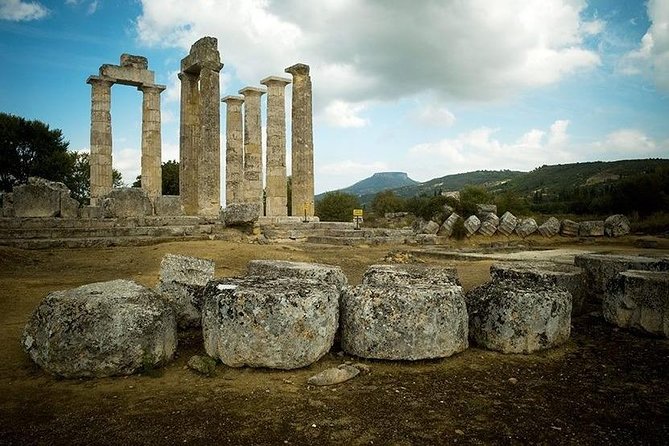
Day 3 is where the tour shifts from mainland power and athletic legends into spiritual decision-making and prophecy.
Delphi Archaeological Museum: the omphalos and the Pythia
The Delphi Archaeological Museum is scheduled for about 2 hours 20 minutes (admission not included). Delphi was the seat of the Pythia, the oracle consulted about major decisions across the classical world. You’ll also see the omphalos stone monument, described as marking the navel of the world in ancient Greek belief.
What I like about Delphi is that it’s both physical and philosophical. The site’s meaning isn’t just written on plaques; it’s tied to where you stand and how you imagine crowds and ceremonies moving through sacred space. Even with a limited time window, the guide’s framing makes a big difference.
Arachova: tradition and mountain proximity
After Delphi, you stop in Arachova (about 25 minutes, free). It’s described as a mountain town close to Delphi and known for traditions. It’s a short pause, but it works as a reset—cooler air at elevation, village feel, and a chance to buy a snack or warm up with local treats if you’re the kind of person who likes to keep moving without skipping fun.
Tradeoff: Delphi plus a quick town stop can feel like a “big ideas, short time” day. If Delphi is your top priority, you’ll get the most out of it if you keep the rest of your focus on staying present.
Day 4: Meteora monasteries on pillars, then Thermopylae’s hot-gates story
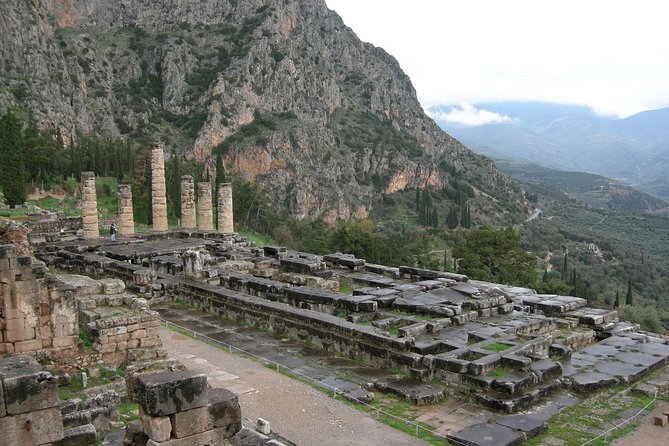
Day 4 is your visual payoff day: sky-high monasteries, then a solemn ancient battlefield pass.
Meteora: monasteries built on rock pillars
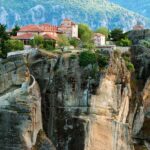
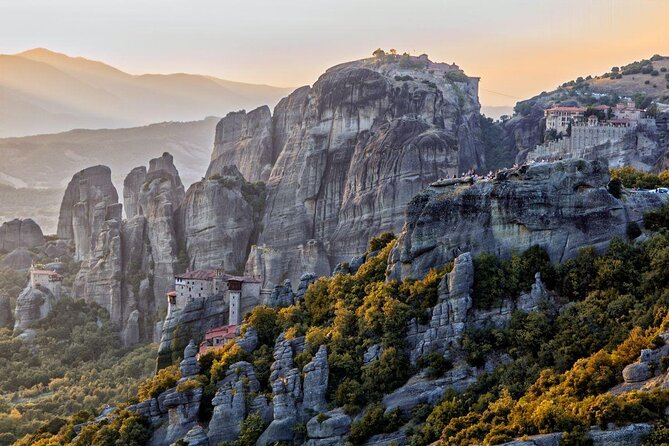
You spend about 3 hours at Meteora (admission not included). Meteora is a rock formation hosting one of the largest and most steeply built complexes of Eastern Orthodox monasteries, second only to Mount Athos in importance (as stated on the plan). You’ll see monasteries built on immense natural pillars and boulders that dominate the area near Kalambaka.
It’s also UNESCO World Heritage-listed under several criteria, which is a helpful reminder that this isn’t just dramatic scenery. It’s a living example of how faith, architecture, and landscape shaped each other.
Thermopylae Museum: Leonidas, the pass, and the monument across the road
Then you go to Thermopylae (about 35 minutes, admission not included). The “Hot Gates” ties to hot sulphur springs and is also linked to Greek mythology. Thermopylae’s fame is the battle between Greek forces (notably Spartans) and invading Persian forces, commemorated by Simonides’ epitaph: Go tell the Spartans, stranger passing by, that here obedient to their laws we lie.
Practically, the tour description includes modern geography too: the pass is used as a major land route between regions, there’s a modern highway splitting the pass, and a modern-day monument to King Leonidas I stands on the east side of the highway. It’s said to be directly across from the hill where the epitaph is engraved in stone at the top.
Consideration: This is emotional history. Keep your expectations realistic: 35 minutes is enough to absorb the setting, but it’s not enough for a deep, slow museum day.
Price and logistics: what you’re paying for, and what you should budget for
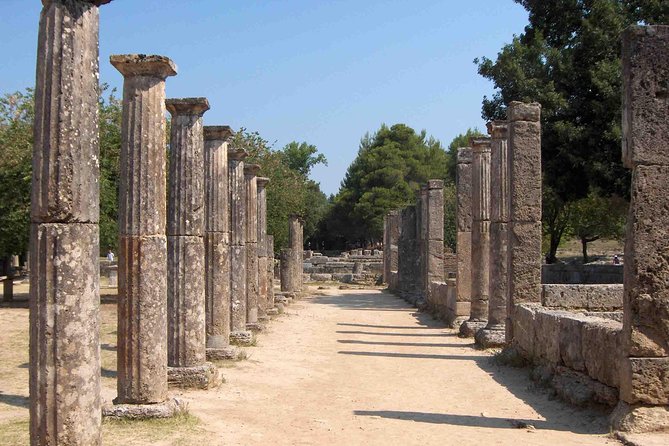
The price is $3,880 per group up to 8 people, for roughly 4 days. That’s the big headline, but the real value is how the cost converts into fewer headaches.
If you fill the group (8 people), it works out to about $485 per person for private transportation across multiple regions. If you travel as 4, you’re closer to $970 per person, and you’ll feel that difference in your budget. So this tour is best when you have enough people to spread the fixed cost.
What’s included is very clear:
- Air-conditioned vehicle, WiFi on board, and bottled water
- Private transportation
- Driver’s accommodation
- Pickup offered and mobile ticket
- English-speaking driver support (but not licensed to accompany inside sites)
What’s not included:
- Entrance fees for archaeological sites, monasteries, and museums
- Lunch and dinner
- Passenger accommodation
That last part matters. This tour can still feel “stress-free” if you handle hotel booking quickly, but passenger lodging isn’t part of the base price. The good news: the plan says you can contact the provider if you need help booking accommodation.
So my advice is simple: get a realistic total by adding expected entry fees for the stops you care about most (Olympia, Delphi, Meteora, Epidaurus, Mycenae are the likely budget drivers). Then decide if you want a licensed tour guide at key sites by request.
Hotels, meals, and the food rhythm you’ll actually follow
Lunch and dinner aren’t included, which means you have control—but you’ll want a plan because the day is packed. The route gives you scheduled stop windows, and meals will probably happen as quick breaks near your next destination.
The route also has time in towns with an “eat here” feel: Nafplio and Nafpaktos are both the kind of places where you can find straightforward local options without turning the day into an errand list. From the guide style described in the tour feedback, the driver’s suggestions for local dishes have been valued, which usually means less guessing and fewer tourist traps.
If you’re the kind of traveler who wants one planned meal on each day, you may need to reserve ahead once you know where your group is staying (since accommodation isn’t included in the package). If you’re flexible, you can keep meals casual and enjoy whatever fits your energy level.
How to get more out of every stop (without burning out)
This tour moves through big places quickly, so the best way to enjoy it is to pick a “focus lens” for each day.
- Day 1 lens: power and place. Keep your attention on Mycenae’s Bronze Age story and Epidaurus’ medicine sanctuary link. Nafplio is your decompression.
- Day 2 lens: competition and ideas. Olympia is the athletic backbone; Archimedes gives you the thinking gear; Nafpaktos is your war-and-sea story.
- Day 3 lens: prophecy and mountain life. Delphi is meaning and geography. Arachova is a reset, not a second museum day.
- Day 4 lens: spirituality and resistance. Meteora is the visual and emotional peak. Thermopylae is the final “why the world mattered” chapter.
Also, wear shoes you can trust. Ancient sites and cliffside monasteries are not built for fragile soles. Bring layers too. You might start in sun and end in cooler air, especially with elevation changes toward Delphi and Meteora.
And don’t underestimate how much easier it is when you have bottled water and WiFi onboard. You’ll spend less time figuring out logistics and more time doing the fun part.
Should you book this private 4-day mainland Greece tour?
Book it if you want a structured, private way to hit the biggest ancient and scenic anchors on the Greek mainland without stitching together buses and rental cars. This is a strong choice for friends or small groups, especially when you can fill most of the car and bring the per-person cost down.
Don’t book it if you’re trying to keep your budget tight on top of admission fees and you don’t want to deal with lunch/dinner and lodging planning. Also think twice if you need a lot of slow time inside museums; the schedule is built for seeing many sites, not for lingering all day.
If you care most about the storytelling and want someone to keep the route moving while you enjoy each stop on its terms, this is an excellent fit. The combination of Corinth–Mycenae–Epidaurus, then Olympia–Delphi, and finally Meteora–Thermopylae gives you a mainland story that feels connected, not random.
FAQ
FAQ
How many people are in the private tour group?
The tour is private for your group, with pricing based on a group size of up to 8 people.
Where does the tour start?
It starts in Athens with pickup offered from your pickup location.
Is pickup from Athens included?
Yes. Pickup is offered, and the plan says you’ll be at the pickup location 10 minutes earlier than the scheduled time.
What language support do you get?
The tour includes an English-speaking driver and a mobile ticket. A licensed tour guide can be provided upon request depending on availability.
Are admission fees included?
No. Entrance fees for archaeological sites, monasteries, and museums are not included.
Which stops have free admission on this plan?
The plan lists free entry for the Corinth Canal, Acronauplia, Nafplio, Nafpaktos, and Arachova.
Is lunch included?
No. Lunch is not included.
Is dinner included?
No. Dinner is not included.
Is accommodation for passengers included?
No. Accommodation for passengers is not included, though you can contact the provider if you need booking help.
Does the tour last the full 4 days?
It’s scheduled for 4 days approximately, visiting multiple stops across the Peloponnese, Delphi, and Meteora areas.