REVIEW · ATHENS
9 Day Private Tour Ancient Peloponnese and Meteora
Book on Viator →Operated by Private Tours Greece · Bookable on Viator
A private driver makes Peloponnese feel less like a checklist. You’ll move from Corinth and Mycenae to the monastery rocks of Meteora in a smooth, human-paced way. Private means your group sets the tone, and the stops are packed with big names plus a few very specific experiences, like the Cave of Lakes and the Meteora sunset.
I especially like two things. First, you’re not stuck in “sit and stare” mode—drivers like Spyros (and Panos) bring local color, language tips, and practical restaurant guidance that make the day feel easier. Second, this tour mixes archaeology with food moments, including Olympia honey/olive oil/wine tastings and a stop at Klio’s Honey Farm.
One possible drawback: admissions add up. Several key site tickets are not included, and the itinerary includes caves twice (Corinth-area Cave of Lakes, plus Diros Caves), so if you dislike underground spaces, plan for that up front.
In This Review
- Key highlights worth planning for
- Entering a Peloponnese classics tour that feels actually doable
- Corinth Canal, Ancient Corinth, and the Cog Railway through Vouraikos Gorge
- Diakofto, Kalavryta, and ending the day with underground lakes
- Lousios Gorge monasteries and why the views matter here
- Nafplio castle views, Mycenae’s Lion Gate, and Epidaurus scale
- Mystras, olive oil at the museum, and Monemvasia’s rock-fortress vibe
- Diros Caves and the Kalamata coast: underground wonder and seaside life
- Messene, Pylos, and Nestor: seeing the Mycenaean layer clearly
- Olympia: the Olympic Games birthplace, plus a tasting break
- Delphi’s oracle day, Arachova cheese stops, and reaching Meteora at golden hour
- Meteora monasteries: two visits plus a traditional lunch in Kalambaka
- Thermopylae and the Athens drop-off: a final Sparta-to-Athens thread
- Price and value: what $4,855.75 per person is buying you
- The comfort and pace that make-or-break this kind of itinerary
- Who this tour suits best
- Should you book this Ancient Peloponnese and Meteora tour?
Key highlights worth planning for
- Private car + English-speaking driver: easier logistics, fewer public-transport headaches, and more flexibility when timing gets tight.
- Corinth + Vouraikos Cog Railway + Cave of Lakes: one day with engineering, a famous train ride through the gorge, and a rare underground lakes set-up.
- Monasteries in action, not just ruins: Lousios Gorge viewpoints and Meteora’s rock-top monasteries are the “wow” factor here.
- Tastings that match the region: Olympia’s honey/olive oil/wine stop is more than a snack break.
- Large classical sites, handled with built-in pacing: Mycenae, Epidaurus, Olympia, and Delphi are big, but the flow helps you stay awake and oriented.
- Sunset time at Meteora plus morning monasteries: you see the UNESCO rocks at two different angles of the day.
Entering a Peloponnese classics tour that feels actually doable
This is the kind of trip that works because it’s private. You’re not timing buses between sites, and you’re not trying to interpret everything alone while your phone battery dies. With a private car and English driver, the days are more like a guided road trip with smart stops, not a frantic sprint.
The route also keeps giving you variety. Some days lean heavy on ancient monuments (Mycenae, Epidaurus, Olympia, Delphi). Other days slow down into monasteries, coastal towns, and food breaks. It’s also built around overnight changes—so you get the comfort of checking into a hotel each night instead of sleeping on the move.
And yes, it’s still a lot. The first 2–3 days can feel packed because you’re stacking multiple highlights. That’s normal for a 9-day sweep of the mainland plus Meteora. If you like structure, you’ll appreciate it. If you prefer long unplanned mornings, you’ll want to go in with realistic expectations.
You can also read our reviews of more private tours in Athens
Corinth Canal, Ancient Corinth, and the Cog Railway through Vouraikos Gorge
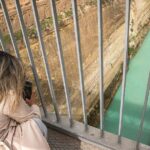
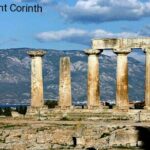
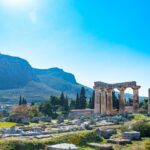
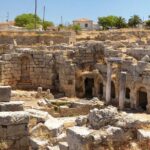
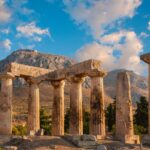
Day 1 is a strong “set the hook” day. You start at Ancient Corinth (Archaia Korinthos) and also see the Corinth Canal, a major engineering link between seas. The tour connects the modern landscape to the ancient one: Ancient Corinth is tied to St. Paul’s preaching in 52 AD, and you walk among ruins that help you picture why this place mattered.
Then comes a different kind of highlight: the Cog Railway (Odontotos) through the Vouraikos Gorge. This is one of the most scenic train rides in the region, traveling past cliffs, tunnels, waterfalls, and lush growth. The description is specific for a reason—you’ll feel like you’re riding through a film set built of stone, water, and forest.
After the train, you get the Cave of Lakes. It’s not just a random cave stop. This underground system has small and large lakes with colors that vary depending on oxides in the rocks. There’s also a “hanging bridge” and waterfalls that create that surreal corridor effect. If you like places where nature did the special effects, this is a top stop.
Practical note: the itinerary states that a few admissions may not be included (for example, the Ancient Corinth ticket is not included). Budget some extra for those site fees so the day doesn’t end with surprises.
Diakofto, Kalavryta, and ending the day with underground lakes
You also get a mini geography lesson built into the timing. The day uses Diakofto as a rail jump-off point, then connects onward so you can finish the day at Kalavryta before moving into the Cave of Lakes experience.
This matters because it turns what could be a “drive-by” region into a full circuit: gorge ride, town transition, cave walk, and then overnight in Dimitsana. Dimitsana is a change of pace after the busy ancient-and-train combo, so it works as a mental reset.
If you’re the kind of traveler who likes “one unforgettable thing per day,” Day 1 hits that goal. It also sets you up for the rest of the Peloponnese leg, where the tour keeps using dramatic settings—gorges, hill towns, and rock forts—to keep you from feeling like you’re just moving between museums.
Lousios Gorge monasteries and why the views matter here
Day 2 is where the trip stops being only about ancient capitals and starts feeling more like Greece in real time. After breakfast, you head to a path that leads to the Monastery of Agios Ioannis Prodromos (built in the 19th century). The walk isn’t just for exercise—it’s for the payoff. The route is designed so you reach the monastery and then look down toward the Lousios River.
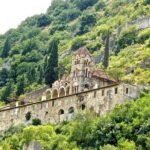
Then you continue to the Holy Monastery of the Philosopher, described as one of the oldest monasteries in Greece, with the older monastery tied to 963 and the newer built in 1691. Whether you’re religious or not, monasteries like this tend to land because they combine architecture with a “why here?” location choice—views, isolation, and the sense that people adapted their lives to the terrain.
After that, the tour drives you to Nafplio for overnight. Nafplio is one of those towns that’s enjoyable even if you’re tired, because you can walk by the coast, look out over the harbor, and feel like you’re in a real place rather than a staged stop.
Nafplio castle views, Mycenae’s Lion Gate, and Epidaurus scale
Day 3 starts with Nafplio on foot: a coastal walk, the Castle of the Town, and views over the small island of Bourtzi in the harbor. It’s the kind of break that helps you recharge before the ancient sites get serious.
Then you hit two heavyweight classics:
- Mycenae with the Gate of Lions and the Atreus King Tomb
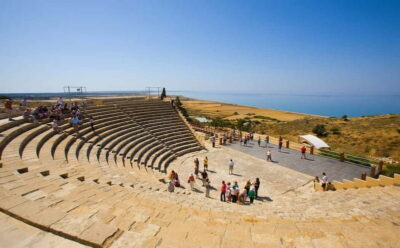
- Epidaurus and its Ancient Theatre for 15,000 spectators
These are not small stops. If you go in with even basic curiosity, both sites reward you quickly because the structure gives you clues. You can stand in the right spots and start imagining how these places functioned.
What I like about this tour’s approach is that it doesn’t throw you into everything all day long. You still get time to travel, and you end by driving to Sparta for check-in and a chance to relax.
One consideration: Epidaurus and Mycenae tickets are listed as not included, so plan for that cost. Also, this is one of the “big day” stretches where it’s smart to pace your photos and keep water handy.

Mystras, olive oil at the museum, and Monemvasia’s rock-fortress vibe
Day 4 has a strong “Byzantine and coastal fortresses” theme. You start with a stop at the Museum of Olive & Olive Oil, tied to a sacred Greek product. It’s a short education break that fits the region, especially if you’ve been eating olive oil your whole life but never connected it to how people historically treated food as identity.
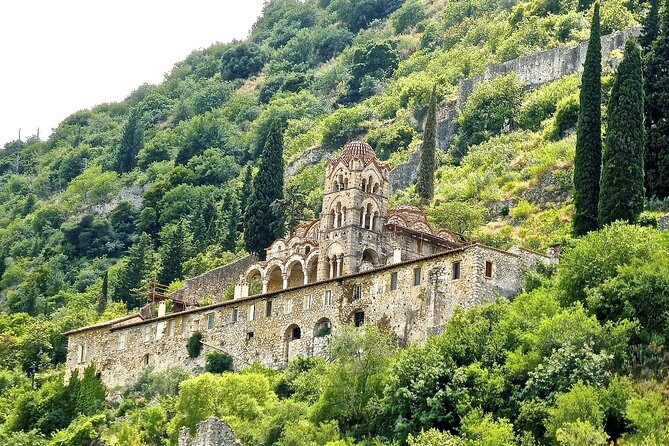
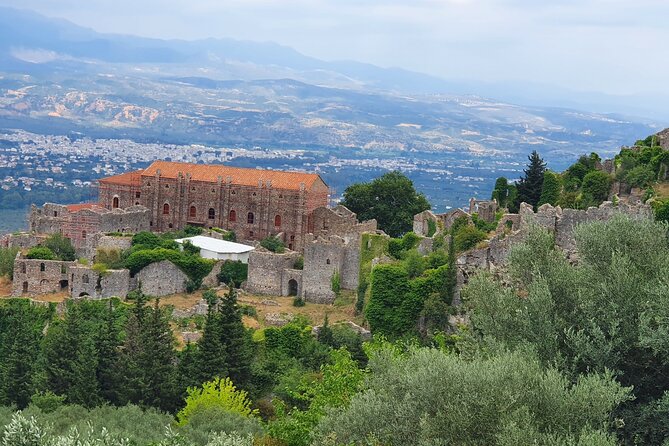
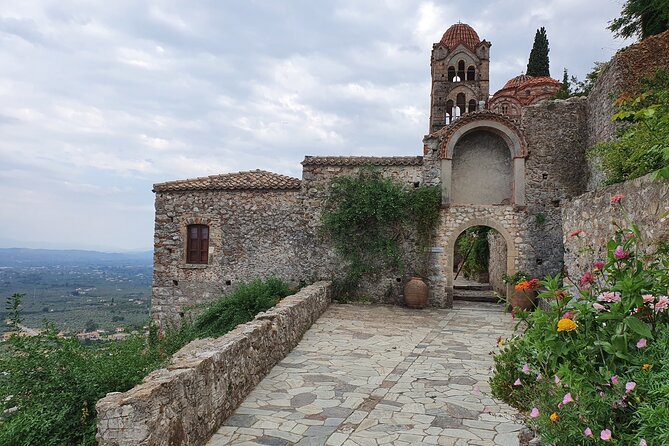
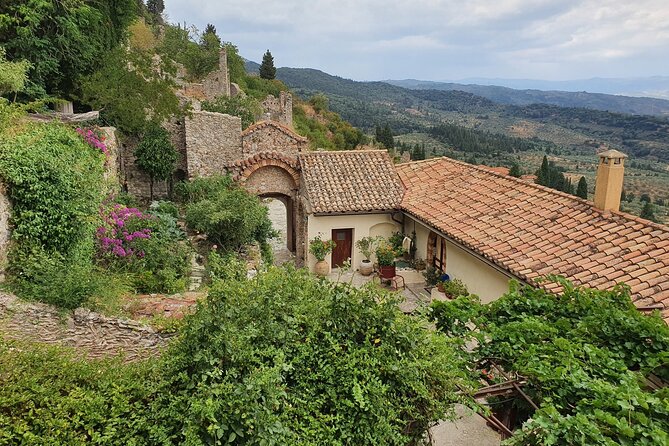
Then comes Mystras, the Byzantine town. You explore the Upper and Lower Town and several specific highlights: the Palace of the Despots (Anaktora), houses of Laskaris and Frangopoulos, the Cathedral of Saint Dimitrios, plus the Monasteries of Our Lady Pantánassa and Our Lady Perivleptos. The vibe here is “city of stone and silence,” and that theme shows up in the itinerary description: you’re meant to sense the grandeur through the walk.
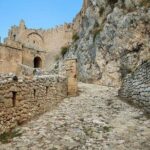
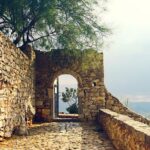
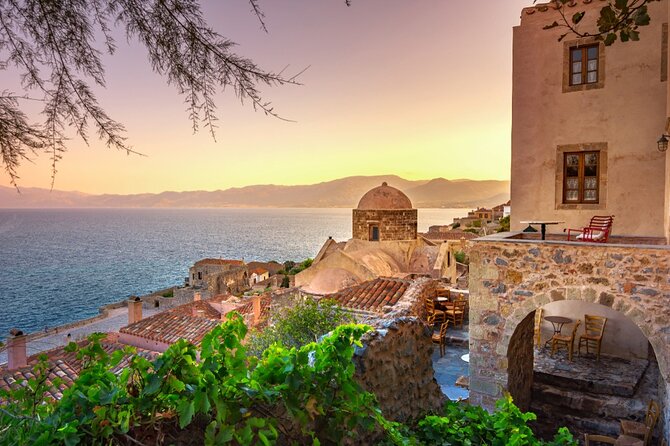
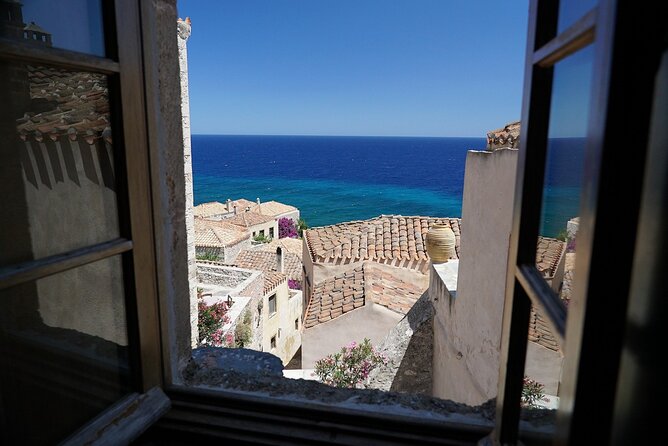
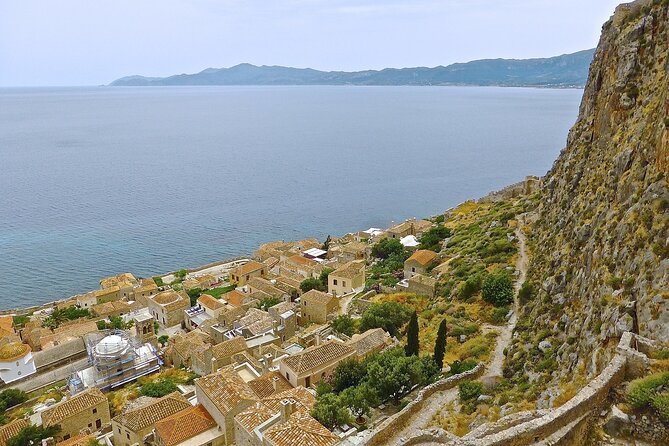
Next you head to Monemvasia, a medieval fortress-town carved into a massive rock by the sea. You’ll stroll narrow cobbled alleys, see centuries-old mansions, and Byzantine chapels. This is the part of the trip where you start enjoying the walking more than the facts, because the physical setting is the story.
The day ends back in the Sparta area for overnight, with an afternoon return that gives you time to decompress.
Diros Caves and the Kalamata coast: underground wonder and seaside life
Day 5 is split between Gytheio time and the Diros Caves. The itinerary gives you free time in Gytheio first, which I think is a smart move. It breaks up the day so the caves don’t feel like nonstop touring.
Diros Caves are described as an underground river system navigated by boat, moving among stalactites and stalagmites. They were once thought of as entrances to the underworld, which helps you frame what you’re seeing. Whether you buy the mythology or not, you can feel the “different world” effect instantly in a cave ride like this.
After the caves, you reach Kalamata for overnight. Kalamata is positioned as a coastal town with olive groves and seafront dining. It’s a good “recovery night” after cave time, because you can go easy the next morning.
Messene, Pylos, and Nestor: seeing the Mycenaean layer clearly
Day 6 is built around three stops that connect archaeology to the landscape. You start with Ancient Messene, a UNESCO monument founded on the 4th century B.C. by Epaminondas. The itinerary emphasizes that it’s built at one side of the Messenian valley, which is exactly the sort of placement that gives a site power—you can’t ignore the location.
Next is Pylos, with its natural harbor and naval history. There’s time for an optional lunch with views over Bay of Navarino, plus a stroll through the main square and that relaxed seaside feel.
Then you go to the Palace of Nestor, described as one of the best-preserved Mycenaean palaces in Greece. The itinerary points out original frescoes and links the palace to myths connected to Homer’s epics. If you like when a site “explains itself” through preserved details, this is a strong capstone stop.
You end in Olympia for overnight.
Olympia: the Olympic Games birthplace, plus a tasting break
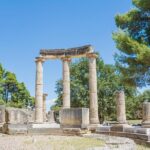
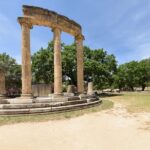
Day 7 focuses on Ancient Olympia, and it’s thorough in a way that matters. You visit the lush valley setting by the Alfios River, tied to the first Olympic Games in 776 B.C. You also see the Temple of Zeus, connected to the gold and ivory statue dedicated to Zeus, described as one of the seven wonders of the ancient world.
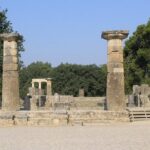
From there you also visit the Temple of Hera, the shrine of Pelops, the Council house where athletes took the Olympic oath, the Treasury houses, the Gymnasium and Palestra, and finally the stadium. That sequence helps you understand that Olympia wasn’t just one building—it was a working sports and worship complex.
After the heavy walking, the tour adds lighter, tasty stops:
- Market of Ancient Olympia, with olive oil and wine tasting
- Klio’s Honey Farm for coffee/juice and hand-made desserts featuring honey produced at the farm
Then there’s a short stop at Nafpaktos (Naupactus) by the Venetian Castle and port for lunch time before continuing to Delphi for overnight.
This is one of the most “real Greece” mixes on the route: monuments first, then food moments that don’t feel like filler.
Delphi’s oracle day, Arachova cheese stops, and reaching Meteora at golden hour
Day 8 begins at Delphi: the archaeological site and the Archaeological Museum. The itinerary highlights the Ancient Oracle, the stadium, the Ancient Theatre (described as seating more than 5,000), and the museum’s Charioteer bronze statue. Delphi is presented as best known for the oracle at the Apollo sanctuary during the classical period.
Then you head to Arachova, a mountainous village around 1,000 meters altitude, framed as a winter destination with a strong traditional feel. There’s time for coffee or lunch, and yes, you’re encouraged to try the local cheese formaela in its common forms.
After that, it’s drive time through central Greece and a quick stop in Trikala before you reach Kalambaka. You check in, then the tour watches sunset at Meteora around the rocks. This is a big deal because Meteora isn’t just “pretty cliffs.” The monasteries sit on top of towering stone, so seeing them in shifting light changes the whole perception of height and isolation.
Meteora monasteries: two visits plus a traditional lunch in Kalambaka
Day 9 is the Meteora day in full. You start at 09:00 and visit UNESCO-listed Byzantine monasteries:
- Holy Monastery of Great Meteoro, described as the biggest and oldest, built on the “suspended in the air” rock formation
- Monastery of Varlaam, founded in the 16th century and located at about 380m height
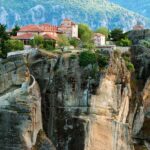
The tour ends in Kalambaka with a traditional Greek lunch. If you like moments where nature and faith architecture share the same space, Meteora is built for you. The rock formations are the stage, and the monasteries are the story. A sunset tour the previous evening plus the next-morning monastery visit means you’re seeing the same place in different moods.
Thermopylae and the Athens drop-off: a final Sparta-to-Athens thread
After Meteora, the tour heads back to Athens with a quick stop at Thermopylae. You’ll see the statue of Leonidas, described as a memorial of the Battle of the 300 Spartans against thousands of soldiers of the Persian Empire. It’s short, but it works as a closing beat after the Sparta content earlier in the week.
Then you’re dropped at your Athens hotel.
Price and value: what $4,855.75 per person is buying you
At $4,855.75 per person for 9 days, this is not a budget trip. You’re paying for private transport, accommodation for 8 nights, breakfast, and several built-in “experience” elements—especially the Olympia tastings and the Meteora sunset included tour.
Here’s where the value really comes from:
- You get the convenience of a private car and an English-speaking driver, which matters a lot when you’re hopping across regions.
- You’re not just seeing “ruins.” The day structure includes food tastings and specific activities like the Cave of Lakes and Diros Caves.
- It’s designed for group comfort. In past trips, people noted vehicles like a Mercedes van and hotels along the route that felt more boutique than bare-bones.
What to watch:
- Hotel city tax is listed as an extra €40 per person for the 4-star category.
- Many admissions are not included, so your total on-the-ground spend will likely be higher than you expect if you’re assuming everything is covered.
- If you want heavy, site-by-site narration, note that local guides are not listed as included. Also, one review experience called out that there were no audio guides at the sites. So if you’re the type who wants constant commentary, plan to rely on your driver or consider paying for local specialists when needed.
The comfort and pace that make-or-break this kind of itinerary
This route is big. You’ll be on the road often, and some days compress multiple highlights. The private format helps, and driver quality is a real factor.
In the reviews, drivers like Spyros and Panos are praised not just for safe driving, but for adding context and making practical choices—where to eat, how to work around timing, and extra insights while traveling. That turns the “drive day” into part of the experience rather than just downtime.
Hotels and van comfort also help you keep going. One review singled out a comfortable vehicle and boutique-style accommodation along the way. That matters because tired legs make ancient sites feel harder, not more fun.
If you like a plan that’s full but not chaotic, this is a good match. If you want slow mornings every day and long standalone wandering, you’ll want to choose a different style of tour.
Who this tour suits best
This is a strong fit if:
- You want private comfort with an English-speaking driver and fewer logistics headaches.
- You care about major classical sites plus the signature spiritual architecture of Meteora.
- You like food-linked stops like olive oil/wine tasting and honey farm breaks.
- You’re okay with paying some extra for site admissions.
It might feel less ideal if:
- You’re trying to do Greece on a strict budget.
- You dislike underground cave experiences (the itinerary includes both the Cave of Lakes and Diros Caves).
- You need constant guided narration at every single stop, since local guides and audio guidance aren’t guaranteed in what’s included.
Should you book this Ancient Peloponnese and Meteora tour?
I’d book it if you want a one-trip overview that still includes real, specific experiences—train through the gorge, underground lakes, monasteries on cliff tops, plus the big ancient anchors of the region. The private driver format is the main reason this itinerary works: it reduces friction and lets you enjoy the journey, not just collect timestamps.
If admissions are a concern for you, do a quick budget check before you commit. And if you want deeper explanations than what a driver can cover between stops, plan on hiring local specialists at a couple of the sites that matter most to you.
Overall, this is the kind of tour that makes Greece history feel connected: Corinth to Mycenae to Olympia to Delphi, then up to Meteora for the spiritual punctuation—and finally back down to Athens.