REVIEW · ATHENS
Ancient Agora: E-Ticket w/Treasure Hunt Tour on your phone
Book on GetYourGuide →Operated by Narratologies · Bookable on GetYourGuide
Ancient Agora, but make it a game. This e-ticket + phone treasure hunt helps you slip past ticket lines and get moving fast, then learn as you solve riddles around the Agora and Temple of Hephaestus. I especially like that it turns big ideas like democracy into something your family can actively chase instead of just read.
My second favorite part is the phone-driven format. You and kids can team up in the app to find stories, answer questions, and keep momentum without needing a live guide to manage attention.
One thing to consider: the finish-and-reward moment may not fully satisfy every kid. One recent comment flagged that the online gift option felt a bit underwhelming for the effort kids put into the hunt.
In This Review
- Key points I’d plan around
- Entering The Ancient Agora with an E-Ticket and Phone App
- E-Ticket Setup: What You’ll Want to Do Before You Go
- Your 1.5-Hour Mission: How the Treasure Hunt Runs On-Site
- Temple of Hephaestus and the Agora: The Start of Your Story
- The Stoa of Attalos: Where Learning Feels Concrete
- Democracy, Philosophy, and Riddles That Keep Momentum
- Views Over Athens: Acropolis, Lycabettus Hill, and the City Below
- Gems and Online Rewards: Fun During the Hunt, Mixed at the Finish
- Price and Value: Is $28.22 Worth It?
- Logistics That Matter (and What to Do With Them)
- Who This Is Best For
- Should You Book the Ancient Agora E-Ticket and Treasure Hunt?
- FAQ
- How long is the Ancient Agora treasure hunt experience?
- Does it include the entry ticket to the Ancient Agora?
- Is there a live guide during the activity?
- Where do we start, and where does it end?
- What do I need to bring?
- Can I cancel, and do I pay right away?
Key points I’d plan around
- Skip-the-line entry: e-tickets arrive by email, so you’re ready to enter through the site process without extra waiting.
- Family-friendly puzzle format: the treasure hunt is built for kids and adults to solve together.
- Philosophy + democracy theme: you’re not just wandering; you’re working through a mission about ancient Greek ideas.
- Iconic Agora monuments on the route: you’ll hit key spots like the Stoa of Attalos.
- Great Athens views as a payoff: you get perspectives toward the Acropolis and Lycabettus Hill.
- Gems-and-redeem rewards: you collect gems during the hunt and redeem them online for gifts that support sustainability, empowerment, and innovation.
Entering The Ancient Agora with an E-Ticket and Phone App
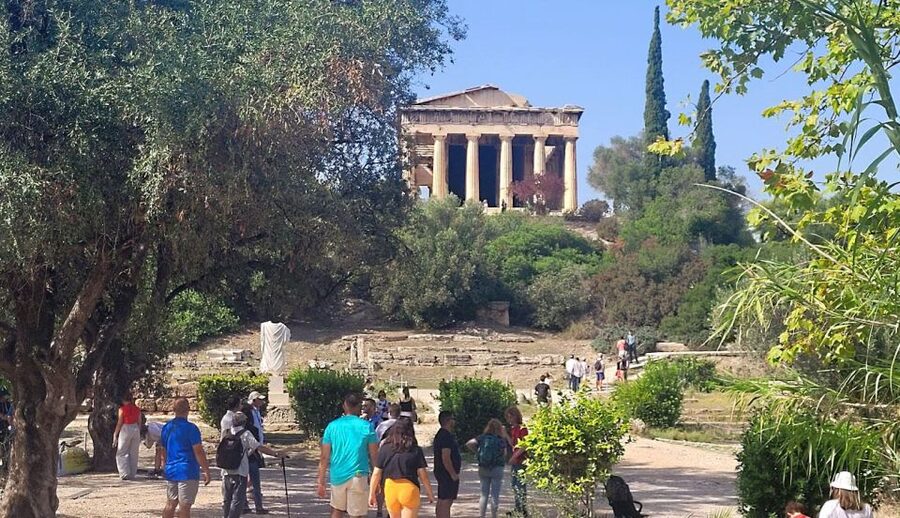
This is the kind of tour that respects your time. Instead of building your day around long lines, you get an entry ticket sent to your email and use it to get into the Ancient Agora Archaeological Site. Once you’re inside, you press start on your phone and the hunt takes over.
The practical magic here is that the experience is light on logistics. You don’t need to meet a guide at a set time and wait for the group to gather. You start at the ticket office of the Archaeological Site of the Ancient Agora, then the app leads your party through the monuments at your pace.
Two small prep tips make a big difference:
- Bring a charged smartphone. You’ll need it for the hunt and app interaction.
- Download the treasure hunt app in advance. Internet signal around archaeological sites can be weak, so you don’t want your game to hiccup mid-mission.
A few more Athens tours and experiences worth a look


E-Ticket Setup: What You’ll Want to Do Before You Go
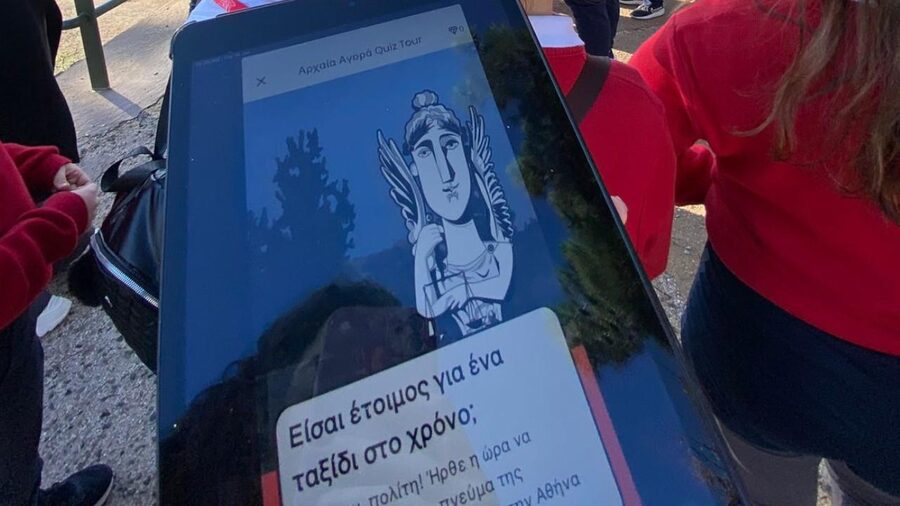
After booking, you’ll receive an email with information, your e-ticket, and a link to download the treasure hunt app. Check your spam folder just in case. Then give yourself enough time before your visit to load everything onto your phone.
This is one of those tours where a little homework turns into a smoother day. If you wait until you’re at the site to download the app, you might lose time or end up stressed if the connection is spotty.
Also, keep IDs ready. You’ll want to bring passport or ID card for you, and passport or ID card for children. That’s especially important for families, since the site experience is set up as a family activity and you don’t want any last-minute surprises at entry.
Your 1.5-Hour Mission: How the Treasure Hunt Runs On-Site
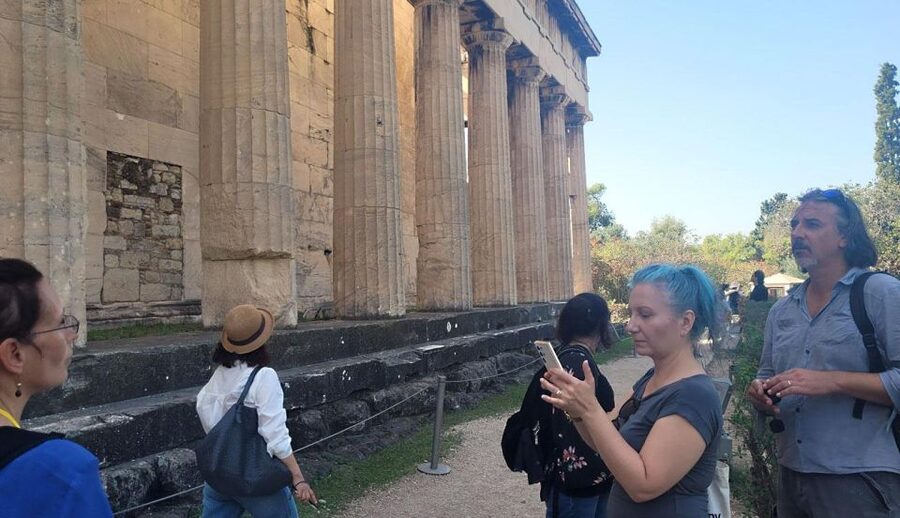
The total duration is about 1.5 hours, with starting times shown when you check availability. After you enter, you’ll start the adventure inside and follow the app’s prompts as you explore.
Think of it as a guided experience without a person guiding. The app handles the pacing and the “what now?” moments, while you handle the walking and the fun.
During the hunt, you’ll:
- Explore Agora monuments (including major stops like the Stoa of Attalos)
- Solve riddles linked to the site and its stories
- Collect gems along the way
- Complete your mission and claim your well-deserved reward
What makes this work well for families is that it gives kids a job. Instead of asking them to stay quiet while adults take in ruins, it turns their curiosity into a checklist. Adults also tend to enjoy it because you’re learning as you move, not learning after you’re tired.
Temple of Hephaestus and the Agora: The Start of Your Story

Your hunt is designed around the Agora area and the Temple of Hephaestus. Even if you’ve been to other ancient sites before, this area has a special feel: it’s the kind of place where you can connect physical remains to ideas people argued about thousands of years ago.
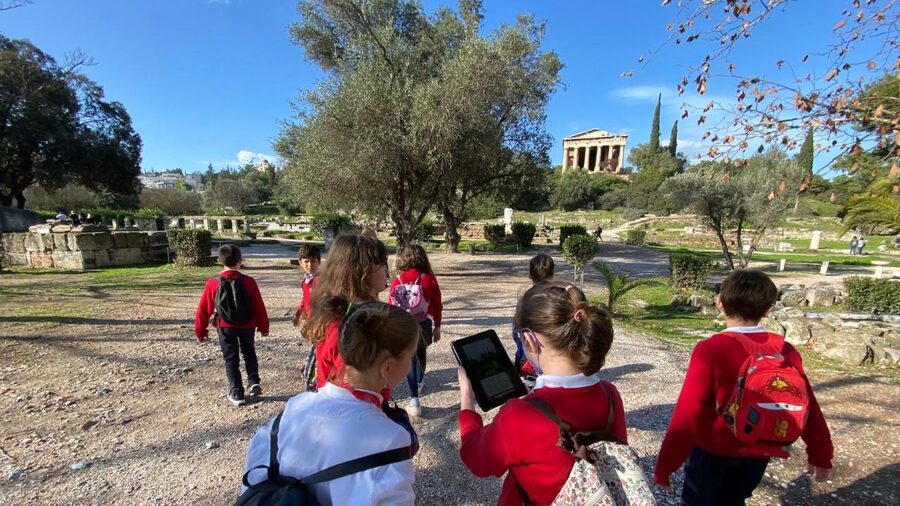
As you start, you’re essentially switching from sightseeing mode to problem-solving mode. The app’s prompts are where the learning happens. You’ll meet ancient philosophers in the app and help a Spirit of Democracy succeed in Athens.
That matters because it reframes the ruins. You’re not just looking at stone. You’re tracking a mission built around ancient Greek philosophy and democracy, with answers tied to what you’re seeing around you.
Practical note: since this is self-guided, you can slow down at parts that grab you and move faster through spots that don’t. If you have a slower-moving child, you can stretch the route within the 1.5-hour window more comfortably than you could on a strict walking tour.
The Stoa of Attalos: Where Learning Feels Concrete
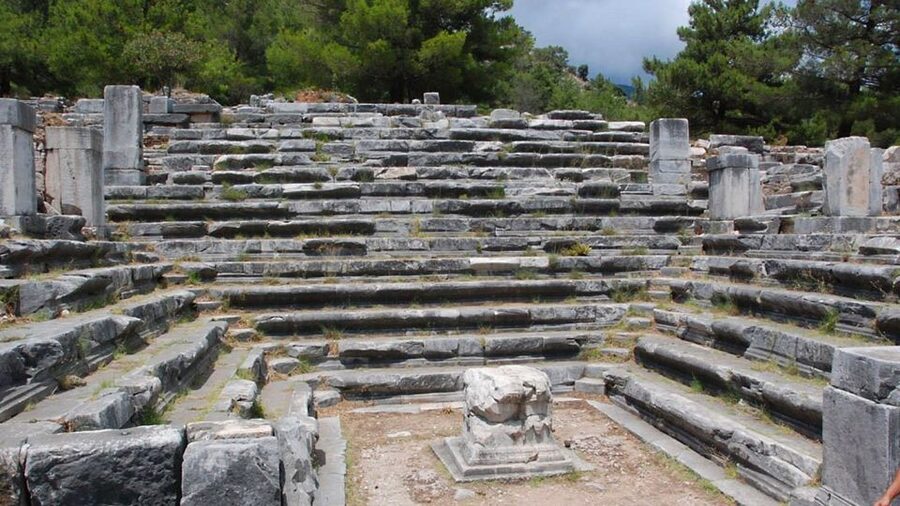
One of the best-known architectural landmarks in the Agora is the Stoa of Attalos, and it’s specifically called out as part of the exploration. This kind of place is perfect for a hunt format because a stoa isn’t just “old stuff.” It’s an actual structure that helps you understand how people gathered, moved, and talked in public spaces.
On a regular visit, the Stoa might be a stop where you pause for photos and move on. In this treasure hunt, you’re more likely to linger because you’re hunting for the information and solving the riddles that connect the structure to the mission.
For you, that means you’ll probably leave with clearer mental images. You’ll remember not only what the building looks like, but why it matters to the story the app is telling—especially when the app ties your questions to ancient ideas.





Democracy, Philosophy, and Riddles That Keep Momentum

The strongest theme here is education through play. The app’s mission puts ancient Greek philosophy and democracy front and center, and the riddles keep you from drifting into passive “ruins fatigue.”
If you’ve ever done a museum-style tour with kids, you know the issue: attention is short, and the learning needs to feel interactive. This format helps because:
- The game gives immediate goals
- The answers come from looking at the surroundings
- The mission builds in a sense of progress
I also like that it’s described as suitable for all ages. That doesn’t mean every activity will feel equally exciting to every child, but it does suggest the app experience isn’t only for older kids.
And if your group is mixed—say, teens who want speed and younger kids who want repetition—you can usually keep everyone involved because the app keeps presenting small challenges rather than a single long lecture.
Views Over Athens: Acropolis, Lycabettus Hill, and the City Below

As you work your way around the Agora monuments, you’ll get “bonus” payoff: incredible views toward the Acropolis and Lycabettus Hill, plus Athens at large.
Those views matter more than you might think. Ruin sites can sometimes feel flat—just stone and shadows—unless you can connect them to the modern city around them. When you catch the sightlines toward big landmarks, the whole area starts to make sense. It’s easier to picture where people lived, argued, and traveled.
This also helps the family pacing. If kids need a break from problem-solving, a quick look out toward the Acropolis is a natural reset button. You get a moment of wonder without losing the flow of the hunt.
Gems and Online Rewards: Fun During the Hunt, Mixed at the Finish
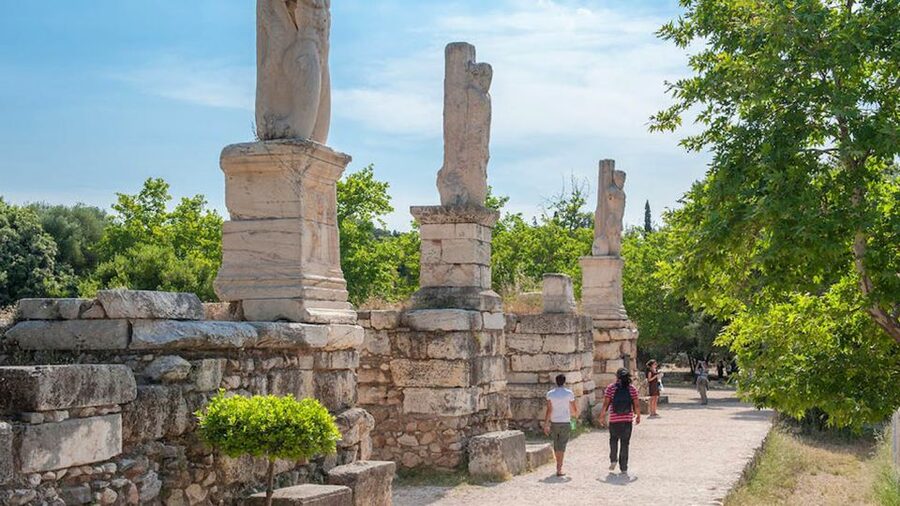
The hunt includes collecting gems as you complete tasks. The gems are redeemable online for gifts that support sustainability, empowerment, and innovation.
This can be a win for families because it extends the excitement a bit beyond the ruins. Instead of the hunt ending with a single moment and a photo, the reward system gives a second chance to keep the experience going.
That said, one drawback showed up in the feedback: the gift itself might not feel satisfying enough for the work kids do to finish the hunt. If you’re booking for very gift-motivated kids, it’s worth mentally framing the reward as an add-on rather than the main event.
My advice: treat the experience as the reward. The walking, solving, and learning are the reason you’re here. The redeemable gifts are a bonus on top.
Price and Value: Is $28.22 Worth It?
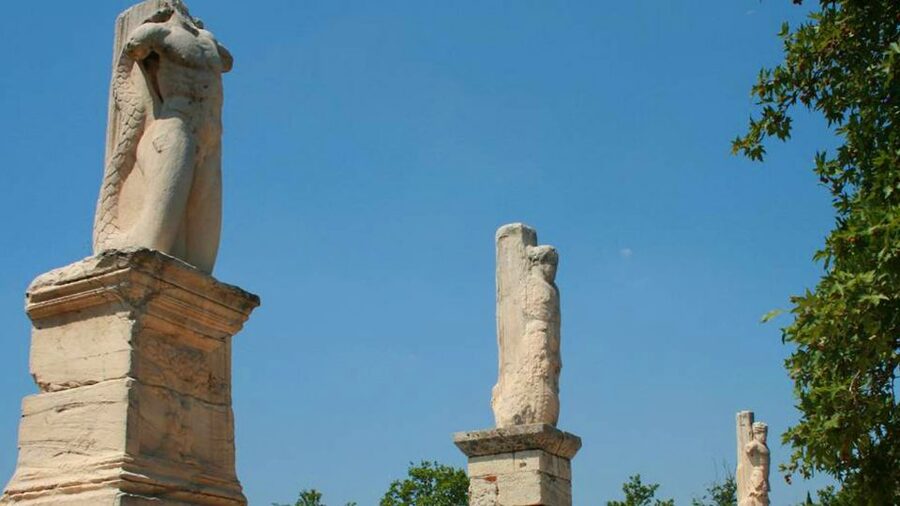
At about $28.22 per person, this is priced like a smart add-on for families who want entry and an activity in one package. What you’re paying for isn’t a live guide. It’s:
- Entry ticket to the Ancient Agora Archaeological Site
- A self-guided treasure hunt with stories and riddles
- Gems redeemable online for gifts connected to sustainability, empowerment, and innovation
- The skip-the-line benefit via e-ticket
For value, the big question is: will your group actually enjoy a puzzle-based format? If yes, then the price starts to look very reasonable because it buys your family time and attention. Kids stay engaged, adults get guided learning prompts, and you don’t need to coordinate a guide schedule.
If your group prefers a purely narrative tour with lots of spoken explanation, you may feel the lack of a live guide. The app can be fun, but it won’t replace deep, spontaneous answers you might ask a real person.
Logistics That Matter (and What to Do With Them)
This activity starts at the ticket office of the Ancient Agora Archaeological Site and ends back at the meeting point. That helps you plan your next move, since you’re not dropped somewhere far away after the experience.
It’s also offered as a private group. Even though the core experience is self-guided on your phone, “private group” typically means your party is not mixed into someone else’s tour dynamic. If you’re traveling with family and want your own rhythm, that’s a plus.
One more thing to plan: phone signal and batteries. Since you’re relying on a smartphone app during the site visit, bring a charged device and don’t count on strong connectivity.
Who This Is Best For
I think this is a strong match for:
- Families with kids who need a reason to keep moving and looking
- Parents who want a learning experience without constant shushing
- Groups who like flexible pacing and don’t want to wait on a guide
It may be less ideal if:
- Your group wants a live guide to explain context in depth
- You’re traveling with people who dislike phone-based activities
- You expect the reward at the end to be a major highlight
Should You Book the Ancient Agora E-Ticket and Treasure Hunt?
Book it if you want Ancient Agora to feel like an adventure, not a long museum lesson. The skip-the-line e-ticket is a practical win, and the riddle-based app keeps the focus on learning while you move through the most memorable parts of the site like the Temple of Hephaestus area and the Stoa of Attalos.
Hold off or pair it with something else if you strongly prefer human interpretation or if your group will only enjoy activities with minimal screen time. And if your kids are very reward-driven, keep expectations realistic about the final gift.
Overall, this is one of those smart family-friendly ways to see the Ancient Agora: you get entry, structure, and a mission in about 90 minutes—plus views toward the Acropolis and Lycabettus Hill that make the walk feel worth it.
FAQ
How long is the Ancient Agora treasure hunt experience?
It lasts about 1.5 hours. Starting times vary, so check availability for the schedule.
Does it include the entry ticket to the Ancient Agora?
Yes. Your purchase includes an entry ticket to the Ancient Agora Archaeological Site.
Is there a live guide during the activity?
No. The activity is self-guided with a treasure hunt on your phone, and it does not include a live guide.
Where do we start, and where does it end?
You start by going to the ticket office of the Ancient Agora Archaeological Site. The activity ends back at the meeting point.
What do I need to bring?
Bring a passport or ID card (including for children) and a charged smartphone.
Can I cancel, and do I pay right away?
You can cancel up to 24 hours in advance for a full refund. You can also reserve now and pay later.