REVIEW · ATHENS
Ancient Agora of Athens Site & Museum Private Tour
Book on Viator →Operated by Let's Book Travel · Bookable on Viator
The Agora feels alive with a real guide. This private visit through Athens’ Ancient Agora and its museum gives you a smart way to make sense of what you’re seeing, without getting stuck reading placards like a robot. You get a local, English-speaking guide, plus site and museum admissions so you’re not juggling extra stops or surprise costs.
I really like that the tour is private and can be tailored to your group’s pace and interests. I also like the practical setup: admission tickets to both the archaeological site and the museum are included, which keeps the day smooth.
One thing to consider: at this price point, you should confirm you’re comfortable with a 2-hour format. If you want a long, slow wander with lots of open-ended time, you may feel a bit time-boxed.
In This Review
- Key things to know before you go
- Ancient Agora in 2 Hours: a smart Athens pairing
- Ancient Agora Walk: Panathenaic Way and Sacred Landmarks
- Temple of Hephaestus (Thisio): the view and the worship story
- Museum of the Ancient Agora: the Stoa of Attalos and what you’ll actually see
- Price and value: what you’re paying for at $263.15
- Tickets, timing, and the e-ticket scan reality
- Who this tour is best for
- Practical pairing tips for Athens
- Should you book this private Ancient Agora tour?
- FAQ
- How long is the Ancient Agora of Athens site and museum private tour?
- Is this tour private or group-based?
- What language is the tour offered in?
- Does the price include admission tickets?
- What are the main stops on the tour?
- Is the museum included, or only the outdoor site?
- Are tickets also required for the Temple of Hephaestus area?
- How far in advance should I book?
- Are service animals allowed?
- What are my options if I need to cancel?
- Do I need to pay gratuities?
Key things to know before you go
- A private guide means pace control: you can move faster at the highlights or slow down where your group cares most.
- Tickets are part of the package: Agora site and the Ancient Agora Museum admissions are included.
- You’ll walk a real processional route: the Panathenaic Way is central to how the Agora connects to the Acropolis.
- Hephaestus isn’t just a temple stop: it comes with clear context on who was worshipped there.
- Museum time matters here: the Stoa of Attalos building helps you understand the finds in place.
- Do a quick e-ticket check before you arrive: you’ll want your proof ready to scan at the site.
Ancient Agora in 2 Hours: a smart Athens pairing
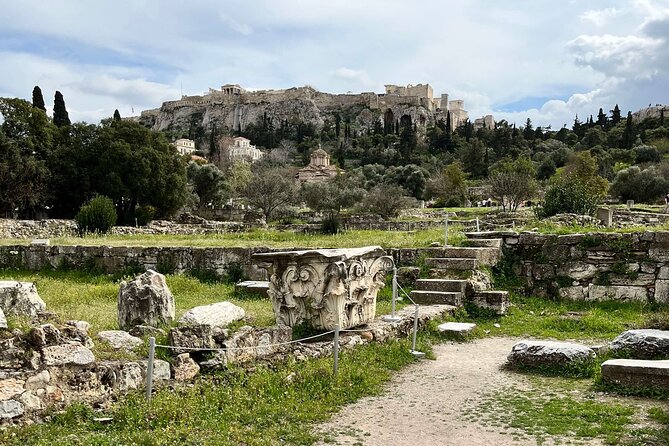
Athens has a lot of “ancient things.” The Ancient Agora is different because it’s not just scattered ruins. It’s a flat, walkable area with big geographic clues—things like the Sacred Rock of the Acropolis, the hill of Areopagus, and the hill of Kolonos Agoraios—that help you picture how the city worked.
This tour gives you a focused 2-hour window to connect those clues. You’ll start outdoors, move into the best-preserved temple in the area (the Temple of Hephaestus), and finish inside the reconstructed Stoa of Attalos at the museum. It’s a clean arc: streets and city life outside, artifacts and context inside.
I like that the guide approach keeps things moving but not shallow. You’re not relying on dry guidebook reading. Instead, you get explanations aimed at what you can see right now. That matters in archaeological sites, where the stones can look similar unless someone helps you match the dots.
You can also read our reviews of more private tours in Athens

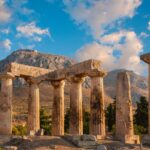
Ancient Agora Walk: Panathenaic Way and Sacred Landmarks
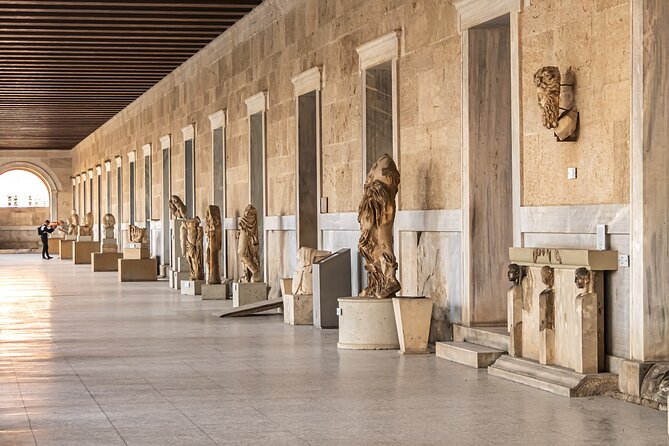
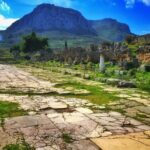
Your first stop is the Ancient Agora archaeological area, a flat space defined by the surrounding “edges” of landscape. The guide’s job here is gold: they help you understand why this space mattered and how it was used.
Here’s what you’ll be visualizing as you walk:
- The Agora sits between major features like the Sacred Rock of the Acropolis and the Areopagus hill to the south.
- It connects westward to Kolonos Agoraios.
- One of the most important ancient roads crosses the area: the Panathenaic Way.
That Panathenaic Way isn’t just a road in name. It was the processional route for the Panathenaic festival parade, held in honor of Athena, the city’s patron goddess. Even if you don’t know the festival details yet, you’ll feel the logic: this was the kind of place where big civic events moved people across the city.
Two practical benefits to this start:
- You’re outdoors, so it’s easier to orient yourself quickly.
- The story ties directly to the Acropolis—so you don’t just see “Athens ruins,” you see connections.
If your schedule allows, I’d strongly consider doing the Agora before you tackle the Acropolis. The reason is simple: once you grasp how the Panathenaic procession links the city to Athena’s center, the Acropolis sites feel less random and more intentional. You’ll likely get more meaning out of both days.
Temple of Hephaestus (Thisio): the view and the worship story
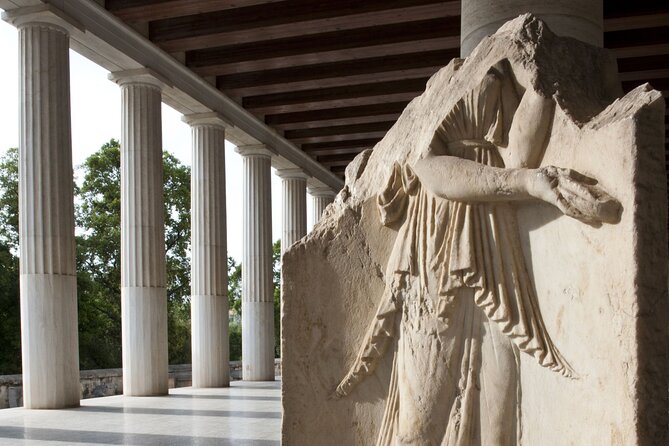
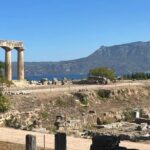
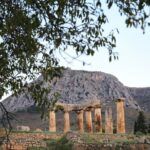
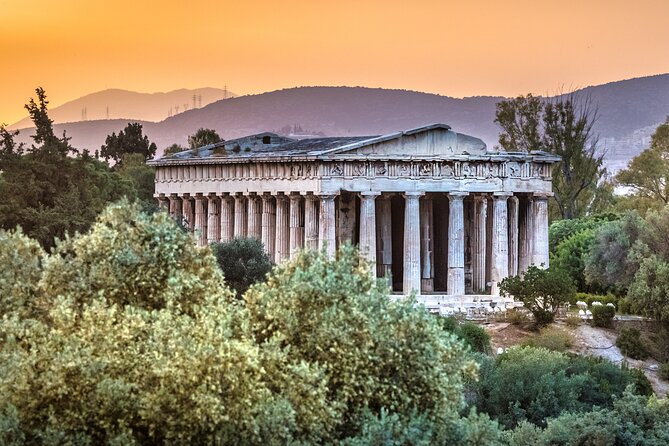
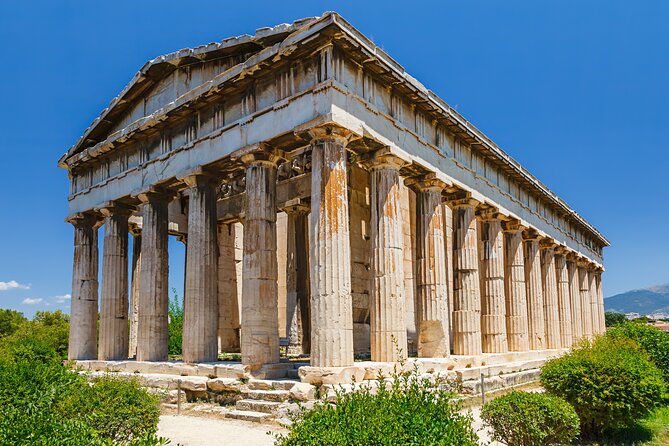
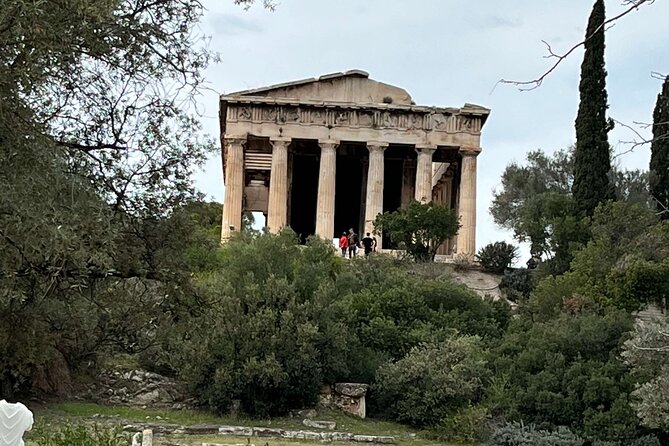
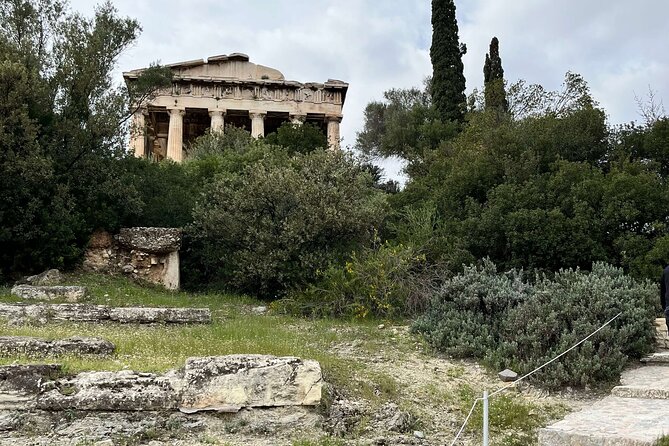
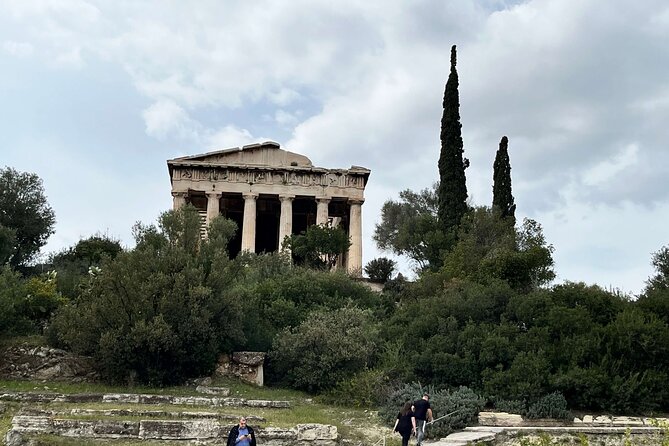
Next comes the Temple of Hephaestus, commonly known as Thisio. It sits on top of Agoraios Kolonos hill, and it’s one of the best-preserved ancient temples in Athens. A big reason is that it was transformed into a Christian church at some point in its long life. That kind of reuse helped preserve the structure when many other sites didn’t survive as well.
This stop is a strong mix of practical sight and solid story. From here, you’ll get a great view over the area, and that helps you understand what it meant to build a temple like this on a rise. It’s not just “pretty columns.” It’s a landmark that changes how you interpret the Agora below it.
The guide will also likely explain the worship context tied to the site. In descriptions attributed to Pausanias, two deities were jointly worshipped here:
- Hephaestus, protector of metallurgists
- Athena Ergani, connected to potters and cottage industries
A key detail that helps this make sense: the temple’s identification as a worship site for Hephaestus was reinforced by archaeological findings that pointed to nearby metallurgy workshops in the wider area. Earlier theories floated other names, including Theseus, Hercules, or Aris (Mars), but the metallurgy clues tipped the scale.
Why this matters for you: if you’re the type who likes to know what a place is “for,” this stop delivers. You’ll leave with a more specific mental picture than you’d get from looking at columns alone.
Museum of the Ancient Agora: the Stoa of Attalos and what you’ll actually see
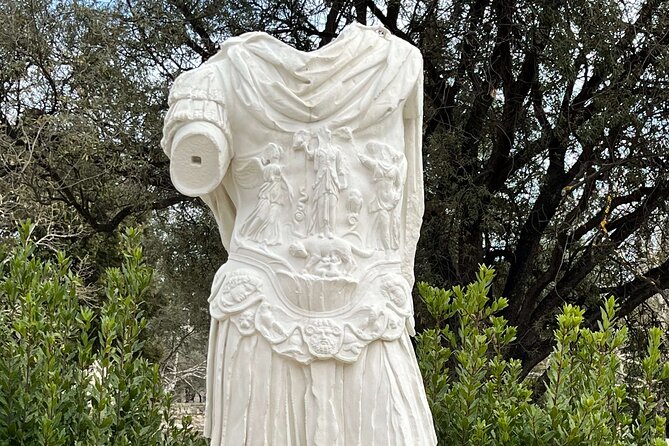
After the outdoor walking, the Ancient Agora Museum gives your brain something concrete: objects and evidence that match the city around you.
The museum is housed in the reconstructed Stoa of Attalos, originally built in the 2nd century BC as a gift to Athens from Attalos II, king of Pergamon. That’s more than trivia. When the building itself is part of the story, you tend to pay more attention to how the space was used and how people moved through it.
Inside, the exhibition includes archaeological finds from systematic excavations in the area, covering periods from the Neolithic all the way through Post-byzantine and Ottoman times. That time range is useful even if you’re mostly there for classical Greece. It quietly reminds you the Agora didn’t stop being important after ancient Athens. Layers of later life kept happening here.
In practical terms, you’ll get more out of the museum if you’ve already walked the site first. Seeing the Agora outdoors sets up the questions, and the museum answers them with objects. I like that this tour doesn’t separate those two parts into unrelated stops.
Price and value: what you’re paying for at $263.15
At $263.15 per person for about 2 hours, this tour sits in the “private guided time” range, not the “budget group bus” range. So the question isn’t just what the price is. It’s what you’re buying.
You’re buying:
- A private experience, not a standard scripted group walk
- An official licensed local guide
- Admission tickets to both the Agora archaeological site and the museum
- A schedule designed to be easy to pair with more Athens sightseeing
For many people, that ticket inclusion is where value shows up. Archaeological sites can be expensive add-ons, and it’s easy to lose time and energy when tickets become a separate task. Here, you’re supposed to walk in with what you need.
Also, the private aspect helps with realism. Athens ruin-walking rewards attention, not speed. If you have kids, a slower group, or just people who want to ask questions, a private guide tends to feel like less of a hassle and more like a conversation with someone who knows how to point out what you’d miss on your own.
You can also read our reviews of more museum experiences in Athens




Tickets, timing, and the e-ticket scan reality
This experience includes admissions, which is great. But the success of that experience often comes down to one unglamorous detail: having your e-ticket proof ready when you arrive.
From the good experiences, the pattern is clear: e-tickets arrive in time to use at the Ancient Agora, and the admission access can cover both the archaeological site and the museum. That’s exactly what you want—scan once, then keep going.
From the bad experiences, there’s also a lesson. If your voucher email lands in spam, doesn’t show up at all, or you’re missing the ticket on arrival, you can end up having to buy new entry at the gate. Nobody wants that extra expense or the lost time.
Here’s the practical fix I recommend:
- Check your inbox and spam folder the day before the tour.
- Take a screenshot or save the email offline.
- Make sure the email address on your booking is correct.
This is not about blaming anyone. It’s about protecting your day. Athens will happily keep going while you chase an inbox problem.
Who this tour is best for
This tour tends to fit well if:
- You want a guided experience that explains what you see instead of sending you off with a map.
- Your group includes mixed ages and you’d like the pace adjusted.
- You want a tight 2-hour plan that still feels meaningful.
- You care about temple context and civic life, not just photos.
It may be less ideal if:
- You want half a day of wandering without structure.
- Your group wants super deep technical archaeology detail for every stop. (This tour is timed, so there’s a limit to how long you can linger at any one spot.)
Practical pairing tips for Athens
The Agora naturally connects to the Acropolis story because the Panathenaic festival link is the whole point of the geography. So if you’re planning your day, think about doing the Agora first or earlier in the sequence.
A good planning rhythm can look like:
- Morning or early afternoon: Agora + Temple of Hephaestus for views and orientation.
- Later: Acropolis sites while the procession story is still fresh.
Also, the site area is generally easy to move through since it’s described as a flat area. That makes the 2-hour format feel manageable even if you’re not chasing a “marathon” Athens day.
Should you book this private Ancient Agora tour?
Yes, if you want a smart, time-friendly guided experience that connects streets, temples, and artifacts into one story. The value is strongest when you care about having tickets included and having a licensed guide translate the stones into meaning.
I’d especially book it if you like structure but don’t want a rigid, “read this paragraph” approach. The Agora works best when someone helps you visualize how the Panathenaic route and the major surrounding hills shape daily life and big civic ceremonies.
Skip it only if you’re truly happy piecing it together solo with a map and you plan to spend more than 2 hours on site. Otherwise, this is a solid Athens plan that feels efficient without feeling rushed.
FAQ
How long is the Ancient Agora of Athens site and museum private tour?
It runs for about 2 hours.
Is this tour private or group-based?
It is a private experience.
What language is the tour offered in?
The tour is offered in English.
Does the price include admission tickets?
Yes. Admission tickets to both the Ancient Agora archaeological site and the Ancient Agora Museum are included.
What are the main stops on the tour?
You’ll visit the Ancient Agora site, the Temple of Hephaestus (Thisio), and the Museum of the Ancient Agora.
Is the museum included, or only the outdoor site?
The museum is included, with about 1 hour for the museum visit.
Are tickets also required for the Temple of Hephaestus area?
The tour includes the site admission, which covers your time at the Ancient Agora area that includes this stop.
How far in advance should I book?
On average, this tour is booked about 45 days in advance.
Are service animals allowed?
Yes, service animals are allowed.
What are my options if I need to cancel?
You can cancel up to 24 hours in advance for a full refund.
Do I need to pay gratuities?
Gratuities are not included, so tipping is optional.