REVIEW · ROME
Ancient Mosaic Workshop in Rome
Book on Viator →Operated by Studio Cassio - Arte del Mosaico · Bookable on Viator
You can go from museum mosaic fan to mosaic maker in 2.5 hours. This Roman mosaic workshop turns ancient techniques into a hands-on souvenir you’ll actually want to hang up.
I especially like the serious workshop setup—real marble tiles, proper tools, and a finished piece that’s built to last. The other big win is the way the instructors (including Eleonora and Renato, plus Alex, Giulia, and Giuliana) connect the craft to Roman design ideas, so you’re not just copying a pattern.
One thing to keep in mind: the class is minimum age 12, so if you’re traveling with younger kids, they won’t be able to join (unless the group’s policy changes, which the listing doesn’t indicate).
In This Review
- Key things to know before you go
- Studio Cassio on Via Urbana: a workshop you’ll want to revisit
- What makes the setting special
- The 2.5-hour flow: history first, then your hands on marble
- Cutting tiles: where the lesson becomes fun (and a bit addictive)
- Design and composition: why your 7″ x 5″ matters
- Your take-home artwork: frame, box, and a souvenir with weight
- Built-in “this is from Rome” energy
- What you’re learning: Roman technique, restoration mindset, and design logic
- Why that history intro is more than a lecture
- Small group size, lots of attention: what max 7 really means
- English instruction and communication
- Who this workshop fits best (and who might want to skip it)
- Great fit if you’re one of these people
- Consider this if you’re pressed for time
- Planning your day: how to pair this with the rest of Rome
- Transportation note that affects your comfort
- Price and value: why $107.68 can make sense here
- Should you book this Rome mosaic workshop?
- FAQ
- What is the duration of the Ancient Mosaic Workshop in Rome?
- Where does the workshop start?
- What time does the workshop begin?
- What language is the workshop offered in?
- Is a mobile ticket included?
- What will I make in the class?
- What’s included in the price?
- What is not included?
- Who can participate and is there an age limit?
- Is there a maximum group size?
- What is the cancellation policy?
Key things to know before you go
- Small group (max 7 people) means you get real guidance while cutting and placing tiles
- True Roman technique focus, including the design logic behind traditional mosaic layouts
- You create a 7″ x 5″ mosaic with a frame and a sturdy storage box included
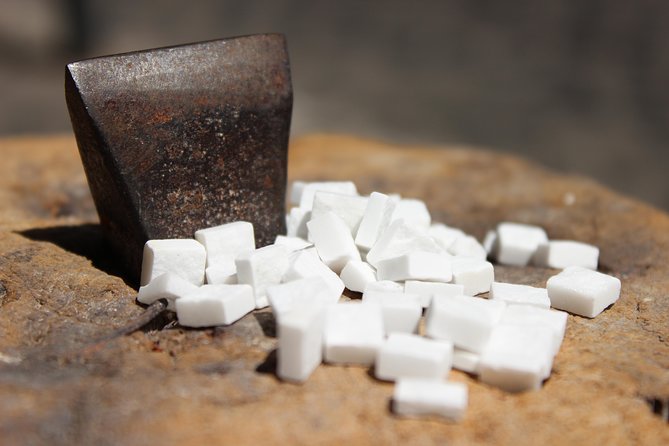
- All materials are provided, including natural local marble tiles and the tools you need
- Refreshments are included: bottled water plus coffee and/or tea
- English instruction with a mobile ticket for easy check-in
Studio Cassio on Via Urbana: a workshop you’ll want to revisit
Rome has two kinds of mosaic experiences: the ones you study from a distance in museums, and the ones you make with your hands. This workshop sits firmly in the second camp. You go to Studio Cassio – Arte del Mosaico on Via Urbana 98, and you spend a calm chunk of time inside while the city moves on outside.
The location matters more than you’d think. Via Urbana is one of those streets where you can pair this activity with a broader afternoon plan: walk in from nearby sights, slow down for a creative break, then head back out when you’re done. The class also starts at 2:00 pm, which lines up nicely with a “cool down” mid-to-late afternoon when the sun can get heavy.
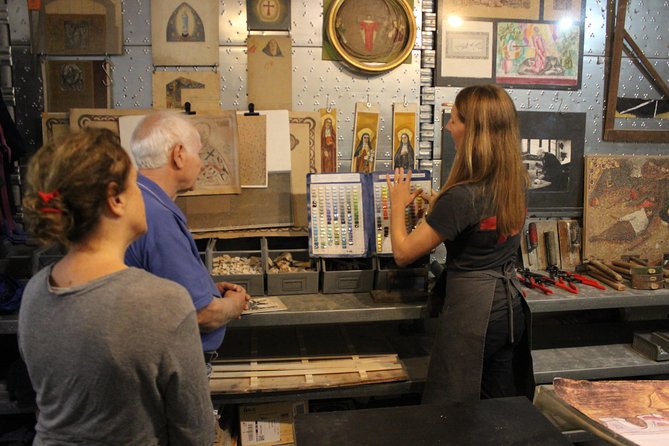
And yes, the studio has an authentic feel. Several workshop experiences from this team center on mosaic restoration work, and it’s the kind of place where you can look around and see evidence of skilled hands at work—not just a classroom with a craft table. If you like your Rome experiences with some substance behind them, that’s a big plus.
A few more Rome tours and experiences worth a look


What makes the setting special
Here’s why I think this studio works so well:
- You’re surrounded by finished and in-progress mosaics, so the craft feels real, not theatrical.
- The class environment supports concentration. People mention it feels peaceful and focused, which is exactly what you want when you’re learning something detailed.
- The team’s restoration background shows up in how they teach—there’s a sense of standards and technique, not just “let’s make something pretty.”
The 2.5-hour flow: history first, then your hands on marble
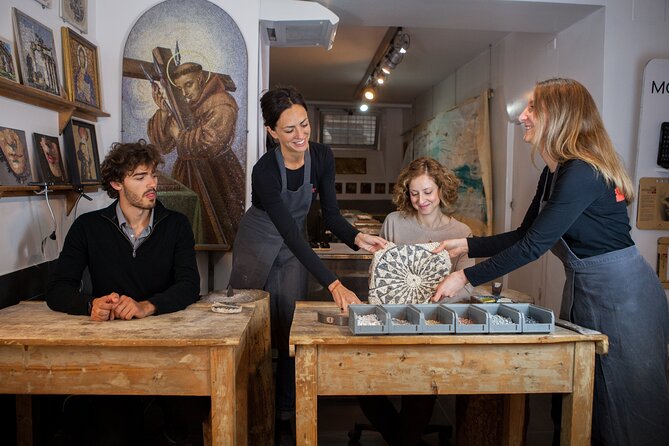
This is a 2 hours 30 minutes workshop, and the pacing is part of its charm. You don’t get dumped straight into cutting tiles. Instead, you start with a short introduction to Roman mosaic techniques and mosaic history. That matters because mosaic design isn’t just placing squares randomly—it’s about textures, spacing, and how patterns read from different distances.
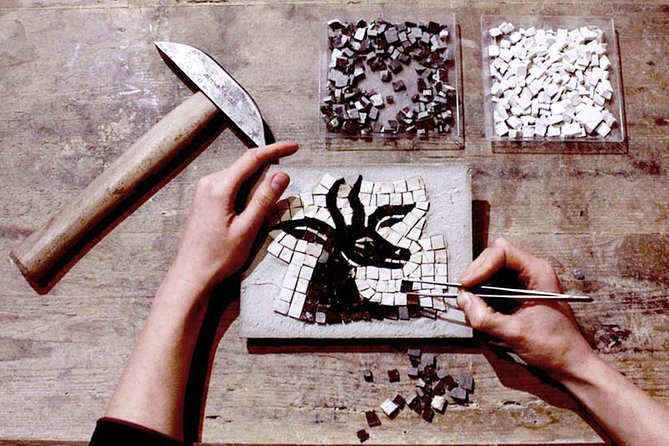
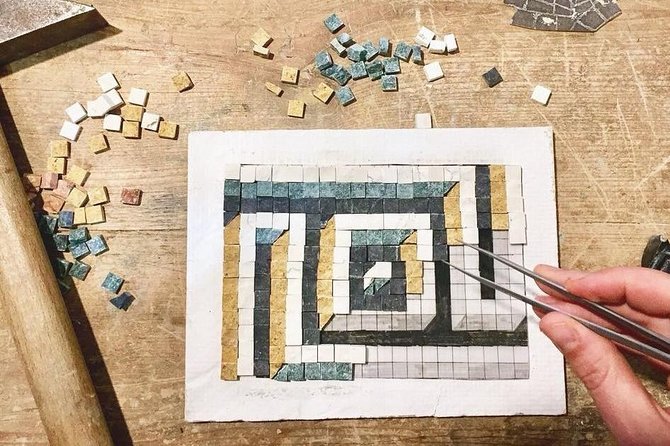
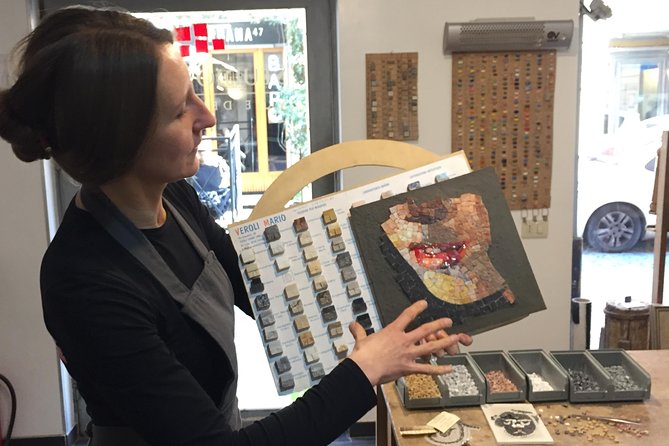
After that intro, the focus turns physical. You cut marble tiles and start shaping your composition. Your instructor guides you through textures and the choices that make a mosaic look like it belongs to the ancient tradition. The finished result isn’t a random craft project. It’s built using design principles tied to Roman mosaic layout, so you’re learning a way of thinking, not just a way of gluing.
Cutting tiles: where the lesson becomes fun (and a bit addictive)
If you’ve ever wondered why mosaic makers seem so calm while working, this part explains it. Cutting and selecting tiles is repetitive in the best way—almost like a slow puzzle. Reviews highlight that people who weren’t “art people” still got hooked, especially once they understood the logic behind the pieces and the textures.
You’ll be supported throughout. The goal isn’t to test your precision skills; it’s to help you learn how to make the small decisions that add up to a clean, traditional-looking surface.
Design and composition: why your 7″ x 5″ matters
The workshop ends with you creating a personal mosaic roughly 7″ x 5″. That size is a sweet spot:
- Small enough that you can finish in one session.
- Big enough to notice texture, color transitions, and tile placement.
- Perfect for a take-home piece because it’s framed and not flimsy.


Your take-home artwork: frame, box, and a souvenir with weight
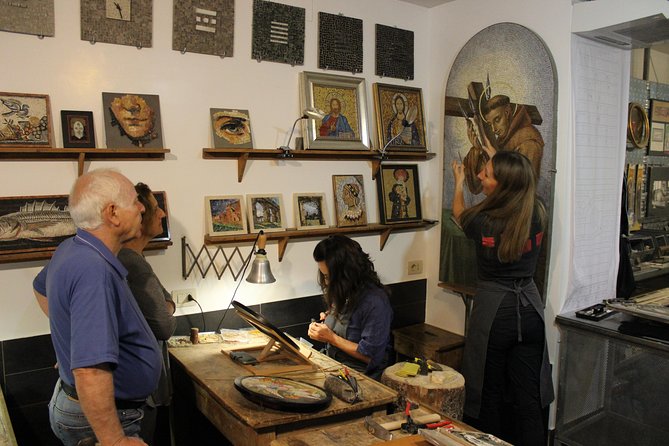
At the end of the workshop, you don’t just get a bagged craft. You get a finished mosaic ready to keep. What’s included makes a real difference for value and practicality.
You receive:
- A frame to create/display your artwork
- A sturdy box to store and protect the finished piece
- Your own unique mosaic creation, built during the class with guidance
That box part sounds minor until you picture hauling your artwork through Rome. Mosaics have edges; frames have corners. This setup reduces the risk of a sad arrival at your hotel.
Built-in “this is from Rome” energy
One reason this feels like a standout Rome activity is that it gives you an actual object that carries meaning. Many workshops teach skills but don’t help you end with something worth keeping. Here, the craft is traditional enough that your finished piece feels like a genuine representation of Roman technique—not a generic souvenir.
People also love the educational payoff. Once you learn how mosaics are assembled, you start noticing design decisions in the real works you see across the city and beyond. That makes your museum time feel richer, because you finally have a mental map for what you’re looking at.
What you’re learning: Roman technique, restoration mindset, and design logic
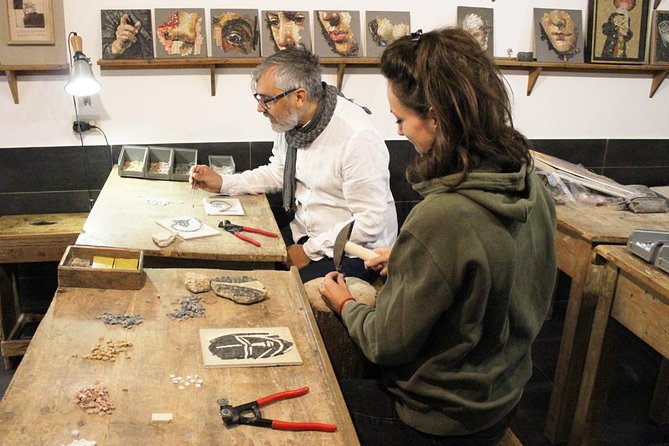
This workshop’s big strength is that it treats mosaics as a craft with rules. You’re taught the “language” of mosaic: how texture and spacing guide the eye, and how composition supports the overall design.
Based on the emphasis in the class:
- You learn authentic mosaic techniques, not a shortcut method
- You work within traditional Roman design principles
- You gain respect for the craftsmanship behind the kind of mosaics that take years to create
In reviews, you’ll see a common theme: the instructors connect the handwork to history and restoration. That’s useful because it gives context. When you know mosaics were maintained, repaired, and restored over time, you stop thinking of them as frozen art behind glass and start understanding them as crafted surfaces with a life.
Why that history intro is more than a lecture
A lot of classes tack on history like a garnish. Here, the intro sets up your choices while you work. Even a short talk can change how you place tiles, because you understand the logic of the design.
And if you’re the type who likes a Rome visit where you leave with a new way to see the city, this works. After you’ve cut marble and built textures, you’ll likely spot the differences between styles in real mosaics more quickly.
Small group size, lots of attention: what max 7 really means
This class caps at 7 people. That’s not a marketing flourish—it changes how the session feels.
In smaller groups:
- You’re more likely to get hands-on correction while cutting tiles
- You spend less time waiting for help
- You feel more comfortable asking questions if you get stuck
Several reviews mention patience and support, which makes sense with this group size. Mosaic-making can be detailed work, so guidance isn’t optional—it’s the difference between frustration and progress.
English instruction and communication
The workshop is offered in English, so you should be able to follow the technique explanations and ask questions without guessing. In a craft class, that matters because small technique tips are often verbal: how to cut, how to position tiles, and how to think about texture.
Who this workshop fits best (and who might want to skip it)
This activity is suitable for ages 12 and up. Children must be accompanied by an adult. Service animals are allowed. Most people can participate, and it’s near public transportation—handy if you want an easy hop over from a nearby sight.
Great fit if you’re one of these people
You’ll likely enjoy this if:
- You like hands-on learning and want a non-museum Rome moment
- You want a take-home souvenir that’s not mass-produced
- You’re curious about Roman art beyond the big names
- You want a shared activity for a couple, family group, or solo visit
- You’d like something detailed enough to focus your brain for a while
Reviews also mention solo friendliness. If you’re traveling alone, a small group class can be a welcome break from walking everywhere by yourself.
Consider this if you’re pressed for time
It’s 2.5 hours, which is a commitment. If your schedule is ultra tight, you’ll need to decide what gets cut. But if you can spare the time, it’s one of those experiences that makes the rest of Rome feel better afterward.
Planning your day: how to pair this with the rest of Rome
With a 2:00 pm start, you can build a smart day around it:
- Morning: museums or major sites (then save energy)
- Early afternoon: lunch or a slower walk
- 2:00 pm: workshop to get off your feet
- Late afternoon/evening: back out to enjoy Rome while your mind is buzzing
Also, refreshments are included—bottled water plus coffee and/or tea—so you’re not scrambling for a drink right before you sit down.
Transportation note that affects your comfort
Transportation to and from attractions isn’t included. That’s standard for many studio activities, but it affects planning. You’ll want to map your route in advance and pick nearby sights accordingly.
Price and value: why $107.68 can make sense here
The price is listed at $107.68 per person for about 2.5 hours. Is it “cheap”? No craft class that includes materials ever is. But it’s easier to see the value when you look at what you actually take home and what the studio provides.
You get:
- High-quality natural local marble and the tools
- A frame for your mosaic
- A sturdy storage box
- Instruction tied to Roman mosaic techniques and design logic
- Coffee and/or tea plus bottled water
So you’re paying for materials and expert guidance, not just a themed arts-and-crafts session. Compared with buying a ready-made souvenir, you’re investing in an experience that changes how you see mosaics—and you leave with a finished piece you made.
Should you book this Rome mosaic workshop?
Book it if you want a Rome activity that feels hands-on, technical in a friendly way, and rooted in how mosaics were actually made. The small group size, the included materials, and the finished framed piece with a protective box are practical wins. I also like that the class gives you both the how and the why—history and technique working together.
Skip it only if:
- you can’t fit 2.5 hours into your day, or
- you need something that’s less hands-on and more passive, or
- you’re traveling with someone under 12 who would be unable to participate.
If those aren’t your constraints, this is the kind of workshop that makes Rome feel personal. You won’t just look at mosaic art—you’ll understand it.
FAQ
What is the duration of the Ancient Mosaic Workshop in Rome?
The workshop lasts about 2 hours 30 minutes.
Where does the workshop start?
The meeting point is Studio Cassio – Arte del Mosaico, Via Urbana, 98, 00184 Roma RM, Italy.
What time does the workshop begin?
The start time is 2:00 pm.
What language is the workshop offered in?
The workshop is offered in English.
Is a mobile ticket included?
Yes, the workshop includes a mobile ticket.
What will I make in the class?
You’ll create a personalized mosaic about 7″ x 5″, following traditional Roman mosaic design principles.
What’s included in the price?
Included items are access to natural marble and tools, a frame, a sturdy box for storing/protecting your artwork, bottled water, and coffee and/or tea, along with the lesson and your mosaic creation.
What is not included?
Transportation to and from attractions is not included.
Who can participate and is there an age limit?
The minimum age is 12, and children must be accompanied by an adult.
Is there a maximum group size?
Yes, the workshop has a maximum of 7 people.
What is the cancellation policy?
There is free cancellation, and you can cancel up to 24 hours in advance for a full refund.