REVIEW · JAIPUR
Feel Jaipur Like a Local with Guide & Old City Heritage Walk
Book on GetYourGuide →Operated by Rajasthan Tour Car Driver · Bookable on GetYourGuide
Jaipur in a single day, without the fuss. I like how this route pairs big-ticket sights like Amber Fort with a guided finish through the old city streets. A local guide adds stories that make the courtyards, stepwell symmetry, and royal architecture feel personal, not like a checklist.
The main thing to weigh is the walking. It’s moderate, but you’ll be on your feet through forts, palaces, and the short old-city walk, and it’s not suitable for wheelchair users.
In This Review
- Key highlights worth planning around
- A 8-hour Jaipur mix of forts, palaces, and everyday streets
- Starting at Amber Fort: courtyards, palace rooms, and the hilltop view
- Panna Meena ka Kund: the stepwell where symmetry matters
- Jal Mahal photo stop + Royal Gaitor: water palace views and calm marble cenotaphs
- City Palace + Hawa Mahal: seeing royal design in two different ways
- The Pink City finish: a 30-minute old-city heritage walk
- Price and value: what $8 gets you for an 8-hour loop
- Transport, guide style, and why the day feels flexible
- What you should bring (and what will slow you down)
- Who this tour suits best (and who should choose another plan)
- Should you book this Jaipur heritage walk?
- FAQ
- How long is the Jaipur heritage walk tour?
- Where does the guide meet you?
- Is hotel pickup and drop-off included?
- Are entrance tickets included?
- What language does the driver/guide speak?
- Can I bring luggage or a large bag?
- Is the tour wheelchair accessible?
Key highlights worth planning around
- Amber Fort morning focus: Courtyards, palaces, and hilltop views with a guide who explains what you’re seeing.
- Panna Meena ka Kund stepwell: A symmetrical, traditional water-architecture stop near Amber Fort.
- Photo-first water stop at Jal Mahal: Quick looks and photos of the Water Palace on Man Sagar Lake.
- Royal Gaitor + City Palace pairing: Cenotaphs, marble carvings, then the heart of Jaipur’s royal heritage.
- Short but useful old city walk: A 30-minute guide-led loop through markets, historic homes, and city gates.
A 8-hour Jaipur mix of forts, palaces, and everyday streets
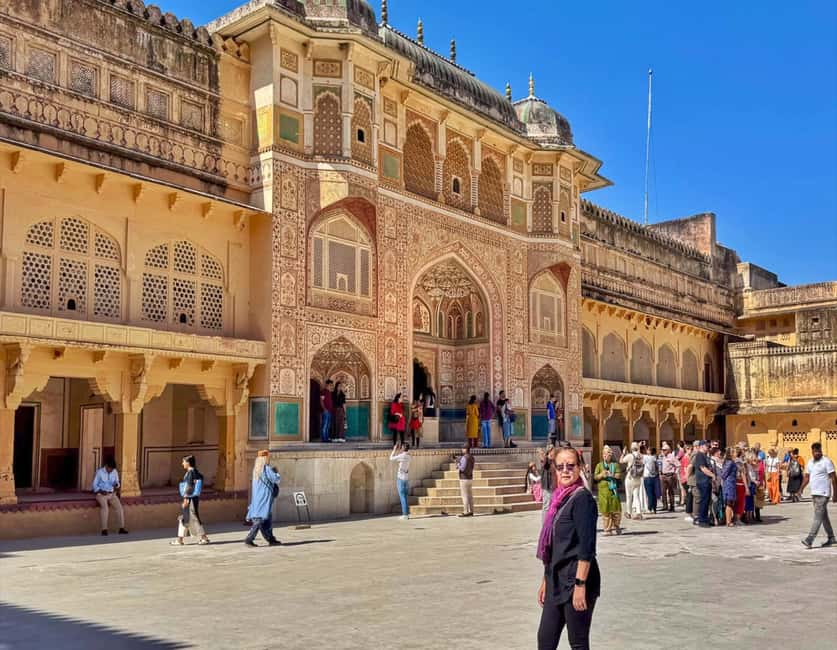
This is the kind of day I like in Jaipur: compact, efficient, and heavy on the places that shape how the city looks and works. You start with Amber Fort, move through other royal and architectural landmarks, and end with a quick guided stroll meant to show daily life in the Pink City.
What makes this work is the pacing. You’re not spending all day in one monument, and you still get guided context at multiple stops. There’s also a practical rhythm: longer visits where it matters, plus shorter photo stops where you’re just soaking in the view and moving on.
A key detail for me: you can keep the day feeling personal if your driver/guide is paying attention to your pace. People using this service have talked about guides tailoring the day to their interests, which is a big deal when you only have one day in town.
You can also read our reviews of more walking tours in Jaipur


Starting at Amber Fort: courtyards, palace rooms, and the hilltop view
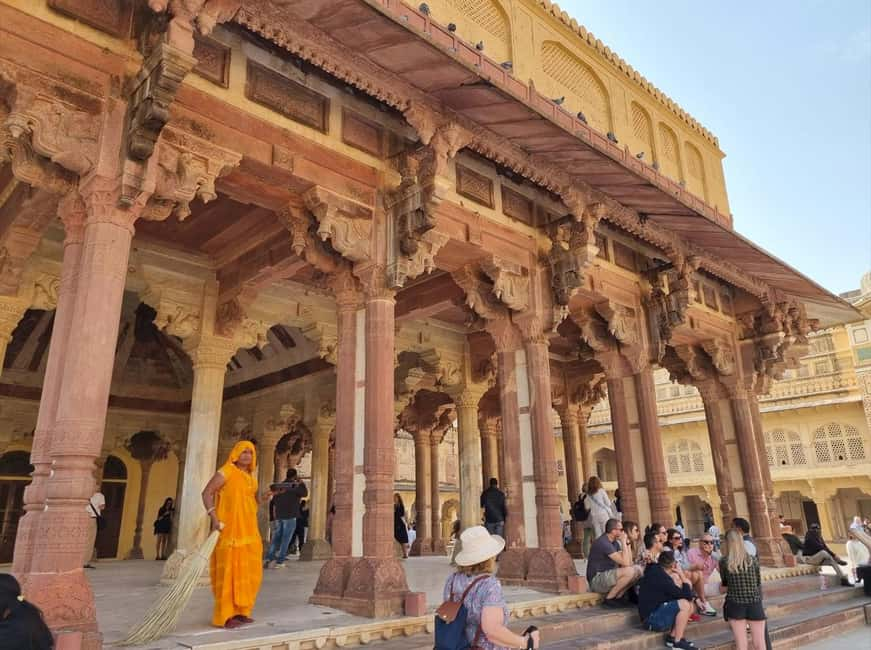
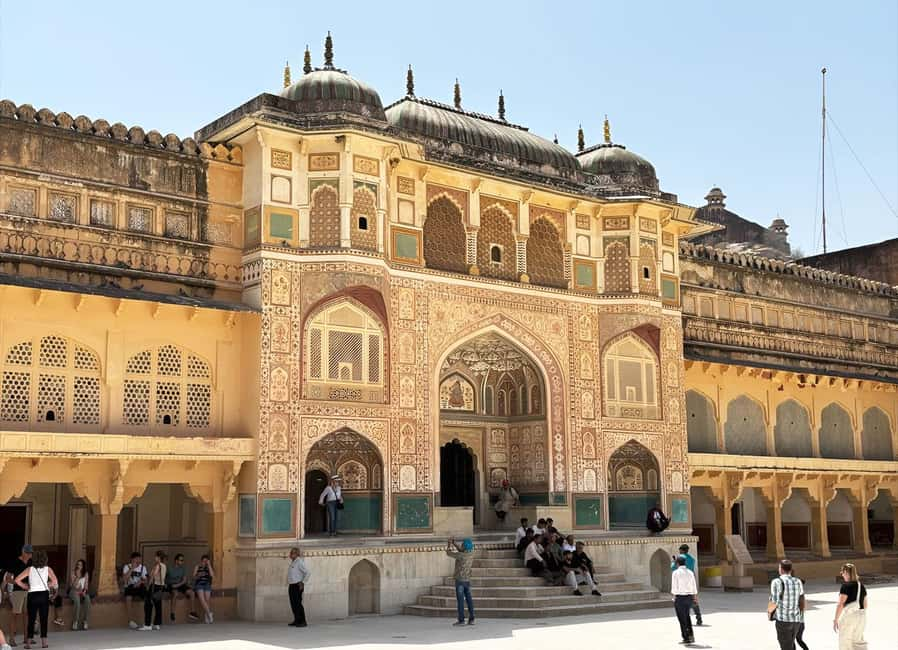
The morning begins at the UNESCO World Heritage Site Amber Fort, and you get about two hours to explore. This isn’t just a quick pass through a fortress. Expect courtyards and palace areas where your guide points out what to look for, plus the views from the fort’s hilltop setting.
At Amber Fort, I think the smart approach is to slow down for details, especially in the courtyards. When you know what you’re looking at—where the lines of movement are, how the spaces connect—it’s easier to understand why this site became so important.
Also, the fort setting means you’ll want good light for photos and comfortable shoes for uneven paths. If the sun is strong (it often is in Jaipur), you’ll be glad you brought sunscreen and a hat.
Panna Meena ka Kund: the stepwell where symmetry matters
Right after Amber Fort comes Panna Meena ka Kund (Panna Meena Stepwell). You’ll get about a half hour including a photo stop and guided time, and this is one of those Jaipur sights that feels different from forts and palaces.
The standout here is the stepwell’s symmetry and traditional design. Your guide’s explanations help you see it beyond a pretty photo spot—this was (and in some ways still is) a functional water space with architectural planning behind it.
Because it’s close to Amber Fort, it also keeps the day smooth. You’re not losing half a day to long transfers, which helps if you want to see more than one highlight without rushing.
Jal Mahal photo stop + Royal Gaitor: water palace views and calm marble cenotaphs
The tour then does a short, focused swing at Jal Mahal, the Water Palace on Man Sagar Lake. It’s listed as a photo stop with a brief pass-by time, so manage expectations: you’re getting the look and the atmosphere, not a long visit inside.
In practice, this is useful because Jal Mahal is best experienced visually. If you want a photo where the palace feels like it’s floating, you’ll want to stand where your guide suggests and take your time with angles. The lake setting is the point.
After that comes Gaitor Ki Chhatriyan, also called Royal Gaitor. This area is known for its peaceful setting and detailed marble carvings. The contrast is part of the charm: after the visual hit of Jal Mahal, you shift to calmer grounds where the details become the story.
City Palace + Hawa Mahal: seeing royal design in two different ways
In the afternoon, you hit City Palace, and it’s one of the best places to understand Jaipur’s royal identity. You’ll spend around two hours with a guided visit that covers courtyards, museum areas, and historic residences of the former royal family.
What I like about City Palace is that it’s not just walls and gates. It helps you connect the dots between the city’s planning, the royal lifestyle, and the landmark architecture you saw earlier. Even if you’re not a museum person, the courtyards can make the royal design feel more real and less distant.
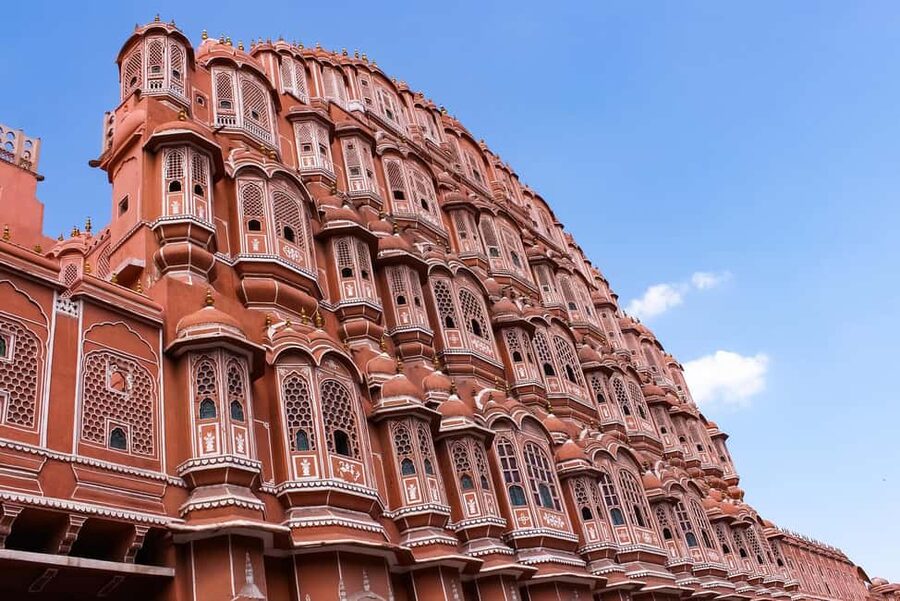
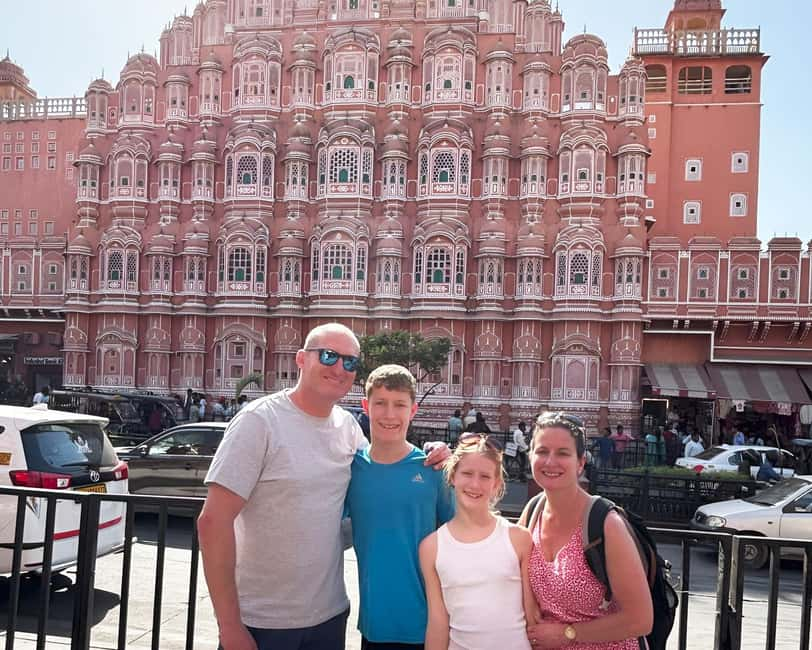
Then you shift to Hawa Mahal. Expect an exterior visit with about a half hour. You’ll see the iconic Palace of Winds and hear about its unique design and purpose, which helps you understand why it looks the way it does.
My practical tip for Hawa Mahal: treat it like a strong streetside photo moment, not a long linger. You’ll get the best value by keeping your eyes open for the design details and letting your guide explain the purpose while you’re there.
You can also read our reviews of more guided tours in Jaipur






The Pink City finish: a 30-minute old-city heritage walk

The last major part is a 30-minute guided walk through the old city. This is the section that gives the tour its “local” feel.
You’ll explore heritage buildings, historic homes, traditional markets, and city gates. The goal isn’t an exhausting marathon—it’s to help you get your bearings fast and notice how the city functions around the big monuments.
A smart strategy here is to wear comfortable shoes and keep your camera ready, but don’t only hunt for photos. The value comes from seeing everyday life in small flashes: street activity, shop fronts, and the scale of the lanes compared to what you saw at Amber Fort and City Palace.
If you want shopping, this is where you’ll likely feel it most, since the route includes time for shopping at the Pink City stop.
Price and value: what $8 gets you for an 8-hour loop
At $8 per person for an 8-hour day, the value is mostly in the route efficiency. You’re paying for transport, logistics, and guided context across multiple major landmarks—not for a day-long sit-down experience.
Your included basics are meaningful:
- Hotel pickup and drop-off
- Transport in an air-conditioned vehicle
- Bottled water
- Fuel, parking, and other charges
- A guided licensed professional if you choose that option
- Entrance tickets to monuments if chosen
- Skip-the-ticket-line option
That combination can be a real money-saver in a city where getting from place to place takes time and where lines can slow you down. If you’re comparing against doing things on your own, you’re likely paying in time and stress rather than only in money.
One thing to watch: meals aren’t included. The good news is that food and drinks can be purchased at various points during the day, but you’ll want to plan around it so you’re not stuck hunting for snacks between stops.
Transport, guide style, and why the day feels flexible
The tour runs with an English and Hindi driver, and it can be private or in small groups. That matters because you’ll move faster through decision points like photo breaks, timing, and how long you want to stay in certain areas.
The guide approach also seems to be a strong point. People have praised drivers like Suraj for being professional, friendly, and tuned in to individual interests. Another name that came up in the same context is Raghuveer, specifically for describing Amber Fort well and showing visitors the important places.
That kind of guidance is what turns a landmark tour into a story you remember. Instead of staring at stone and guessing, you get explanations at the moment you’re standing where the story happened.
What you should bring (and what will slow you down)
This day isn’t “museum-only,” and it won’t feel good if you show up under-prepared. Bring comfortable shoes first. Expect moderate walking and some ground that can be uneven.
Then bring practical sun protection:
- Hat and sunscreen
- Camera (photos are allowed, and you’ll have multiple photo moments)
- A water bottle (hydration helps a lot when you’re outside for hours)
Also note what you can’t bring: no pets, and no luggage or large bags. Smoking in the vehicle isn’t allowed, and alcohol/drugs are off the table.
Restrooms are available at each site, which is a relief for an 8-hour route. Food and drinks can be purchased at points during the tour, so you won’t be trapped without options.
And if you’re the type to use drone gear: drones aren’t permitted.
Who this tour suits best (and who should choose another plan)
This works well for first-time visitors who want a highlight-packed Jaipur day with a human guide. It’s especially good if you like a mix of:
- Forts and palaces
- Architecture details (stepwell symmetry, marble carvings)
- A bit of street-level city feel at the end
It also suits independent travelers who want structure without feeling locked into one location for the whole day.
But it’s not suitable for people with mobility impairments or wheelchair users. With the walking involved, you’ll likely struggle with the route.
If you’re traveling with lots of luggage, you may find the no-large-bags rule annoying. Pack light, or you’ll spend your time managing bags instead of enjoying the sites.
Should you book this Jaipur heritage walk?
If you want an 8-hour, organized route that hits Amber Fort, stepwell architecture, royal landmarks, and the old city in one day, this is a smart choice—especially at the stated price. The guided parts matter: the Fort and palace sections become more understandable when someone walks you through what to look for.
I’d book it if:
- You’re short on time in Jaipur
- You want a mix of big sights and old-city streets
- You prefer a driver/guide who can keep the day moving at your pace
Skip it (or consider a different option) if:
- You need wheelchair-friendly access
- You hate walking through multiple major sites
- You’re expecting long time inside every stop (some are photo-first and brief)
FAQ
How long is the Jaipur heritage walk tour?
The duration is 8 hours.
Where does the guide meet you?
The guide meets you in front of Hawa Mahal.
Is hotel pickup and drop-off included?
Yes—hotel pickup and drop-off are included, and pickup may also be available from your hotel or any location of your choice.
Are entrance tickets included?
Entrance tickets are included if you choose that option.
What language does the driver/guide speak?
The driver/guide is listed as English and Hindi.
Can I bring luggage or a large bag?
No. Luggage or large bags are not allowed.
Is the tour wheelchair accessible?
No. The tour is not suitable for people with mobility impairments or wheelchair users.