REVIEW · JAIPUR
Jaipur Heritage Walking Tour
Book on Viator →Operated by Backpack India · Bookable on Viator
One short walk can teach you how to read Jaipur. This small-group heritage tour (max 10) pairs you with architecture students who know how to explain what you’re seeing, plus you get a Rajasthani breakfast and complimentary digital photos. One heads-up: there have been reported cases where the guide didn’t show up at the meeting place, so keep your booking details handy and plan a calm backup option.
You’ll move through the old city on foot, starting at Ajmeri Gate and working your way toward the icons people point to on postcards, with local context you won’t get from a quick photo stop. The pace stays human because it’s designed for 2 to 4 hours, with frequent story breaks at each landmark.
If you want a deep architectural lecture only, this may feel more story-and-streets than classroom. If you want a fun, practical way to get your bearings fast—and to see landmarks with meaning—this format fits well.
In This Review
- Key highlights at a glance
- Why Ajmeri Gate sets the tone for this Jaipur walk
- Architecture students, and why that changes what you notice
- Price and value: what $16 buys you (and what to expect)
- Group size, pacing, and how 2 to 4 hours really feels
- Stop-by-stop: Ajmeri Gate to Hawa Mahal (the good, the tradeoffs)
- Ajmeri Gate: history plus how the city moves
- Isarlat Sargasooli: architecture thinking, not just sightseeing
- Tripolia Bazar / Tripolia gate: royal access, then public opening
- Hawa Mahal: 900 windows and an engineering story
- Jalebi Chowk: the City Palace yard and a street-name clue
- Govind Devji Temple, chai, and the Q&A close
- Practical tips so this walk feels smooth, not stressful
- Should you book this Jaipur Heritage Walking Tour?
Key highlights at a glance
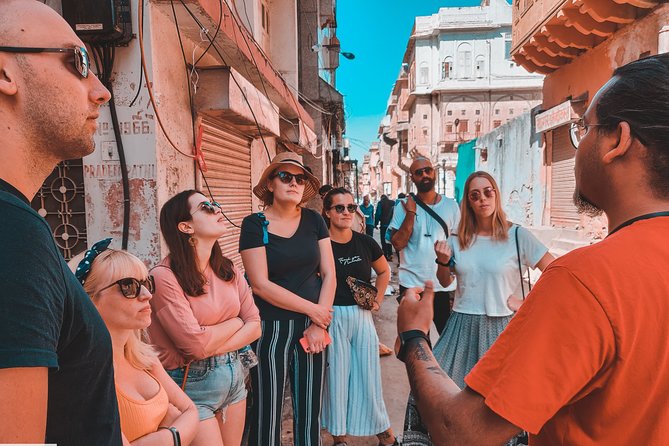
- Max 10 travelers: a genuinely intimate group size
- Architecture-student perspective: explanations tied to design choices
- Breakfast included: a real local start before you hit the sights
- Photo bonus: complimentary digital photos shared from the walk
- Icon landmarks + lived-in streets: Ajmeri Gate, Tripolia, Hawa Mahal, and more
- Ends with chai + Q&A: a chance to ask questions in a relaxed setting
Why Ajmeri Gate sets the tone for this Jaipur walk

Ajmeri Gate is one of the city’s busy entry points, and that matters because Jaipur’s heritage isn’t just in monuments. It’s in movement—how people pass through, how spaces function, and how daily transport patterns have changed over time.
On this tour, you start there and get a history-and-use explanation, not just a landmark name. The angle I like is the focus on what the gate did for the city and how its role has evolved as old-city travel needs shifted. You’ll also pick up how to think about the lanes around it: the city isn’t random, and gates like this help you understand why certain routes and neighborhoods developed the way they did.
Practical note: you’ll be on your feet for a few hours, and gates and markets tend to mean more noise and dust than a quiet garden. Bring a water habit and expect the old city to feel active.
You can also read our reviews of more walking tours in Jaipur



Architecture students, and why that changes what you notice
This isn’t a standard script. The guiding style leans on architecture students who can connect what you’re seeing to why it was built the way it was. Even when a stop is short, you’re usually given a “why this exists” story, then you see the structure again with new attention.
You’ll get that at stops like Isarlat Sargasooli, where the focus is on the city’s architecture and the thoughts behind the construction. That kind of framing makes you less likely to treat buildings like background. Instead, you start noticing patterns: how entrances and windows shape light and view, how façades present themselves, and how a structure can communicate power or function.
If you’re the type who likes architecture but hates slow museum lectures, this is a good compromise. You’re learning in outdoor context, with streets right there beside the stonework.
Price and value: what $16 buys you (and what to expect)
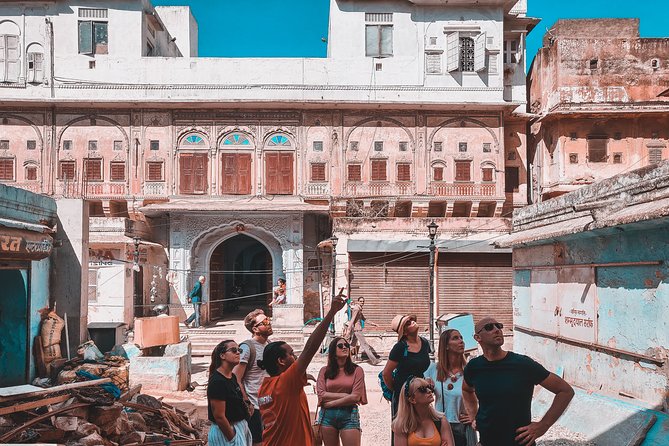
The price is listed at $16, and the big value drivers are the things that reduce your out-of-pocket and planning stress. You get:
- a Rajasthani breakfast,
- a water bottle,
- an English-speaking guide,
- stories focused on architecture and heritage,
- and complimentary digital photos.
That combination is what makes the cost feel fair. In many cities, a guided walk without breakfast and photo sharing costs more, and you still end up paying for your own snacks and drinks. Here, the tour includes at least the basics you need to start well and keep going.
Two small details to keep in mind: GST is not included, and admission tickets are not included for every stop. In the walk itself, you’ll hit places where admission is free at certain points, but other sites aren’t bundled, so you may want a little extra cash or card readiness.
If your travel budget is tight, the breakfast alone helps justify the booking. If you dislike fees and ticket add-ons, check in before you go by asking what, if anything, may require separate payment for the stops you care about most.
Group size, pacing, and how 2 to 4 hours really feels
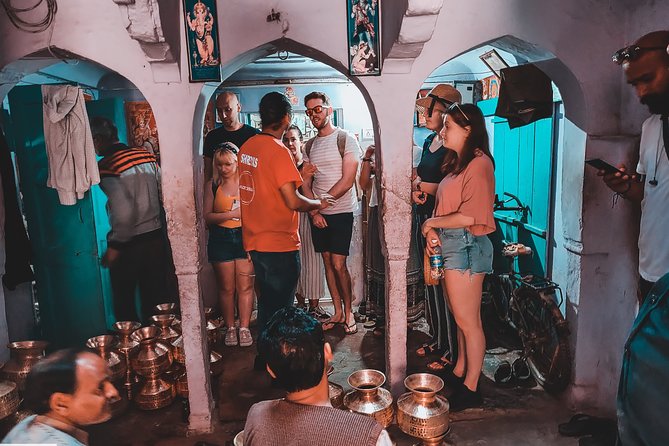
With a maximum of 10 travelers, the group stays small enough for questions and for the guide to adjust pacing when someone needs a slower moment. You’re also walking roughly 3 km, which is a manageable distance for most people—especially if you take the tour as “walk plus breaks,” not “walk nonstop.”
The time range is 2 to 4 hours, which is realistic for city-walking tours: you’re waiting at each stop for the story, then moving to the next one. The itinerary uses short blocks at some locations, and longer ones at others, so the day doesn’t feel like one long slog.
Start time availability is within the 8:00 AM to 12:00 PM window. Morning makes sense here. You’ll get cooler temperatures and easier navigation through the old city before midday pressure builds.
One caution based on what’s been reported: because there have been cases of guide no-shows, you should treat the meeting time like it’s serious. Arrive early, confirm the meeting point, and keep communication ready so you’re not scrambling when you’re already standing in the heat.
Stop-by-stop: Ajmeri Gate to Hawa Mahal (the good, the tradeoffs)

Here’s what each major stop adds to the experience, and where you might want to adjust your expectations.
You can also read our reviews of more historical tours in Jaipur






Ajmeri Gate: history plus how the city moves
You get a focused talk on Ajmeri Gate’s history, its importance, and how transport around the old city has changed with time. This is a smart opener because it teaches you how to “read” movement. Even if you’ve seen gates before, you’ll likely start paying attention to circulation—where people enter, how streets branch, and why certain routes matter.
Admission is free for this stop, which is a nice bonus if you’re trying to keep costs predictable.
Isarlat Sargasooli: architecture thinking, not just sightseeing
This stop is brief, but it’s designed to give you the architecture angle: the guide talks about the architecture of the city and the thoughts behind the construction. Think of it as a quick lesson you can apply immediately when you look at the next buildings.
The tradeoff is time. If you love long explanations, you may wish you had more minutes here. If you like compact “aha” moments, this works.
Tripolia Bazar / Tripolia gate: royal access, then public opening
Tripolia gate is described as a private entrance to the royal family, with a story that adds drama: it was opened to the general public only once, during a moment connected to the former king going to fight an election. That’s not the kind of detail you get from a guidebook headline, and it changes how you view the gate—less like a wall and more like a controlled threshold.
You’ll also see a beautifully painted gate, and the short stop format means you’re mostly there for meaning rather than lingering photography sessions.
Admission isn’t listed as included here, so if you care about inside access, budget accordingly.
Hawa Mahal: 900 windows and an engineering story
Hawa Mahal is the star of the walk, with over 900 windows and an engineering-focused explanation. The tour frames it as a landmark so iconic that it’s treated as more central than even Amber Fort in how many people experience it. The point isn’t to win a debate—it’s to get you looking with intention.
You’ll take a breath here—literally and mentally. The structure’s scale comes through fast, and the guide’s “science and engineering” angle is meant to help you understand why it looks the way it does.
Admission isn’t included for this stop. So you should decide in advance whether you mainly want the exterior experience and story, or if you also want to go inside (if accessible during your visit).
Jalebi Chowk: the City Palace yard and a street-name clue
Jalebi Chowk is described as a square in the back yard of City Palace, connected to the official residence of Jaipur’s crown. You also get an explanation for the name: it’s tied to a serpentine road that connects east-west to the main route.
What I like about this stop is that it feels like a bridge between grand architecture and everyday city logic. You see how naming, layout, and movement intertwine.
This stop lists free admission, which helps it feel like a low-risk, high-interest pause.
Govind Devji Temple, chai, and the Q&A close
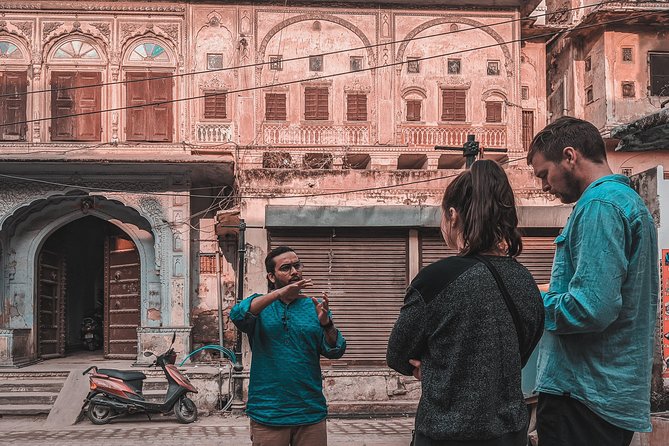
Most city walks end with a convenient drop-off. This one closes with a story stop and then a relaxed Q&A moment over chai.
You’ll visit Govind Devji Temple, noted as a famous Krishna temple. Even if you’re not deeply religious, temples like this can give you a different kind of understanding of Jaipur. It’s still architecture and heritage, but it’s also about how belief lives in the city.
Then the tour “finishes the story” and heads to a chai shop for Q&A. That’s where small-group tours shine. You can ask follow-up questions that come from seeing real streets, not just reading about them on your flight. It’s also a practical decompression moment before you continue exploring on your own.
Admission isn’t listed as included for the temple stop, so factor that into your plan if you’re aiming to enter.
Practical tips so this walk feels smooth, not stressful

You’ll get a water bottle and the breakfast is included, but you still need a little field strategy—especially in an active old-city setting.
A few things I’d do if I were booking this again:
- Wear comfortable shoes with grip. Old Jaipur streets can be uneven.
- Use sun protection even in the morning; the tour is in the 8:00 AM to 12:00 PM window, not night.
- Save screenshots of your mobile ticket and any confirmation email, so you can check details quickly.
- If you’re staying somewhere nearby, ask your front desk staff for help identifying the meeting area. When meeting points get reused by different operators, clarity matters.
Also, keep in mind the tour ends in a different location. That’s not a problem, but it means you should plan your next step without expecting to return to where you started.
Should you book this Jaipur Heritage Walking Tour?
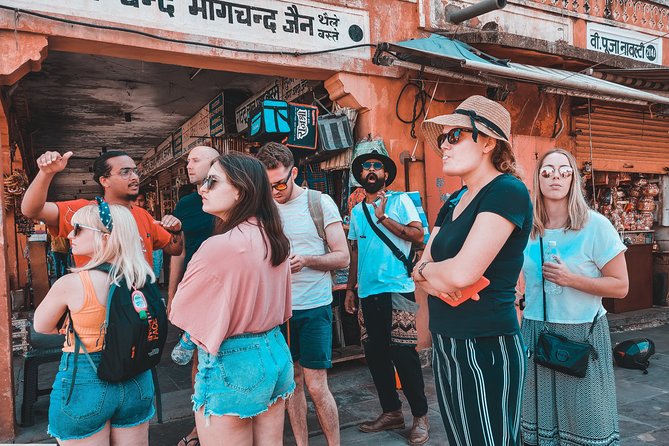
Book it if you want a low-cost, small-group way to see Jaipur through architecture explanations and street-level stories, with breakfast and complimentary digital photos baked in. The max-10 size and chai Q&A ending are especially appealing if you like conversation over a hurried photo grab.
Skip it (or at least build in a backup plan) if you can’t handle the risk of a guide not showing up. Since there have been reported no-show and communication issues, I’d treat this as a tour you confirm actively—arrive early, keep your contact details ready, and don’t schedule anything critical right after the end time.
If you’re flexible, curious, and happy to walk streets while learning how the city works, this is a smart way to spend your morning in Jaipur for the money.