REVIEW · JAIPUR
Heritage Culture and History Walking Tour in Jaipur
Book on Viator →Operated by RICH walk ( heritage, culture, history walk ) · Bookable on Viator
Jaipur can feel big and loud. This walk keeps it human-sized, moving from one iconic landmark to the next with stops that explain how the city thinks about astronomy, royalty, and faith. I like that the route is built around major sites plus everyday markets, so you get both the big monuments and the lived-in street level.
Two things I especially like: you’re guided through religious spaces with real cultural context (including an aarti ceremony at Govind Devji Temple), and the timing is tight enough to feel like a full story without turning into a long endurance test. And you’ll also get help matching the visit to your interests, with guides like Aditya and Ankit showing strong command of the material and answering lots of questions.
One drawback to plan for: several stops charge separate entry fees, and the City Palace ticket is the biggest add-on. Also, parts of the tour are exterior walking and street-market time, so you should be ready for sun and crowds at peak hours.
In This Review
- Key highlights you’ll feel right away
- Planning Your Jaipur Heritage Walk Time Budget
- Start at Jantar Mantar: Jaipur Through the Lens of Astronomy
- City Palace in 20 Minutes: Royal Power Meets Architecture
- Govind Devji Temple and the Aarti Ceremony Moment
- Chandi Ki Taksal: A 17th-Century Bazaar Walk
- Mandir Shri Ram Chandra Ji: A Free Stop That Resets Your Pace
- Hawa Mahal: The Famous Facade, Without the Inside Rush
- Mandir Shree Laxminarayan Ji: Lord Vishnu and Goddess Laxmi
- Johri Bazar and Katla Purohit Ji Ka: Shopping Streets as Cultural Windows
- Isarlat Sargasooli Tower: Your Panoramic Ending in 10 Minutes
- Price and Value: A Low Base Price With Manageable Add-Ons
- Who This Tour Fits Best (and Who Might Want Something Different)
- Should You Book This Jaipur Heritage Culture Walk?
- FAQ
- FAQ
- How long is the Heritage Culture and History Walking Tour in Jaipur?
- Where does the tour start and end?
- What is included in the tour price?
- What entrance fees are not included?
- Are any temples included with no admission fee?
- Will we enter Hawa Mahal?
- Is this tour private?
- Can I get a full refund if I cancel?
Key highlights you’ll feel right away
- Jantar Mantar’s astronomy tools: quick, clear explanations of why this place matters to Raja Sawai Jai Singh II
- Govind Devji Temple aarti: learn what you’re seeing, then watch the ceremony with a calmer mindset
- Multiple free temples: Mandir Shri Ram Chandra Ji and Mandir Shree Laxminarayan ji stop without extra admission
- Market time that’s not shopping pressure: Chandi Ki Taksal, Johri Bazar, and Katla Purohit Ji Ka for city texture
- Hawa Mahal viewed from the outside: you’ll admire the famous facade without being stuck on long interior waits
- Isarlat Sargasooli photo stop: a built-in payoff at the end with panoramic city views
Planning Your Jaipur Heritage Walk Time Budget

This is a 2 hours 25 minutes walking experience, designed to cover several top landmarks without dragging. The route starts at Jantar Mantar and ends at Isarlat Sargasooli (also spelled Sarkasuli in the end description), a historic tower where you get a strong final view of the city.
Because this is a private tour/activity, it’s just your group. That matters in Jaipur, where “one-size-fits-all” tours can push people through at the same pace. Here, the guide can slow down for questions and speed up if your group is keen.
The biggest practical thing to know up front: it’s not just one ticket. The tour price is low, but you’ll likely add entry fees for key stops (especially City Palace). That doesn’t make it bad value. It just means you should budget in advance so you’re not surprised halfway through.
You can also read our reviews of more walking tours in Jaipur



Start at Jantar Mantar: Jaipur Through the Lens of Astronomy

You begin at Jantar Mantar, meeting your guide at the ticket counter. This stop is the first clue that this tour isn’t only about palaces and temples. It also treats Jaipur like a thinking city, with science and design sitting right alongside politics and religion.
Expect about 20 minutes here, focused on the astronomical instruments and the vision of Raja Sawai Jai Singh II. Jantar Mantar’s metal-and-stone tools look strange at first glance, but the payoff is understanding what they were built to do, and how that fits with Jaipur’s reputation as a planned, intentional capital.
Admission matters here: the Jantar Mantar entry fee is 200 INR, and it isn’t included in the tour price. If you want a straightforward way to decide, I’d treat this as a “pay once, learn a lot” stop. The guide’s explanations help you look past the wow-factor and into the purpose.
City Palace in 20 Minutes: Royal Power Meets Architecture

From Jantar Mantar, you walk to the City Palace of Jaipur, where you get about 20 minutes to absorb both design and story. This is where the tour leans into royalty: you’ll learn how the royal family shaped the city and why the palace complex looks the way it does.
Here’s the main value trade-off. The City Palace ticket is 1000 INR, not included. That’s a big line item compared with the other admission fees listed on the tour. If you’re trying to manage your budget, this is the one stop where you should ask yourself if palaces are your thing.
That said, the route doesn’t promise a full museum-style visit. It’s more like a guided orientation: enough time to understand the main ideas and not enough time to feel trapped inside long corridors. If you enjoy architecture and want context for what you’re seeing, this stop can justify the added cost.
Govind Devji Temple and the Aarti Ceremony Moment
Next comes Govind Devji Temple, and the tone changes from royal spaces to active devotion. You’ll spend around 20 minutes, with the chance to witness the aarti ceremony and feel the quieter rhythm of the place.
I like this stop because it’s not just sight-seeing. You’re not asked to guess what’s happening. The guide sets the scene first, so when the ceremony begins, you understand the meaning of the actions and why people are gathered.
There’s no admission fee listed for this temple in the tour information. That’s a nice bonus after you’ve already paid for the earlier stops.
If your group includes kids or first-time visitors to temple rituals, this is the kind of moment that helps them connect fast. Even if you don’t know the language, you can still follow the ceremony’s flow with the guide’s help.
Chandi Ki Taksal: A 17th-Century Bazaar Walk
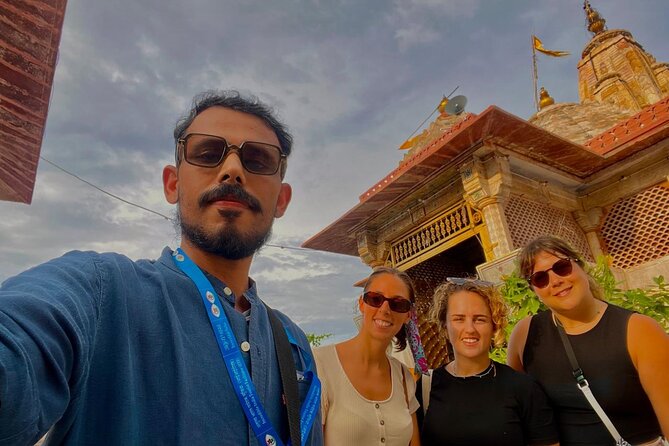
After the temple, the tour moves into Chandi Ki Taksal, described as a local bazaar that has existed since the 17th century. This is one of the most “you are in Jaipur” parts of the walk.
You’ll stroll and explore at your own discretion, with a clear note that the tour doesn’t push you to buy. For me, that balance is important. Markets can either feel like a distraction or a learning tool, depending on the approach. Here, the goal is to experience the setting and notice how old city life still operates in everyday lanes.
This part also helps you understand the city beyond official buildings. Palaces and temples explain the big systems. Markets explain the daily economy and the textures of craft and trade.
You can also read our reviews of more historical tours in Jaipur






Mandir Shri Ram Chandra Ji: A Free Stop That Resets Your Pace
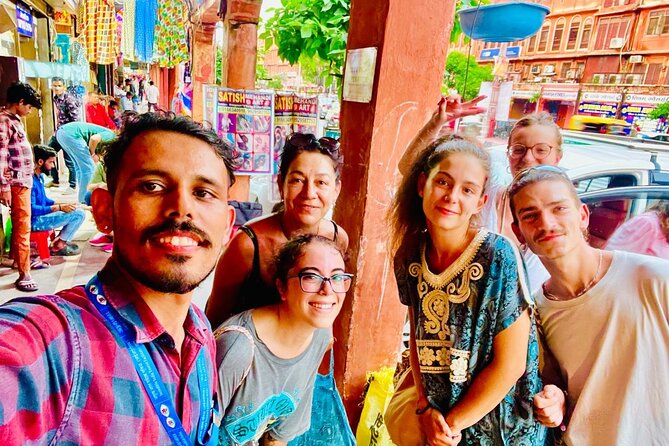
Then you reach Mandir Shri Ram Chandra Ji, dedicated to Lord Rama. The tour keeps it focused with about 20 minutes and marks admission as free.
What makes this stop work is the contrast. After the market rhythm, you get a calmer, more structured space where you can appreciate the architecture and spiritual significance. The guide’s job here is practical: help you notice details and understand the religious meaning without turning the visit into a lecture.
If you’re worried the tour might feel rushed, this free temple stop is a breather. It’s also a good place to pause for photos and just watch how people move through the space.
Hawa Mahal: The Famous Facade, Without the Inside Rush
Next is Hawa Mahal, the Palace of Wind. The plan here is exterior focus: you’ll walk by and admire the facade, with about 15 minutes for viewing and explanation.
A note in the tour details says you won’t go inside. Admission for Hawa Mahal is listed as 200 INR and not included, which can feel slightly confusing at first. In practice, it usually means you’ll only need that entry if the group accesses areas beyond the exterior viewing. Still, I’d keep the fee in your budget just in case your guide decides to include an entry option.
Even without entering, Hawa Mahal can be the emotional photo stop. Those window patterns are instantly recognizable, and with the guide pointing out the history and design thinking, it turns into more than a postcard.
Mandir Shree Laxminarayan Ji: Lord Vishnu and Goddess Laxmi

After Hawa Mahal, the tour goes to Mandir Shree Laxminarayan Ji, dedicated to Lord Vishnu and Goddess Laxmi. You’ll spend about 25 minutes, and admission is listed as free.
This is one of the longer temple stops on the route, and I think that time makes sense. You get enough space to look slowly at architectural elements, learn what the dedication means, and settle into the environment.
If you like history but also want the tour to feel human, this stop helps. It’s where the walk stops acting like a checklist and starts acting like a day in Jaipur—religion mixed into regular city movement.
Johri Bazar and Katla Purohit Ji Ka: Shopping Streets as Cultural Windows
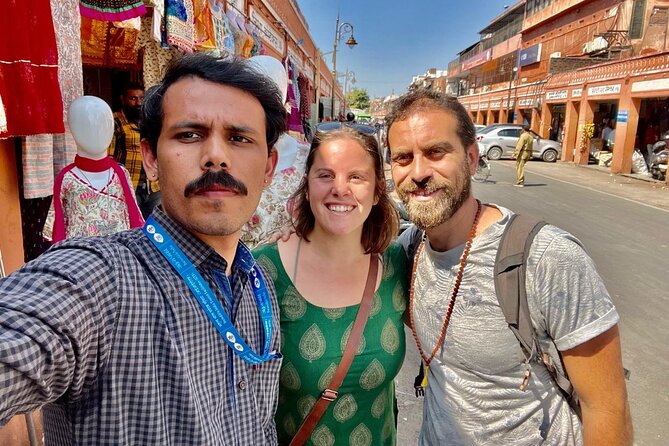
After the temple circuit, the tour switches into market exploration with two named areas.
First is Johri Bazar, described as a well-known market for jewelry and handicrafts. Then you move into the narrow streets of Katla Purohit Ji Ka, another historic market area. The tour doesn’t push purchases, but it does encourage you to soak up the street experience and notice how craft and commerce live together.
I like this section because it gives context to what you’ve already seen. City planning and royal buildings set the stage. The bazaars show how people actually spend money, choose materials, and pass traditions down through trade.
Also, if you want a small food break, some guides have been known to suggest snack pauses like kulfi or ice cream during the outing. It’s not listed as a guaranteed stop, so treat it as optional, but it can be a nice way to cool down and keep momentum.
Isarlat Sargasooli Tower: Your Panoramic Ending in 10 Minutes
The tour finishes at Isarlat Sargasooli, a historic tower built in the 18th century. You’ll have about 10 minutes here, which is short, but the payoff is clear: you get stunning panoramic views and a strong final chance for photos.
Admission for this tower is listed at 200 INR and not included. I’d treat this as your “wrap-up view.” Even if you don’t stay to stare forever, a quick look from above helps you mentally map the city you’ve been walking through.
It also works emotionally. After temples and street lanes, you end with a sense of scale. You can see how the old parts connect and where the landmarks sit relative to each other.
Price and Value: A Low Base Price With Manageable Add-Ons
The tour price is listed as $20, which is on the budget-friendly side for a guided walk across major Jaipur sights. The real question is value after you factor in entry fees.
Not included:
- Jantar Mantar: 200 INR
- City Palace: 1000 INR
- Hawa Mahal: 200 INR
- Isarlat Sargasooli: 200 INR
Included:
- Water bottle
- English and Spanish written guide
So the cost can still be quite reasonable, but it depends on what you care about most. If you’re happy paying extra for palace access and astronomy explanations, this can feel like a good bargain. If you’re trying to keep entrance fees tight, City Palace is the one to evaluate.
A small plus that helps the value: because it’s private for your group, you’re not paying extra for guide attention you won’t use. And the mobile ticket and group discount note suggests the operator tries to keep the experience smooth for groups.
Who This Tour Fits Best (and Who Might Want Something Different)
This walk is a strong fit if you want:
- A short, organized way to see multiple Jaipur highlights in one outing
- Temple and market context, not just monuments
- Guides who can answer questions and adjust to your interests (names like Aditya, Ankit, and Richi show up with consistently positive remarks)
It’s also a good option for families, since the tour is described as suitable for children with guides who bring the stories to life.
You might want to consider an alternative if:
- You hate paying separate entry fees and prefer one all-in ticket
- You don’t enjoy exterior walking or market street time
- You want a slow, deep museum experience rather than guided highlights
Should You Book This Jaipur Heritage Culture Walk?
If you’re visiting Jaipur for the first time, this is a smart, time-efficient choice. The route balances big landmarks (Jantar Mantar, City Palace, Hawa Mahal) with spiritual stops (Govind Devji Temple and two free temples) and then finishes with a city-view payoff at Isarlat Sargasooli.
The main reason to book is the structure: you get explanations at the right moments, so Jaipur doesn’t feel like disconnected stops. The main reason to pause is the admission cost add-ons, especially the City Palace ticket.
If you’re the type who likes to understand what you’re looking at, and you want a guide who can talk through history, religion, and everyday city life in a practical way, I’d book it. Just budget for the entry fees, bring patience for street walking, and plan on a photo-friendly ending.
FAQ
FAQ
How long is the Heritage Culture and History Walking Tour in Jaipur?
The tour is about 2 hours 25 minutes.
Where does the tour start and end?
It starts at Jantar Mantar (Malve Nagar, J.D.A. Market, Kanwar Nagar area in Jaipur) and ends at Isarlat Sargasooli (Sarkasuli tower area near Aatish Market, Gangori Bazaar).
What is included in the tour price?
You get a water bottle and an English and Spanish written guide. The tour also includes a mobile ticket.
What entrance fees are not included?
Jantar Mantar is 200 INR, City Palace is 1000 INR, Hawa Mahal is 200 INR, and Isarlat Sargasooli is 200 INR. These are not included.
Are any temples included with no admission fee?
Yes. Mandir Shri Ram Chandra Ji and Mandir Shree Laxminarayan ji are listed as having free admission.
Will we enter Hawa Mahal?
No. The plan is to admire the facade from outside, and the tour notes that you will not go inside.
Is this tour private?
Yes. It’s listed as a private tour/activity, meaning only your group participates.
Can I get a full refund if I cancel?
Yes. The policy allows free cancellation up to 24 hours before the experience for a full refund. Cancellation within 24 hours is not refunded.