REVIEW · JAIPUR
Jaipur Heritage Walk – Artisans | Bazaars | Culinary | Temples (Awarded)
Book on Viator →Operated by Vedic Walks Rajasthan · Bookable on Viator
Jaipur is a city you feel in your shoes. This Heritage Walk threads through the walled-city lanes with stops built around artisans, bazaars, and small moments of temple life, not just big sights. You’ll get a guided sense of how the Pink City was planned—then you’ll move street by street through the places that keep daily life going.
I especially like the mix of hands-on craft stops and real food breaks: you can watch metal beating, see bangle making in action, and try local snacks like pani puri and Mohanthal, plus a hot cup of masala chai. The second big win is pacing: it’s only about 2 hours 30 minutes, with frequent short pauses that make the tight lanes easier to handle.
One consideration: this is a walk through narrow lanes and busy markets, so comfortable shoes matter. Also, the experience requires good weather, so if it’s rainy or rough, you may need to switch dates or opt out.
In This Review
- Key highlights to know before you go
- First steps in Jaipur’s walled-city maze: from Golcha Cinema to the Seven Gates
- Narrow lanes, metal beating, and pani puri: the heart of everyday Jaipur
- The Royal entry gate and temple-time meaning: seeing why sacred spaces matter
- Bridal market color and Mohanthal at Sodhya Halwai
- Maniharo Ka Rasta bangle making: the sealing-wax demo you’ll remember
- Tripolia Bazar flower market and Isarlat Sargasooli: ending with sights you can smell
- Price and value: why $30.04 makes sense for this kind of route
- Who this walk is best for (and who should pick something else)
- Practical prep for a smooth 2.5-hour walk
- Should you book Jaipur Heritage Walk – Artisans | Bazaars | Culinary | Temples?
- FAQ
- How long is the Jaipur Heritage Walk?
- Where does the tour start and end?
- What does the tour cost?
- What’s included in the price?
- What food tastings should I expect?
- Is there a limit on group size?
- Does the tour include temple visits?
Key highlights to know before you go
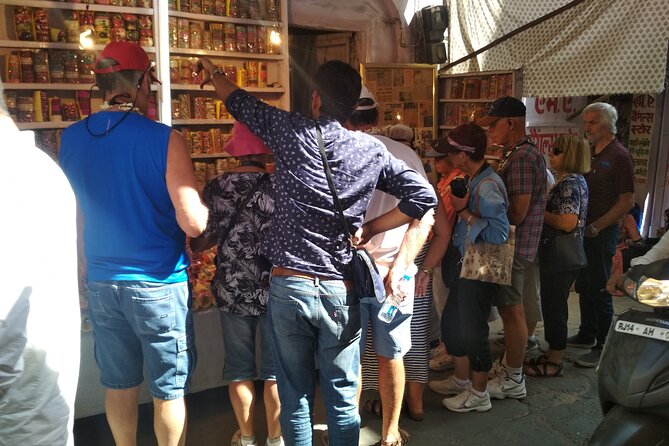
- Seven Gates context at the start: you begin with how Jaipur’s walled city is organized, before stepping into the lanes.
- Live artisan work: metal beaters and bangle artisans are part of the route, with demonstrations rather than photo stops.
- Food stops that feel local: pani puri and Mohanthal show up alongside a warm cup of masala chai.
- Markets with specific personalities: Bridal market energy, an older flower market, and spice-bazaar stops.
- Temple culture explained, not just visited: a guide talks through what you’re seeing during the temple moment.
- Small group size: capped at 15 travelers, which helps you actually hear and ask questions.
First steps in Jaipur’s walled-city maze: from Golcha Cinema to the Seven Gates
The walk starts at Golcha Cinema on Chaura Rasta Road, in Bapu Bazar, right in the Pink City. You meet, get your bearings, and the guide sets the big-picture layout: Jaipur was planned with a grid-like logic, divided into sections shaped by the geometry of the walled city. That matters because the lanes you’re about to walk can feel confusing at first glance.
At this early stop, you also get the story of 07 gates of Jaipur, the entry points that structure movement through the old city. It’s the kind of context that makes later stops click—when you know why a street turns the way it does, you stop thinking you’re lost and start thinking you’re learning the city’s rules.
You’ll also visit a priest family connected with a heritage mansion. Even if you’re not trying to memorize every detail, this stop gives you a human baseline: the old city isn’t only monuments. It’s families, routines, and traditions still living in the architecture.
What to watch for: look at the lane widths and how the city funnels people through the gates. Those small observations make the rest of the walk feel less like aimless wandering and more like a guided path you understand.
You can also read our reviews of more walking tours in Jaipur



Narrow lanes, metal beating, and pani puri: the heart of everyday Jaipur
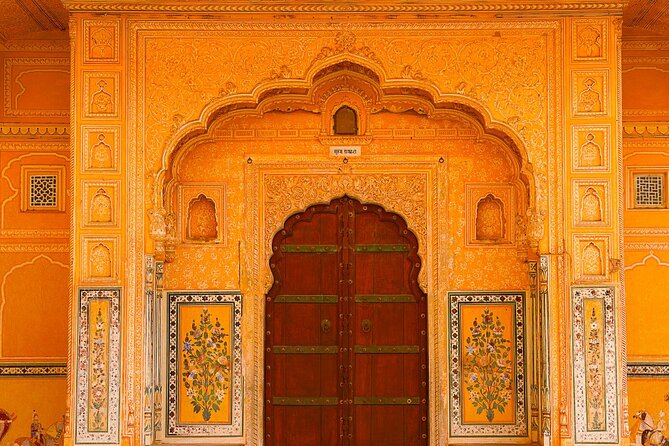
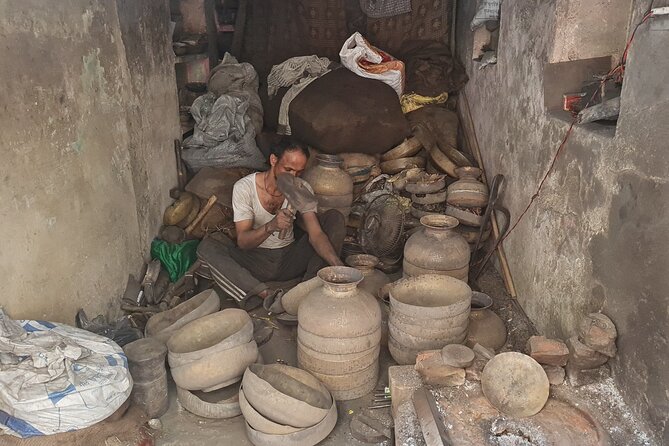
Soon you’re moving into the tight lanes of Jaipur. This section is designed to make you slow down and notice what’s happening around you. You’ll stop for four different “life-in-motion” experiences: a community of metal beaters, a wholesale snack area known for pani puri, an Ayurveda center, and heritage lanes with an anecdote about Prince Charles visiting those areas.
The metal beating stop is the kind of craft work that looks simple until you watch it closely. You see how repeated hammering and careful shaping turn metal into bangles, utensils, or decorative pieces that Jaipur is known for. It’s not a behind-glass museum display. It’s workshop energy.
Then there’s the pani puri market moment. Instead of getting one plated snack, you’re seeing the wholesale setup—so you understand the scale and speed of how these foods are made and sold. You’ll get one of the tastings included in the tour, and it’s a good way to sample something classic without turning your walk into a food mission.
The Ayurveda center stop adds a different layer. You get a brief look at traditional wellness practices, not as a lecture, but as part of the city’s everyday health culture. If you’re curious about how old and new sit side by side in India’s towns, this is one of the more interesting “in-between” stops.
One practical tip: this portion is inside the old city lanes, so plan on short photo breaks rather than long stand-stills. Keep your pace, and your guide will keep the route logical.
The Royal entry gate and temple-time meaning: seeing why sacred spaces matter
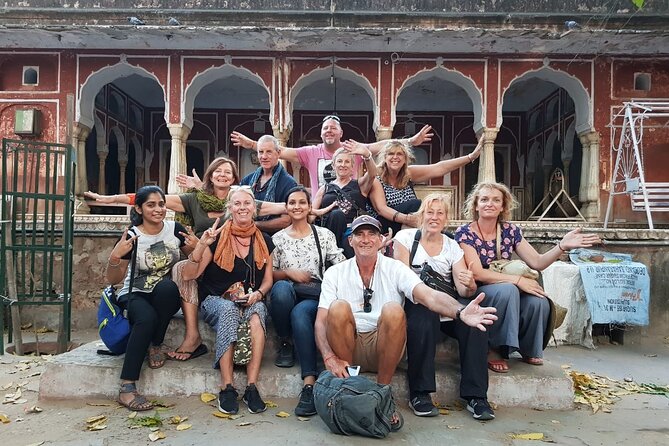
About halfway through, you reach a big heritage gate that also serves as an entry gate for the residence of Jaipur’s Royal family. This is one of those moments where the city planning and the power dynamics show up instantly. Even if you don’t go deep into palace architecture, the gate gives you a sense of how movement and access were controlled.
From there, the tour’s temple connection comes in—this experience is described as part of temples, and the guide’s role is to explain what you’re seeing while you’re there. In the feedback tied to this tour style, guides like Nidhi have been praised for talking clearly through what’s happening at a Hindu temple visit, so you understand the rhythm of worship rather than just looking on.
Why it’s valuable: temple stops can be hit-or-miss on city tours. Here, the temple element is framed as culture with context. That turns it into a learning moment that fits the rest of the walk’s theme: artisans, markets, and living traditions.
If you plan to visit temples during your trip, dress modestly and keep your body language respectful. Even if the exact rules aren’t stated for every site, you’ll be in active community spaces, not a staged attraction.
Bridal market color and Mohanthal at Sodhya Halwai
Stop three takes you to SODHYA HALWAI, where the route passes through the Bridal market of Jaipur. This is one of the most visually fun stops. You can see brides shopping for traditional wedding dress styles, and the whole area carries that mix of excitement and focus that comes with big life events.
The stop is also a food moment. You’ll try a local sweet called Mohanthal here. It’s the kind of dessert that feels purpose-built for festivals and celebrations, which makes it fit the Bridal market theme. If you like sweets but don’t want a heavy sugar overload, plan to take small bites and share.
This part of the walk works well even for people who aren’t shopping. You’re watching the human side of the market: family decisions, tailoring details, and how clothing connects to culture. It’s not only about buying something. It’s about seeing how the community prepares for important days.
Possible drawback: if you dislike crowded shopping streets, this segment may feel intense. The good news is that the stop is short, and the guide will keep you moving.
Maniharo Ka Rasta bangle making: the sealing-wax demo you’ll remember
At Maniharo Ka Rasta, you get your most hands-on craft experience. The street is known for bangle making artisans, and you’ll see a live demo of making traditional wrist bangles using sealing wax. That detail matters because it tells you this workshop isn’t a generic craft show. It’s a specific technique, explained in the moment.
Bangle making is perfect for a walking tour because you can watch the process without needing special equipment. You’ll see shaping steps and craft workflow, and you’ll get a stronger idea of why bangles are such an emotional and social object in Rajasthan culture.
If you’re planning to buy bangles, this is the time. You’ll be able to see quality cues firsthand, rather than picking blindly from a display later. Also, the tour includes a souvenir from local artisans, so you may leave with a small piece made through this same tradition.
Photo tip: bring your camera, but be ready to pause. Craft workshops don’t always love big crowds hovering at every angle, so ask before you step in close.
You can also read our reviews of more historical tours in Jaipur




Tripolia Bazar flower market and Isarlat Sargasooli: ending with sights you can smell
The final stretch heads to Tripolia Bazar. This stop is built around market life with a specific trio of themes: the oldest Flower Market of Jaipur, a spice market, and a walk past the tall minaret called Isarlat Sargasooli. You end at the Flower Market near Choti Chaupar in the Tripolia Bazar area.
This is where your senses do a lot of the work. Flowers give you scent and color. Spices give you color and that warm, earthy smell that sticks to your memory. The minaret stop acts like a visual punctuation mark: after workshops and street-level stalls, you get a taller landmark that helps you map the city vertically.
The walk ends at the florist market, which is a good reset point. By then, you’ve built a sense of the old city’s rhythm, so the final market feels less like a random last stop and more like the closing scene of what you’ve learned.
Price and value: why $30.04 makes sense for this kind of route
At about $30.04 per person, this is one of those tours that feels like a bargain once you see what’s included. You’re not paying mainly for transit between tourist sites. You’re paying for a guided sequence through the working city.
Your included items matter:
- packaged drinking water
- an experienced English speaking city explorer
- two local food tasting opportunities
- a souvenir from local artisans
Those food tastings plus the craft demonstrations are typically where tours start to feel expensive elsewhere. Here, the tour is priced low enough that you can treat it as a value add to your day, not a major budget hit.
Also, the group size is capped at 15, which helps with questions and keeps the pace workable in narrow lanes.
Who this walk is best for (and who should pick something else)
This Heritage Walk is ideal if you like city life and you want a guided path through neighborhoods you’d probably miss on your own. It’s especially good for:
- first-timers who want the logic of the Pink City layout
- people who enjoy artisan demonstrations
- anyone who likes sampling street food and local sweets without hunting for it
- families who want a structured walk that stays active (the feedback mentions an 8-year-old enjoying the experience)
It’s less ideal if:
- you hate crowded bazaars
- you struggle with lots of walking on uneven surfaces
- you want only major monuments and long, ticketed indoor visits (this route is more about streets, markets, and culture than monument-heavy sightseeing)
Practical prep for a smooth 2.5-hour walk
Plan for a route that includes narrow lanes, market stalls, and workshop stops. Wear shoes you can move fast in. Carry a small amount of cash if you want to buy bangles or sweets, but remember two tastings are already included.
Since the experience requires good weather, check the forecast before you go. If rain hits, the walk may be rescheduled or refunded, so don’t plan it as the only activity holding your whole day together.
For temple etiquette, keep your clothes modest and follow your guide’s cues. Even when the route is relaxed, you’re entering community spaces.
Should you book Jaipur Heritage Walk – Artisans | Bazaars | Culinary | Temples?
I think you should book it if you want Jaipur to feel like a living city, not a checklist. The route hits what most visitors miss: craft work you can watch, markets you can smell and taste, and culture moments explained in plain language by guides praised for teaching what you’re seeing (including names like Nidhi and Ani in the feedback).
Skip it if you’re only interested in monuments, or if you’re set on a low-foot-traffic day with minimal crowds. Otherwise, this is a strong value walk for getting oriented fast, eating well, and leaving with a better sense of how Jaipur’s old-city neighborhoods actually work.
FAQ
How long is the Jaipur Heritage Walk?
It lasts about 2 hours 30 minutes (approximately).
Where does the tour start and end?
It starts at Golcha Cinema, Chaura Rasta Rd, New Gate, Bapu Bazar, Pink City, Jaipur, and ends at the Flower Market near Choti Chaupar, Tripolia Bazar, Modikhana, Jaipur.
What does the tour cost?
The price is listed as $30.04 per person.
What’s included in the price?
Inclusions are packaged drinking water, an English speaking city explorer, two local food tasting opportunities, and a souvenir from local artisans.
What food tastings should I expect?
You’ll have two local food tasting opportunities during the walk, including chances to try pani puri and Mohanthal, plus the route mentions masala chai.
Is there a limit on group size?
Yes. The tour has a maximum of 15 travelers.
Does the tour include temple visits?
The experience is described as including temples, and the route includes a cultural temple moment where the guide explains what’s happening.