REVIEW · JAIPUR
Culture and Heritage Walk | Pink City Jaipur
Book on Viator →Operated by Nomadic Tours India · Bookable on Viator
Jaipur comes alive at street level. This 3-hour Culture and Heritage Walk threads old-city markets with easygoing stories, so you get the why behind the pink walls and temple steps; I especially like the route through Bapu Bazar and Johri Bazaar and the chance to sample classic Jaipur snacks and sweets along the way. The one catch: it moves at a steady walking pace and you only see Hawa Mahal from the outside, so expect photos more than close-up sightseeing.
A female-led guide (and a small group, up to 10) keeps things personal. You’ll start at Golcha Cinema in the Pink City area, and you’ll finish back near the same meeting point, which makes it simpler to plan the rest of your day.
If you want an intro to Jaipur that feels like you’re being shown around by someone who actually cares, this is a smart pick. It’s built for first-timers, but it also works if you already saw the big-name monuments and want the texture—markets, crafts, and daily rhythms.
In This Review
- Key things that make this Pink City walk worth your time
- Jaipur on Foot: what this 3-hour walk gets right
- Meeting point at Golcha Cinema: where the walk starts smoothly
- Hawa Mahal from the street: a fast photo stop with real context
- Bapu Bazar and Tripolia Bazar: crafts, antiques, and worship tools
- Johri Bazaar jewelry history: seeing the economy behind the sparkle
- Food, snacks, and sweets: how the tour handles the best part
- Guides and small-town details: why the story sticks
- Price and value: what $20 buys you in Jaipur
- Who should book this walk, and who should skip it
- Should you book the Pink City Culture and Heritage Walk?
- FAQ
- How long is the Pink City Culture and Heritage Walk?
- Where does the tour start and where does it end?
- What does the tour include in terms of sightseeing?
- Is there an admission ticket for Hawa Mahal during the tour?
- Will I get a ticket on my phone?
- How big is the group?
- Is the tour led by a guide?
- Does the tour run in any weather?
- What is the cancellation policy?
Key things that make this Pink City walk worth your time
- Market-first route that focuses on what Jaipur trades in, not just what it looks like
- Hawa Mahal photo stop from the street with just enough history to place it
- Bapu Bazar and Tripolia Bazar stops for antiques, utensils, locks, and metalware used in worship
- Johri Bazaar jewelry background tied to Jaipur’s older economy
- Small group size (max 10) for better questions and calmer lanes
- Long-running food and sweet tradition vibe built into the pacing
Jaipur on Foot: what this 3-hour walk gets right
This tour is designed for people who learn best by walking—one lane at a time, stopping when something matters. You’re not rushed through monuments. Instead, you get a local-feeling overview of Jaipur through markets, crafts, religious architecture, and everyday shopping.
The big win here is how the tour connects objects to people. A bazaar is not just a place to buy things; it’s also where Jaipur’s identity shows up—jewelry, metalwork, antiques, locks, and the small rituals tied to them. That’s why the walk can feel more meaningful than a checklist of sights.
You also get a tight time window. At about 3 hours, you can fit it on your first evening (or first day) without losing your whole schedule to sightseeing. And because the group is capped at 10 travelers, it stays more human-sized than the mega-group tours.
You can also read our reviews of more walking tours in Jaipur



Meeting point at Golcha Cinema: where the walk starts smoothly

You’ll meet at Golcha Cinema on Chaura Rasta Rd, near New Gate, in the Pink City area. The tour ends back at the meeting point, which is helpful because you’re not left stranded across town when your legs are done.
It’s also marked as near public transportation, so you can usually get there without wrestling with complicated directions. Bring comfortable shoes. The itinerary is built for walking through old-city lanes, including market stretches where sidewalks can be narrow and busy.
If you’re the kind of traveler who likes to get your bearings fast, this is a good move. You start in a central, lived-in area and then gradually “read” the city better as you go.
Hawa Mahal from the street: a fast photo stop with real context
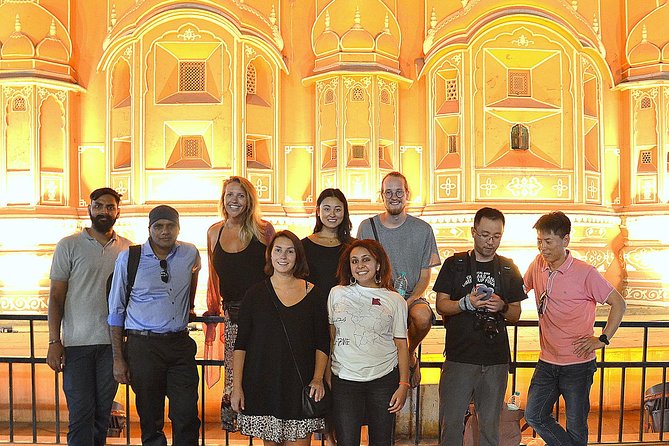
You’ll stop at Hawa Mahal (Palace of Wind) for an outside view only. The tour keeps it short—about 5 minutes—and that’s intentional. This isn’t meant to replace a full monument visit. It’s meant to give you the landmark in the context of the neighborhood, then move on.
You’ll also get the basics of what you’re looking at and where the building fits into Jaipur’s story. And yes, you’ll get time for pictures. The outside-only approach can actually be a plus for first-timers, because you see how the palace shapes the streets around it.
Just remember: if you’re hoping for an in-depth architecture visit inside the monument, you’ll need a separate stop later.
Bapu Bazar and Tripolia Bazar: crafts, antiques, and worship tools
After Hawa Mahal, the walk shifts into marketplace mode, starting with Bapu Bazar. Here, the focus is on products connected to Jaipur and also items that come in from nearby villages. In other words, this is not only about what’s for sale. It’s about where the city’s goods come from and how Jaipur connects to surrounding craft traditions.
Next is Tripolia Bazar, right beside the Wind Palace area. This stop leans into older trade and the objects people use in daily life and worship. You’ll see market specializations like antiques, utensils, locks, and metal products used for religious purposes. Even if you don’t buy anything, it helps you understand why these lanes matter: they’re not random shopping streets. They’re part of the system that kept Jaipur running and kept traditions moving.
One practical consideration: this section is visually busy. You’ll want to pace yourself so you don’t get overwhelmed. The guide’s job here is to help you focus on what to notice, not just walk past things.
Johri Bazaar jewelry history: seeing the economy behind the sparkle
Johri Bazaar is a key stop for anyone curious about Jaipur’s older economy. Jewelry is described as one of the city’s main sources of income, and the market is said to be around 150 years old. That matters, because you start to see the craft behind the shine, not just the end products.
This is also a stop that can change how you look at the city afterward. Once you hear the “why” behind the trade, the market details stop being background noise. You understand that the Pink City isn’t only about architecture—it’s also about work, craftsmanship, and the local business networks that fed families for generations.
If you’re shopping for jewelry or want to understand what makes Jaipur styles distinct, you’ll likely enjoy this stop. Even if you’re not buying, the trade context helps you spot patterns when you walk through other parts of the old city later.
You can also read our reviews of more city tours in Jaipur



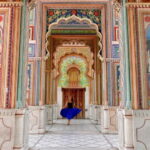

Food, snacks, and sweets: how the tour handles the best part
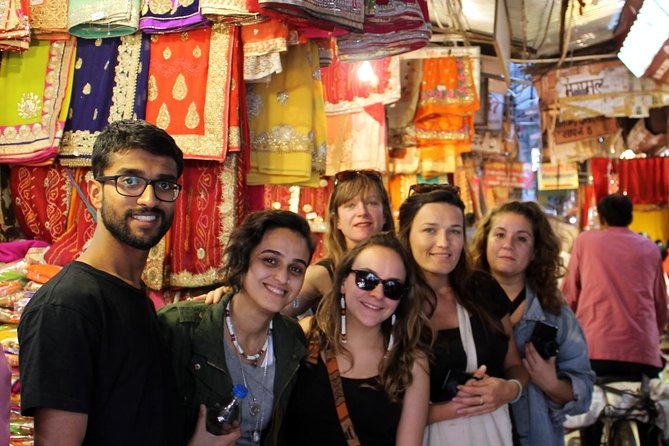
The tour is built around tasting the city as you walk. It highlights snacks and sweets from legendary old-city shops, plus food-stall traditions said to run for 50+ years. In practice, this means the route is timed so you’re not just sightseeing—you’re also taking breaks that feel like part of the experience, not a distraction.
The stops include opportunities to try local flavors and small bites, and you’ll hear stories connected to what you’re eating. That storytelling is important. When someone explains why a sweet shop has a reputation—or what locals order—it turns food into another form of cultural information.
A small tip: if you have a sensitive stomach or strong dietary limits, still go. Just pace the sampling. Since the tour mixes markets and food breaks, you’ll want to pay attention to what you feel comfortable trying on the day.
Guides and small-town details: why the story sticks
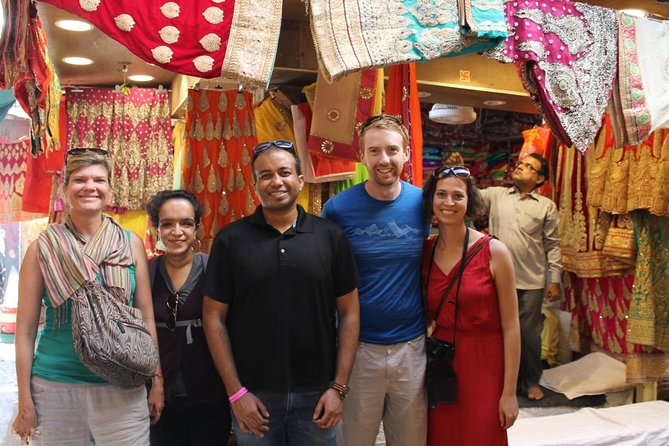
This walk is led by a female guide, and the experience is strongly shaped by the person holding the group together. Names like Harshit, Deepak, Ayush, and Aayush show up in past guide experiences, and the theme is consistent: the guide isn’t reciting facts. They’re translating the city.
What stands out is the type of information you don’t pick up just by reading a sign. You get little bits of context—details about architecture, daily life, and the logic behind market specializations. That’s the difference between seeing Jaipur and understanding it.
The walk also tends to include small cultural stops like tea at places you might not stumble across on your own. Those pauses are where Jaipur feels like a living place, not a photo backdrop.
Finally, group size matters. With a maximum of 10 people, it’s easier for the guide to keep the pace steady and answer questions without feeling rushed.
Price and value: what $20 buys you in Jaipur
At $20 per person, this tour sits in the budget-friendly range for Jaipur. The value comes from three things you usually pay extra for elsewhere: guidance, orientation, and time.
You get a guided route through four meaningful stops—Hawa Mahal’s outside viewpoint, then market areas like Bapu Bazar, Tripolia Bazar, and Johri Bazaar. You also get the kind of context that helps you keep exploring after the tour ends.
Importantly, the tour includes at least one free admission moment for the Hawa Mahal photo stop, and the other market segments are free to access as part of the walk. That makes the ticket feel more like a service fee for interpretation and pacing rather than a basic entrance fee package.
What might affect perceived value is your own travel style. If you already love wandering markets and you’re hungry for local context, you’ll likely feel this was a bargain. If you prefer only large monument time or you dislike walking, you may want to allocate your money elsewhere.
Who should book this walk, and who should skip it
This tour is a good match if:
- You’re visiting Jaipur for the first time and want a grounded intro
- You like markets, crafts, and everyday cultural rhythms
- You want a guide to point out what’s worth noticing
- You’d rather snack and wander than do long museum-style sightseeing
It’s less ideal if:
- You hate walking and want mostly vehicle-based sightseeing
- You expect Hawa Mahal to be a full interior visit
- You want a very structured, museum-like pace
The good news is that it says most travelers can participate. Just remember that comfort comes from choosing the right shoes and bringing a little patience for crowded market lanes.
Should you book the Pink City Culture and Heritage Walk?
I’d book it if you’re the type of traveler who likes to learn by being guided through real life. For $20 and about 3 hours, you get a smart mix of landmark context, market culture, and food-sweet energy that fits nicely into an arrival day.
Skip it only if your priority is strict monument time or you need a slow, low-steps itinerary. Otherwise, this is exactly the sort of tour that turns the Pink City from a set of sights into a place you can actually picture.
FAQ
How long is the Pink City Culture and Heritage Walk?
It runs for about 3 hours.
Where does the tour start and where does it end?
The meeting point is Golcha Cinema, Chaura Rasta Rd, New Gate, Bapu Bazar, Pink City, Jaipur, Rajasthan 302003, India. The tour ends back at the meeting point.
What does the tour include in terms of sightseeing?
You’ll see Hawa Mahal from the outside for photos, then visit markets including Bapu Bazar, Tripolia Bazar, and Johri Bazaar, with stories tied to architecture, products, and traditions.
Is there an admission ticket for Hawa Mahal during the tour?
The Hawa Mahal stop is listed as admission ticket free, and you’ll view it from the outside.
Will I get a ticket on my phone?
Yes. It’s listed as a mobile ticket.
How big is the group?
The tour has a maximum of 10 travelers.
Is the tour led by a guide?
Yes. The tour is led by a guide, and it’s specified as being led by a female guide.
Does the tour run in any weather?
It requires good weather. If it’s canceled due to poor weather, you’ll be offered a different date or a full refund.
What is the cancellation policy?
Free cancellation is available. You can cancel up to 24 hours in advance for a full refund.