REVIEW · ROME
NIGHT TOUR THINK BIG, GO MINI! Rome in Mini Cooper Classic Cabrio
Book on Viator →Operated by MINI TOUR ROMA · Bookable on Viator
Rome at night feels like a movie set. This private Mini Cooper Classic Cabrio tour is built for Rome’s top sights after dark, with a guide riding shotgun and calling out what matters while you glide through neighborhoods you’d never spot on foot. I especially love the way it stacks must-see landmarks (from Piazza Navona to St. Peter’s Square) with viewpoint stops like Turo Aventi and its secret keyhole. One catch: it’s a fast-moving route, so each stop is brief—great for photos and orientation, less ideal if you want long, in-depth exploring.
The timing helps, too. This runs 9:00 PM to 11:30 PM, when traffic is calmer, heat is gone, and monuments look their best under lights. You’ll also get pickup and drop-off wherever you want, plus snacks, water, coffee or tea, and alcoholic beverages included with the tour.
In This Review
- The Big Appeal: A Classic Mini Cabriocar + a Local Who Guides
- Price and What You’re Really Buying at $223.26 Per Person
- Pickup at 9 PM and the 3-Hour Rhythm (How the Night Flows)
- Piazza Navona: Bernini Fountains, Borromini Church, and a Perfect First Impression
- Trevi Fountain and Castel Sant’Angelo: Iconic Money Shots, No Day Crowds
- St. Peter’s Square and the Vatican Area: Big Views, Quick Time
- Piazza di Spagna and the Barcaccia Fountain: Romantic Rome on Rails
- The Pantheon: Pagan Temple to Modern Wonder
- Gianicolo Viewpoint and Fontana dell’Acqua Paola: Where Rome Feels Like a City
- Trastevere at Night: The Neighborhood Energy Stop
- Largo Argentina: The Point Where Julius Caesar Was Killed
- Altare della Patria Area: Victoria-Era Stone and National Memory
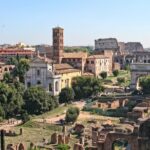
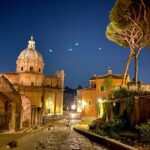
- Foro Romano and Palatine Hill: Ancient Power, Fast Orientation
- Turo Aventi and the Secret Keyhole: The View That Gets You Smiling
- Piramide Cestia and Circo Massimo: Ancient Structures Most People Skip
- Old Roman Term (SPA) and Monte Testaccio: Rome’s Working Side at Night
- The Colosseum Photo Moment: Quick Stop, Big Impact
- Snacks, Drinks, and Coffee: Small Comforts That Make a Night Tour Work
- Who This Tour Fits Best (and Who Might Want Something Else)
- Should You Book the MINI Tour ROMA Classic Mini Cabrio Night Tour?
- FAQ
- What time does the Rome by Mini Cooper night tour run?
- How long is the tour?
- Is hotel pickup and drop-off included?
- Is this tour private?
- What language is the tour offered in?
- What’s included in the price?
- Are meals included?
The Big Appeal: A Classic Mini Cabriocar + a Local Who Guides
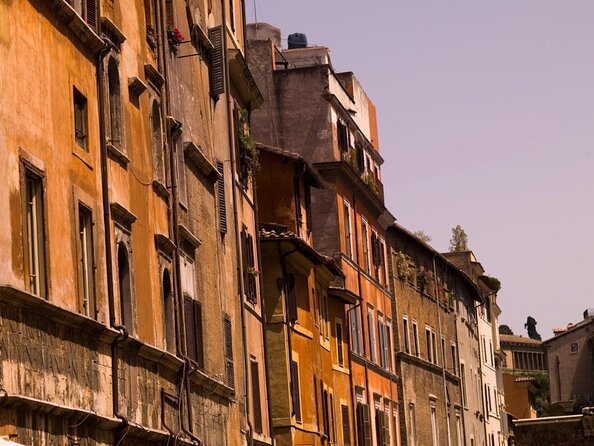
This is not a sit-and-listen bus tour. You’re in a vintage-style Mini cabrio style car that’s made for Rome’s narrow streets, and that changes the whole feel of the night. You don’t just see Rome—you get close to it in a way that feels personal and slightly cinematic.
The other win is the guide. In the stories shared by real people who booked it, the host Luca comes up again and again: caring, funny, and clearly proud of his city. He also asks questions at the start so the route can fit your pace. One couple even said the tour worked for a mobility issue without turning it into a “skip everything” night.
Price and What You’re Really Buying at $223.26 Per Person
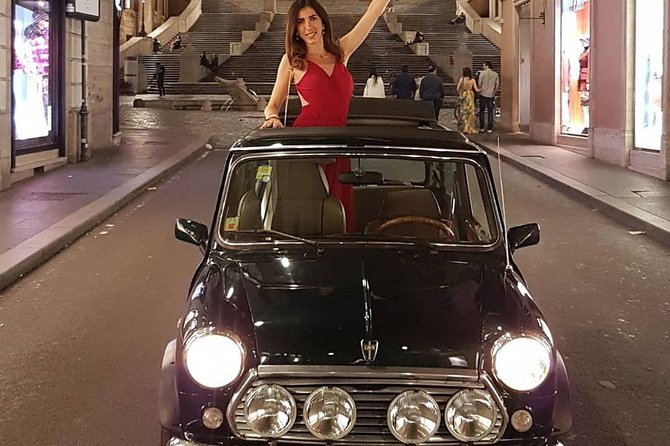
$223.26 per person sounds steep until you look at what’s included and what Rome usually charges for the same level of service. You’re paying for a private guided night with hotel pickup and drop-off (including anywhere you want), round-trip private transfer, live commentary, and time-saving transport between far-flung areas.
Then you add the “nice-to-have” extras that matter on a night tour: bottled water, snacks, coffee or tea, and alcoholic beverages included. That means you can spend your energy on seeing—not hunting down a snack halfway through or budgeting for every small comfort.
You can also read our reviews of more evening experiences in Rome
Pickup at 9 PM and the 3-Hour Rhythm (How the Night Flows)
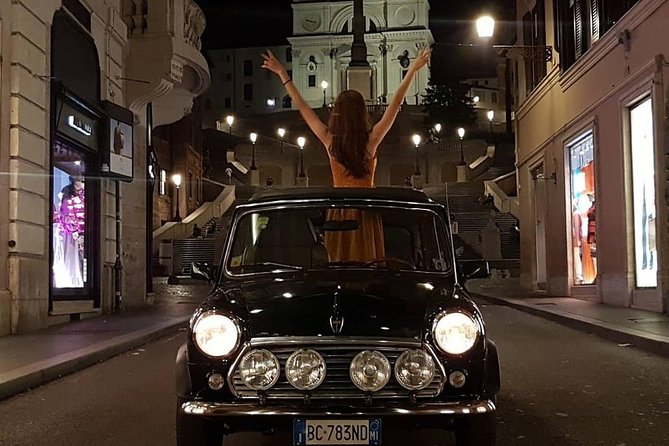
You’ll start around 9:00 PM and wrap up by 11:30 PM, with about 3 hours on the road. The itinerary is intentionally timed so you hit a lot of the city without feeling stuck in one neighborhood for too long.
Expect quick stops—often around 10 minutes—to look, photograph, and hear context from the driver/guide. This is ideal if you’re in Rome for the first time and want a fast, accurate sense of where things are and why they matter. If you’re the type who loves lingering in one place for an hour, you might find the pace a bit tight.
Piazza Navona: Bernini Fountains, Borromini Church, and a Perfect First Impression
The night begins at Piazza Navona, one of Rome’s most photogenic squares. The tour details call out three fountains by Bernini and a church by Borromini. That mix is part of what makes it feel like a greatest-hits Rome opener: baroque drama right in the open.
A quick stop here works well at night. You get the big visual payoff without getting stuck in daytime crowds. The downside is obvious: you can admire, but you can’t really “study” the square in depth in just a few minutes.
Trevi Fountain and Castel Sant’Angelo: Iconic Money Shots, No Day Crowds
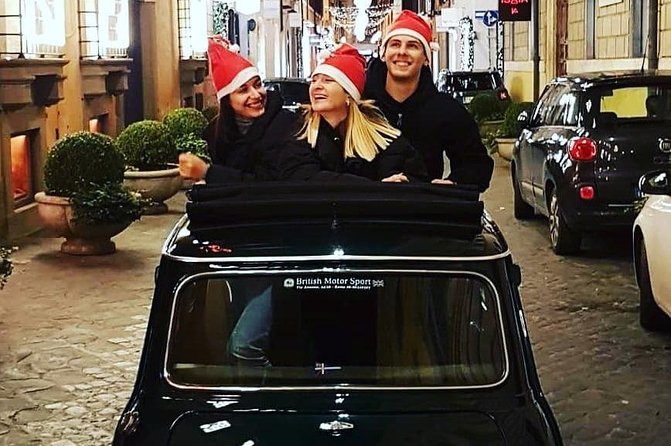
From Piazza Navona you swing to Trevi Fountain, described as the biggest fountain in Rome by Nicola Salvi (built in phases from 1732 to 1762). At night, the fountain’s scale feels even more dramatic, and you’ll be able to frame it in a calmer scene.
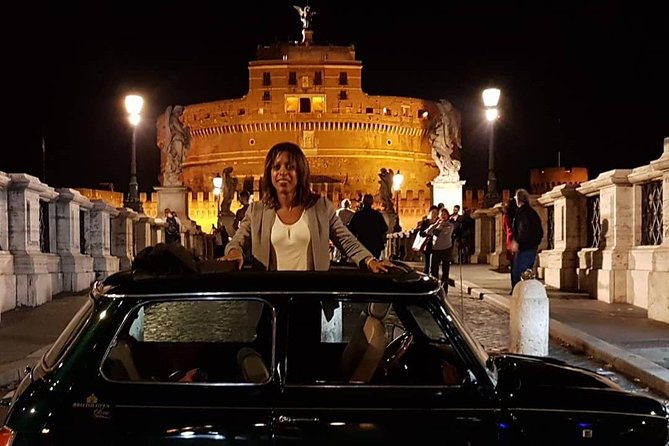
Then it’s on to Castel Sant’Angelo, tied to the tomb of the emperor Adriano. It’s a classic Rome pairing: myth-and-monument energy at Trevi, then imperial gravitas at the fortress-tomb by the river.
Both are frequent “see-it” stops, but the real value is that you’re seeing them under city lights with a guide to connect the dots.
St. Peter’s Square and the Vatican Area: Big Views, Quick Time
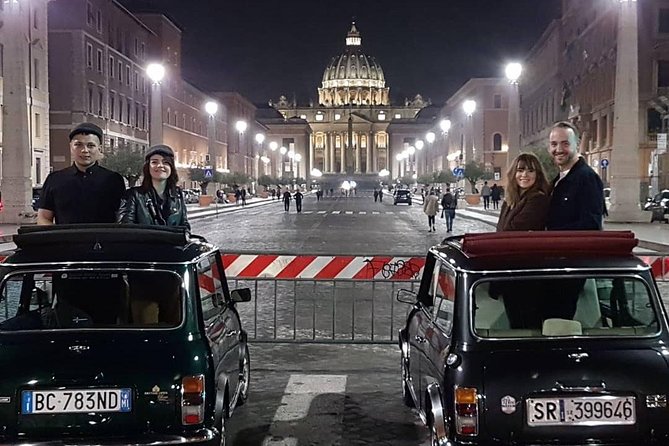
You’ll also spend time at St. Peter’s Square and the nearby basilica area. Even with a brief stop, this is the kind of sight where one good look is enough to reset your brain about what you’re standing in front of.
One practical point: at night, Rome can feel visually overwhelming in a good way. Your guide’s job here is to help you not just look, but understand what you’re seeing—where to stand, what to notice, and how the buildings fit into the city’s story.
Piazza di Spagna and the Barcaccia Fountain: Romantic Rome on Rails
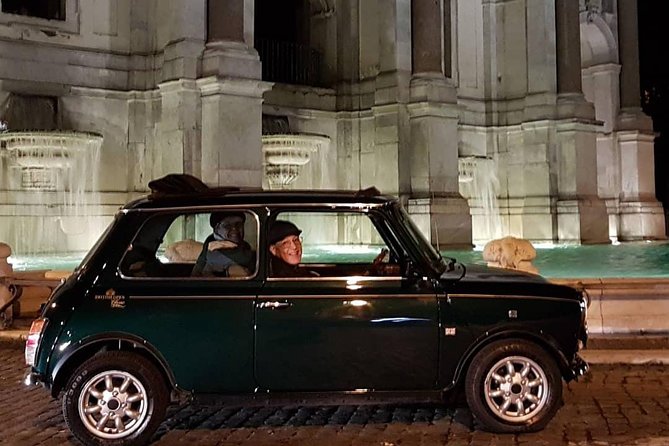
Next up is Piazza di Spagna, with the famous Bernini fountain La Barcaccia. This stop works because the square is instantly recognizable, but the night atmosphere changes everything. It feels less like a checklist and more like Rome being itself.
Again, the stop time is short. That means you’ll get the essence, not a full slow walk and coffee break. If you want a longer sit-down, use the tour as a “where and why” starter, then come back later.
The Pantheon: Pagan Temple to Modern Wonder
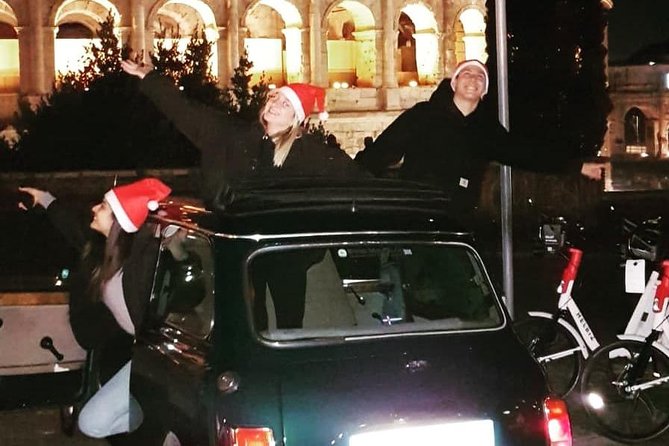
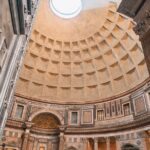
You’ll make a stop at the Pantheon, described in the tour details as a pagan temple. The guide context matters here, because the Pantheon’s layers are the point: ancient structure, later religious use, and a shape that still feels impossible in person.
In a quick visit, you’re mostly checking angles and proportions. I like doing that at night because the lighting helps the building look less flat and more dimensional.
Gianicolo Viewpoint and Fontana dell’Acqua Paola: Where Rome Feels Like a City
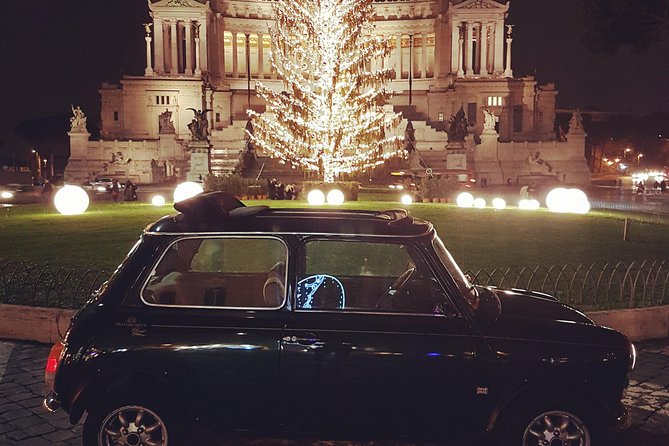
Two stops are clearly designed for the “wow, that’s Rome” moment.
First is Colle del Gianicolo, where you get a panoramic view of the city. Second is Fontana dell’Acqua Paola, also framed as a beautiful viewpoint stop.
These aren’t the headline museums. But for me, they’re the kind of moments that make the rest of the tour land. You see the geography. You realize how far apart landmarks actually are. And suddenly your Rome maps make sense.
Trastevere at Night: The Neighborhood Energy Stop
You’ll spend time in Trastevere, described as the best and biggest night-life neighborhood, and tied to an area that feels centuries deep (the details say around 1000 years old).
This is a smart inclusion because Trastevere gives you a different Rome flavor than the Vatican-and-ancient axis. Even if you only have a short stop, it’s enough to feel the vibe and spot where you might want to come back after your tour ends.
If you’re hoping to bar-hop all night, this stop won’t replace that. It’s more of a “wake up your senses and point you in the right direction” moment.
Largo Argentina: The Point Where Julius Caesar Was Killed
Next is Area Sacra di Largo Argentina, described as the exact point where Julius Caesar was killed. This is a history-heavy stop, and the quick time means you’ll get orientation, not a full excavation-level experience.
Still, the value is huge for first-timers. You’re seeing famous Rome events connected to physical space. The guide’s job is to keep it understandable in the middle of a fast night route.
Altare della Patria Area: Victoria-Era Stone and National Memory
You’ll also stop at the Complex of the Victorian Ala Brasini area, identified with Altare della Patria. This is where Rome’s layers show up in stone and scale. Even with just a short look, you’ll feel the monumental seriousness.
The limitation here is that the tour time won’t let you wander and absorb every angle. Treat it like a compass moment: see it, know it’s important, then decide if you want a longer visit later.
Foro Romano and Palatine Hill: Ancient Power, Fast Orientation
Now you’re into the ancient core. The route includes Foro Romano (the cultural and political center of ancient Rome) and Palatine Hill, one of the seven hills tied to the early start of Rome’s story.
A short stop at these sites can still be meaningful because you’re getting a guide-led “what you’re looking at” session. Then, when you walk later on your own (or on another tour), the stones stop being random.
If you’re a history lover, this is exactly why I like night tours for orientation: the city quiets down just enough for you to notice form and layout.
Turo Aventi and the Secret Keyhole: The View That Gets You Smiling
One of the most famous “only-in-Rome” photo moments shows up at Turo Aventi, including the secret keyhole and the mention of Sant’Anselmo Church. This stop is short, but it’s the kind of payoff that makes people remember the whole night.
The big plus: viewpoint stops at night work better than during the day. You get depth, lights, and a clear feeling of Rome as a city on layers—not just a pile of monuments.
The only consideration: if you want to replicate that photo or spend time walking the area, you’ll likely need your own extra time beyond the tour window.
Piramide Cestia and Circo Massimo: Ancient Structures Most People Skip
The route includes Piramide Cestia (as the tomb of Caio Cestio Imperator from 12 a.c.) and Circo Massimo, described as an old arena.
These are excellent for travelers who want variety beyond the postcard classics. They also help you understand the city’s scale—Rome wasn’t just temples and palaces. It had major public spaces and ceremony tracks.
There’s also a listed stop described as the oldest in the world, but the name isn’t provided in the details you’re given. Your guide should clarify what that refers to during the ride, since the context is what makes it click.
Old Roman Term (SPA) and Monte Testaccio: Rome’s Working Side at Night
You’ll stop at Old Roman Term (SPA)—presented simply as an “old Roman term” stop—and then Monte Testaccio, described as an old market.
This is the part of the tour that feels less tourist-locked. It gives you a sense of Rome as a lived-in city, not only a museum stage. Even if you can’t do a long walk-through, you’ll probably leave with stronger instincts for where the city “hums.”
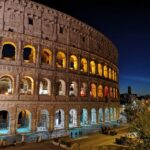
The Colosseum Photo Moment: Quick Stop, Big Impact
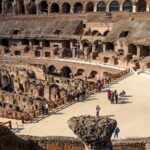
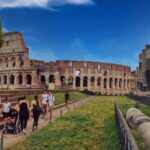
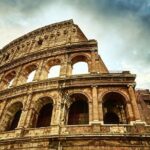
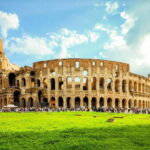
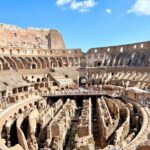
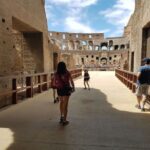
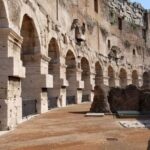
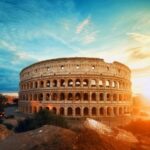
Finally, the itinerary ends with a stop at the Colosseum for about 10 minutes, with admission included. It’s a classic Rome finish: even a brief look feels like a rite of passage.
At night, the Colosseum can look almost surreal. The guide-led context matters because you’ll notice more than you’d expect in that short window—how the space fits together, and why it still dominates the skyline.
Snacks, Drinks, and Coffee: Small Comforts That Make a Night Tour Work
What I like here is the practical build. You get snacks, bottled water, coffee and/or tea, and alcoholic beverages included. That turns the “3 hours of driving and stops” into something smoother, especially on the first night of your trip.
A quick note: the details also say alcoholic drinks may be available to purchase, so you might end up with extra options depending on what’s offered. Either way, you won’t be left thirsty or stuck waiting for dinner plans to start the night.
Who This Tour Fits Best (and Who Might Want Something Else)
This tour is a great match if:
- You want a first-night Rome orientation with tons of landmark context
- You like photo stops but don’t want to plan transport between distant sights
- You want a private guide and the flexibility of pickup wherever you want
- You enjoy the idea of seeing Rome calmer at night with fewer crowds and cooler temps
It may feel less perfect if:
- You want long museum-style time at each site
- You prefer slow walks with lots of free time
- You’re expecting a deep dive into one neighborhood or one monument
Should You Book the MINI Tour ROMA Classic Mini Cabrio Night Tour?
If you’re trying to pick a “best value” first night in Rome, I’d lean yes. For $223.26 per person, you’re paying for a rare mix: classic Mini transport, pickup flexibility, private guiding, and included snacks/drinks—plus a route that covers major icons and smart viewpoint stops.
Book it especially if you want your next days to go smoother. This gives you mental landmarks. You’ll know what areas to revisit and what routes make sense when you’re walking.
If you’re a slow-traveler who hates time pressure, you might still enjoy it—but go in knowing the stops are brief by design.
FAQ
What time does the Rome by Mini Cooper night tour run?
It runs Monday through Sunday from 9:00 PM to 11:30 PM.
How long is the tour?
The duration is about 3 hours.
Is hotel pickup and drop-off included?
Yes. Pickup and drop-off are included, and pickup details say the provider will pick up and drop off everywhere the customers want.
Is this tour private?
Yes. It’s listed as a private tour/activity, with only your group participating.
What language is the tour offered in?
The tour is offered in English.
What’s included in the price?
Included items are local taxes, bottled water, snacks, driver/guide, live commentary on board, hotel pickup and drop-off, private round-trip transfer, coffee and/or tea, and alcoholic beverages.
Are meals included?
Lunch is not included, and food and drinks are only included if specified (snacks, water, coffee/tea, and alcoholic beverages are included).