REVIEW · ROME
THINK BIG, GO MINI! Rome Day&Night in Mini Cooper Classic Cabrio
Book on Viator →Operated by MINI TOUR ROMA · Bookable on Viator
A classic car tour in Rome beats the usual bus routine. You get a vintage cabrio ride plus quick, well-placed stops that help you get your bearings fast. I like that this is designed as an intimate experience rather than a cattle-car shuffle.
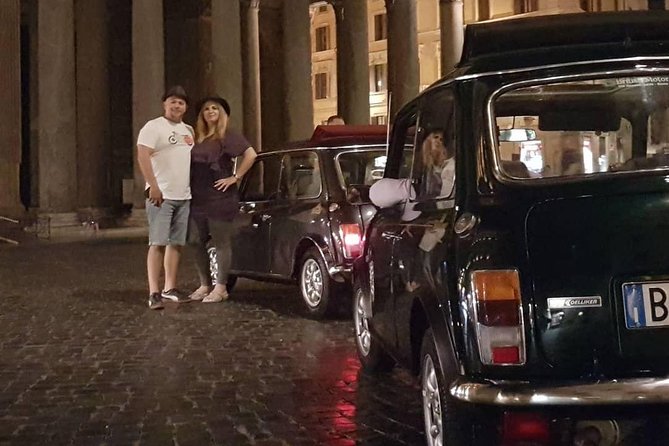
Two things I really like: you’ll enjoy an aperitif with food (plus snacks, bottled water, and alcoholic beverages) while you take in the city’s pace, and you’ll have a small-group feel that makes it easier to ask questions without feeling rushed. If you love photo breaks, the route includes viewpoint moments like Aventino Hill.
One consideration: it’s about 3 hours, and the schedule is packed with short stops, so you’ll want to be comfortable moving quickly between iconic places. Also, this runs Monday–Friday in set morning/afternoon windows, so timing matters.
In This Review
- Key things to know before you go
- Why the Classic Mini Cooper Cabrio works so well in Rome
- The “night in Rome” aperitif plan (and why it’s not just a snack)
- The route: from Piazza Navona to Trastevere after dark
- Stop 1: Piazza Navona (Fontane del Bernini + Chiesa del Borromini)
- Stop 2: Trevi Fountain (the famous facade and story)
- Stop 3: Piazza di Spagna (La Barcaccia)
- Stop 4: Pantheon
- Stop 5: St. Peter’s Basilica
- Stop 6: Castel Sant’Angelo
- Stop 7: Colle del Gianicolo (A great view break)
- Stop 8: Fontana dell’Acqua Paola
- Stop 9: Trastevere (the nightlife heart)
- Extra stops in the historic center: Largo Argentina, the Altare della Patria area, and more
- The ancient Rome pass-by moments you shouldn’t ignore
- Aventino Hill and the photo angle that sells the whole tour
- Your guide matters: Luca and the Rome-loving energy
- Price and what you’re really paying for (it’s not just the car)
- Who should book this MINI Cooper Rome Day & Night tour
- What to expect from timing, movement, and comfort
- Should you book this tour?
- FAQ
- How long is the Rome Day & Night Mini Cooper Classic Cabrio tour?
- What is the price per person?
- Is pickup offered?
- What is included in the tour?
- Are admission tickets included for the stops?
- Is the tour private?
- What happens if I need to cancel?
Key things to know before you go
- Classic Mini Cooper cabrio vibe: Vintage style, open-air fun, and a fun way to cover lots of Rome without the stress of driving.
- Aperitif included: Food and drinks are built in, so your “night in Rome” plan is already partly handled.
- Small-group, private feel: Only your group participates, so the experience stays personal.
- Photo-friendly viewpoints: Expect stops made for skyline views, not just passing by.
- Prime historic stops in sequence: You’ll hit major squares and landmarks efficiently in one route.
- English-language guiding: Offered in English, with a guide who brings a love for the city.
Why the Classic Mini Cooper Cabrio works so well in Rome
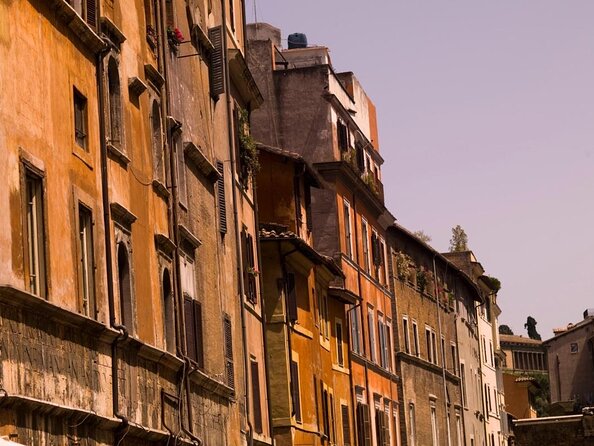
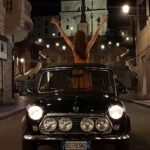
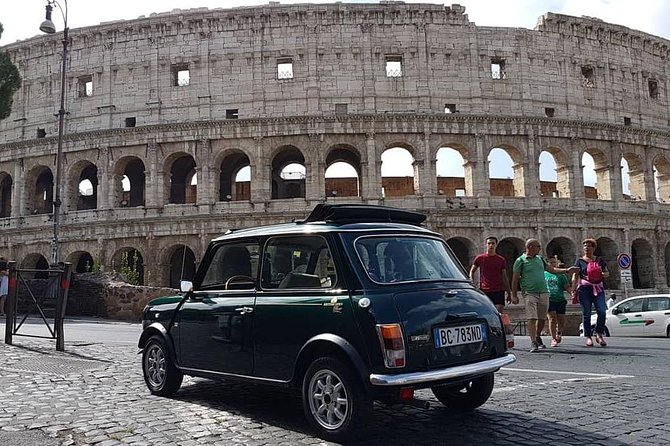
Rome can feel like two cities at once. By day, it’s stone, dust, and famous ruins. By night, it’s lights, lingering conversations, and streets that feel like they never stop moving. This tour gives you the best of both moods by mixing classic sights with evening energy, all from the driver’s side of a Mini Cooper Classic Cabrio—small, photogenic, and different enough that you’ll remember it long after the photos.
The practical win is simple: Rome’s center is dense. Even if you know the map, getting from Trevi to the Pantheon to St. Peter’s in a reasonable timeframe usually means juggling buses, walking, and traffic. Here, you’re carried between locations, which saves your energy for the parts that matter most: short walks, quick stops, and view moments where you can actually enjoy the setting.
And it’s not just about the car. The tour style matters. It’s built as a more intimate experience, with space for questions and time to step out for photos. That small-group approach is a real value in Rome, where big tours often make you feel like a passenger instead of a participant.
You can also read our reviews of more evening experiences in Rome
The “night in Rome” aperitif plan (and why it’s not just a snack)
Aperitif time is one of Rome’s nicest rituals: you nibble, you sip, you watch the city flow. On this tour, the aperitif and food are included, along with snacks, bottled water, and alcoholic beverages. That inclusion matters because it changes how you experience the night.
If you’ve only got a limited number of hours, it’s easy to end up doing the standard checklist of monuments and then scrambling for dinner. Here, your eating is already scheduled into the route, so you can slow down for a while without guessing where to go or whether the place is worth it. You also get a more local rhythm—Rome doesn’t run on “breakfast, monument, lunch, monument, repeat.” It runs on stops, conversations, and little moments.
One note: because drinks are included, you’ll want to keep that in mind for pace. It’s a sightseeing tour, not a party bus, but you’re still choosing between walking and sitting in the car. Pace yourself, enjoy the aperitif, and save your stamina for the viewpoint stops.
The route: from Piazza Navona to Trastevere after dark
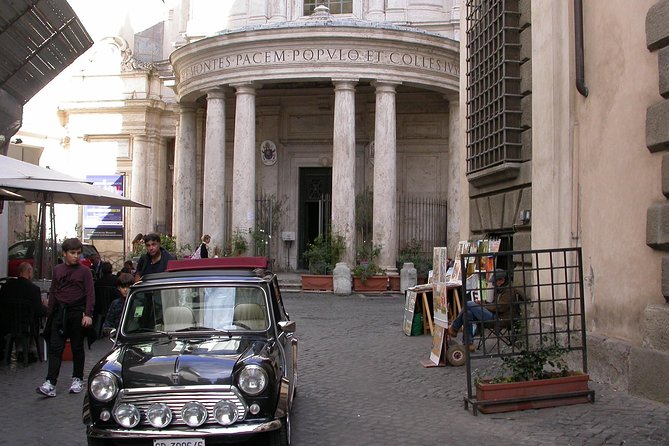
Rather than one long walk, the itinerary is a series of short, high-value stops. Think of it as a guided “greatest hits” circuit where you step out, look closely, snap photos, then get back in the car. Each stop is brief—about 10 minutes at many locations—so your best strategy is to treat the time like a photo sprint plus a short orientation moment.
Stop 1: Piazza Navona (Fontane del Bernini + Chiesa del Borromini)
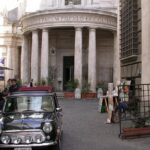
Piazza Navona is one of those places where you instantly understand why Rome keeps topping travelers’ lists. You’ll see the Fontane del Bernini and the Chiesa del Borromini from a vantage that’s easy to appreciate even in a short window.
What’s special: this is a square that feels theatrical—stone geometry, famous fountains, and church architecture that rewards looking up.
How to use your 10 minutes: take one wide shot to get the whole scene, then walk a few steps to capture details around the fountain area.
Stop 2: Trevi Fountain (the famous facade and story)
The Trevi Fountain is “too famous,” which is precisely why it’s worth a stop. Up close, it’s not just a postcard. It’s scale, sculpture, and the kind of mass that feels impossible to imagine from far away.
What to expect in the time: a quick orientation and photo time.
Practical tip: keep moving—crowds gather fast around Trevi, and your best photos usually come from angles that people don’t automatically choose.
Stop 3: Piazza di Spagna (La Barcaccia)
Piazza di Spagna is a classic meeting point, and it’s especially good for evening energy. You’ll see La Barcaccia by Bernini, which gives the square a distinctive personality.
Why it works: the fountain and stair setting make it a natural backdrop for photos.
Consideration: like most top squares in Rome, it can get busy, so aim for a calm moment rather than fighting for the best spot.
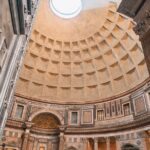
Stop 4: Pantheon
The Pantheon is one of those landmarks where even a short look feels meaningful. It’s not a “quick photo and gone” place unless that’s all you’ve got.
What you’ll get here: a brief visit window that’s perfect for appreciating the exterior impact and understanding why people keep returning.
Time reality check: with a tight schedule, you won’t have time to linger like a day-ticket experience. Still, getting here on a route like this helps you connect the dots across the city.
Stop 5: St. Peter’s Basilica
St. Peter’s Basilica is immense. From a quick stop, you can still appreciate scale and the significance of the location without needing hours.
What I like about including it here: it’s a “wow” moment even when you don’t plan to go deep.
What to watch: the biggest challenge isn’t distance—it’s time and crowds.
Stop 6: Castel Sant’Angelo
Castel Sant’Angelo is a perfect mid-to-late route stop because it gives you a different kind of Rome: not just sacred sites, but a landmark with a fortress feel.
Why it’s a good fit for this tour: it’s dramatic, easy to spot, and works well with quick photo pauses.
Use your 10 minutes: capture at least one shot that includes the surrounding context, not just the structure itself.
Stop 7: Colle del Gianicolo (A great view break)
When a tour includes a hill viewpoint like Colle del Gianicolo, you should treat it as a gift. This is where Rome opens up. You’re not just seeing monuments—you’re seeing the city’s layout.
Why it matters: it helps you understand direction and distance in a way flat street sightseeing can’t.
Photo tip: take a few seconds before you start clicking. Pick your angle, then shoot.
Stop 8: Fontana dell’Acqua Paola
This is another “look out, then look up” moment. The Fontana dell’Acqua Paola is both a landmark and a pause point.
Why it fits the route: viewpoint + monument in one.
Best approach: don’t rush. Even in short windows, this is one of those places where a calm look helps you feel the scale.
Stop 9: Trastevere (the nightlife heart)
Trastevere is one of Rome’s most famous evening areas, and the tour includes it as a nighttime stop—exactly where you want to be if your goal is to feel the city after hours.
What you’ll get: a quick taste of Trastevere’s character—older streets, lively atmosphere, and the “this is Rome at night” feeling.
Smart strategy: if you’re choosing to keep moving, step out for a few minutes, then let the car carry you to the next sequence.
Extra stops in the historic center: Largo Argentina, the Altare della Patria area, and more
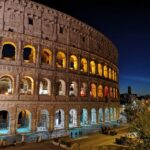
The route continues with additional iconic anchors in the historic core, including Area Sacra di Largo Argentina, where the site is described as the exact place where Julius Caesar was killed. There’s also a stop associated with the Altare della Patria area.
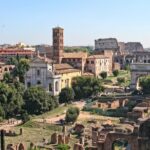
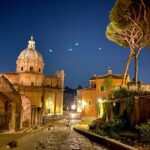
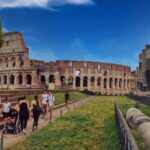
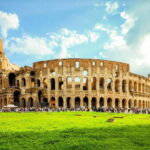
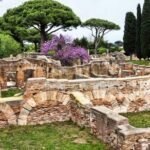
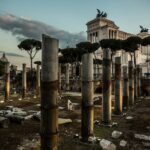
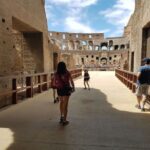
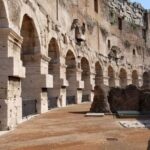
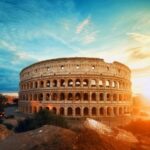
Then you’ll move toward Foro Romano and Palatine Hill, both of which help you feel the city’s political and ancient roots. After that, the tour heads toward hilltop viewing points like Turo Aventi (where the route includes the Orange Park viewpoint and the so-called Secret Key Hole and Sant’Anselmo Church area).
The ancient Rome pass-by moments you shouldn’t ignore
Not every stop on a short tour will get equal time, but this route includes several extra ancient-site names that are worth noticing because they help the story of Rome feel connected, not random.
Along the way, you’ll see stops listed around older structures and areas, including:
- Piramide Tomba di Caio Caestio (12 a.C.)
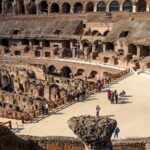
- Antica Arena
- Antiche terme Romane
- An Old Market stop
Because the time windows on a 3-hour schedule are tight, you may mostly be orienting and snapping quick photos rather than doing deep museum-level exploration. Still, seeing these names along the route makes the city’s layering feel more real: Rome isn’t one timeline. It’s dozens stacked on top of each other.
Aventino Hill and the photo angle that sells the whole tour
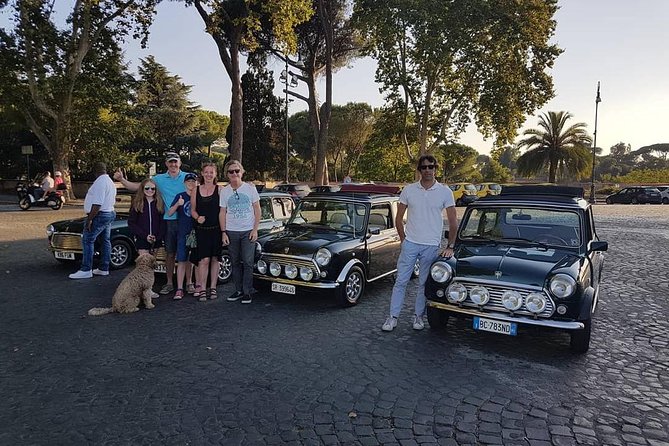
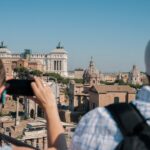
If you care about getting standout photos, the hill stops are where the value shows. Aventino Hill is a classic “Rome skyline” angle area, and the route includes view points plus the “Secret Key Hole” area and Sant’Anselmo Church context.
Even if you’re not a photo person, this is the moment when Rome stops being a list of attractions and starts being a city you can visualize. You see how neighborhoods relate to each other. You understand why Rome feels like it’s built on viewpoints and long sightlines.
This is also where the small-group style shines. In a big tour, you often feel like you have to follow the pack. Here, you can make your own quick choices about where to stand, and you’re less likely to feel trapped in a long line.
Your guide matters: Luca and the Rome-loving energy
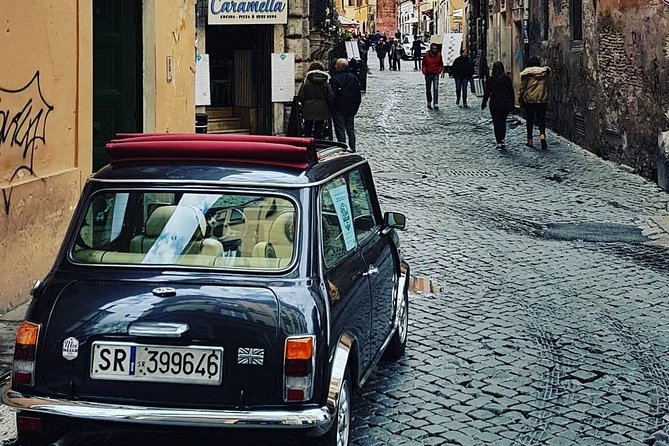
The best tours don’t just move you around. They give you a guide who cares. On this experience, Luca is repeatedly highlighted for being friendly, professional, and genuinely passionate about Rome. On some departures, you may ride with Luca and Fabio in two Mini Coopers, which keeps the group organized and adds a fun, “two-car tour” vibe.
That guide energy matters because Rome’s landmarks are famous, but the stories and small details are what make them memorable. A good guide helps you notice things you’d miss without guidance—what you’re looking at, why it’s there, and what makes it distinctive.
And because it’s a private-style tour for your group, you can also move at a pace that feels comfortable. One of the standout benefits from the experience’s reputation is that it doesn’t feel rushed. You can usually take your time for photos and short strolls without the sense of being pushed along.
Price and what you’re really paying for (it’s not just the car)
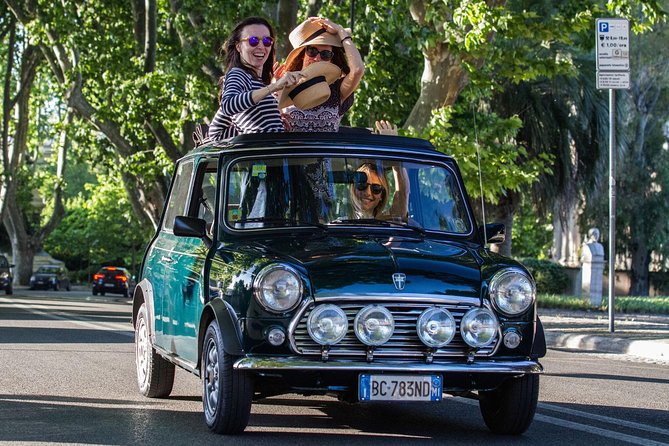
At $209.70 per person for about 3 hours, you’re paying for more than transportation. You’re paying for:
- a classic cabrio Mini experience,
- a guide who’s guiding you between major landmarks,
- included snacks, bottled water, and aperitif/food (plus alcoholic beverages),
- admission is free for the listed stops,
- and a private-group feel rather than a crowded mass tour.
Is it the cheapest way to see Rome? No. But the value is in the combination: comfort + coverage + food/drink + guided context in a short time window. If you’ve got limited hours—or you don’t want to spend your energy navigating transit and crowds—this price starts to look more reasonable.
Think of it as buying time and easing the stress. Rome rewards time. This tour tries to compress the best highlights into a manageable block without turning it into a frantic sprint.
Who should book this MINI Cooper Rome Day & Night tour
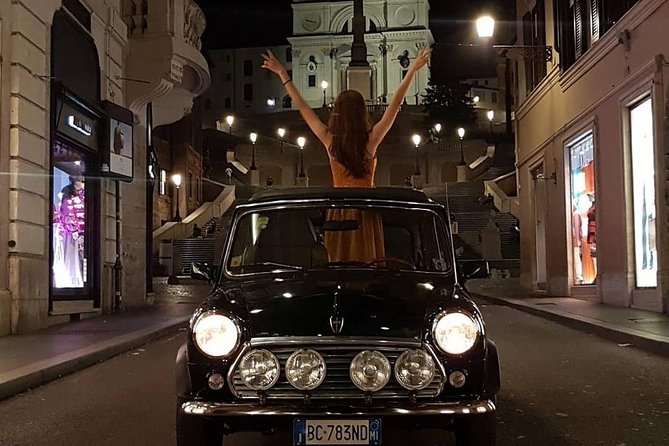
This tour fits best if you:
- want a fun, different way to cover major Rome landmarks in a short timeframe,
- like mixing daytime icons with evening neighborhood energy,
- prefer a small-group feel and a guide who can talk through what you’re seeing,
- enjoy aperitif-style food breaks instead of hunting for dinner plans.
It may be less ideal if you want a long, unhurried museum deep dive at only one site. This experience is about “see it, feel it, photograph it, move on,” with plenty of quick stepping-out time—but not hours inside monuments.
What to expect from timing, movement, and comfort
The tour runs about 3 hours and works through the center with brief stops—often around 10 minutes each. That means you’ll be constantly switching between car time and short viewing windows. If you get restless in cars, you’ll still likely enjoy it because the car is part of the fun, and the stops are purposeful.
Because this is an open-air classic cabrio experience, dressing matters. Choose clothes you’re comfortable walking in for short bursts, and bring layers if the evening is cooler.
Also, since the itinerary includes hills and viewing points, be ready for a bit of walking. It’s still designed to be approachable—Most travelers can participate—but you’ll get more out of it if you’re comfortable with short stretches.
Should you book this tour?
Book it if you want a high-efficiency, feel-good Rome plan that combines landmark hits with Rome-at-night atmosphere—and you like your sightseeing delivered with personality. The pairing of a classic car ride, aperitif with food, and viewpoint stops like Aventino Hill makes this a strong “first-timer orientation” option and a great way to squeeze in a lot without living in transit.
Skip or reconsider if your schedule can’t fit the limited Monday–Friday windows, or if you’re the type who wants long hours inside a single attraction rather than short, guided stops across the city. And if plans change last minute, note that it’s non-refundable and cannot be changed—so book when you’re fairly sure of your dates.
If that matches your style, this is the kind of Rome experience you’ll talk about later: a city tour that doesn’t feel like a chore.
FAQ
How long is the Rome Day & Night Mini Cooper Classic Cabrio tour?
It’s approximately 3 hours.
What is the price per person?
The price is $209.70 per person.
Is pickup offered?
Yes, pickup is offered.
What is included in the tour?
Included are snacks, bottled water, and alcoholic beverages, along with the tour experience itself. The tour also includes accommodation as per the itinerary.
Are admission tickets included for the stops?
The listed admissions are free for the stops noted (so you won’t be paying admission fees for those specific stops).
Is the tour private?
Yes. Only your group will participate.
What happens if I need to cancel?
The experience is non-refundable and cannot be changed for any reason.