REVIEW · NEW DELHI
Old Delhi Heritage Food Walk
Book on Viator →Operated by DPD India Tours · Bookable on Viator
Old Delhi is a sensory lesson with snacks. This 4.5-hour food walk strings together Old Delhi sights and street tastes, from a rickshaw ride and masala chai to temple stops and Khari Baoli’s spice market. You start and finish at Jama Masjid, so the route is easy to follow even when the lanes get tight.
I especially like how the tour balances food with context, so you’re not just eating on repeat. You get masala chai early, then move through places like Sri Digambar Jain Lal Mandir and Gauri Shankar Temple, which help you understand why people gather where they do. Guides associated with this experience (Dave, Dev, and Devendra are named in the feedback) are also credited with being punctual, professional, and willing to adjust the pace.
One drawback to plan for: it’s mostly a street-and-temple route with time in crowded areas, and Jama Masjid’s stop lists no included admission ticket. If you’re sensitive to crowds or want lots of downtime, you may feel it more than you’d like.
In This Review
- Key highlights to know before you go
- Old Delhi in 4.5 hours: what this walk really covers
- Start at Jama Masjid: your easiest orientation point
- Rickshaw ride and masala chai: the fastest way to begin eating like a local
- Temple stops you can actually make sense of: Sikh, Jain Lal Mandir, and Gauri Shankar
- Sikh temple stop during the early stretch
- Sri Digambar Jain Lal Mandir: beautiful, plus the bird hospital angle
- Gauri Shankar Temple: older than 600 years
- Khari Baoli spice market: where you learn by smelling and naming
- Gali Paranthe Wali: the paratha street stop that actually feeds you
- Jama Masjid photo time: the last view before you return
- Price and value: is $35 fair for this food-plus-culture route?
- What to wear and do so your stomach and feet both survive
- Group size, pickup, and how flexible the day can feel
- Who this Old Delhi Heritage Food Walk suits best
- Should you book the Old Delhi Heritage Food Walk?
- FAQ
- How long is the Old Delhi Heritage Food Walk?
- Where does the tour start and end?
- Is pickup included?
- What food and drinks are included?
- Are admission tickets included?
- Is tips included in the price?
- Can I get a refund if my plans change?
Key highlights to know before you go
- A rickshaw ride plus masala chai as your warm-up
- Sri Digambar Jain Lal Mandir, known for its bird hospital
- Khari Baoli, billed as the largest spice market of Asia
- Gali Paranthe Wali, where paratha is the star of the street
- Jama Masjid stop for photo time at a major landmark
- One bottled water included, with multiple food tastings during the walk
Old Delhi in 4.5 hours: what this walk really covers
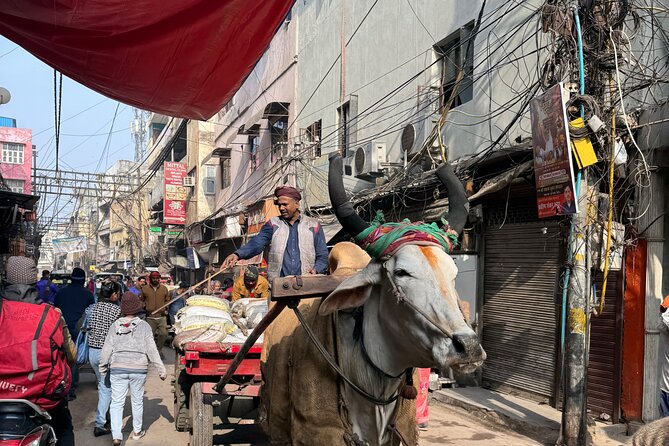
This is a short-but-full route for Old Delhi, designed so you don’t waste hours figuring out where to go next. At roughly 4 hours 30 minutes, you’ll cover several major stops while also getting food samples along the way. The pacing tends to work best when you’re open to walking in tight lanes and staying flexible about timing.
The best part of this format is that food is treated like culture, not a side quest. You’ll see temples, markets, and a famous mosque area, then taste what makes the neighborhood tick. For $35 per person, the value comes from bundling food tastings, water, and multiple paid-entry stops (with one notable exception for Jama Masjid, described below).
You can also read our reviews of more walking tours in New Delhi



Start at Jama Masjid: your easiest orientation point
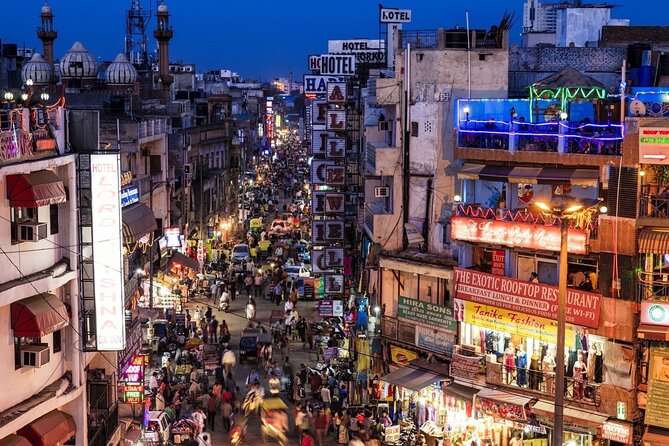
You begin at Jama Masjid, Old Delhi, and you end back at the same meeting point. That sounds simple, but it matters: Old Delhi can feel like a maze, and returning to one anchor spot reduces stress when you’re hungry and your feet are already working overtime.
Jama Masjid is also a smart starting view because it frames your day. You get the big landmark first, then spend the next hours in smaller, more everyday spaces like spice lanes and temple courtyards. The tour’s final stop gives you a second chance to photograph or look around, which is handy if you need a breather.
Rickshaw ride and masala chai: the fastest way to begin eating like a local
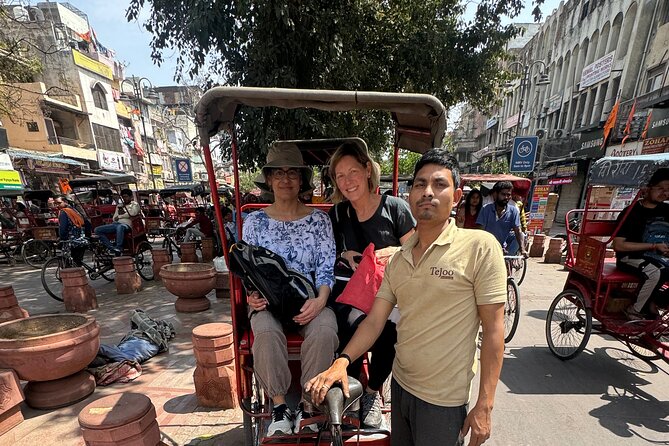
Stop 1 mixes movement with comfort. You’ll enjoy an Old Delhi rickshaw ride, which is a classic way to experience the rhythm of the old city without relying only on foot traffic. Right after, you’ll try authentic masala chai, plus additional old-city food tastings.
I like starting with chai because it doubles as a reset. It’s warm, spicy, and it gets your taste buds ready for the stronger flavors coming next, especially in the spice market. If you’re unsure about street food, this early sampling helps you decide fast whether your stomach is on board.
Also, this is the moment to ask your guide for how to handle the day’s flavors. Guides mentioned in the feedback (including Dave and Dev) are credited with answering questions and keeping conversation going, so don’t be shy about asking what’s spicy, what’s mild, and what to try first.
Temple stops you can actually make sense of: Sikh, Jain Lal Mandir, and Gauri Shankar
This walk doesn’t just pass temples like background scenery. It gives you short, focused time at three religious sites that explain how Old Delhi is organized around community spaces.
Sikh temple stop during the early stretch
In the first hour, you’ll also visit a Sikh temple. That early temple stop is useful because it helps you understand why people move through these areas at different times of day. You’re not just chasing photos; you’re learning the neighborhood’s logic in small doses.
You can also read our reviews of more food & drink experiences in New Delhi



Sri Digambar Jain Lal Mandir: beautiful, plus the bird hospital angle
Next comes Sri Digambar Jain Lal Mandir, one of the stops specifically described as “very beautiful.” It also has a distinctive claim to fame: it functions as a bird hospital. That detail gives the visit real meaning beyond architecture, because you see religion connected to compassion and daily care.
You’ll have about 30 minutes here, with the stop listing admission included. That’s enough time to notice the calm of the courtyard and take in details without feeling rushed.
Gauri Shankar Temple: older than 600 years
Then you move to Gauri Shankar Temple, described as a Hindu temple in the heart of Old Delhi and older than 600 years. The age matters because it signals continuity: this area didn’t become important yesterday, and the foot traffic around it reflects that staying power.
This is another 30-minute stop with admission included. I’d use the time to look slowly rather than sprinting for the best angle. Temples reward attention, especially when you’re also trying to keep your energy for food later.
Khari Baoli spice market: where you learn by smelling and naming
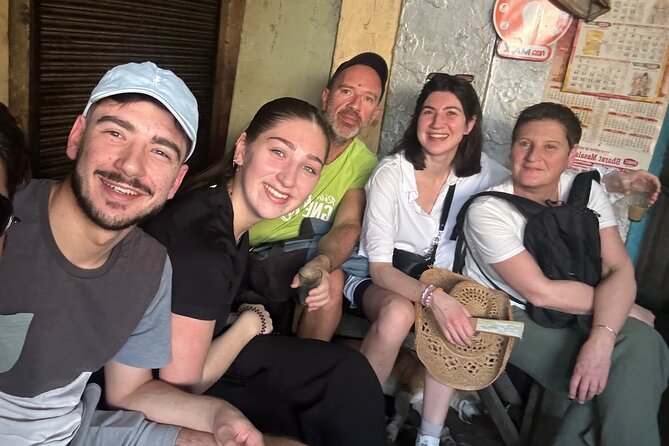
Khari Baoli is the big flavor checkpoint. It’s described as the largest spice market of Asia, and the tour gives you about 1 hour to experience it properly. This is where the day’s food focus becomes practical: you’ll see stacks, varieties, and ground spices that explain why Indian cooking can taste so layered.
What to expect here is not a lecture-only moment. It’s visual and sensory. I recommend taking notes in your head: which smells sharpest, which feels sweet, and which ones look like they’d be used in tea blends or savory dishes. If you’re the type who likes to cook later, this is your best stop to connect names to aromas.
A small consideration: spice markets can be intense. If you have strong sensitivities to fragrance or dust, you may want to keep your breathing calm and pace yourself. The good news is you have a full hour, so you can step back when you need to.
Gali Paranthe Wali: the paratha street stop that actually feeds you
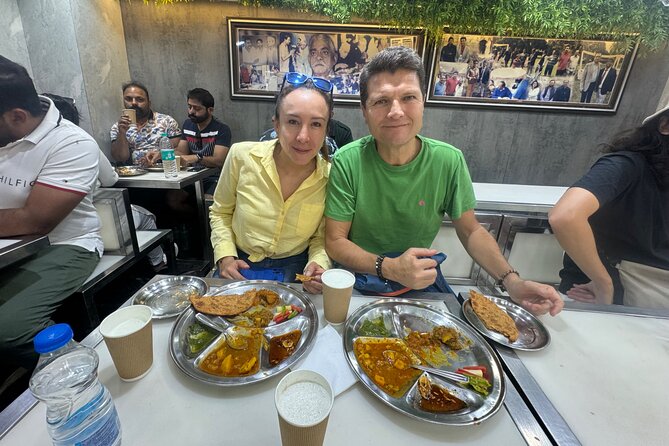
After spices, you shift from ingredients to finished comfort food at Gali Paranthe Wali. This street is known for paratha, and it’s described as having its own history and culture, with unique paratha varieties you can find there.
You’ll spend about 30 minutes here. That’s a smart length: long enough to get a satisfying tasting and short enough that you’re not stuck while the rest of the day carries on. I’d treat this stop as your chance to slow down and focus on texture. Paratha isn’t just about flavor; it’s about thickness, crisp edges, and the way fillings distribute.
If you’re worried you’ll get too full too early, balance it by sampling rather than overcommitting at every food moment before this. The tour structure is built so you’ll still have energy for the final landmark time.
Jama Masjid photo time: the last view before you return
The final stop is Jama Masjid, the largest mosque of India as described. You’ll have about 20 minutes, and the tour notes that this is a great time to grab photos.
One practical thing to keep in mind: the stop lists admission ticket not included. In the real world, sometimes mosque entry is straightforward, but since the tour specifically flags ticket inclusion for other stops, you should assume you might need to handle any entry cost yourself if required during your visit.
Use this final segment to do two things: (1) get your photos without rushing, and (2) re-check where you are relative to your meeting point. Because the tour ends back at Jama Masjid, you won’t need a complicated navigation plan after the walk.
Price and value: is $35 fair for this food-plus-culture route?
For $35 per person, you’re paying for a guided route that combines several categories of value:
- Food tastings and chai across multiple stops
- Bottled water (one bottle is included)
- Admission tickets included at several temples and market-time stops
- A structured route that reduces decision fatigue in Old Delhi
Where the value question gets interesting is that the tour isn’t just about eating. It’s also about meaning. Visiting Sri Digambar Jain Lal Mandir and Gauri Shankar Temple is time inside real religious spaces, not just a quick exterior peek. That turns the food walk into a cultural orientation.
The only “watch this” item is Jama Masjid admission ticket not included, plus tips aren’t included either. If you tip, plan for it separately. And if you tend to dislike crowds, factor in that Old Delhi can’t be made quiet for the sake of a schedule.
What to wear and do so your stomach and feet both survive
You’ll be moving through Old Delhi with a guide keeping you on track. Even without a detailed list of terrain, the city is known for tight lanes, and one of the most consistent praises in the feedback is the sense of comfort and safety during the street-food portions.
For practical planning:
- Wear comfortable shoes. You want grip and support, because you’ll likely be on uneven surfaces and moving frequently.
- Bring a light layer. Tea and spices warm you up, then temples and shaded areas can feel cooler.
- Pace your tasting. The day includes multiple food stops, and it’s easy to overdo it if you’re trying everything at once.
For food comfort and safety, I’d lean on the guide. The experience includes guidance for eating in busy markets, and guides named Dave, Dev, and Devendra are credited with making the street-food experience feel safe and fun. That matters because you don’t just want flavor; you want to eat smart.
Group size, pickup, and how flexible the day can feel
This is offered as a private tour/activity for only your group. That’s one reason it can feel less chaotic than a large group bus tour. If you want to ask questions, take photos without feeling rushed, or need to slow down for a moment, a private format usually gives you that breathing room.
You can also get pickup offered, and the tour includes group discounts. That combination is often best for couples and small friend groups who want a guided route but don’t want to pay “big group” pricing.
Timing also looks thoughtfully planned: it runs daily from 8:30 AM to 5:00 PM. If you like a morning start to beat the busiest hours, aim early within that window.
Who this Old Delhi Heritage Food Walk suits best
This walk fits best if you want a guided way to eat and learn in the same day. I’d point you here if you:
- Love street food but want structure and a guide’s help
- Like mixing food with a few major landmarks (Jama Masjid and the temple stops)
- Prefer a route that returns to the starting point rather than ending somewhere random
- Travel as a small group and want a private experience
It may be less ideal if you need lots of quiet time, have limited mobility, or hate crowding in markets. The route is short on paper, but Old Delhi can feel dense, and you’ll be active for much of it.
Should you book the Old Delhi Heritage Food Walk?
If you’re excited by street food and want Old Delhi sights without doing a solo planning marathon, this is a strong pick. The $35 price makes sense when you factor in guided tasting time, included bottled water, and multiple admission-inclusive temple visits. The only real reasons to think twice are crowd sensitivity and the possibility of handling any Jama Masjid admission that isn’t listed as included.
For most people, the best reason to book is simple: you get food, context, and a walk that’s organized around the neighborhood’s essentials.
FAQ
How long is the Old Delhi Heritage Food Walk?
It lasts about 4 hours 30 minutes.
Where does the tour start and end?
It starts at Jama Masjid, Old Delhi, Delhi, and ends back at the same meeting point.
Is pickup included?
Pickup is offered.
What food and drinks are included?
You’ll get bottled water (one bottle) and tasting of different foods, including masala chai.
Are admission tickets included?
Admission tickets are listed as included for stops 1 through 5. The Jama Masjid stop specifically lists admission ticket not included.
Is tips included in the price?
No. Tips are not included.
Can I get a refund if my plans change?
Yes. You can cancel up to 24 hours in advance for a full refund. If you cancel less than 24 hours before the start time, the amount paid isn’t refunded.