REVIEW · KATHMANDU
Private Day Tour at the World Heritage Site in Kathmandu Valley
Book on Viator →Operated by Nepalaya Treks & Expedition · Bookable on Viator
Kathmandu Valley is UNESCO close, but not simple. This private day tour stitches together Swayambhunath, Patan, Boudhanath, and Pashupatinath with a guide who helps you read what you’re seeing, not just stand in front of it. It’s one of the best ways to make sense of a city where major monuments are scattered across different districts.
I also like the private transport and pickup—it cuts the usual time drain of finding places, paying for rides, and recalculating when traffic changes. One thing to watch: the $90 price doesn’t include all entrance fees, so budget extra for $26 per person in attraction admissions.
In This Review
- Key Things That Make This Tour Worth Your Day
- Kathmandu Valley Feels Like An Open-Air Museum. This Tour Helps You Read It.
- Price and Logistics: What You Pay $90 For (And What Adds Up)
- The 4–6 Hour Timing: How a Half-Day Can Still Feel Like a Full Cultural Story
- Stop 1: Swayambhunath (Monkey Temple) and the Best Shortcut to Valley Views
- Stop 2: Patan Durbar Square in Lalitpur for Carved Stone, Wood, and Palace Scale
- Stop 3: Boudhanath Stupa for Sacred Scale You Can Actually Feel
- Stop 4: Pashupatinath Temple on the Bagmati for UNESCO-Level Hindu Heritage
- What the Guide Actually Adds (Beyond Basic Directions)
- Who This Tour Suits Best (And Who Should Reconsider)
- Small Practical Tips to Make the Most of Your Day
- Should You Book This Private Kathmandu Valley Day Tour?
- FAQ
- How long is the Kathmandu Valley private day tour?
- What is included in the $90 per person price?
- Are the entrance fees included?
- What sites does the tour visit?
- Is this a private tour or will I be grouped with other people?
- Is the tour suitable for most travelers, and are service animals allowed?
- What happens if weather is bad or if the minimum number of travelers isn’t met?
Key Things That Make This Tour Worth Your Day
- A smart UNESCO route across Kathmandu Valley’s major sights without the usual DIY stress
- Swayambhunath’s hilltop panorama and the famous Monkey Temple vibe
- Patan Durbar Square’s carved temples and palace complex in Lalitpur
- Boudhanath Stupa’s scale (about 100m across and 40m high) and wide religious appeal
- Pashupatinath Temple on the Bagmati with UNESCO status dating to 1979
- Mobile ticket + private pickup, so you’re not stuck coordinating on arrival
Kathmandu Valley Feels Like An Open-Air Museum. This Tour Helps You Read It.
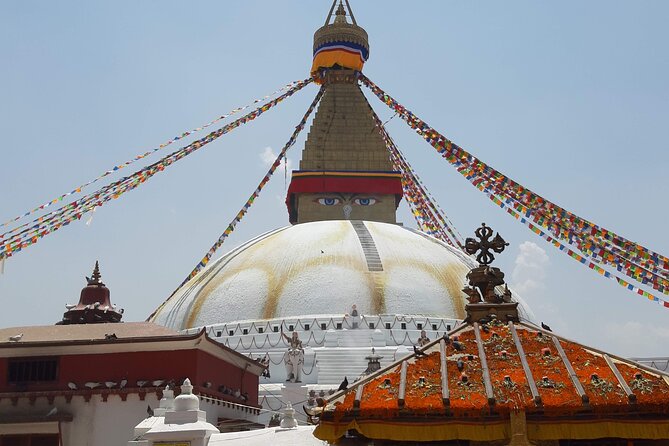
Kathmandu Valley is small on a map, but big in sights. Temples, stupas, and monasteries spread across different districts, and that makes self-guided days feel more like logistics than culture.
That’s where this private guided format shines. A local guide can connect the dots—why these places look the way they do, how they fit into Hindu and Buddhist traditions, and what to notice so your photos come with context. You’re not just collecting stops; you’re building a mental map of the valley.
And because it’s private transportation, your day stays yours. You’re not waiting for a group, and you’re not paying for separate rides between far-flung landmarks.
You can also read our reviews of more private tours in Kathmandu

Price and Logistics: What You Pay $90 For (And What Adds Up)
The listed price is $90 per person, for a private day tour running about 4 to 6 hours. That includes private transport and a professional tour guide, plus a mobile ticket.
What’s not included is the part that often surprises people: entry fees to attractions are listed as $26 USD per person. The schedule also includes a mix of sites where admission is and isn’t charged. Swayambhunath is ticket-free on this itinerary, while Patan Durbar Square, Boudhanath Stupa, and Pashupatinath Temple are marked as not included.
So the real budgeting reality is: plan for the tour price plus the $26 per person entrance fees, and also account for food and drinks and tips for your guide. If you like to spend your day focused on temples and monuments (not on finding your next ticket counter), this setup still tends to feel good value because transport and guiding are handled.
The 4–6 Hour Timing: How a Half-Day Can Still Feel Like a Full Cultural Story
This tour is designed to fit into a short window. With four main stops and a guided pace, it works well if you’re landing in Kathmandu with limited time, or if you want a concentrated UNESCO sampler without committing to a multi-day plan.
In a place like Kathmandu Valley, timing matters. Roads and routes can shift, and districts aren’t right next to each other. A private setup helps you avoid wasting hours “between” sights.
Also, the itinerary keeps each stop around one hour, which is just long enough to see the major features and still move on before the day drifts into exhaustion.
Stop 1: Swayambhunath (Monkey Temple) and the Best Shortcut to Valley Views
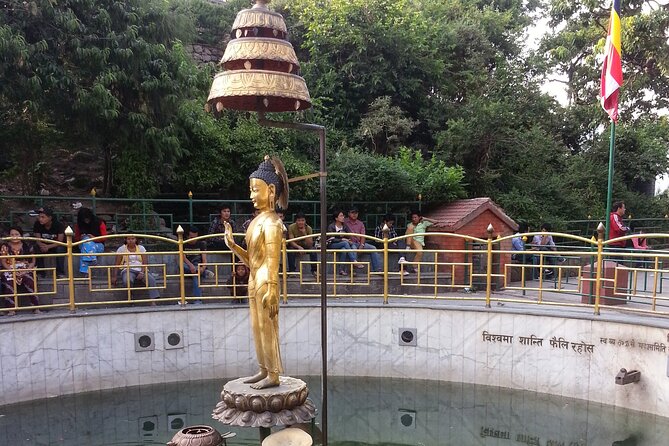
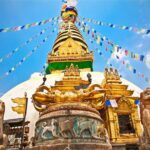
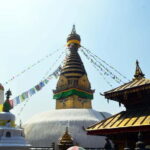
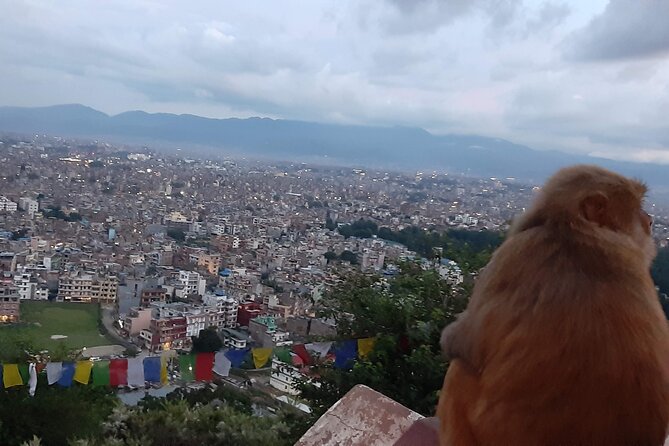
Swayambhunath sits on a hillock in the northwest inside Kathmandu Valley, and it’s famous as the Monkey Temple. The big draw isn’t only the temple complex—it’s the sense of height and perspective. This is described as one of the best places to take panoramic views of the valley.
There’s also a strong origin story attached to the site. It’s believed this stupa dates to when the Kathmandu Valley was created from a lake more than 2,000 years ago. Even if you’ve only got an hour, that kind of framing helps the site feel more than scenic. You start looking for symbolic details rather than just stopping for a quick glance.
Admission ticket is free here on this tour, which is a nice bonus when you’re budgeting other paid sites later in the day.
Possible consideration: because it’s a hilltop viewpoint, you might find it easier to enjoy if you’re comfortable walking up and around temple areas. Keep your energy for the views—this stop is the one that sets the mood for the rest of the day.
Stop 2: Patan Durbar Square in Lalitpur for Carved Stone, Wood, and Palace Scale
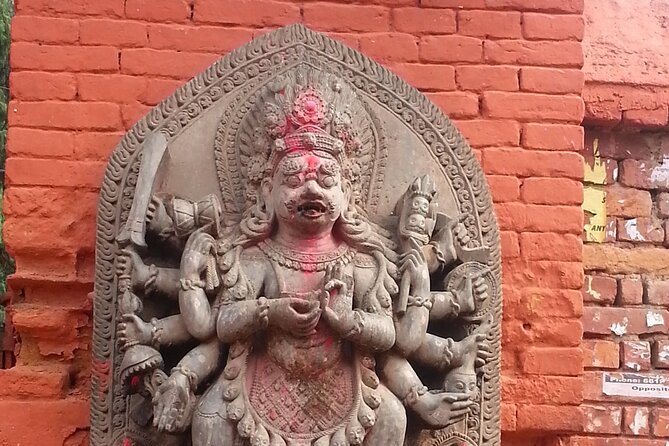
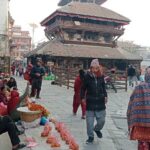
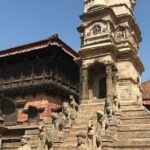
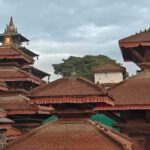
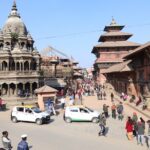
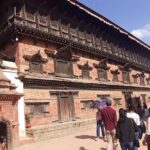
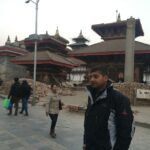
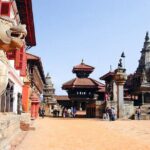
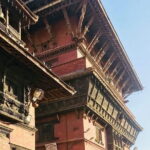
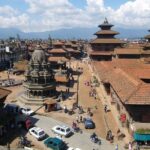
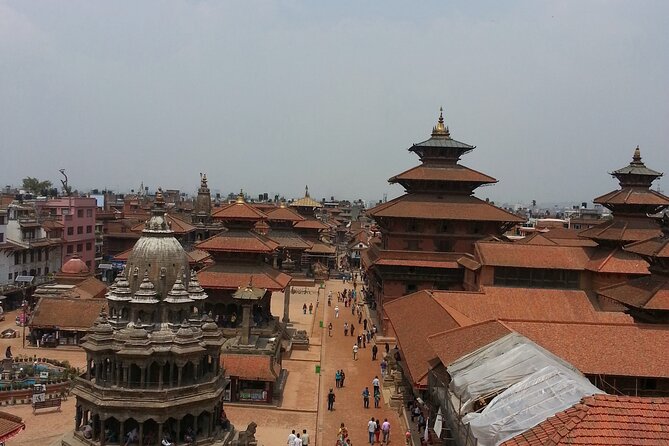
Patan (also known as Lalitpur) is described as the oldest of the three cities in Kathmandu Valley. The tour’s second stop is Patan Durbar Square, a dense complex of temples, palaces, and monuments with standout carving in wood and stone.
There’s a cultural line attached to the place too: Patan is sometimes described as meaning eternity, and the Durbar Square is called a spectacular sight of Asia. Whether you treat that as poetic language or historical marketing, it hints at how impressive the scale and detailing can feel once you’re there.
This stop is about one hour, and admission is not included. So treat it as one of the moments when you’ll want to slow down a bit and look closely. In a city where architecture can be visually “busy,” a carved palace square is easier to appreciate with a guide because they point out what’s structural, what’s decorative, and what has religious meaning.
Possible drawback: if you’re the type who wants just one or two stops, you might find Durbar Squares can take mental energy—so plan to stay present rather than trying to photograph everything at once.
You can also read our reviews of more historical tours in Kathmandu
Stop 3: Boudhanath Stupa for Sacred Scale You Can Actually Feel
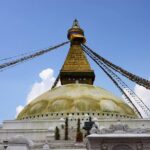
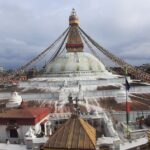
Boudhanath Stupa is described as one of the largest stupas in the world and it matters to both Hindus and Buddhists. It’s also labeled as an ancient, holiest site with UNESCO World Heritage status.
The numbers help you picture the scale: it’s about 100m in diameter and 40m high. The tour notes it dominates the skyline, which is exactly why it’s such a good “midday anchor” stop. Even if you’ve seen other religious monuments, Boudhanath’s sheer size makes it hard to miss and easy to remember.
This stop is also around one hour, but admission is not included on the itinerary, so it’s another place where that extra $26 per person budget starts making sense.
A practical consideration here is contrast. After the more architectural feel of Durbar Square, Boudhanath is more about the stupa as a focal point and the surrounding religious atmosphere. If you’re traveling with mixed interests—someone into temples, someone into photography, someone into spirituality—this is often a strong compromise stop.
Stop 4: Pashupatinath Temple on the Bagmati for UNESCO-Level Hindu Heritage
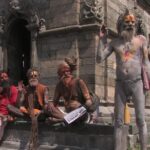
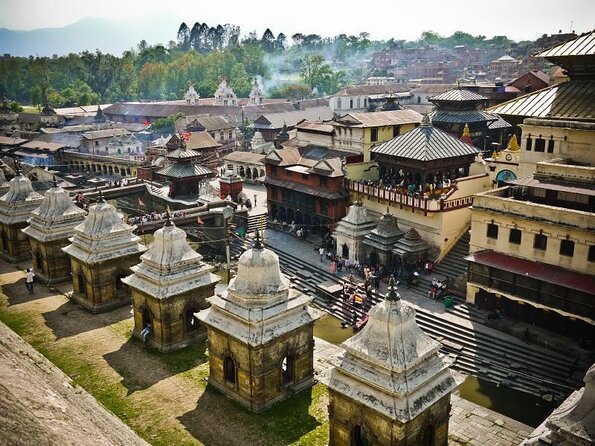
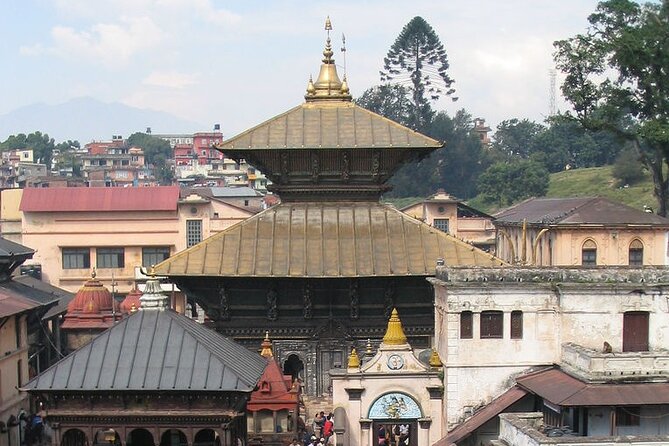
Pashupatinath Temple is one of Nepal’s most famous Hindu sites. It sits on the banks of the holy river Bagmati and was inscribed on the UNESCO World Heritage list in 1979.
The reason it hits hard for many people is the living scale of devotion. On the occasion of Maha Shivaratri, it’s noted that over one million devotees visit. Even if you’re not visiting during that festival, knowing how central this temple is to major religious observances helps you understand why the site draws so much attention year-round.
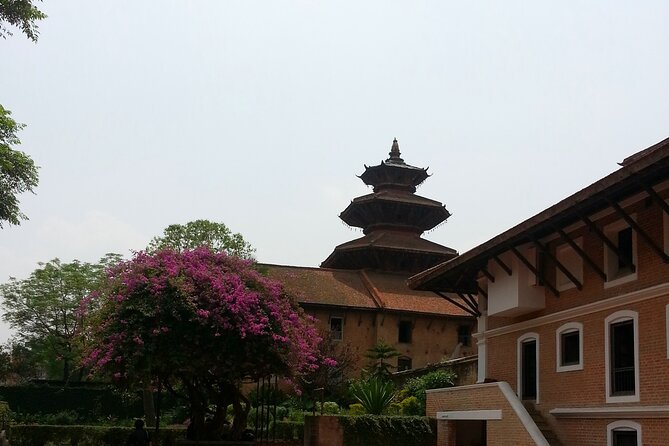
Architecturally, the tour description highlights that the temple is built in a two-storied pagoda style. That’s a helpful detail because it gives you something specific to look for: form, layers, and religious architectural language.
Admission is not included for this stop, and this one also runs about one hour.
Possible drawback: Pashupatinath can be emotionally intense in a way that’s meaningful but not always relaxing. If you’re sensitive to crowding or ceremony-focused environments, you’ll enjoy it more if you treat this as a “witness and absorb” stop rather than a quick photo sprint.
What the Guide Actually Adds (Beyond Basic Directions)
A private guide does more than point out where to go. This kind of route only works if someone can explain why the sites matter and what you’re looking at while you’re standing there.
The company behind this tour—Nepalaya Treks & Expedition—has guides who have been praised for exactly that. Names that come up repeatedly in their service experience include Basu, Ramesh, Sujan, Kamal, and Kapil. People highlight that guides took time to introduce and explain details, and that guides could shape the plan to match interests.
That matters most on a short timeline. With only 4 to 6 hours, you don’t have room for guesswork. A guide helps you avoid the common mistake of treating UNESCO stops like checkboxes.
If you have a special constraint—like a tight schedule on arrival—this tour format can also work. One example from the same provider’s experience shows how they’ve handled airport pickup, city touring, and return to the airport during a 7-hour layover. If you’re thinking about a short, high-impact Kathmandu day, that’s a sign this setup can be flexible in real life.
Who This Tour Suits Best (And Who Should Reconsider)
This is a good fit if you want:
- A first-time Kathmandu day that gives you orientation fast
- UNESCO-focused sightseeing without dealing with separate tickets and transport
- A private pace so you can ask questions and adjust time between stops
- A guided route through sights that are spread across districts
You might consider a different plan if:
- You hate paying extra for entrance fees and prefer a tour with everything included
- You want more time at one site to go beyond the main highlights
- You’re planning a very packed day around other activities and a few delays could throw off your schedule
Small Practical Tips to Make the Most of Your Day
These aren’t “secret hacks.” They’re the basics that make a half-day tour feel smooth.
- Budget for entrances: plan for the stated $26 per person attraction fees on top of the $90 tour price.
- Carry cash for small extras: the tour listing doesn’t include food and drinks, so you’ll likely want spending money ready.
- Dress for temples: this itinerary is all religious sites, so comfortable, respectful clothing and modest covering habits help you feel at ease.
- Keep water handy if you’re doing multiple stops in one day—4 to 6 hours can still be tiring in a city with lots of walking.
And if you care about tailoring, ask your guide what you’re most interested in: architecture, religious meaning, or stories behind the sites. The provider’s guides have a track record of adjusting to traveler interests.
Should You Book This Private Kathmandu Valley Day Tour?
I’d book this tour if you want a focused, guided UNESCO introduction to Kathmandu Valley with private pickup and transport and a day that stays in the 4 to 6 hour range. The route is efficient: hilltop Swayambhunath views, carving-rich Patan Durbar Square, massive Boudhanath scale, and the major Hindu heritage of Pashupatinath.
Just go in with one mindset: the advertised price is only part of the cost. You should expect about $26 per person in attraction admissions, plus your own meals and tips. If that works for your budget, this is a strong, low-stress way to make Kathmandu’s UNESCO sites feel connected instead of random.
FAQ
How long is the Kathmandu Valley private day tour?
The tour runs about 4 to 6 hours.
What is included in the $90 per person price?
It includes private transportation and a professional tour guide. Pickup is offered, and you also receive a mobile ticket.
Are the entrance fees included?
No. Entry fee to all attractions is listed as $26 USD per person. Also, Swayambhunath is noted as free on this itinerary, while the other listed attractions are marked as not included.
What sites does the tour visit?
You visit Swayambhunath, Patan Durbar Square, Boudhanath Stupa, and Pashupatinath Temple.
Is this a private tour or will I be grouped with other people?
This is a private tour/activity. Only your group participates.
Is the tour suitable for most travelers, and are service animals allowed?
Service animals are allowed, and most travelers can participate.
What happens if weather is bad or if the minimum number of travelers isn’t met?
If it’s canceled due to poor weather, you’ll be offered a different date or a full refund. If it’s canceled because the minimum isn’t met, you’ll be offered a different date/experience or a full refund.
If you want, tell me your travel dates and whether you’re starting from a specific hotel area, and I’ll suggest the best “time to leave” strategy for squeezing this into your day smoothly.