REVIEW · ATHENS
“All Day Tour Athens & Corinth:Highlights & Path of Apostle Paul”
Book on Viator →Operated by Greece Athens Taxi GAT · Bookable on Viator
Acropolis views never get old. This all-day Athens and Corinth tour strings together the big-ticket ruins and a smart dose of modern Athens, with hotel pickup and a comfortable private ride. You’ll spend the morning high above the city on the Acropolis, then work your way down through major monuments and squares.
I especially like the private-group feel, so you’re not squeezed into a cattle-car schedule while you’re trying to take photos or catch your breath. The day’s also timed well for the light and the crowds, with plenty of stops that don’t require extra ticketing. One heads-up: it’s a long day (about 10–11 hours), and archaeological entrance fees aren’t included, so you’ll want to budget for tickets on top of the tour price.
What I like next is the practical support: an English-speaking driver, skip-the-line ticket help (you still pay the ticket cost), bottled water, WiFi, and an air-conditioned Mercedes with A/C. That combination matters, because the Acropolis and Corinth areas can be physically demanding, and you’ll appreciate having a driver who can handle the timing. The other consideration is that the driver isn’t a licensed guide in every site—there’s a licensed tour guide only if you request one and availability allows it—so come ready to learn through the information you get from your driver and your own reading.
In This Review
- Key things to know before you go
- How the day actually feels: private comfort plus a serious time crunch
- Acropolis morning: Parthenon viewpoints, Athena Nike, and the Erechtheion details
- Marble stadium to Olympian Zeus: a quick-hit walk through Athens’ big monuments
- Constitution Square and the changing of the guard: Athens politics in plain view
- Plaka and Monastiraki: old streets, ancient meeting places, and snack-friendly breaks
- Corinth by land: the canal and the climb to Acrocorinth
- Archaeological Museum of Ancient Corinth: what you’ll pay for and what it adds
- The price question: is $307.39 good value?
- Who should book this day tour
- Should you book this Athens & Corinth day tour?
- FAQ
- Is this a private tour?
- Do I get hotel or port pickup?
- How long is the tour?
- What languages are offered?
- Are skip-the-line tickets included?
- What entrance fees are not included?
- Does the tour include a licensed guide inside museums?
- What’s included in the vehicle and comfort setup?
- On what dates are major sites closed?
- Is free cancellation available?
Key things to know before you go

- Hotel/Airbnb and Port pickup included: you can meet the driver where you’re staying, including the Port of Piraeus.
- Skip-the-line ticket assistance: faster entry help, but you still cover the museum/site ticket costs.
- Acropolis highlights in one morning: Parthenon, Erechtheion (Karyatids), Temple of Athena Nike, and more.
- Modern Athens stops with context: Parliament House, Constitution Square, and a look at national institutions.
- Corinth route includes Paul-linked sites: the schedule is built around areas connected to Apostle Paul’s story.
- You pay entrances separately: Acropolis and the Archaeological Museum of Corinth have separate fees.
How the day actually feels: private comfort plus a serious time crunch
This tour is built around one big advantage: you don’t have to figure out how to connect buses, trains, and taxi stands. You’re picked up from your hotel/Airbnb or right outside your cruise ship at Piraeus, then carried between Athens sites and out toward Corinth. That matters because the day includes both hilltop walking and flatter museum-area time, and it’s easier when you can reset every so often in a cool, air-conditioned vehicle.
It’s also private, meaning only your group participates. That helps with pacing. You can usually spend a bit longer where you care most—ruins, viewpoints, or photo stops—without everyone else’s time pressure turning your stop into a sprint.
Still, keep your expectations realistic. The itinerary is packed, and it’s a drive-out-and-drive-back type of day. Plan for stairs, uneven paths, and sun. If you’re someone who needs a slow, unhurried museum-style pace, you’ll feel the pressure here—especially because the Acropolis and Corinth areas are the core of the day.
Finally, the driver is described as English-speaking with historical knowledge, but not licensed to accompany you in sites. If you want a true licensed guide at museums, you’ll need to request that option (and availability can affect whether it’s possible).
A few more Athens tours and experiences worth a look

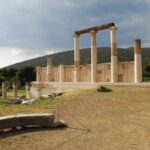
Acropolis morning: Parthenon viewpoints, Athena Nike, and the Erechtheion details
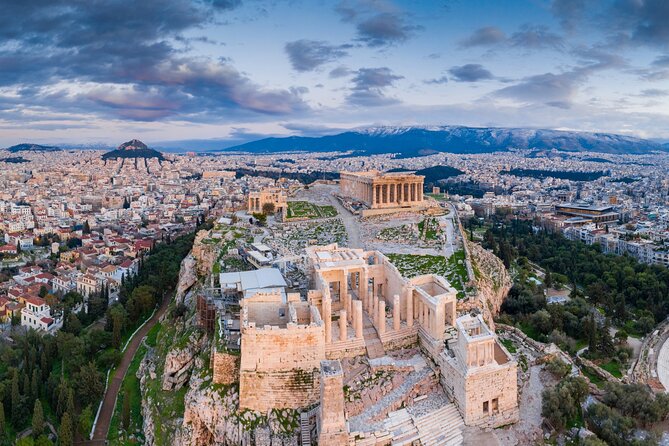
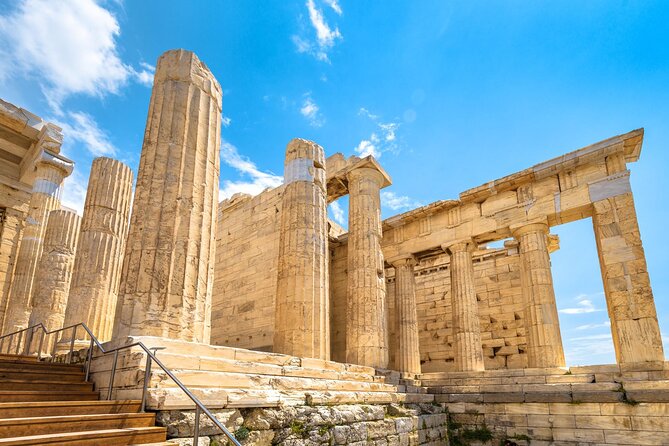
The Acropolis part of this day is the reason to wake up early. The hill rises about 156 meters above sea level, and the views are part of the ticket price—even when you’re not staring at a single stone for long. The stop is long enough to see the main cluster of monuments that most first-timers want: the Parthenon, the Temple of Athena Nike, the Erechtheion with its famous Karyatids, plus the Propylaea and the Odeon of Herodes Atticus and Theatre of Dionysus area.
Here’s what makes the Acropolis sequence worth it:
- Parthenon (Athena’s temple): construction began in 447 BC and finished in 438 BC, with decorative work continuing afterward. You’ll be looking at the most important surviving building of Classical Greece and the high point of Doric development.
- Temple of Athena Nike: smaller than the Parthenon, but it gives you a different feel—Athens’ worship traditions expressed through a more compact temple shape.
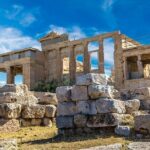
- Erechtheion and the Karyatids: if you only remember one architectural detail from the Acropolis, make it these iconic female figures. The Erechtheion sits on the north side of the hill and is dedicated primarily to Athena.
- Theaters and Roman-era layers: the Odeon of Herodes Atticus (a Roman theatre structure) and the Theatre of Dionysus help you understand that this wasn’t a one-time temple complex. It was a cultural stage layered over centuries.
Timing note that affects your comfort: admission tickets aren’t included for the Acropolis. Ticket prices vary depending on the season, and the tour notes closures on major dates like Jan 1, Mar 25, May 1, Easter Sunday, and Dec 25–26. If you’re traveling around a holiday, it’s worth double-checking before you plan your day around the Acropolis being open.
If you want one practical move, it’s this: wear shoes with grip. The paths on the Acropolis can be slippery when it’s damp, and you’ll do a lot of uphill-and-downhill walking for a few different monuments.
Marble stadium to Olympian Zeus: a quick-hit walk through Athens’ big monuments
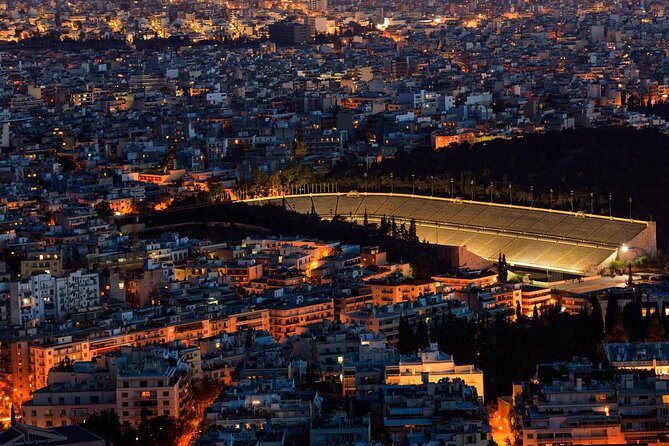
After the Acropolis, the tour shifts to Athens’ “major landmarks you can’t miss” zone. You’ll stop at the Panathenaic Stadium, known as the Kallimarmaro. It’s the oldest stadium still in operation and has held Olympic Games three times. It’s also the only major stadium built entirely of white marble—one of those details that’s almost unfair, because it looks too perfect for something that old.
Then you’ll move toward the Temple of Olympian Zeus. What makes this stop interesting isn’t that it’s fully intact. It’s half-complete, a dedicated space for Zeus with an impressive backstory of destruction and rebuilding. You can treat it like an open-air lesson in what ancient projects looked like—big scale plans, lots of time, and no guarantee that everything finishes intact.
From there, you’ll see nearby power-and-emperor symbols like Hadrian’s Arch (Hadrian’s Gate) and pass by modern landmark-adjacent areas such as the Zappeion next to the National Gardens.
A heads-up: these monument stops don’t list paid admissions in the data you have, but they can still involve short walks and photo time. The “value” here is the way the stops chain together. Instead of bouncing around Athens in separate directions, you get a logical route that keeps you moving, not negotiating.
Constitution Square and the changing of the guard: Athens politics in plain view
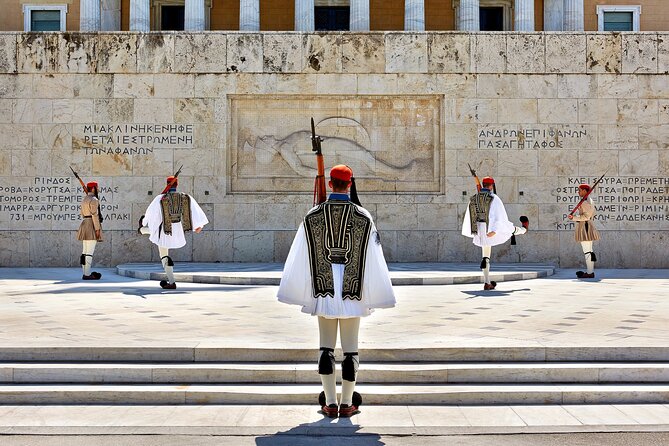
This is where the tour turns from ancient stones to modern identity. You’ll visit Syntagma Square and the Hellenic Parliament (in the Old Royal Palace) and then catch the Monument to the Unknown Soldier and the changing of the guard by the Euzones in front of the Parliament area.
Why this works on a packed day:
- It’s a free or low-cost stop (the Unknown Soldier monument changing guard is noted as free).
- It gives you a real, everyday Athens scene—not just ruins.
- The setting is dramatic: the Parliament building overlooks the square, and Constitution Square is the center of modern Greek civic life.
You’ll also pass the National Library building (Vallianeion), and the tour notes that it once held over 2 million books and manuscripts, including thousands of Greek New Testament manuscripts and hand-written works by major Greek thinkers. Even if you can’t go inside, the outside context is useful. It’s a reminder that Athens is not just an outdoor museum.
Plaka and Monastiraki: old streets, ancient meeting places, and snack-friendly breaks
The route drops you into the Plaka area for about an hour. Plaka sits under the Acropolis with narrow lanes, neoclassical houses, red-tiled roofs, and balconies with flowers. This is where you can reset your brain after the ruins. You’re walking through one of the city’s oldest and most charming districts, with plenty of small taverns and street cafés where you can grab an ice-cold drink and keep moving.
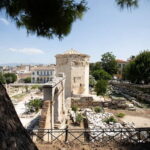
From there, the day includes key highlights around Monastiraki, with links to the ancient Agora concept—the gathering place where Greek city-states organized their social and political life. You’ll see or connect with landmarks like Hadrian’s Library, the Stoa of Attalos, and the general Agora area.
Here’s what’s especially nice about this part of the day: it doesn’t only tell you what Athens was. It lets you experience what Athens feels like now—tour-friendly streets where you can browse, pause, and take in small details without always paying an entrance fee.
If you’re sensitive to crowds, plan your timing around this stop. The old-town areas can get busy, so if you want quieter photo angles, aim to walk a bit away from the biggest flows.



Corinth by land: the canal and the climb to Acrocorinth
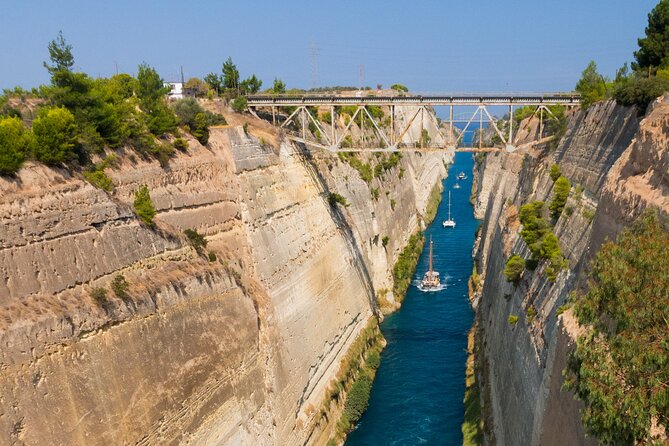
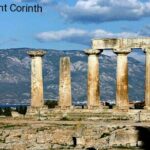
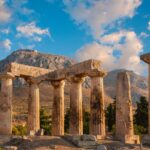
Then you leave Athens and go to Corinth. This isn’t just a “see it from the road” type of day. You’ll stop at the Corinth Canal, a narrow strip connecting the Saronic Gulf with the Gulf of Corinth. It’s about 6 kilometers long, with the canal built in the late 1800s (1880–1893). The area matters historically because it controls movement between regions.
The tour also notes the Hexamilion wall idea and how the Isthmus was strategic in ancient times and through Byzantine periods. You’re not just looking at a canal; you’re seeing why empires obsessed over this tight geography.
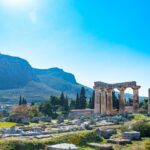
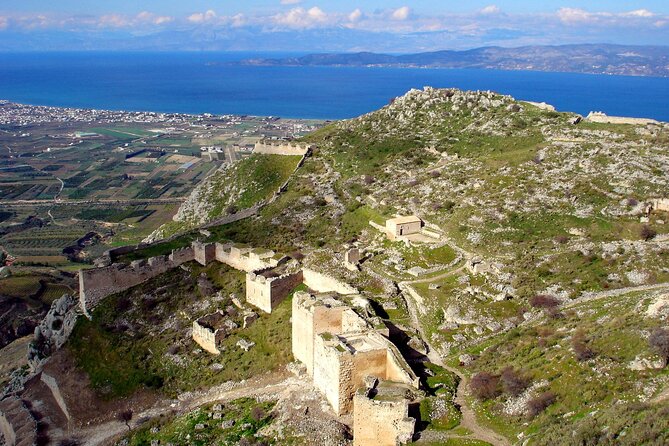
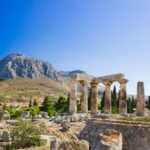
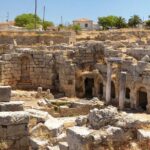
After that, you’ll reach Akrokorinthos (Acrocorinth)—a steep rock rising about 575 meters. You’ll get views over the ancient city of Corinth, and the route includes a string of noteworthy places on the hill, such as an amphitheater, Apostle Paul’s step, a theatre, and sanctuaries including Sanctuary of Asclepius and the Sanctuary of Demeter and Koris. The list also includes places like the Fountain Glavki, Temple of Apollo, Temple of Octavia, early Christian basilicas, and other features like Pirine and a conservatory.
This is one of the best parts of the day, even if you’re not trying to “complete” a history checklist. Acrocorinth’s strength is perspective: you understand how a fortress position works and why someone would build it where you can see who’s coming.
Practical note: expect uneven ground and a serious climb. If you don’t do hills well, bring a backup plan—pace slower and use any rest moments your driver allows.
Archaeological Museum of Ancient Corinth: what you’ll pay for and what it adds
The day includes the Archaeological Museum of Corinth for about an hour. The museum is at the archaeological site area of ancient Corinth and was built in 1932 by the American School of Classical Studies, following excavations in the region. If the Acrocorinth hilltop gives you the “site story,” the museum gives you the object story—what people actually made and used.
Your data says admission is not included, with a fee listed as €20 per person. Ticket prices can vary by season for archaeological sites.
Even without going ultra-deep, this museum stop adds value because it covers multiple periods: prehistoric collections, finds from the Asklepieion, and artifacts spanning Geometric times through the Byzantine period. The tour also notes that twin Kouroi from ancient Tenea were added to the exhibition. If you like seeing how styles changed over time, this is the place to slow down for a bit.
If you’re more ruins-focused than museum-focused, you can still make this hour worth it by prioritizing display themes that match what you saw outside—temples, sanctuaries, and early Christian references.
The price question: is $307.39 good value?

For $307.39 per person, you’re paying for a full-day private package: private transportation, A/C Mercedes-Benz vehicles, bottled water, WiFi and mobile chargers, and hotel/Airbnb or Port pickup and drop-off without extra charge. You also get an English-speaking driver and assistance with purchasing skip-the-line tickets (you cover the ticket cost).
So what’s the catch? The biggest one is that major archaeological admission tickets aren’t included. The Acropolis fee is listed as €30 per person, and the Corinth museum fee is listed as €20 per person. That means you should expect to add roughly €50 in entrances just for those two items, and the exact total can shift with season pricing.
Is that still good value? Usually, yes—because the alternative is cobbling together transport plus timed entries plus the hassle of moving between places. This tour basically bundles the hardest part (getting you where you need to be, on time) and keeps your comfort level high for a long day.
If you’re traveling with someone who hates logistical stress, you’ll feel the value fastest.
Who should book this day tour
This is a great fit if you:
- Want the Athens highlights plus Corinth in one go without rental-car stress.
- Like seeing big monuments and getting a practical sense of how the places connect.
- Appreciate having a driver who can manage timing and move between stops efficiently.
It may be less ideal if you:
- Want a licensed museum guide everywhere. The driver isn’t stated as licensed to accompany you inside sites, and the option for a licensed guide depends on request and availability.
- Prefer a slow pace with deep reading in museums. The schedule is full, and you’ll likely spend more time moving than thinking.
One more quick check: if you’re traveling on dates when the Acropolis or Corinth museum are closed (like Jan 1, Mar 25, May 1, Easter Sunday, and Dec 25–26), you’ll want to confirm how the day is adjusted, since closures can affect what you can actually see.
Should you book this Athens & Corinth day tour?
I’d book it if you want a streamlined, comfortable day that hits the big icons—Acropolis, Parliament Square, and the Corinth hilltop and museum—without you wrestling with logistics. The pickup options (including Port of Piraeus) are a real win if you’re on a cruise.
If you’re the kind of traveler who insists on a licensed guide for every museum stop, or you’re planning around a holiday closure, I’d treat this as a “confirm details first” tour—especially around entrance tickets and whether a licensed guide can be arranged.
Overall: for most first-timers and time-crunched visitors, it’s a solid way to see two regions’ worth of landmarks in one day, while keeping your comfort and sanity intact.
FAQ
Is this a private tour?
Yes. It’s private, meaning only your group participates.
Do I get hotel or port pickup?
Yes. The tour includes hotel/Airbnb pickup and drop-off, and it also covers pickup from the Port of Piraeus.
How long is the tour?
It runs about 10 to 11 hours.
What languages are offered?
The tour is offered in English, with an English-speaking driver.
Are skip-the-line tickets included?
You get assistance with purchasing skip-the-line tickets, but you cover the ticket cost.
What entrance fees are not included?
Tickets are not included for archaeological places and museums. The Acropolis is listed at €30 per person, and the Archaeological Museum of Ancient Corinth is listed at €20 per person.
Does the tour include a licensed guide inside museums?
A licensed tour guide is not included by default. A licensed guide is offered upon request depending on availability.
What’s included in the vehicle and comfort setup?
The vehicle is air-conditioned and includes WiFi, bottled water, mobile chargers, and child seats. The tour uses Mercedes-Benz vehicles equipped with A/C.
On what dates are major sites closed?
The Acropolis & the Archaeological Museum of Ancient Corinth are closed on January 1st, March 25th, May 1st, Easter Sunday, and December 25th and 26th.
Is free cancellation available?
Yes. You can cancel up to 24 hours in advance for a full refund.