REVIEW · ROME
Ancient Rome After Dark a Guided Night Walk
Book on Viator →Operated by E & D Guided Tours · Bookable on Viator
Rome changes after dark—less rushed, more story. This guided walk turns major ruins into a connected route. You’ll move from Piazza Venezia toward the Colosseum area while your guide frames what you’re seeing in ancient-life terms.
I like two things a lot: the small group size (15 or fewer) keeps the pace human, and the walk is clearly built for learning—Capitoline Hill, the Via dei Fori Imperiali, and the Monti district are all explained in context, not just named. You get a guided sense of how Rome worked.
One thing to consider: the tour is about 2 hours, so it’s not for lingering. You’ll want comfortable shoes and to be ready for steady walking and quick photo moments.
In This Review
- Key things to know before you go
- Why a night walk makes Ancient Rome easier to understand
- Piazza Venezia start: the view that sets the stage
- Capitoline Hill: Michelangelo’s square, Roman power, and big views
- Via dei Fori Imperiali: the Roman Forum front row
- Rione Monti after dark: a quieter Rome moment
- Piazza del Colosseo: the approach to the Colosseum and Arch of Constantine
- Price and value: what $37.34 really buys
- Guides, pacing, and what to watch for at the meeting point
- What to bring for a comfortable, photogenic night
- Who this tour is best for
- Should you book Ancient Rome After Dark?
- FAQ
- How long is the Ancient Rome After Dark guided night walk?
- What is the group size for this tour?
- Where does the tour start and end?
- Is the ticket delivered digitally?
- What’s included with the tour?
- Are food and drinks included?
- What is the cancellation policy?
Key things to know before you go
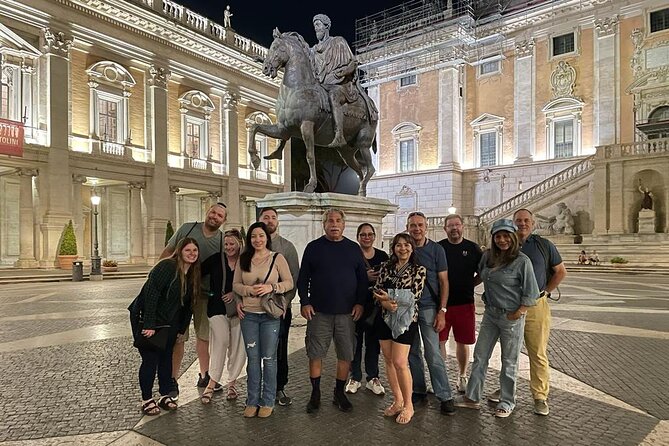
- Small group (15 or fewer): more chance to ask questions and get personal help.
- Night timing helps: you’ll see illuminated sights and dodge more daytime heat.
- Big viewpoints, quick stops: Capitoline Hill and the Colosseum area are built for “see it, understand it.”
- Guided connections: you’ll learn how places link together along the route.
- Some admissions are included: ticketed entry is listed for multiple stops.
- Ends at the Colosseum area: convenient if you want to keep exploring after the walk.
Why a night walk makes Ancient Rome easier to understand
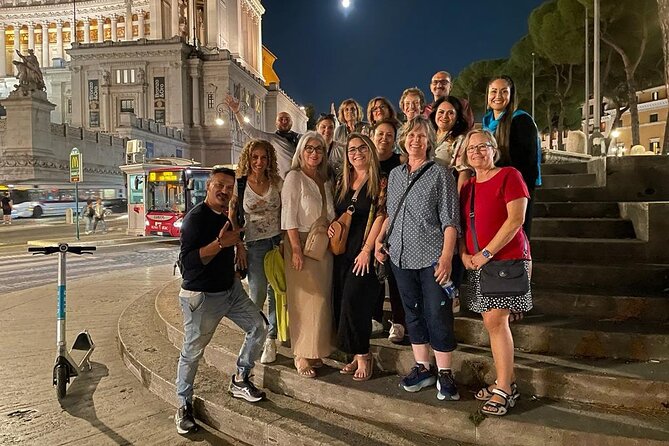
Rome’s ruins can feel like a pile of stone—until someone helps you connect the dots. That’s the core value here: you’re not just looking at monuments, you’re walking a logical path where your guide ties each stop to daily life in ancient Rome.
Night also changes the experience in practical ways. The big monuments around Piazza Venezia and the Colosseum area glow after sunset, and the streets can feel less overwhelming than peak midday crowds. Even if you only have a couple of hours, the timing gives you that “I get it now” feeling faster.
The guide-led format matters because the city is huge. Without a plan, you can spend your time getting your bearings instead of learning. On this walk, the route does that work for you, and your questions have a home base: your guide.
You can also read our reviews of more walking tours in Rome

Piazza Venezia start: the view that sets the stage
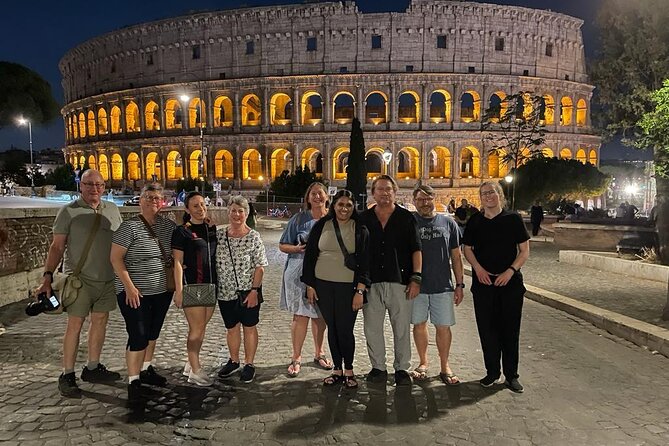
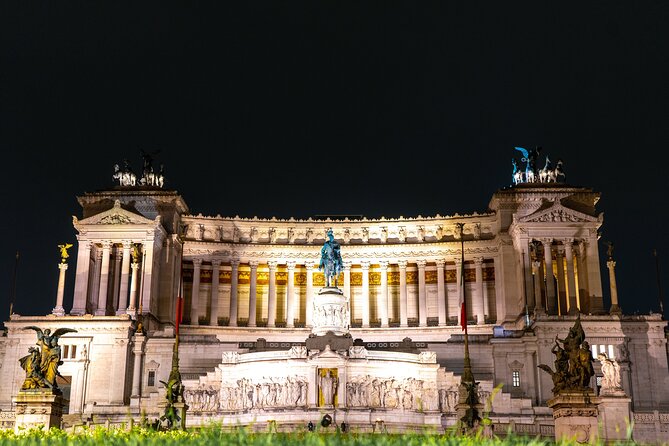
You begin at Piazza Venezia, near the Monument to Victor Emmanuel II. It’s a dramatic starting point, and it helps you get oriented immediately. From here, it’s easier to understand how Rome’s major landmarks relate to each other—especially when the walk is moving toward the Imperial zone and then the Colosseum area.
In a practical sense, arriving at Piazza Venezia also helps. It’s a central hub, so you’re close to public transportation. And because the tour uses a mobile ticket, you don’t need to scramble for paper while you’re navigating the meeting spot.
If you’re doing this early in your trip, this start is a good move. You’re basically setting a mental map of Rome’s “great roads” and “big power zones” before you try to explore on your own the rest of the night.
Capitoline Hill: Michelangelo’s square, Roman power, and big views
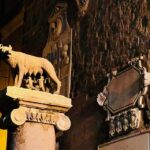
Capitoline Hill is one of those places that makes Rome feel like a layered story. You’ll head up, and the experience is built around the square and palaces designed by Michelangelo. That’s not just a design detail—it’s part of how Rome kept repurposing ancient authority.
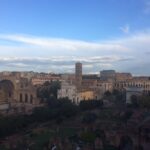
What you’ll get on this stop is the view. From the top, the city’s scale hits you, and your guide can point out how the ancient city would have worked from this kind of commanding position.
A subtle benefit: because you’re higher up, it’s easier to orient yourself for the next stage of the walk. When you later pass along the Via dei Fori Imperiali, you’ll understand why people were drawn to this area.
Via dei Fori Imperiali: the Roman Forum front row
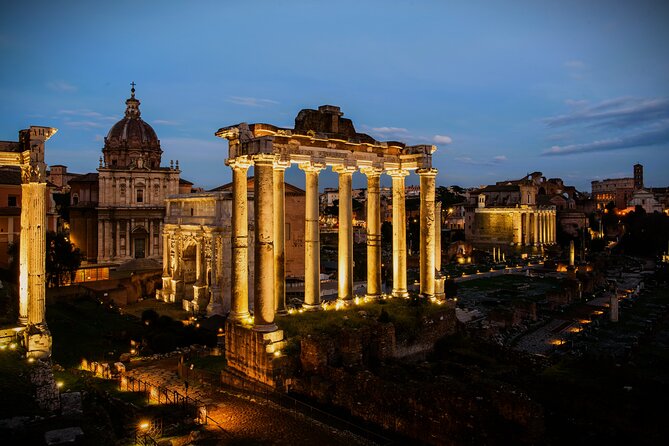
Then you move onto the Via dei Fori Imperiali. This is where the walk starts to feel more “history in motion.” The route is lined with ancient ruins and towering columns, and your guide’s job is to turn that visual density into something you can follow.
Expect cobblestones underfoot and a steady forward flow. You’re not wandering here—you’re walking with purpose, and the Roman Forum opens up like an “open book,” which is exactly what you want on a night tour.
One important note: ticketed access is listed for this part of the experience. That matters for value because you’re not only paying for storytelling; you’re also getting included admission for segments where it applies. That’s a key reason a guided route like this can feel like better money than a casual DIY roam.
Rione Monti after dark: a quieter Rome moment
Next comes the Rione Monti district. This is a different mood from the Imperial monuments: narrower streets, cozy piazzas, and a neighborhood feel that gives your night walk balance.
This stop works best if you’re the type of traveler who likes to connect “power Rome” to “people Rome.” Monti is where you can sense how the past and present rub shoulders. You still have your guide with you, but the pacing often feels more relaxed because the streets are smaller and the atmosphere is more human.
Also, ticketed access is listed for this portion. That suggests the experience isn’t purely a stroll-by of scenery; it’s designed to bring you into specific areas where admission applies.
Practical tip: Monti’s lanes can mean uneven pavement and tighter turns. Keep an eye on your footing, especially after dark.
You can also read our reviews of more guided tours in Rome
Piazza del Colosseo: the approach to the Colosseum and Arch of Constantine
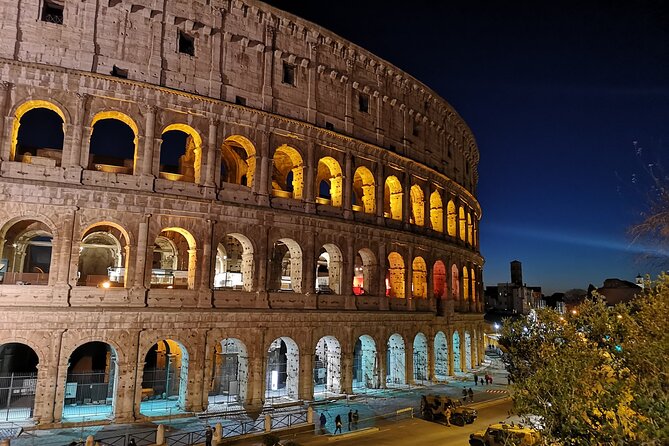
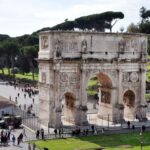
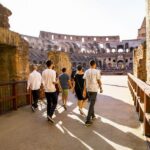
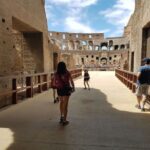
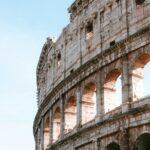
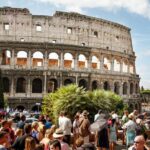
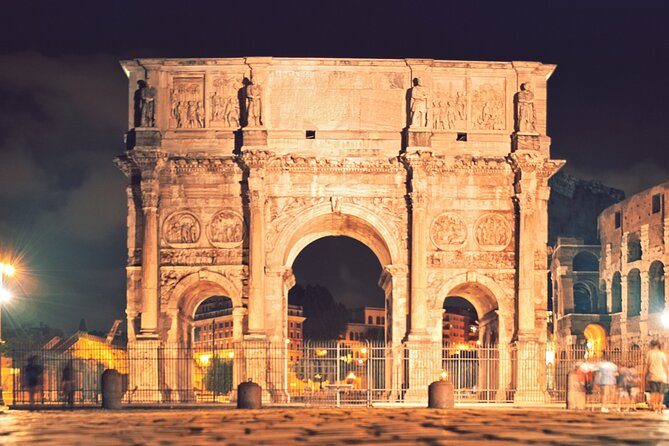
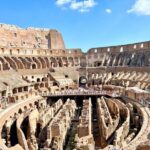
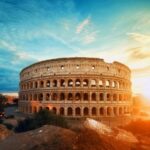
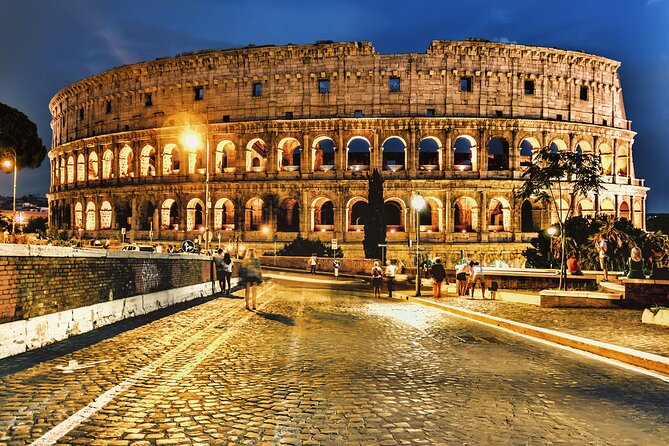
Your walk concludes at Piazza del Colosseo, in front of the Colosseum, with the Arch of Constantine along the way. Even if you’ve seen photos, approaching this area as part of a guided storyline hits differently.
The guide is there to explain the stories behind these iconic landmarks, and that’s crucial. The Colosseum isn’t just a sight; it’s a symbol of Roman ambition and leadership. The Arch of Constantine is part of that same messaging—so you’re learning at the point where the setting is at its strongest.
Ticketed admission is listed for this final stretch too, which again strengthens the value. The tour is ending here, but the location is perfect for continuing the night on your own. You’re right where most people want to be anyway.
Price and value: what $37.34 really buys
At $37.34 per person for about 2 hours, you’re paying for three things:
- A guided narrative that connects major sites instead of leaving you to piece it together.
- A small-group format (up to 15), which makes it easier to ask questions and not get lost in the crowd.
- Included admission for multiple stops, not just a sightseeing walk.
If you were to build your own night plan, you’d likely spend time figuring out routes, managing entry questions, and translating what you see. Here, your guide handles the structure and interpretation, and the pace is designed for nighttime viewing.
Booking is also a hint at demand: it’s commonly reserved around 20 days in advance on average. If your travel dates are fixed, I’d treat it like a “book it early enough” experience, not a last-minute add-on.
Guides, pacing, and what to watch for at the meeting point
Small-group tours rise or fall on organization, and this one includes helpful basics: you receive the guide’s name and number to make communication easier.
That matters because meeting locations can be chaotic, especially around Piazza Venezia. One reported issue involved a late arrival and confusion about how the guide was identified; the response noted that the guide waited 20 minutes as an exception, but they generally don’t wait for latecomers. The takeaway for you: show up a bit early, and if you’re delayed, call the number you’re given instead of relying on yelling across a square.
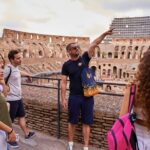
As for guide quality, one guide named Brian has been praised for making the night feel worth it even after a long journey. If Brian is leading your group, you can expect extra attention and good photo help—useful if you want real memory-making, not just blurry snapshots.
What to bring for a comfortable, photogenic night
This is a walking tour, and your body will decide how much you enjoy it.
- Wear shoes you can walk on for cobblestones and uneven pavement.
- Bring a light layer. Night air in Rome can feel cooler than you expect.
- Bring water. Food and drinks are not included.
- If you want photos, plan for quick bursts rather than long stops. The tour duration is about 2 hours.
Also, keep an eye out for messages related to the Jubilee. The tour notes that some monuments may be under restoration, so the route could have changes. That doesn’t automatically mean the tour is a problem—it just means you should read any updates you receive before you go.
Who this tour is best for
This is a strong fit if you:
- Want ancient Rome context without spending the whole night reading guidebooks.
- Like small groups where your guide can actually answer questions.
- Are in Rome during hotter months and prefer a cooler-feeling evening plan.
- Want a route that takes you from Piazza Venezia to the Colosseum area efficiently.
It’s also a good choice if you’re short on time and want a “high-impact” Rome overview that feels guided and intentional. If you’re the type who hates rushing, keep expectations realistic: this is paced for coverage and storytelling, not extended free exploration.
Should you book Ancient Rome After Dark?
I’d book it if you want a guided night path through Rome’s big ancient anchors—Capitoline Hill, Via dei Fori Imperiali, Monti, and the Colosseum—without turning your evening into a scavenger hunt.
Skip it (or switch to a different kind of experience) if you’re hoping for a long, slow wander with lots of unscheduled time. The tour is efficient, and you’ll get the most out of it by showing up ready to walk, ask questions, and move with the group.
FAQ
How long is the Ancient Rome After Dark guided night walk?
The tour runs for about 2 hours.
What is the group size for this tour?
The experience has a maximum of 15 travelers, keeping it small-group.
Where does the tour start and end?
It starts at the Monument to Victor Emmanuel II on Piazza Venezia and ends in front of the Colosseum at Piazza del Colosseo.
Is the ticket delivered digitally?
Yes. You’ll receive a mobile ticket.
What’s included with the tour?
It includes the small-group guided tour, instant confirmation, and name/number of the guide. Admission tickets are listed as included for multiple stops.
Are food and drinks included?
No, food and drinks are not included.
What is the cancellation policy?
You can cancel for a full refund up to 24 hours before the experience’s start time. If you cancel less than 24 hours before, the amount paid is not refunded.